 Movie
Movie Controller


+ Open data

- Basic information
| Entry | Database: PDB / ID: 9wig | |||||||||||||||||||||
|---|---|---|---|---|---|---|---|---|---|---|---|---|---|---|---|---|---|---|---|---|---|---|
| Title | Structure of the PT NTD-C1536-CoV2-3434-BLN8 complex | |||||||||||||||||||||
 Components Components |
| |||||||||||||||||||||
 Keywords Keywords | VIRAL PROTEIN/PROTEIN BINDING / FAB / PROTEIN BINDING/VIRAL PROTEIN / VIRAL PROTEIN-PROTEIN BINDING complex | |||||||||||||||||||||
| Function / homology |  Function and homology information Function and homology informationsymbiont-mediated disruption of host tissue / Maturation of spike protein / host cell surface / Translation of Structural Proteins / Virion Assembly and Release / Lectin pathway of complement activation / host extracellular region / symbiont-mediated-mediated suppression of host tetherin activity / structural constituent of virion / Induction of Cell-Cell Fusion ...symbiont-mediated disruption of host tissue / Maturation of spike protein / host cell surface / Translation of Structural Proteins / Virion Assembly and Release / Lectin pathway of complement activation / host extracellular region / symbiont-mediated-mediated suppression of host tetherin activity / structural constituent of virion / Induction of Cell-Cell Fusion / positive regulation of viral entry into host cell / Initial triggering of complement / membrane fusion / host cell endoplasmic reticulum-Golgi intermediate compartment membrane / Attachment and Entry / entry receptor-mediated virion attachment to host cell / receptor-mediated virion attachment to host cell / host cell surface receptor binding / symbiont-mediated suppression of host innate immune response / endocytosis involved in viral entry into host cell / receptor ligand activity / fusion of virus membrane with host plasma membrane / fusion of virus membrane with host endosome membrane / viral envelope / symbiont entry into host cell / virion attachment to host cell / host cell plasma membrane / SARS-CoV-2 activates/modulates innate and adaptive immune responses / virion membrane / membrane / identical protein binding / plasma membrane Similarity search - Function | |||||||||||||||||||||
| Biological species |  Homo sapiens (human) Homo sapiens (human) 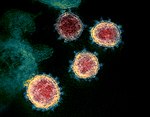 Severe acute respiratory syndrome coronavirus 2 Severe acute respiratory syndrome coronavirus 2 | |||||||||||||||||||||
| Method | ELECTRON MICROSCOPY / single particle reconstruction / cryo EM / Resolution: 3.93 Å | |||||||||||||||||||||
 Authors Authors | Sun, J.Q. / Zhou, J.J. | |||||||||||||||||||||
| Funding support |  China, 1items China, 1items
| |||||||||||||||||||||
 Citation Citation | Journal: Proc Natl Acad Sci U S A / Year: 2026 Title: A structural and mechanistic atlas of NTD antibody neutralization and immune escape across SARS-CoV-2 prototype and its (sub-)variants. Authors: Jianjie Zhou / Wenyu Li / Xiaoyun Wang / Junqing Sun / Shuxin Guo / Xiaoyu Rong / Zhou Tong / Lianpan Dai / William Jun Liu / Jianxun Qi / George Fu Gao / Qihui Wang / Abstract: The N-terminal domain (NTD) of the SARS-CoV-2 spike (S) is a critical antibody target, yet its epitope organization, neutralization mechanisms, and immune evasion strategies remain incompletely ...The N-terminal domain (NTD) of the SARS-CoV-2 spike (S) is a critical antibody target, yet its epitope organization, neutralization mechanisms, and immune evasion strategies remain incompletely resolved. Here, we classify NTD antibodies into nine spatially distinct classes (designated as NTD-1 to NTD-9), including a cryptic epitope defined here (NTD-8). Mechanistic studies reveal that NTD-5 and NTD-9 antibodies neutralize by inducing S1 shedding, thereby extending this mechanism to selected NTD-directed antibodies. Format profiling shows that while most NTD antibodies require bivalency, selected antibodies from NTD-3, NTD-5, and NTD-9 retain neutralizing activity in Fab form. Profiling 41 antibodies across prototype, Delta, and 17 Omicron subvariants defines an epitope-resolved escape landscape and enables dissection of three convergent evasion strategies: contact residue disruption, glycan shielding, and conformational remodeling. Notably, the KP.3.1.1 subvariant uses a dual escape mechanism in which ∆S31 introduces N30 glycosylation and substantially remodels the S27-R34 region, undermining recognition by both NTD-5 and NTD-9 antibodies. These findings provide a structural and mechanistic framework for rational vaccine and antibody design resilient to antigenic drift. | |||||||||||||||||||||
| History |
|
- Structure visualization
| Structure viewer | Molecule: MolmilJmol/JSmol |
|---|
- Downloads & links
-Download
| PDBx/mmCIF format | 9wig.cif.gz | 267.7 KB | Display | PDBx/mmCIF format |
|---|---|---|---|---|
| PDB format | pdb9wig.ent.gz | 211.9 KB | Display | PDB format |
| PDBx/mmJSON format | 9wig.json.gz | Tree view | PDBx/mmJSON format | |
| Others |  Other downloads Other downloads |
-Validation report
| Arichive directory | https://data.pdbj.org/pub/pdb/validation_reports/wi/9wigftp://data.pdbj.org/pub/pdb/validation_reports/wi/9wig | HTTPS FTP |
|---|
-Related structure data
| Related structure data |  65993MC  9w6uC  9x9zC  9xa0C  9xa4C  9xa5C  9xarC  9xawC M: map data used to model this data C: citing same article ( |
|---|---|
| Similar structure data |

-Links
 PDBj
PDBj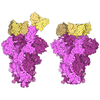
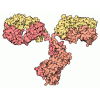
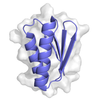
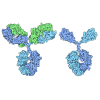
- Assembly
| Deposited unit | 
|
|---|---|
| 1 |
|
-Components
-Antibody , 6 types, 6 molecules ABCDEF
| #1: Antibody | Mass: 24240.234 Da / Num. of mol.: 1 Source method: isolated from a genetically manipulated source Source: (gene. exp.) Homo sapiens (human) / Production host: Homo sapiens (human) |
|---|---|
| #2: Antibody | Mass: 22420.674 Da / Num. of mol.: 1 Source method: isolated from a genetically manipulated source Source: (gene. exp.) Homo sapiens (human) / Production host: Homo sapiens (human) |
| #3: Antibody | Mass: 24392.170 Da / Num. of mol.: 1 Source method: isolated from a genetically manipulated source Source: (gene. exp.) Homo sapiens (human) / Production host: Homo sapiens (human) |
| #4: Antibody | Mass: 23239.725 Da / Num. of mol.: 1 Source method: isolated from a genetically manipulated source Source: (gene. exp.) Homo sapiens (human) / Production host: Homo sapiens (human) |
| #5: Antibody | Mass: 23811.691 Da / Num. of mol.: 1 Source method: isolated from a genetically manipulated source Source: (gene. exp.) Homo sapiens (human) / Production host: Homo sapiens (human) |
| #6: Antibody | Mass: 22294.611 Da / Num. of mol.: 1 Source method: isolated from a genetically manipulated source Source: (gene. exp.) Homo sapiens (human) / Production host: Homo sapiens (human) |
-Protein / Sugars , 2 types, 6 molecules G
| #7: Protein | Mass: 32635.770 Da / Num. of mol.: 1 Source method: isolated from a genetically manipulated source Source: (gene. exp.) Severe acute respiratory syndrome coronavirus 2Gene: S, 2 / Production host: Homo sapiens (human) / References: UniProt: P0DTC2 |
|---|---|
| #8: Sugar | ChemComp-NAG / 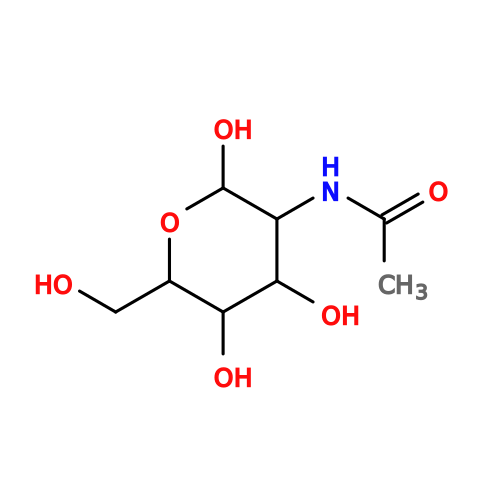 Type: D-saccharide, beta linking / Mass: 221.208 Da / Num. of mol.: 5 / Source method: obtained synthetically / Formula: C8H15NO6 / Feature type: SUBJECT OF INVESTIGATION Type: D-saccharide, beta linking / Mass: 221.208 Da / Num. of mol.: 5 / Source method: obtained synthetically / Formula: C8H15NO6 / Feature type: SUBJECT OF INVESTIGATION |
-Details
| Has ligand of interest | Y |
|---|---|
| Has protein modification | Y |
-Experimental details
-Experiment
| Experiment | Method: ELECTRON MICROSCOPY |
|---|---|
| EM experiment | Aggregation state: PARTICLE / 3D reconstruction method: single particle reconstruction |
- Sample preparation
| Component | Name: Structure of the PT NTD-C1536-CoV2-3434-BLN8 complex / Type: COMPLEX / Entity ID: #3-#4, #2, #1, #5-#7 / Source: RECOMBINANT | ||||||||||||
|---|---|---|---|---|---|---|---|---|---|---|---|---|---|
| Source (natural) |
| ||||||||||||
| Source (recombinant) | Organism: Homo sapiens (human) | ||||||||||||
| Buffer solution | pH: 8 | ||||||||||||
| Specimen | Embedding applied: NO / Shadowing applied: NO / Staining applied: NO / Vitrification applied: YES | ||||||||||||
| Vitrification | Cryogen name: ETHANE |
- Electron microscopy imaging
| Experimental equipment |  Model: Titan Krios / Image courtesy: FEI Company |
|---|---|
| Microscopy | Model: TFS KRIOS |
| Electron gun | Electron source: OTHER / Accelerating voltage: 300 kV / Illumination mode: FLOOD BEAM |
| Electron lens | Mode: BRIGHT FIELD / Nominal defocus max: 2000 nm / Nominal defocus min: 1000 nm |
| Image recording | Electron dose: 50 e/Å2 / Film or detector model: GATAN K3 (6k x 4k) |
- Processing
| EM software |
| ||||||||||||||||||||||||
|---|---|---|---|---|---|---|---|---|---|---|---|---|---|---|---|---|---|---|---|---|---|---|---|---|---|
| CTF correction | Type: PHASE FLIPPING AND AMPLITUDE CORRECTION | ||||||||||||||||||||||||
| 3D reconstruction | Resolution: 3.93 Å / Resolution method: FSC 0.143 CUT-OFF / Num. of particles: 77118 / Symmetry type: POINT | ||||||||||||||||||||||||
| Refinement | Highest resolution: 3.93 Å Stereochemistry target values: REAL-SPACE (WEIGHTED MAP SUM AT ATOM CENTERS) | ||||||||||||||||||||||||
| Refine LS restraints |
|
