Movie
 Controller


+ Open data

- Basic information
| Entry | Database: PDB / ID: 9tc7 | |||||||||
|---|---|---|---|---|---|---|---|---|---|---|
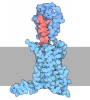
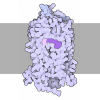
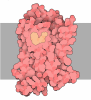
| Title | Inactive-state structure of GPR55 in complex with BI-6229 | |||||||||
 Components |
| |||||||||
 Keywords | MEMBRANE PROTEIN / GPCR / G protein-coupled receptor GPR55 | |||||||||
| Function / homology |  Function and homology information cannabinoid receptor activity / negative regulation of osteoclast differentiation / Class A/1 (Rhodopsin-like receptors) / bone resorption / positive regulation of Rho protein signal transduction / bioluminescence / generation of precursor metabolites and energy / electron transport chain / G protein-coupled receptor activity / phospholipase C-activating G protein-coupled receptor signaling pathway ...cannabinoid receptor activity / negative regulation of osteoclast differentiation / Class A/1 (Rhodopsin-like receptors) / bone resorption / positive regulation of Rho protein signal transduction / bioluminescence / generation of precursor metabolites and energy / electron transport chain / G protein-coupled receptor activity / phospholipase C-activating G protein-coupled receptor signaling pathway / G alpha (i) signalling events / positive regulation of ERK1 and ERK2 cascade / electron transfer activity / periplasmic space / iron ion binding / G protein-coupled receptor signaling pathway / heme binding / plasma membrane Similarity search - Function | |||||||||
| Biological species | Synthetic construct (others)  Aequorea victoria (jellyfish)  Homo sapiens (human)   Escherichia coli (E. coli) | |||||||||
| Method | ELECTRON MICROSCOPY / single particle reconstruction / cryo EM / Resolution: 2.57 Å | |||||||||
 Authors | Claff, T. / Ebenhoch, R. / Kley, J.T. / Weichert, D. | |||||||||
| Funding support | 1items
| |||||||||
 Citation | Journal: Nat Commun / Year: 2026 Title: Molecular insights into GPR55 modulation reveal an atypical activation mechanism and glycosylation-dependent efficacy regulation. Authors: Tobias Claff / Chamalee Demalgiriya-Gamage / Andhika B Mahardhika / Nikolaos Angelos Stamos / Frederik Bangnowski / Xue Sun / Katharina L Dürr / Carol V Robinson / Rainer Haney / Lee Frego ...Authors: Tobias Claff / Chamalee Demalgiriya-Gamage / Andhika B Mahardhika / Nikolaos Angelos Stamos / Frederik Bangnowski / Xue Sun / Katharina L Dürr / Carol V Robinson / Rainer Haney / Lee Frego / Herbert Nar / Christa E Müller / Rebecca Ebenhoch / Jörg T Kley / Dietmar Weichert /    Abstract: GPR55 is a lipid-activated G protein-coupled receptor (GPCR) implicated in metabolism, inflammation, and neurodegeneration. Lysophosphatidylinositol (LPI) species are proposed as endogenous agonists, ...GPR55 is a lipid-activated G protein-coupled receptor (GPCR) implicated in metabolism, inflammation, and neurodegeneration. Lysophosphatidylinositol (LPI) species are proposed as endogenous agonists, but progress in understanding GPR55 function has still been limited by suboptimal chemical probes. Here, we present cryo-electron microscopy (cryo-EM) structures of GPR55 in both inactive and active states. The inactive-state structure bound to the inverse agonist CID16020046 facilitated the rational design of an improved in vitro tool compound, BI-8310. Surprisingly, mutation of a glycosylation site in extracellular loop 2 converted CID16020046 into a potent agonist, enabling co-structure determination of the active, G-bound receptor. Comparative analysis of both states bound to the same ligand provides insights into an atypical activation mechanism that diverges from the typical helix VI outward movement observed in other GPCRs. Functional mutagenesis, N-glycoproteomics, and hydrogen-deuterium exchange mass spectrometry (HDX-MS) substantiate the findings. These results establish a basis for targeted modulation of GPR55 in pathophysiological conditions. | |||||||||
| History |
|
- Structure visualization
| Structure viewer | Molecule: MolmilJmol/JSmol |
|---|
- Downloads & links
-Download
| PDBx/mmCIF format | 9tc7.cif.gz | 205.1 KB | Display | PDBx/mmCIF format |
|---|---|---|---|---|
| PDB format | pdb9tc7.ent.gz | Display | PDB format | |
| PDBx/mmJSON format | 9tc7.json.gz | Tree view | PDBx/mmJSON format | |
| Others |  Other downloads |
-Validation report
| Arichive directory | https://data.pdbj.org/pub/pdb/validation_reports/tc/9tc7ftp://data.pdbj.org/pub/pdb/validation_reports/tc/9tc7 | HTTPS FTP |
|---|
-Related structure data
| Related structure data |  55776MC  9tc8C  9tc9C C: citing same article ( M: map data used to model this data |
|---|---|
| Similar structure data |


-Links
 PDBj
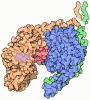
- Assembly
| Deposited unit | 
|
|---|---|
| 1 |
|
-Components
-Protein , 1 types, 1 molecules A
| #4: Protein | Mass: 83224.250 Da / Num. of mol.: 1 Source method: isolated from a genetically manipulated source Source: (gene. exp.) Aequorea victoria (jellyfish), (gene. exp.) Homo sapiens (human), (gene. exp.) Escherichia coli (E. coli)Gene: GFP, GPR55, cybC / Production host:  Trichoplusia ni (cabbage looper) References: UniProt: P42212, UniProt: Q9Y2T6, UniProt: P0ABE7 |
|---|
-Antibody , 3 types, 3 molecules HLN
| #1: Antibody | Mass: 26064.318 Da / Num. of mol.: 1 Source method: isolated from a genetically manipulated source Source: (gene. exp.) Synthetic construct (others) / Production host:   Cricetulus griseus (Chinese hamster) |
|---|---|
| #2: Antibody | Mass: 25339.463 Da / Num. of mol.: 1 Source method: isolated from a genetically manipulated source Source: (gene. exp.) Synthetic construct (others) / Production host: Cricetulus griseus (Chinese hamster) |
| #3: Antibody | Mass: 17585.475 Da / Num. of mol.: 1 Source method: isolated from a genetically manipulated source Source: (gene. exp.) Synthetic construct (others) / Production host: Escherichia coli (E. coli) |
-Non-polymers , 2 types, 2 molecules 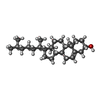
| #5: Chemical | ChemComp-CLR /  Mass: 386.654 Da / Num. of mol.: 1 / Source method: obtained synthetically / Formula: C27H46O |
|---|---|
| #6: Chemical | ChemComp-A1JU1 / Mass: 425.436 Da / Num. of mol.: 1 / Source method: obtained synthetically / Formula: C25H19N3O4 / Feature type: SUBJECT OF INVESTIGATION |
-Details
| Has ligand of interest | Y |
|---|---|
| Has protein modification | Y |
-Experimental details
-Experiment
| Experiment | Method: ELECTRON MICROSCOPY |
|---|---|
| EM experiment | Aggregation state: PARTICLE / 3D reconstruction method: single particle reconstruction |
- Sample preparation
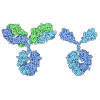
| Component | Name: GPR55-bRIL-Fab-Nb-BI-6229 / Type: COMPLEX / Entity ID: #1-#4 / Source: RECOMBINANT |
|---|---|
| Molecular weight | Experimental value: NO |
| Source (natural) | Organism: Homo sapiens (human) |
| Source (recombinant) | Organism: Trichoplusia ni (cabbage looper) |
| Buffer solution | pH: 7.4 |
| Specimen | Embedding applied: NO / Shadowing applied: NO / Staining applied: NO / Vitrification applied: YES |
| Vitrification | Instrument: FEI VITROBOT MARK IV / Cryogen name: ETHANE |
- Electron microscopy imaging
| Experimental equipment | 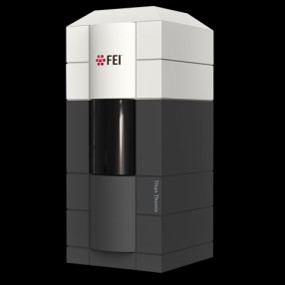 Model: Titan Krios / Image courtesy: FEI Company |
|---|---|
| Microscopy | Model: TFS KRIOS |
| Electron gun | Electron source:  FIELD EMISSION GUN / Accelerating voltage: 300 kV / Illumination mode: OTHER |
| Electron lens | Mode: BRIGHT FIELD / Nominal defocus max: 28000 nm / Nominal defocus min: 2800 nm |
| Specimen holder | Cryogen: NITROGEN |
| Image recording | Electron dose: 40 e/Å2 / Film or detector model: TFS FALCON 4i (4k x 4k) |
- Processing
| EM software |
| ||||||||||||||||||||||||||||
|---|---|---|---|---|---|---|---|---|---|---|---|---|---|---|---|---|---|---|---|---|---|---|---|---|---|---|---|---|---|
| CTF correction | Type: PHASE FLIPPING AND AMPLITUDE CORRECTION | ||||||||||||||||||||||||||||
| Symmetry | Point symmetry: C1 (asymmetric) | ||||||||||||||||||||||||||||
| 3D reconstruction | Resolution: 2.57 Å / Resolution method: FSC 0.143 CUT-OFF / Num. of particles: 436701 / Symmetry type: POINT | ||||||||||||||||||||||||||||
| Refinement | Highest resolution: 2.57 Å Stereochemistry target values: REAL-SPACE (WEIGHTED MAP SUM AT ATOM CENTERS) | ||||||||||||||||||||||||||||
| Refine LS restraints |
|