[English] 日本語
Yorodumi
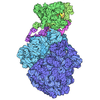
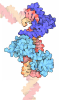
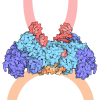
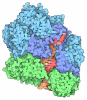
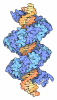
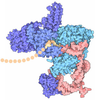
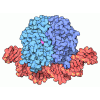
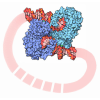
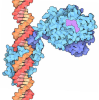
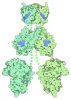
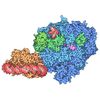
- PDB-9ofu: Dimer of HIF-1a-ARNT Heterodimers Complexed on 52-bp HRE/HAS -

+
Open data


ID or keywords:

Loading...

-
Basic information

Entry
Database: PDB / ID: 9ofu
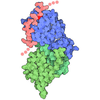
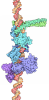
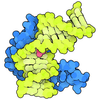
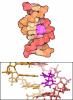
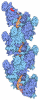
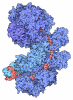
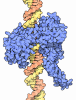
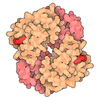
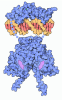
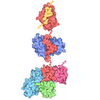
TitleDimer of HIF-1a-ARNT Heterodimers Complexed on 52-bp HRE/HAS
Components
  • 52-nt Hypoxia Response Element (Forward)
  • 52-nt Hypoxia Response Element (Reverse)
  • Aryl hydrocarbon receptor nuclear translocator
  • Hypoxia-inducible factor 1-alpha
KeywordsDNA BINDING PROTEIN / Complex / Hypoxia / Transcription / Cancer / Dimer / Higher-ordered
Function / homology
Function and homology information


elastin metabolic process / positive regulation of chemokine-mediated signaling pathway / regulation of transforming growth factor beta2 production / connective tissue replacement involved in inflammatory response wound healing / nuclear aryl hydrocarbon receptor complex / Aryl hydrocarbon receptor signalling / positive regulation of hormone biosynthetic process / Cellular response to hypoxia / collagen metabolic process / aryl hydrocarbon receptor complex ...elastin metabolic process / positive regulation of chemokine-mediated signaling pathway / regulation of transforming growth factor beta2 production / connective tissue replacement involved in inflammatory response wound healing / nuclear aryl hydrocarbon receptor complex / Aryl hydrocarbon receptor signalling / positive regulation of hormone biosynthetic process / Cellular response to hypoxia / collagen metabolic process / aryl hydrocarbon receptor complex / PTK6 Expression / regulation of protein neddylation / vascular endothelial growth factor production / positive regulation of protein sumoylation / intracellular oxygen homeostasis / negative regulation of ossification / Xenobiotics / STAT3 nuclear events downstream of ALK signaling / Phase I - Functionalization of compounds / negative regulation of oxidative stress-induced neuron intrinsic apoptotic signaling pathway / positive regulation of vascular endothelial growth factor receptor signaling pathway / transcription regulator activator activity / Regulation of gene expression by Hypoxia-inducible Factor / motile cilium / response to iron ion / positive regulation of cytokine production involved in inflammatory response / regulation of glycolytic process / DNA-binding transcription repressor activity / PTK6 promotes HIF1A stabilization / axonal transport of mitochondrion / DNA-binding transcription activator activity / E-box binding / aryl hydrocarbon receptor binding / positive regulation of epithelial cell migration / cellular response to interleukin-1 / epithelial to mesenchymal transition / Endogenous sterols / positive regulation of vascular endothelial growth factor production / positive regulation of blood vessel endothelial cell migration / cis-regulatory region sequence-specific DNA binding / negative regulation of reactive oxygen species biosynthetic process / positive regulation of chemokine production / NPAS4 regulates expression of target genes / positive regulation of endothelial cell proliferation / axon cytoplasm / positive regulation of erythrocyte differentiation / xenobiotic metabolic process / negative regulation of miRNA transcription / positive regulation of glycolytic process / intracellular glucose homeostasis / nuclear receptor binding / transcription corepressor binding / response to reactive oxygen species / RNA polymerase II transcription regulatory region sequence-specific DNA binding / cellular response to virus / PPARA activates gene expression / negative regulation of inflammatory response / euchromatin / Hsp90 protein binding / RNA polymerase II transcription regulator complex / positive regulation of miRNA transcription / nuclear receptor activity / NOTCH1 Intracellular Domain Regulates Transcription / Oxygen-dependent proline hydroxylation of Hypoxia-inducible Factor Alpha / histone deacetylase binding / positive regulation of angiogenesis / sequence-specific double-stranded DNA binding / transcription coactivator binding / p53 binding / regulation of gene expression / Regulation of PD-L1(CD274) transcription / transcription regulator complex / Neddylation / Interleukin-4 and Interleukin-13 signaling / cellular response to oxidative stress / cellular response to hypoxia / DNA-binding transcription activator activity, RNA polymerase II-specific / sequence-specific DNA binding / response to hypoxia / RNA polymerase II-specific DNA-binding transcription factor binding / nuclear body / DNA-binding transcription factor activity, RNA polymerase II-specific / nuclear speck / Ub-specific processing proteases / RNA polymerase II cis-regulatory region sequence-specific DNA binding / DNA-binding transcription factor activity / protein heterodimerization activity / negative regulation of gene expression / protein domain specific binding / ubiquitin protein ligase binding / positive regulation of gene expression / regulation of transcription by RNA polymerase II / regulation of DNA-templated transcription / positive regulation of DNA-templated transcription / protein kinase binding / chromatin / enzyme binding / signal transduction / positive regulation of transcription by RNA polymerase II / protein homodimerization activity
Similarity search - Function
Hypoxia-inducible factor-1 alpha / HIF-1 alpha, transactivation domain, C-terminal / HIF-1 alpha C terminal transactivation domain / Hypoxia-inducible factor 1-alpha bHLH domain / : / Hypoxia-inducible factor, alpha subunit-like / Hypoxia-inducible factor-1 / Nuclear translocator / PAS fold-3 / PAS fold ...Hypoxia-inducible factor-1 alpha / HIF-1 alpha, transactivation domain, C-terminal / HIF-1 alpha C terminal transactivation domain / Hypoxia-inducible factor 1-alpha bHLH domain / : / Hypoxia-inducible factor, alpha subunit-like / Hypoxia-inducible factor-1 / Nuclear translocator / PAS fold-3 / PAS fold / Helix-loop-helix DNA-binding domain / PAC motif / Motif C-terminal to PAS motifs (likely to contribute to PAS structural domain) / PAS domain / helix loop helix domain / Myc-type, basic helix-loop-helix (bHLH) domain / Myc-type, basic helix-loop-helix (bHLH) domain profile. / Helix-loop-helix DNA-binding domain superfamily / PAS fold / PAS fold / PAS domain / PAS repeat profile. / PAS domain / PAS domain superfamily
Similarity search - Domain/homology
DNA / DNA (> 10) / Aryl hydrocarbon receptor nuclear translocator / Hypoxia-inducible factor 1-alpha
Similarity search - Component
Biological speciesHomo sapiens (human)
MethodELECTRON MICROSCOPY / single particle reconstruction / cryo EM / Resolution: 3.9 Å
AuthorsClosson, J.D. / Tiyani, T.T. / Xu, X. / Gardner, K.H.
Funding support United States, 3items
OrganizationGrant numberCountry
National Institutes of Health/National Cancer Institute (NIH/NCI)U54 CA132378 United States
National Institutes of Health/National Cancer Institute (NIH/NCI)U54 C137788 United States
The G. Harold and Leila Y. Mathers FoundationMF-2112-02288 United States
Citation
Journal: Proc Natl Acad Sci U S A / Year: 2026
Title: Context-dependent variability of HIF heterodimers influences interactions with macromolecular and small molecule partners.
Authors: Joseph D Closson / Xingjian Xu / Meiling Zhang / Tarsisius T Tiyani / Leandro Pimentel Marcelino / Eta A Isiorho / Jason S Nagati / Joseph A Garcia / Kevin H Gardner /
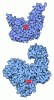
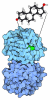
Abstract: Hypoxia inducible factors (HIFs) are heterodimeric transcription factors that coordinate cellular responses to low oxygen levels by binding a short hypoxia response element (HRE) DNA sequence near O- ...Hypoxia inducible factors (HIFs) are heterodimeric transcription factors that coordinate cellular responses to low oxygen levels by binding a short hypoxia response element (HRE) DNA sequence near O-regulated genes. Prior studies suggest HIF/HRE complexes are augmented by the binding of additional factors nearby, but those interactions are not well understood. Here, we integrated structural and biochemical approaches to investigate several functionally relevant HIF assemblies with other protein, small molecule, and DNA partners. First, we used cryo-electron microscopy (cryo-EM) to establish that HIF-1 and HIF-2 self-assemble into "dimer-of-heterodimers" (DoHD) complexes on extended human EPO enhancer sequences, with one heterodimer bound at a canonical HRE site and the second binding in an inverted fashion to an HRE-adjacent sequence 8 bp away. Consistent with ARNT PAS-B domains predominating interactions within a DoHD, we found HIF-1 and HIF-2 coassemble mixed DoHD complexes on the same DNA. Second, we saw that despite the increased complexities of the larger complexes, ligands for the isolated ARNT or HIF-2α PAS-B domains still bound and disrupted both heterodimeric and DoHD complexes, albeit with variable potencies depending on the ligand. Finally, we combined cryo-EM and hydrogen-deuterium exchange by mass spectrometry (HDX-MS) to show how HIF-1 and HIF-2 heterodimers engage the transforming acidic coiled-coil containing protein 3 coactivator via both ARNT and HIF-α subunits, though this was unseen in the larger DoHD. Our findings highlight the importance of molecular context in biomolecular complex formation, adding to the complexities of potential regulation.
#1: Journal: bioRxiv / Year: 2025
Title: CONTEXT-DEPENDENT VARIABILITY OF HIF HETERODIMERS INFLUENCES INTERACTIONS WITH MACROMOLECULAR AND SMALL MOLECULE PARTNERS.
Authors: Joseph D Closson / Xingjian Xu / Meiling Zhang / Tarsisius T Tiyani / Leandro Pimentel Marcelino / Eta A Isiorho / Jason S Nagati / Joseph A Garcia / Kevin H Gardner /
Abstract: Hypoxia inducible factors (HIFs) are transcription factors that coordinate cellular responses to low oxygen levels, functioning as an α/β heterodimer which binds a short hypoxia response element ...Hypoxia inducible factors (HIFs) are transcription factors that coordinate cellular responses to low oxygen levels, functioning as an α/β heterodimer which binds a short hypoxia response element (HRE) DNA sequence. Prior studies suggest HIF/HRE complexes are augmented by the binding of additional factors nearby, but those interactions are not well understood. Here, we integrated structural and biochemical approaches to investigate several functionally relevant HIF assemblies with other protein, small molecule, and DNA partners. First, we used cryo-electron microscopy (cryo-EM) to establish HIF-1 and HIF-2 form novel "dimer-of-heterodimers" (DoHD) complexes on extended human EPO enhancer sequences, showing that one heterodimer bound at a canonical HRE site with the second binding in an inverted fashion to an HRE-adjacent sequence (HAS) 8 bp away. Consistent with ARNT PAS-B domains predominating interactions within a DoHD, we found HIF-1 and HIF-2 assemble mixed DoHD complexes on the same DNA. Second, we saw substantial variability among ligands for isolated ARNT or HIF-2α PAS-B domains to bind larger complexes: for example, the ARNT PAS-B binding KG-548 and KG-279 ligands both bound the simpler HIF-2 heterodimer but exhibited differential binding to a HIF-2 DoHD. Finally, we combined cryo-EM and hydrogen-deuterium exchange by mass spectrometry (HDX-MS) to show how HIF-1 and HIF-2 heterodimers engage the transforming acidic coiled-coil containing protein 3 (TACC3) coactivator via both ARNT and HIF-α subunits, though this was unseen in the larger DoHD. Our findings highlight the importance of both molecular context and dynamics in biomolecular complex formation, adding to the complexities of potential regulation.
History
DepositionApr 30, 2025Deposition site: RCSB / Processing site: RCSB
Revision 1.0Jun 11, 2025Provider: repository / Type: Initial release
Revision 1.0Jun 11, 2025Data content type: EM metadata / Data content type: EM metadata / Provider: repository / Type: Initial release
Revision 1.0Jun 11, 2025Data content type: FSC / Data content type: FSC / Provider: repository / Type: Initial release
Revision 1.0Jun 11, 2025Data content type: Half map / Part number: 1 / Data content type: Half map / Provider: repository / Type: Initial release
Revision 1.0Jun 11, 2025Data content type: Half map / Part number: 2 / Data content type: Half map / Provider: repository / Type: Initial release
Revision 1.0Jun 11, 2025Data content type: Image / Data content type: Image / Provider: repository / Type: Initial release
Revision 1.0Jun 11, 2025Data content type: Primary map / Data content type: Primary map / Provider: repository / Type: Initial release
Revision 1.0Jun 11, 2025Data content type: FSC / Data content type: FSC / Provider: repository / Type: Initial release
Revision 1.0Jun 11, 2025Data content type: Half map / Part number: 1 / Data content type: Half map / Provider: repository / Type: Initial release
Revision 1.0Jun 11, 2025Data content type: Half map / Part number: 2 / Data content type: Half map / Provider: repository / Type: Initial release
Revision 1.0Jun 11, 2025Data content type: Image / Data content type: Image / Provider: repository / Type: Initial release
Revision 1.0Jun 11, 2025Data content type: Primary map / Data content type: Primary map / Provider: repository / Type: Initial release
Revision 1.1Jun 25, 2025Group: Data collection / Database references / Category: citation / em_admin
Item: _citation.pdbx_database_id_PubMed / _citation.title / _em_admin.last_update
Revision 1.2Jul 2, 2025Group: Data collection / Category: em_admin / Item: _em_admin.last_update
Revision 2.0Jul 2, 2025Data content type: EM metadata / Data content type: EM metadata / Group: Experimental summary / Data content type: EM metadata / Category: em_admin / Data content type: EM metadata / Item: _em_admin.last_update
Revision 2.0Jul 2, 2025Data content type: Half map / Part number: 1 / Data content type: Half map / Provider: repository / Type: Data updated
Revision 2.0Jul 2, 2025Data content type: Half map / Part number: 2 / Data content type: Half map / Provider: repository / Type: Data updated
Revision 2.0Aug 27, 2025Group: Advisory / Atomic model ...Advisory / Atomic model / Data collection / Database references / Derived calculations / Other / Polymer sequence / Refinement description / Source and taxonomy / Structure summary
Category: atom_site / em_admin ...atom_site / em_admin / em_entity_assembly / em_software / entity / entity_name_com / entity_poly / entity_poly_seq / entity_src_gen / ndb_struct_na_base_pair / ndb_struct_na_base_pair_step / pdbx_contact_author / pdbx_database_status / pdbx_entity_src_syn / pdbx_entry_details / pdbx_modification_feature / pdbx_poly_seq_scheme / pdbx_struct_sheet_hbond / pdbx_unobs_or_zero_occ_residues / pdbx_validate_rmsd_angle / pdbx_validate_torsion / refine_ls_restr / struct_asym / struct_conf / struct_conn / struct_conn_type / struct_ref / struct_ref_seq / struct_ref_seq_dif / struct_sheet / struct_sheet_order / struct_sheet_range
Item: _em_admin.last_update / _em_entity_assembly.entity_id_list ..._em_admin.last_update / _em_entity_assembly.entity_id_list / _em_software.fitting_id / _em_software.name / _em_software.version / _entity.details / _entity.formula_weight / _entity.pdbx_description / _entity.pdbx_number_of_molecules / _entity.src_method / _entity_name_com.entity_id / _entity_poly.pdbx_seq_one_letter_code / _entity_poly.pdbx_seq_one_letter_code_can / _entity_poly.pdbx_strand_id / _entity_poly.type / _entity_poly_seq.entity_id / _entity_poly_seq.mon_id / _entity_poly_seq.num / _entity_src_gen.entity_id / _pdbx_database_status.pdb_format_compatible / _pdbx_entity_src_syn.entity_id / _pdbx_entry_details.has_protein_modification / _pdbx_poly_seq_scheme.asym_id / _pdbx_poly_seq_scheme.auth_mon_id / _pdbx_poly_seq_scheme.auth_seq_num / _pdbx_poly_seq_scheme.entity_id / _pdbx_poly_seq_scheme.mon_id / _pdbx_poly_seq_scheme.ndb_seq_num / _pdbx_poly_seq_scheme.pdb_mon_id / _pdbx_poly_seq_scheme.pdb_seq_num / _pdbx_poly_seq_scheme.pdb_strand_id / _pdbx_poly_seq_scheme.seq_id / _pdbx_struct_sheet_hbond.range_1_auth_asym_id / _pdbx_struct_sheet_hbond.range_1_auth_atom_id / _pdbx_struct_sheet_hbond.range_1_auth_comp_id / _pdbx_struct_sheet_hbond.range_1_auth_seq_id / _pdbx_struct_sheet_hbond.range_1_label_asym_id / _pdbx_struct_sheet_hbond.range_1_label_atom_id / _pdbx_struct_sheet_hbond.range_1_label_comp_id / _pdbx_struct_sheet_hbond.range_1_label_seq_id / _pdbx_struct_sheet_hbond.range_2_auth_asym_id / _pdbx_struct_sheet_hbond.range_2_auth_atom_id / _pdbx_struct_sheet_hbond.range_2_auth_comp_id / _pdbx_struct_sheet_hbond.range_2_auth_seq_id / _pdbx_struct_sheet_hbond.range_2_label_asym_id / _pdbx_struct_sheet_hbond.range_2_label_atom_id / _pdbx_struct_sheet_hbond.range_2_label_comp_id / _pdbx_struct_sheet_hbond.range_2_label_seq_id / _pdbx_struct_sheet_hbond.range_id_1 / _pdbx_struct_sheet_hbond.range_id_2 / _pdbx_struct_sheet_hbond.sheet_id / _refine_ls_restr.dev_ideal / _refine_ls_restr.number / _struct_asym.entity_id / _struct_conf.beg_auth_asym_id / _struct_conf.beg_auth_comp_id / _struct_conf.beg_auth_seq_id / _struct_conf.beg_label_asym_id / _struct_conf.beg_label_comp_id / _struct_conf.beg_label_seq_id / _struct_conf.end_auth_asym_id / _struct_conf.end_auth_comp_id / _struct_conf.end_auth_seq_id / _struct_conf.end_label_asym_id / _struct_conf.end_label_comp_id / _struct_conf.end_label_seq_id / _struct_conf.pdbx_PDB_helix_class / _struct_conf.pdbx_PDB_helix_length / _struct_conn.conn_type_id / _struct_conn.details / _struct_conn.id / _struct_conn.pdbx_dist_value / _struct_conn.ptnr1_auth_asym_id / _struct_conn.ptnr1_auth_comp_id / _struct_conn.ptnr1_auth_seq_id / _struct_conn.ptnr1_label_asym_id / _struct_conn.ptnr1_label_atom_id / _struct_conn.ptnr1_label_comp_id / _struct_conn.ptnr1_label_seq_id / _struct_conn.ptnr2_auth_asym_id / _struct_conn.ptnr2_auth_comp_id / _struct_conn.ptnr2_auth_seq_id / _struct_conn.ptnr2_label_asym_id / _struct_conn.ptnr2_label_atom_id / _struct_conn.ptnr2_label_comp_id / _struct_conn.ptnr2_label_seq_id / _struct_ref.db_code / _struct_ref.db_name / _struct_ref.pdbx_align_begin / _struct_ref.pdbx_db_accession / _struct_ref.pdbx_seq_one_letter_code / _struct_ref_seq.db_align_beg / _struct_ref_seq.db_align_end / _struct_ref_seq.pdbx_auth_seq_align_beg / _struct_ref_seq.pdbx_auth_seq_align_end / _struct_ref_seq.pdbx_db_accession / _struct_ref_seq.pdbx_strand_id / _struct_ref_seq.ref_id / _struct_ref_seq.seq_align_beg / _struct_ref_seq.seq_align_end / _struct_ref_seq_dif.align_id / _struct_ref_seq_dif.pdbx_auth_seq_num / _struct_ref_seq_dif.pdbx_pdb_strand_id / _struct_sheet_order.range_id_1 / _struct_sheet_order.range_id_2 / _struct_sheet_order.sense / _struct_sheet_order.sheet_id
Description: Atomic clashes / Details: Re-refining to reduce clashscore and overfitting / Provider: author / Type: Coordinate replacement
Revision 2.1Aug 27, 2025Data content type: EM metadata
Data content type: EM metadata / EM metadata ...EM metadata / EM metadata / EM metadata / EM metadata / EM metadata / EM metadata
Group: Data processing / Database references ...Data processing / Database references / Experimental summary / Other / Source and taxonomy / Structure summary
Data content type: EM metadata / EM metadata ...EM metadata / EM metadata / EM metadata / EM metadata / EM metadata / EM metadata / EM metadata / EM metadata / EM metadata / EM metadata
Category: em_admin / em_entity_assembly ...em_admin / em_entity_assembly / em_software / entity / entity_poly / entity_src_gen / pdbx_entity_src_syn / struct_ref / struct_ref_seq / struct_ref_seq_dif
Data content type: EM metadata / EM metadata ...EM metadata / EM metadata / EM metadata / EM metadata / EM metadata / EM metadata / EM metadata / EM metadata / EM metadata / EM metadata / EM metadata / EM metadata / EM metadata / EM metadata / EM metadata / EM metadata / EM metadata / EM metadata / EM metadata / EM metadata / EM metadata / EM metadata / EM metadata / EM metadata / EM metadata / EM metadata / EM metadata / EM metadata / EM metadata / EM metadata / EM metadata / EM metadata / EM metadata
Item: _em_admin.last_update / _em_entity_assembly.entity_id_list ..._em_admin.last_update / _em_entity_assembly.entity_id_list / _em_software.fitting_id / _em_software.name / _em_software.version / _entity.details / _entity.formula_weight / _entity.pdbx_description / _entity.pdbx_number_of_molecules / _entity.src_method / _entity_poly.pdbx_seq_one_letter_code / _entity_poly.pdbx_seq_one_letter_code_can / _entity_poly.pdbx_strand_id / _entity_poly.type / _entity_src_gen.entity_id / _pdbx_entity_src_syn.entity_id / _struct_ref.db_code / _struct_ref.db_name / _struct_ref.pdbx_align_begin / _struct_ref.pdbx_db_accession / _struct_ref.pdbx_seq_one_letter_code / _struct_ref_seq.db_align_beg / _struct_ref_seq.db_align_end / _struct_ref_seq.pdbx_auth_seq_align_beg / _struct_ref_seq.pdbx_auth_seq_align_end / _struct_ref_seq.pdbx_db_accession / _struct_ref_seq.pdbx_strand_id / _struct_ref_seq.ref_id / _struct_ref_seq.seq_align_beg / _struct_ref_seq.seq_align_end / _struct_ref_seq_dif.align_id / _struct_ref_seq_dif.pdbx_auth_seq_num / _struct_ref_seq_dif.pdbx_pdb_strand_id
Revision 3.0Jul 15, 2026Group: Advisory / Atomic model ...Advisory / Atomic model / Data collection / Database references / Derived calculations / Structure summary
Category: atom_site / em_admin ...atom_site / em_admin / pdbx_modification_feature / pdbx_poly_seq_scheme / pdbx_struct_sheet_hbond / pdbx_unobs_or_zero_occ_residues / pdbx_validate_torsion / struct_conf / struct_conn / struct_ref_seq / struct_ref_seq_dif / struct_sheet_range
Item: _atom_site.auth_seq_id / _em_admin.last_update ..._atom_site.auth_seq_id / _em_admin.last_update / _pdbx_modification_feature.auth_seq_id / _pdbx_modification_feature.modified_residue_auth_seq_id / _pdbx_poly_seq_scheme.pdb_seq_num / _pdbx_struct_sheet_hbond.range_1_auth_seq_id / _pdbx_struct_sheet_hbond.range_2_auth_seq_id / _pdbx_unobs_or_zero_occ_residues.auth_seq_id / _pdbx_validate_torsion.auth_seq_id / _struct_conf.beg_auth_seq_id / _struct_conf.end_auth_seq_id / _struct_conn.ptnr1_auth_seq_id / _struct_conn.ptnr2_auth_seq_id / _struct_ref_seq.pdbx_auth_seq_align_beg / _struct_ref_seq.pdbx_auth_seq_align_end / _struct_ref_seq_dif.pdbx_auth_seq_num / _struct_sheet_range.beg_auth_seq_id / _struct_sheet_range.end_auth_seq_id
Revision 2.2Jul 15, 2026Data content type: EM metadata / Data content type: EM metadata / EM metadata / Group: Database references / Experimental summary / Data content type: EM metadata / EM metadata / EM metadata / Category: em_admin / struct_ref_seq / struct_ref_seq_dif
Data content type: EM metadata / EM metadata ...EM metadata / EM metadata / EM metadata / EM metadata
Item: _em_admin.last_update / _struct_ref_seq.pdbx_auth_seq_align_beg ..._em_admin.last_update / _struct_ref_seq.pdbx_auth_seq_align_beg / _struct_ref_seq.pdbx_auth_seq_align_end / _struct_ref_seq_dif.pdbx_auth_seq_num
Revision 3.1Aug 19, 2026Group: Data collection / Database references / Category: citation / citation_author / em_admin / Item: _em_admin.last_update
Revision 2.3Aug 19, 2026Data content type: EM metadata / Data content type: EM metadata / EM metadata / Group: Database references / Experimental summary / Data content type: EM metadata / EM metadata / EM metadata / Category: citation / citation_author / em_admin / Data content type: EM metadata / Item: _em_admin.last_update

-
Structure visualization

Structure viewerMolecule:
MolmilJmol/JSmol

Downloads & links

-
Assembly

Deposited unit
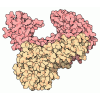
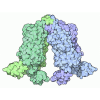
A: Hypoxia-inducible factor 1-alpha
B: Aryl hydrocarbon receptor nuclear translocator
C: Hypoxia-inducible factor 1-alpha
D: Aryl hydrocarbon receptor nuclear translocator
E: 52-nt Hypoxia Response Element (Forward)
F: 52-nt Hypoxia Response Element (Reverse)


Theoretical massNumber of molelcules
Total (without water)204,0976
Polymers204,0976
Non-polymers00
Water00
1


  • Idetical with deposited unit
  • defined by author&software
  • Evidence: electron microscopy, not applicable
TypeNameSymmetry operationNumber
identity operation1_555x,y,z1

-
Components

#1: Protein Hypoxia-inducible factor 1-alpha / HIF-1-alpha / HIF1-alpha / ARNT-interacting protein / Basic-helix-loop-helix-PAS protein MOP1 / ...HIF-1-alpha / HIF1-alpha / ARNT-interacting protein / Basic-helix-loop-helix-PAS protein MOP1 / Class E basic helix-loop-helix protein 78 / bHLHe78 / Member of PAS protein 1 / PAS domain-containing protein 8


Mass: 42962.926 Da / Num. of mol.: 2
Source method: isolated from a genetically manipulated source
Details: N-terminal 14 residues (MGSSHHHHHHSQDP) are vector-derived
Source: (gene. exp.) Homo sapiens (human) / Gene: HIF1A, BHLHE78, MOP1, PASD8 / Production host: Escherichia coli BL21(DE3) (bacteria) / References: UniProt: Q16665
#2: Protein Aryl hydrocarbon receptor nuclear translocator / ARNT protein / Class E basic helix-loop-helix protein 2 / bHLHe2 / Dioxin receptor / nuclear ...ARNT protein / Class E basic helix-loop-helix protein 2 / bHLHe2 / Dioxin receptor / nuclear translocator / Hypoxia-inducible factor 1-beta / HIF-1-beta / HIF1-beta


Mass: 43061.820 Da / Num. of mol.: 2
Source method: isolated from a genetically manipulated source
Source: (gene. exp.) Homo sapiens (human) / Gene: ARNT, BHLHE2 / Production host: Escherichia coli BL21(DE3) (bacteria) / References: UniProt: P27540
#3: DNA chain 52-nt Hypoxia Response Element (Forward)


Mass: 15821.092 Da / Num. of mol.: 1 / Source method: obtained synthetically / Source: (synth.) Homo sapiens (human)
#4: DNA chain 52-nt Hypoxia Response Element (Reverse)


Mass: 16226.375 Da / Num. of mol.: 1 / Source method: obtained synthetically / Source: (synth.) Homo sapiens (human)
Has protein modificationY

-
Experimental details

-
Experiment

ExperimentMethod: ELECTRON MICROSCOPY
EM experimentAggregation state: PARTICLE / 3D reconstruction method: single particle reconstruction

-
Sample preparation

ComponentName: Dimer of two HIF-1a-ARNT heterodimers complexed on 52-bp HRE
Type: COMPLEX / Entity ID: #3-#4, #1-#2 / Source: RECOMBINANT
Molecular weightValue: 0.205 MDa / Experimental value: NO
Source (natural)Organism: Homo sapiens (human)
Source (recombinant)Organism: Escherichia coli (E. coli) / Strain: BL21 (DE3)
Buffer solutionpH: 7.4 / Details: 50mM HEPES, 150mM NaCl, 5mM MgCl2
Buffer component
IDConc.NameFormulaBuffer-ID
150 mM2-[4-(2-hydroxyethyl)piperazin-1-yl]ethanesulfonic acidC8H18N2O4S1
2150 mMSodium ChlorideNaCl1
35 mMMagnesium ChlorideMgCl21
SpecimenConc.: 1.2 mg/ml / Embedding applied: NO / Shadowing applied: NO / Staining applied: NO / Vitrification applied: YES
Specimen supportGrid material: GOLD / Grid mesh size: 300 divisions/in. / Grid type: Quantifoil R1.2/1.3
VitrificationInstrument: FEI VITROBOT MARK II / Cryogen name: ETHANE / Humidity: 100 % / Chamber temperature: 277.15 K

-
Electron microscopy imaging

Experimental equipment
Model: Titan Krios / Image courtesy: FEI Company
MicroscopyModel: TFS KRIOS
Electron gunElectron source: FIELD EMISSION GUN / Accelerating voltage: 300 kV / Illumination mode: FLOOD BEAM
Electron lensMode: BRIGHT FIELD / Nominal defocus max: 4000 nm / Nominal defocus min: 300 nm / Cs: 2.7 mm
Image recordingElectron dose: 58.19 e/Å2 / Film or detector model: GATAN K3 (6k x 4k) / Num. of grids imaged: 2 / Num. of real images: 4098

-
Processing

EM software
IDNameVersionCategory
1Warp1.0.9particle selection
4Warp1.0.9CTF correction
7UCSF ChimeraX1.9model fitting
11cryoSPARC4.7.0classification
12cryoSPARC4.7.03D reconstruction
13PHENIX1.20.1_4487:model refinement
14Coot0.9.1.1model refinement
CTF correctionType: PHASE FLIPPING AND AMPLITUDE CORRECTION
Particle selectionNum. of particles selected: 262568
3D reconstructionResolution: 3.9 Å / Resolution method: FSC 0.143 CUT-OFF / Num. of particles: 71802 / Algorithm: FOURIER SPACE / Num. of class averages: 1 / Symmetry type: POINT
Atomic model buildingSource name: AlphaFold / Type: in silico model
Refine LS restraints
Refine-IDTypeDev idealNumber
ELECTRON MICROSCOPYf_bond_d0.01210403
ELECTRON MICROSCOPYf_angle_d0.73914305
ELECTRON MICROSCOPYf_dihedral_angle_d20.651807
ELECTRON MICROSCOPYf_chiral_restr0.0391604
ELECTRON MICROSCOPYf_plane_restr0.0061575

+
About Yorodumi

-
News

-
Feb 9, 2022. New format data for meta-information of EMDB entries

New format data for meta-information of EMDB entries

  • Version 3 of the EMDB header file is now the official format.
  • The previous official version 1.9 will be removed from the archive.

Related info.:EMDB header

External links:wwPDB to switch to version 3 of the EMDB data model

-
Aug 12, 2020. Covid-19 info

Covid-19 info

URL: https://pdbj.org/emnavi/covid19.php

New page: Covid-19 featured information page in EM Navigator.

Related info.:Covid-19 info / Mar 5, 2020. Novel coronavirus structure data

+
Mar 5, 2020. Novel coronavirus structure data

Novel coronavirus structure data

Related info.:Yorodumi Speices / Aug 12, 2020. Covid-19 info

External links:COVID-19 featured content - PDBj / Molecule of the Month (242):Coronavirus Proteases
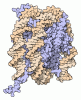
+
Jan 31, 2019. EMDB accession codes are about to change! (news from PDBe EMDB page)

EMDB accession codes are about to change! (news from PDBe EMDB page)

  • The allocation of 4 digits for EMDB accession codes will soon come to an end. Whilst these codes will remain in use, new EMDB accession codes will include an additional digit and will expand incrementally as the available range of codes is exhausted. The current 4-digit format prefixed with “EMD-” (i.e. EMD-XXXX) will advance to a 5-digit format (i.e. EMD-XXXXX), and so on. It is currently estimated that the 4-digit codes will be depleted around Spring 2019, at which point the 5-digit format will come into force.
  • The EM Navigator/Yorodumi systems omit the EMD- prefix.

Related info.:Q: What is EMD? / ID/Accession-code notation in Yorodumi/EM Navigator

External links:EMDB Accession Codes are Changing Soon! / Contact to PDBj
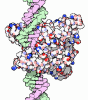
+
Jul 12, 2017. Major update of PDB

Major update of PDB

  • wwPDB released updated PDB data conforming to the new PDBx/mmCIF dictionary.
  • This is a major update changing the version number from 4 to 5, and with Remediation, in which all the entries are updated.
  • In this update, many items about electron microscopy experimental information are reorganized (e.g. em_software).
  • Now, EM Navigator and Yorodumi are based on the updated data.

External links:wwPDB Remediation / Enriched Model Files Conforming to OneDep Data Standards Now Available in the PDB FTP Archive

-
Yorodumi

Thousand views of thousand structures

  • Yorodumi is a browser for structure data from EMDB, PDB, SASBDB, etc.
  • This page is also the successor to EM Navigator detail page, and also detail information page/front-end page for Omokage search.
  • The word "yorodu" (or yorozu) is an old Japanese word meaning "ten thousand". "mi" (miru) is to see.

Related info.:EMDB / PDB / SASBDB / Comparison of 3 databanks / Yorodumi Search / Aug 31, 2016. New EM Navigator & Yorodumi / Yorodumi Papers / Jmol/JSmol / Function and homology information / Changes in new EM Navigator and Yorodumi

Read more