 Movie
Movie Controller


+ Open data

- Basic information
| Entry |  | ||||||||||||
|---|---|---|---|---|---|---|---|---|---|---|---|---|---|
| Title | Dimer of HIF-1a-ARNT Heterodimers Complexed on 52-bp HRE/HAS | ||||||||||||
 Map data Map data | |||||||||||||
 Sample Sample |
| ||||||||||||
 Keywords Keywords | Complex / Hypoxia / Transcription / Cancer / Dimer / Higher-ordered / DNA BINDING PROTEIN | ||||||||||||
| Function / homology |  Function and homology information Function and homology informationelastin metabolic process / positive regulation of chemokine-mediated signaling pathway / regulation of transforming growth factor beta2 production / connective tissue replacement involved in inflammatory response wound healing / nuclear aryl hydrocarbon receptor complex / Aryl hydrocarbon receptor signalling / positive regulation of hormone biosynthetic process / Cellular response to hypoxia / collagen metabolic process / aryl hydrocarbon receptor complex ...elastin metabolic process / positive regulation of chemokine-mediated signaling pathway / regulation of transforming growth factor beta2 production / connective tissue replacement involved in inflammatory response wound healing / nuclear aryl hydrocarbon receptor complex / Aryl hydrocarbon receptor signalling / positive regulation of hormone biosynthetic process / Cellular response to hypoxia / collagen metabolic process / aryl hydrocarbon receptor complex / PTK6 Expression / regulation of protein neddylation / vascular endothelial growth factor production / positive regulation of protein sumoylation / intracellular oxygen homeostasis / negative regulation of ossification / Xenobiotics / STAT3 nuclear events downstream of ALK signaling / Phase I - Functionalization of compounds / negative regulation of oxidative stress-induced neuron intrinsic apoptotic signaling pathway / positive regulation of vascular endothelial growth factor receptor signaling pathway / transcription regulator activator activity / Regulation of gene expression by Hypoxia-inducible Factor / motile cilium / response to iron ion / positive regulation of cytokine production involved in inflammatory response / regulation of glycolytic process / DNA-binding transcription repressor activity / PTK6 promotes HIF1A stabilization / axonal transport of mitochondrion / DNA-binding transcription activator activity / E-box binding / aryl hydrocarbon receptor binding / positive regulation of epithelial cell migration / cellular response to interleukin-1 / epithelial to mesenchymal transition / Endogenous sterols / positive regulation of vascular endothelial growth factor production / positive regulation of blood vessel endothelial cell migration / cis-regulatory region sequence-specific DNA binding / negative regulation of reactive oxygen species biosynthetic process / positive regulation of chemokine production / NPAS4 regulates expression of target genes / positive regulation of endothelial cell proliferation / axon cytoplasm / positive regulation of erythrocyte differentiation / xenobiotic metabolic process / negative regulation of miRNA transcription / positive regulation of glycolytic process / intracellular glucose homeostasis / nuclear receptor binding / transcription corepressor binding / response to reactive oxygen species / RNA polymerase II transcription regulatory region sequence-specific DNA binding / cellular response to virus / PPARA activates gene expression / negative regulation of inflammatory response / euchromatin / Hsp90 protein binding / positive regulation of miRNA transcription / nuclear receptor activity / NOTCH1 Intracellular Domain Regulates Transcription / Oxygen-dependent proline hydroxylation of Hypoxia-inducible Factor Alpha / histone deacetylase binding / regulation of gene expression / RNA polymerase II transcription regulator complex / positive regulation of angiogenesis / sequence-specific double-stranded DNA binding / transcription coactivator binding / p53 binding / Regulation of PD-L1(CD274) transcription / Neddylation / Interleukin-4 and Interleukin-13 signaling / cellular response to oxidative stress / DNA-binding transcription activator activity, RNA polymerase II-specific / transcription regulator complex / sequence-specific DNA binding / response to hypoxia / cellular response to hypoxia / RNA polymerase II-specific DNA-binding transcription factor binding / nuclear body / DNA-binding transcription factor activity, RNA polymerase II-specific / nuclear speck / Ub-specific processing proteases / RNA polymerase II cis-regulatory region sequence-specific DNA binding / DNA-binding transcription factor activity / protein heterodimerization activity / negative regulation of gene expression / protein domain specific binding / ubiquitin protein ligase binding / positive regulation of gene expression / regulation of transcription by RNA polymerase II / regulation of DNA-templated transcription / positive regulation of DNA-templated transcription / protein kinase binding / chromatin / signal transduction / enzyme binding / positive regulation of transcription by RNA polymerase II / protein homodimerization activity Similarity search - Function | ||||||||||||
| Biological species |  Homo sapiens (human) Homo sapiens (human) | ||||||||||||
| Method | single particle reconstruction / cryo EM / Resolution: 3.9 Å | ||||||||||||
 Authors Authors | Closson JD / Tiyani TT / Xu X / Gardner KH | ||||||||||||
| Funding support |  United States, 3 items United States, 3 items
| ||||||||||||
 Citation Citation | Journal: bioRxiv / Year: 2025 Title: CONTEXT-DEPENDENT VARIABILITY OF HIF HETERODIMERS INFLUENCES INTERACTIONS WITH MACROMOLECULAR AND SMALL MOLECULE PARTNERS. Authors: Joseph D Closson / Xingjian Xu / Meiling Zhang / Tarsisius T Tiyani / Leandro Pimentel Marcelino / Eta A Isiorho / Jason S Nagati / Joseph A Garcia / Kevin H Gardner / Abstract: Hypoxia inducible factors (HIFs) are transcription factors that coordinate cellular responses to low oxygen levels, functioning as an α/β heterodimer which binds a short hypoxia response element ...Hypoxia inducible factors (HIFs) are transcription factors that coordinate cellular responses to low oxygen levels, functioning as an α/β heterodimer which binds a short hypoxia response element (HRE) DNA sequence. Prior studies suggest HIF/HRE complexes are augmented by the binding of additional factors nearby, but those interactions are not well understood. Here, we integrated structural and biochemical approaches to investigate several functionally relevant HIF assemblies with other protein, small molecule, and DNA partners. First, we used cryo-electron microscopy (cryo-EM) to establish HIF-1 and HIF-2 form novel "dimer-of-heterodimers" (DoHD) complexes on extended human EPO enhancer sequences, showing that one heterodimer bound at a canonical HRE site with the second binding in an inverted fashion to an HRE-adjacent sequence (HAS) 8 bp away. Consistent with ARNT PAS-B domains predominating interactions within a DoHD, we found HIF-1 and HIF-2 assemble mixed DoHD complexes on the same DNA. Second, we saw substantial variability among ligands for isolated ARNT or HIF-2α PAS-B domains to bind larger complexes: for example, the ARNT PAS-B binding KG-548 and KG-279 ligands both bound the simpler HIF-2 heterodimer but exhibited differential binding to a HIF-2 DoHD. Finally, we combined cryo-EM and hydrogen-deuterium exchange by mass spectrometry (HDX-MS) to show how HIF-1 and HIF-2 heterodimers engage the transforming acidic coiled-coil containing protein 3 (TACC3) coactivator via both ARNT and HIF-α subunits, though this was unseen in the larger DoHD. Our findings highlight the importance of both molecular context and dynamics in biomolecular complex formation, adding to the complexities of potential regulation. | ||||||||||||
| History |
|
- Structure visualization
| Supplemental images |
|---|

- Downloads & links
-EMDB archive
| Map data | emd_70443.map.gz | 220.7 MB | EMDB map data format | |
|---|---|---|---|---|
| Header (meta data) | emd-70443-v30.xmlemd-70443.xml | 44.8 KB 44.8 KB | Display Display | EMDB header |
| FSC (resolution estimation) | emd_70443_fsc.xml | 13.3 KB | Display | FSC data file |
| Images |  emd_70443.png emd_70443.png | 57.5 KB | ||
| Filedesc metadata | emd-70443.cif.gz | 10 KB | ||
| Others | emd_70443_half_map_1.map.gzemd_70443_half_map_2.map.gz | 226.9 MB 226.9 MB | ||
| Archive directory |  https://data.pdbj.org/pub/emdb/structures/EMD-70443ftp://data.pdbj.org/pub/emdb/structures/EMD-70443 https://data.pdbj.org/pub/emdb/structures/EMD-70443ftp://data.pdbj.org/pub/emdb/structures/EMD-70443 | HTTPS FTP |
-Related structure data
| Related structure data |  9ofuMC  9of0C  9of2C  9ydyC M: atomic model generated by this map C: citing same article ( |
|---|---|
| Similar structure data |


-Links
| EMDB pages | EMDB (EBI/PDBe) / EMDataResource |
|---|---|
| Related items in Molecule of the Month |
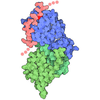

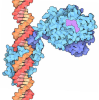
-Map
| File | Download / File: emd_70443.map.gz / Format: CCP4 / Size: 244.1 MB / Type: IMAGE STORED AS FLOATING POINT NUMBER (4 BYTES) | ||||||||||||||||||||||||||||||||||||
|---|---|---|---|---|---|---|---|---|---|---|---|---|---|---|---|---|---|---|---|---|---|---|---|---|---|---|---|---|---|---|---|---|---|---|---|---|---|
| Projections & slices | Image control
Images are generated by Spider. | ||||||||||||||||||||||||||||||||||||
| Voxel size | X=Y=Z: 0.83 Å | ||||||||||||||||||||||||||||||||||||
| Density |
| ||||||||||||||||||||||||||||||||||||
| Symmetry | Space group: 1 | ||||||||||||||||||||||||||||||||||||
| Details | EMDB XML:
|
 Z (Sec.)
 Y (Row.)
 X (Col.)


-Supplemental data
-Half map: #2
| File | emd_70443_half_map_1.map | ||||||||||||
|---|---|---|---|---|---|---|---|---|---|---|---|---|---|
| Projections & Slices |
| ||||||||||||
| Density Histograms |


-Half map: #1
| File | emd_70443_half_map_2.map | ||||||||||||
|---|---|---|---|---|---|---|---|---|---|---|---|---|---|
| Projections & Slices |
| ||||||||||||
| Density Histograms |


- Sample components
-Entire : Dimer of two HIF-1a-ARNT heterodimers complexed on 52-bp HRE
| Entire | Name: Dimer of two HIF-1a-ARNT heterodimers complexed on 52-bp HRE |
|---|---|
| Components |
|
-Supramolecule #1: Dimer of two HIF-1a-ARNT heterodimers complexed on 52-bp HRE
| Supramolecule | Name: Dimer of two HIF-1a-ARNT heterodimers complexed on 52-bp HRE type: complex / ID: 1 / Parent: 0 / Macromolecule list: #3-#4, #1-#2 |
|---|---|
| Source (natural) | Organism: Homo sapiens (human) |
| Molecular weight | Theoretical: 205 KDa |
-Macromolecule #1: Hypoxia-inducible factor 1-alpha
| Macromolecule | Name: Hypoxia-inducible factor 1-alpha / type: protein_or_peptide / ID: 1 Details: N-terminal 14 residues (MGSSHHHHHHSQDP) are vector-derived Number of copies: 2 / Enantiomer: LEVO |
|---|---|
| Source (natural) | Organism: Homo sapiens (human) |
| Molecular weight | Theoretical: 42.962926 KDa |
| Recombinant expression | Organism:   Escherichia coli BL21(DE3) (bacteria) Escherichia coli BL21(DE3) (bacteria) |
| Sequence | String: MGSSHHHHHH SQDPGAGGAN DKKKISSERR KEKSRDAARS RRSKESEVFY ELAHQLPLPH NVSSHLDKAS VMRLTISYLR VRKLLDAGD LDIEDDMKAQ MNCFYLKALD GFVMVLTDDG DMIYISDNVN KYMGLTQFEL TGHSVFDFTH PCDHEEMREM L THRNGLVK ...String: MGSSHHHHHH SQDPGAGGAN DKKKISSERR KEKSRDAARS RRSKESEVFY ELAHQLPLPH NVSSHLDKAS VMRLTISYLR VRKLLDAGD LDIEDDMKAQ MNCFYLKALD GFVMVLTDDG DMIYISDNVN KYMGLTQFEL TGHSVFDFTH PCDHEEMREM L THRNGLVK KGKEQNTQRS FFLRMKCTLT SRGRTMNIKS ATWKVLHCTG HIHVYDTNSN QPQCGYKKPP MTCLVLICEP IP HPSNIEI PLDSKTFLSR HSLDMKFSYC DERITELMGY EPEELLGRSI YEYYHALDSD HLTKTHHDMF TKGQVTTGQY RML AKRGGY VWVETQATVI YNTKNSQPQC IVCVNYVVSG IIQHDLIFSL QQTECVL UniProtKB: Hypoxia-inducible factor 1-alpha |
-Macromolecule #2: Aryl hydrocarbon receptor nuclear translocator
| Macromolecule | Name: Aryl hydrocarbon receptor nuclear translocator / type: protein_or_peptide / ID: 2 / Number of copies: 2 / Enantiomer: LEVO |
|---|---|
| Source (natural) | Organism: Homo sapiens (human) |
| Molecular weight | Theoretical: 43.06182 KDa |
| Recombinant expression | Organism: Escherichia coli BL21(DE3) (bacteria) |
| Sequence | String: MRENHSEIER RRRNKMTAYI TELSDMVPTC SALARKPDKL TILRMAVSHM KSLRGTGNTS TDGSYKPSFL TDQELKHLIL EAADGFLFI VSCETGRVVY VSDSVTPVLN QPQSEWFGST LYDQVHPDDV DKLREQLSTS ENALTGRILD LKTGTVKKEG Q QSSMRMCM ...String: MRENHSEIER RRRNKMTAYI TELSDMVPTC SALARKPDKL TILRMAVSHM KSLRGTGNTS TDGSYKPSFL TDQELKHLIL EAADGFLFI VSCETGRVVY VSDSVTPVLN QPQSEWFGST LYDQVHPDDV DKLREQLSTS ENALTGRILD LKTGTVKKEG Q QSSMRMCM GSRRSFICRM RCGSSSVDPV SVNRLSFVRN RCRNGLGSVK DGEPHFVVVH CTGYIKAWPP AGVSLPDDDP EA GQGSKFC LVAIGRLQVT SSPNCTDMSN VCQPTEFISR HNIEGIFTFV DHRCVATVGY QPQELLGKNI VEFCHPEDQQ LLR DSFQQV VKLKGQVLSV MFRFRSKNQE WLWMRTSSFT FQNPYSDEIE YIICTNTNVK NSSQE UniProtKB: Aryl hydrocarbon receptor nuclear translocator |
-Macromolecule #3: 52-nt Hypoxia Response Element (Forward)
| Macromolecule | Name: 52-nt Hypoxia Response Element (Forward) / type: dna / ID: 3 / Number of copies: 1 / Classification: DNA |
|---|---|
| Source (natural) | Organism: Homo sapiens (human) |
| Molecular weight | Theoretical: 15.821092 KDa |
| Sequence | String: (DT)(DG)(DG)(DG)(DC)(DC)(DC)(DT)(DA)(DC) (DG)(DT)(DG)(DC)(DT)(DG)(DT)(DC)(DT)(DC) (DA)(DC)(DA)(DC)(DA)(DG)(DC)(DC)(DT) (DG)(DT)(DC)(DT)(DG)(DA)(DC)(DC)(DT)(DC) (DT) (DC)(DG)(DA)(DC)(DC)(DC) ...String: (DT)(DG)(DG)(DG)(DC)(DC)(DC)(DT)(DA)(DC) (DG)(DT)(DG)(DC)(DT)(DG)(DT)(DC)(DT)(DC) (DA)(DC)(DA)(DC)(DA)(DG)(DC)(DC)(DT) (DG)(DT)(DC)(DT)(DG)(DA)(DC)(DC)(DT)(DC) (DT) (DC)(DG)(DA)(DC)(DC)(DC)(DT)(DA) (DC)(DC)(DG)(DG) |
-Macromolecule #4: 52-nt Hypoxia Response Element (Reverse)
| Macromolecule | Name: 52-nt Hypoxia Response Element (Reverse) / type: dna / ID: 4 / Number of copies: 1 / Classification: DNA |
|---|---|
| Source (natural) | Organism: Homo sapiens (human) |
| Molecular weight | Theoretical: 16.226375 KDa |
| Sequence | String: (DC)(DC)(DG)(DG)(DT)(DA)(DG)(DG)(DG)(DT) (DC)(DG)(DA)(DG)(DA)(DG)(DG)(DT)(DC)(DA) (DG)(DA)(DC)(DA)(DG)(DG)(DC)(DT)(DG) (DT)(DG)(DT)(DG)(DA)(DG)(DA)(DC)(DA)(DG) (DC) (DA)(DC)(DG)(DT)(DA)(DG) ...String: (DC)(DC)(DG)(DG)(DT)(DA)(DG)(DG)(DG)(DT) (DC)(DG)(DA)(DG)(DA)(DG)(DG)(DT)(DC)(DA) (DG)(DA)(DC)(DA)(DG)(DG)(DC)(DT)(DG) (DT)(DG)(DT)(DG)(DA)(DG)(DA)(DC)(DA)(DG) (DC) (DA)(DC)(DG)(DT)(DA)(DG)(DG)(DG) (DC)(DC)(DC)(DA) |
-Experimental details
-Structure determination
| Method | cryo EM |
|---|---|
 Processing Processing | single particle reconstruction |
| Aggregation state | particle |
-Sample preparation
| Concentration | 1.2 mg/mL | ||||||||||||
|---|---|---|---|---|---|---|---|---|---|---|---|---|---|
| Buffer | pH: 7.4 Component:
Details: 50mM HEPES, 150mM NaCl, 5mM MgCl2 | ||||||||||||
| Grid | Model: Quantifoil R1.2/1.3 / Material: GOLD / Mesh: 300 / Pretreatment - Type: PLASMA CLEANING / Pretreatment - Time: 30 sec. / Pretreatment - Atmosphere: OTHER | ||||||||||||
| Vitrification | Cryogen name: ETHANE / Chamber humidity: 100 % / Chamber temperature: 277.15 K / Instrument: FEI VITROBOT MARK II |
- Electron microscopy
| Microscope | TFS KRIOS |
|---|---|
| Image recording | Film or detector model: GATAN K3 (6k x 4k) / Number grids imaged: 2 / Number real images: 4098 / Average electron dose: 58.19 e/Å2 |
| Electron beam | Acceleration voltage: 300 kV / Electron source:  FIELD EMISSION GUN FIELD EMISSION GUN |
| Electron optics | Illumination mode: FLOOD BEAM / Imaging mode: BRIGHT FIELD / Cs: 2.7 mm / Nominal defocus max: 4.0 µm / Nominal defocus min: 0.3 µm |
| Experimental equipment |  Model: Titan Krios / Image courtesy: FEI Company |
+Image processing

-Atomic model buiding 1
| Initial model | Chain - Source name: AlphaFold / Chain - Initial model type: in silico model |
|---|---|
| Software | Name: UCSF ChimeraX (ver. 1.9) |
| Output model | PDB-9ofu: |
