 Movie
Movie Controller

[English] 日本語
 Yorodumi
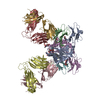
- PDB-7md5: Insulin receptor ectodomain dimer complexed with two IRPA-9 parti... -
+ Open data

- Basic information
| Entry | Database: PDB / ID: 7md5 | ||||||
|---|---|---|---|---|---|---|---|
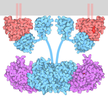
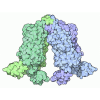
| Title | Insulin receptor ectodomain dimer complexed with two IRPA-9 partial agonists | ||||||
 Components Components |
| ||||||
 Keywords Keywords | PEPTIDE BINDING PROTEIN / Insulin receptor | ||||||
| Function / homology |  Function and homology information Function and homology informationregulation of female gonad development / positive regulation of meiotic cell cycle / insulin-like growth factor II binding / positive regulation of developmental growth / insulin receptor complex / insulin-like growth factor I binding / insulin receptor activity / positive regulation of protein-containing complex disassembly / adrenal gland development / dendritic spine maintenance ...regulation of female gonad development / positive regulation of meiotic cell cycle / insulin-like growth factor II binding / positive regulation of developmental growth / insulin receptor complex / insulin-like growth factor I binding / insulin receptor activity / positive regulation of protein-containing complex disassembly / adrenal gland development / dendritic spine maintenance / insulin binding / negative regulation of glycogen catabolic process / negative regulation of fatty acid metabolic process / Signaling by Insulin receptor / PTB domain binding / IRS activation / cargo receptor activity / Insulin processing / negative regulation of feeding behavior / regulation of protein secretion / positive regulation of peptide hormone secretion / negative regulation of acute inflammatory response / neuronal cell body membrane / positive regulation of respiratory burst / Regulation of gene expression in beta cells / relaxation of vascular associated smooth muscle / alpha-beta T cell activation / amyloid-beta clearance / acute-phase response / heart morphogenesis / positive regulation of receptor internalization / Synthesis, secretion, and deacylation of Ghrelin / insulin receptor substrate binding / negative regulation of gluconeogenesis / fatty acid homeostasis / negative regulation of protein secretion / positive regulation of brown fat cell differentiation / positive regulation of dendritic spine maintenance / positive regulation of insulin receptor signaling pathway / positive regulation of glycogen biosynthetic process / Signal attenuation / FOXO-mediated transcription of oxidative stress, metabolic and neuronal genes / protein kinase activator activity / negative regulation of lipid catabolic process / positive regulation of lipid biosynthetic process / negative regulation of respiratory burst involved in inflammatory response / negative regulation of oxidative stress-induced intrinsic apoptotic signaling pathway / nitric oxide-cGMP-mediated signaling / regulation of protein localization to plasma membrane / phosphatidylinositol 3-kinase binding / Insulin receptor recycling / transport across blood-brain barrier / COPI-mediated anterograde transport / transport vesicle / positive regulation of nitric-oxide synthase activity / negative regulation of reactive oxygen species biosynthetic process / NPAS4 regulates expression of target genes / insulin-like growth factor receptor binding / positive regulation of D-glucose import across plasma membrane / positive regulation of mitotic nuclear division / neuron projection maintenance / endoplasmic reticulum-Golgi intermediate compartment membrane / receptor-mediated endocytosis / male gonad development / hormone activity / positive regulation of glycolytic process / regulation of embryonic development / Insulin receptor signalling cascade / learning / endosome lumen / dendrite membrane / positive regulation of protein secretion / wound healing / insulin receptor binding / positive regulation of long-term synaptic potentiation / positive regulation of cytokine production / positive regulation of neuron projection development / positive regulation of cell differentiation / negative regulation of protein catabolic process / Regulation of insulin secretion / memory / receptor protein-tyrosine kinase / vasodilation / positive regulation of protein localization to nucleus / regulation of synaptic plasticity / caveola / Golgi lumen / cognition / insulin receptor signaling pathway / positive regulation of nitric oxide biosynthetic process / cellular response to insulin stimulus / glucose homeostasis / late endosome / cell-cell signaling / protein autophosphorylation / positive regulation of cell growth / amyloid-beta binding / regulation of protein localization / PI5P, PP2A and IER3 Regulate PI3K/AKT Signaling / protease binding Similarity search - Function | ||||||
| Biological species |  Homo sapiens (human) Homo sapiens (human) | ||||||
| Method | ELECTRON MICROSCOPY / single particle reconstruction / cryo EM / Resolution: 5.2 Å | ||||||
 Authors Authors | Gomez-Llorente, Y. / Zhou, H. / Scapin, G. | ||||||
 Citation Citation | Journal: Nat Commun / Year: 2022 Title: Functionally selective signaling and broad metabolic benefits by novel insulin receptor partial agonists. Authors: Margaret Wu / Ester Carballo-Jane / Haihong Zhou / Peter Zafian / Ge Dai / Mindy Liu / Julie Lao / Terri Kelly / Dan Shao / Judith Gorski / Dmitri Pissarnitski / Ahmet Kekec / Ying Chen / ...Authors: Margaret Wu / Ester Carballo-Jane / Haihong Zhou / Peter Zafian / Ge Dai / Mindy Liu / Julie Lao / Terri Kelly / Dan Shao / Judith Gorski / Dmitri Pissarnitski / Ahmet Kekec / Ying Chen / Stephen F Previs / Giovanna Scapin / Yacob Gomez-Llorente / Scott A Hollingsworth / Lin Yan / Danqing Feng / Pei Huo / Geoffrey Walford / Mark D Erion / David E Kelley / Songnian Lin / James Mu /  Abstract: Insulin analogs have been developed to treat diabetes with focus primarily on improving the time action profile without affecting ligand-receptor interaction or functional selectivity. As a result, ...Insulin analogs have been developed to treat diabetes with focus primarily on improving the time action profile without affecting ligand-receptor interaction or functional selectivity. As a result, inherent liabilities (e.g. hypoglycemia) of injectable insulin continue to limit the true therapeutic potential of related agents. Insulin dimers were synthesized to investigate whether partial agonism of the insulin receptor (IR) tyrosine kinase is achievable, and to explore the potential for tissue-selective systemic insulin pharmacology. The insulin dimers induced distinct IR conformational changes compared to native monomeric insulin and substrate phosphorylation assays demonstrated partial agonism. Structurally distinct dimers with differences in conjugation sites and linkers were prepared to deliver desirable IR partial agonist (IRPA). Systemic infusions of a B29-B29 dimer in vivo revealed sharp differences compared to native insulin. Suppression of hepatic glucose production and lipolysis were like that attained with regular insulin, albeit with a distinctly shallower dose-response. In contrast, there was highly attenuated stimulation of glucose uptake into muscle. Mechanistic studies indicated that IRPAs exploit tissue differences in receptor density and have additional distinctions pertaining to drug clearance and distribution. The hepato-adipose selective action of IRPAs is a potentially safer approach for treatment of diabetes. | ||||||
| History |
|
- Structure visualization
| Movie |
Movie viewer |
|---|---|
| Structure viewer | Molecule: MolmilJmol/JSmol |
- Downloads & links
-Download
| PDBx/mmCIF format | 7md5.cif.gz | 301.2 KB | Display | PDBx/mmCIF format |
|---|---|---|---|---|
| PDB format | pdb7md5.ent.gz | 237.8 KB | Display | PDB format |
| PDBx/mmJSON format | 7md5.json.gz | Tree view | PDBx/mmJSON format | |
| Others |  Other downloads Other downloads |
-Validation report
| Arichive directory | https://data.pdbj.org/pub/pdb/validation_reports/md/7md5ftp://data.pdbj.org/pub/pdb/validation_reports/md/7md5 | HTTPS FTP |
|---|
-Related structure data
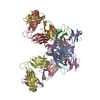
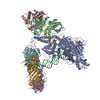
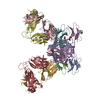
| Related structure data |  23767MC  7md4C M: map data used to model this data C: citing same article ( |
|---|---|
| Similar structure data |




-Links
 PDBj
PDBj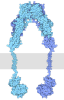

- Assembly
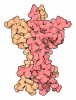
| Deposited unit | 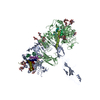
|
|---|---|
| 1 |
|
-Components
-Isoform Short of Insulin ... , 2 types, 4 molecules ABMN
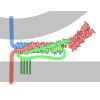
| #1: Protein | Mass: 106143.359 Da / Num. of mol.: 2 / Fragment: extracellular domain Source method: isolated from a genetically manipulated source Source: (gene. exp.) Homo sapiens (human) / Gene: INSR / Cell line (production host): Myeloma / Production host:   Mus musculus (house mouse) Mus musculus (house mouse)References: UniProt: P06213, receptor protein-tyrosine kinase #2: Protein/peptide | Mass: 3459.836 Da / Num. of mol.: 2 / Fragment: C-terminal helix Source method: isolated from a genetically manipulated source Source: (gene. exp.) Homo sapiens (human) / Gene: INSR / Cell line (production host): Myeloma / Production host: Mus musculus (house mouse)References: UniProt: P06213, receptor protein-tyrosine kinase |
|---|
-Protein/peptide , 2 types, 8 molecules SOQUTPRV
| #3: Protein/peptide | Mass: 2383.698 Da / Num. of mol.: 4 Source method: isolated from a genetically manipulated source Source: (gene. exp.) Homo sapiens (human) / Gene: INS / Production host:   Escherichia coli (E. coli) / References: UniProt: P01308 Escherichia coli (E. coli) / References: UniProt: P01308#4: Protein/peptide | Mass: 3433.953 Da / Num. of mol.: 4 Source method: isolated from a genetically manipulated source Source: (gene. exp.) Homo sapiens (human) / Gene: INS / Production host: Escherichia coli (E. coli) / References: UniProt: P01308 |
|---|
-Sugars , 5 types, 14 molecules 
| #5: Polysaccharide | 2-acetamido-2-deoxy-beta-D-glucopyranose-(1-4)-[alpha-L-fucopyranose-(1-6)]2-acetamido-2-deoxy-beta- ...2-acetamido-2-deoxy-beta-D-glucopyranose-(1-4)-[alpha-L-fucopyranose-(1-6)]2-acetamido-2-deoxy-beta-D-glucopyranose Source method: isolated from a genetically manipulated source #6: Polysaccharide | Source method: isolated from a genetically manipulated source #7: Polysaccharide | Source method: isolated from a genetically manipulated source #8: Polysaccharide | Source method: isolated from a genetically manipulated source #9: Sugar | ChemComp-NAG / 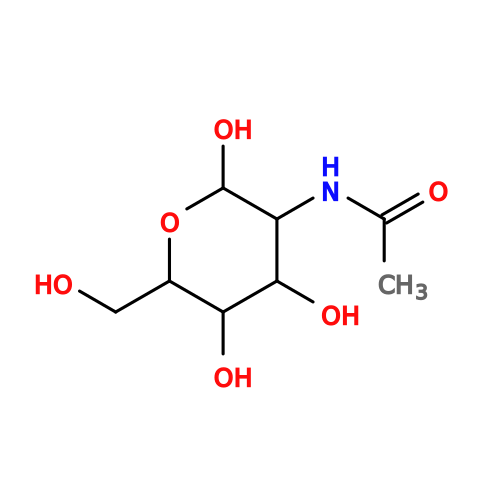 Type: D-saccharide, beta linking / Mass: 221.208 Da / Num. of mol.: 4 / Source method: obtained synthetically / Formula: C8H15NO6 Type: D-saccharide, beta linking / Mass: 221.208 Da / Num. of mol.: 4 / Source method: obtained synthetically / Formula: C8H15NO6 |
|---|
-Details
| Has ligand of interest | N |
|---|---|
| Has protein modification | Y |
-Experimental details
-Experiment
| Experiment | Method: ELECTRON MICROSCOPY |
|---|---|
| EM experiment | Aggregation state: PARTICLE / 3D reconstruction method: single particle reconstruction |
- Sample preparation
| Component |
| ||||||||||||||||||||||||
|---|---|---|---|---|---|---|---|---|---|---|---|---|---|---|---|---|---|---|---|---|---|---|---|---|---|
| Molecular weight | Value: 0.23 MDa / Experimental value: YES | ||||||||||||||||||||||||
| Source (natural) |
| ||||||||||||||||||||||||
| Source (recombinant) |
| ||||||||||||||||||||||||
| Buffer solution | pH: 7.4 | ||||||||||||||||||||||||
| Specimen | Embedding applied: NO / Shadowing applied: NO / Staining applied: NO / Vitrification applied: YES | ||||||||||||||||||||||||
| Specimen support | Grid material: COPPER / Grid type: Homemade | ||||||||||||||||||||||||
| Vitrification | Cryogen name: ETHANE |
- Electron microscopy imaging
| Experimental equipment |  Model: Titan Krios / Image courtesy: FEI Company |
|---|---|
| Microscopy | Model: FEI TITAN KRIOS |
| Electron gun | Electron source:  FIELD EMISSION GUN / Accelerating voltage: 300 kV / Illumination mode: FLOOD BEAM FIELD EMISSION GUN / Accelerating voltage: 300 kV / Illumination mode: FLOOD BEAM |
| Electron lens | Mode: BRIGHT FIELD / Cs: 2.7 mm / Alignment procedure: COMA FREE |
| Specimen holder | Cryogen: NITROGEN / Specimen holder model: FEI TITAN KRIOS AUTOGRID HOLDER |
| Image recording | Electron dose: 45 e/Å2 / Detector mode: COUNTING / Film or detector model: GATAN K2 SUMMIT (4k x 4k) |
- Processing
| EM software | Name: Leginon / Category: image acquisition |
|---|---|
| CTF correction | Type: PHASE FLIPPING AND AMPLITUDE CORRECTION |
| 3D reconstruction | Resolution: 5.2 Å / Resolution method: FSC 0.143 CUT-OFF / Num. of particles: 54293 / Symmetry type: POINT |
