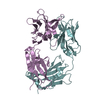
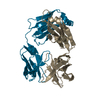
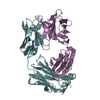
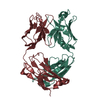
- PDB-3wwt: Crystal Structure of the Y3:STAT1ND complex -
+
Open data
ID or keywords:
Loading...
-
Basic information
Entry
Database: PDB / ID: 3wwt
Title
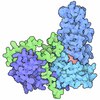
Crystal Structure of the Y3:STAT1ND complex
Components
C' protein
Signal transducer and activator of transcription 1-alpha/beta
Keywords
TRANSCRIPTION/VIRAL PROTEIN / alpha protein / interferon inhibition / signal transduction / transcriptional activation / TRANSCRIPTION-VIRAL PROTEIN complex
Function / homology
Function and homology information
renal tubule development / metanephric mesenchymal cell differentiation / negative regulation of metanephric nephron tubule epithelial cell differentiation / negative regulation by virus of viral protein levels in host cell / negative regulation of mesenchymal to epithelial transition involved in metanephros morphogenesis / ISGF3 complex / response to interferon-beta / metanephric mesenchymal cell proliferation involved in metanephros development / interleukin-27-mediated signaling pathway / Differentiation of naive CD4+ T cells to T helper 1 cells (Th1 cells) ...renal tubule development / metanephric mesenchymal cell differentiation / negative regulation of metanephric nephron tubule epithelial cell differentiation / negative regulation by virus of viral protein levels in host cell / negative regulation of mesenchymal to epithelial transition involved in metanephros morphogenesis / ISGF3 complex / response to interferon-beta / metanephric mesenchymal cell proliferation involved in metanephros development / interleukin-27-mediated signaling pathway / Differentiation of naive CD4+ T cells to T helper 1 cells (Th1 cells) / Interleukin-9 signaling / Interleukin-21 signaling / interleukin-7-mediated signaling pathway / interleukin-9-mediated signaling pathway / positive regulation of mesenchymal cell proliferation / tumor necrosis factor receptor binding / Interleukin-27 signaling / Interleukin-35 Signalling / Signaling by cytosolic FGFR1 fusion mutants / cell surface receptor signaling pathway via STAT / NOTCH3 Intracellular Domain Regulates Transcription / Interleukin-20 family signaling / Interleukin-6 signaling / type I interferon-mediated signaling pathway / negative regulation of endothelial cell proliferation / histone acetyltransferase binding / Regulation of IFNA/IFNB signaling / positive regulation of interferon-alpha production / ubiquitin-like protein ligase binding / Regulation of IFNG signaling / type II interferon-mediated signaling pathway / Growth hormone receptor signaling / virion component / cellular response to interferon-beta / RNA polymerase II core promoter sequence-specific DNA binding / cell surface receptor signaling pathway via JAK-STAT / symbiont-mediated suppression of host JAK-STAT cascade via inhibition of STAT2 activity / Signaling by PDGFRA transmembrane, juxtamembrane and kinase domain mutants / Signaling by PDGFRA extracellular domain mutants / positive regulation of defense response to virus by host / Signaling by CSF3 (G-CSF) / symbiont-mediated suppression of host JAK-STAT cascade via inhibition of STAT1 activity / negative regulation of angiogenesis / tumor necrosis factor-mediated signaling pathway / response to type II interferon / positive regulation of erythrocyte differentiation / Downstream signal transduction / Turbulent (oscillatory, disturbed) flow shear stress activates signaling by PIEZO1 and integrins in endothelial cells / Signaling by phosphorylated juxtamembrane, extracellular and kinase domain KIT mutants / transcription corepressor binding / negative regulation of canonical NF-kappaB signal transduction / defense response / RNA polymerase II transcription regulatory region sequence-specific DNA binding / promoter-specific chromatin binding / cellular response to type II interferon / Downregulation of SMAD2/3:SMAD4 transcriptional activity / Signaling by SCF-KIT / PKR-mediated signaling / Inactivation of CSF3 (G-CSF) signaling / response to peptide hormone / ISG15 antiviral mechanism / Interferon gamma signaling / RNA polymerase II transcription regulator complex / transcription coactivator binding / Signaling by CSF1 (M-CSF) in myeloid cells / Interferon alpha/beta signaling / Regulation of RUNX2 expression and activity / Signaling by ALK fusions and activated point mutants / histone binding / Regulation of PD-L1(CD274) transcription / defense response to virus / regulation of cell population proliferation / Interleukin-4 and Interleukin-13 signaling / double-stranded DNA binding / regulation of apoptotic process / DNA-binding transcription factor activity, RNA polymerase II-specific / symbiont-mediated suppression of host innate immune response / RNA polymerase II cis-regulatory region sequence-specific DNA binding / cadherin binding / symbiont-mediated suppression of host type I interferon-mediated signaling pathway / DNA-binding transcription factor activity / regulation of transcription by RNA polymerase II / positive regulation of DNA-templated transcription / host cell cytoplasm / SARS-CoV-2 activates/modulates innate and adaptive immune responses / chromatin / negative regulation of transcription by RNA polymerase II / perinuclear region of cytoplasm / enzyme binding / positive regulation of transcription by RNA polymerase II / protein homodimerization activity / protein-containing complex / nucleoplasm / identical protein binding / nucleus / cytosol / cytoplasm Similarity search - Function
Paramyxovirus non-structural protein C / Paramyxovirus non-structural protein C / Transcription Factor, Stat-4 / STAT transcription factor, N-terminal domain / Signal transducer and activation of transcription 1, TAZ2 binding domain, C-terminal / STAT1, SH2 domain / STAT1, C-terminal domain superfamily / STAT1 TAZ2 binding domain / STAT transcription factor, DNA-binding, N-terminal / STAT transcription factor, protein interaction ...Paramyxovirus non-structural protein C / Paramyxovirus non-structural protein C / Transcription Factor, Stat-4 / STAT transcription factor, N-terminal domain / Signal transducer and activation of transcription 1, TAZ2 binding domain, C-terminal / STAT1, SH2 domain / STAT1, C-terminal domain superfamily / STAT1 TAZ2 binding domain / STAT transcription factor, DNA-binding, N-terminal / STAT transcription factor, protein interaction / STAT transcription factor, all-alpha domain / STAT transcription factor, DNA-binding / : / STAT transcription factor, coiled-coil domain / STAT protein, DNA binding domain / STAT protein, protein interaction domain / Signal transducer and activator of transcription, linker domain / STAT protein, protein interaction domain / STAT transcription factor, N-terminal domain superfamily / Transcription factor STAT / STAT transcription factor, coiled coil / p53-like transcription factor, DNA-binding / SH2 domain / Src homology 2 (SH2) domain profile. / SH2 domain / SH2 domain superfamily / Orthogonal Bundle / Mainly Alpha Similarity search - Domain/homology
In the structure databanks used in Yorodumi, some data are registered as the other names, "COVID-19 virus" and "2019-nCoV". Here are the details of the virus and the list of structure data.
Jan 31, 2019. EMDB accession codes are about to change! (news from PDBe EMDB page)
EMDB accession codes are about to change! (news from PDBe EMDB page)
The allocation of 4 digits for EMDB accession codes will soon come to an end. Whilst these codes will remain in use, new EMDB accession codes will include an additional digit and will expand incrementally as the available range of codes is exhausted. The current 4-digit format prefixed with “EMD-” (i.e. EMD-XXXX) will advance to a 5-digit format (i.e. EMD-XXXXX), and so on. It is currently estimated that the 4-digit codes will be depleted around Spring 2019, at which point the 5-digit format will come into force.
The EM Navigator/Yorodumi systems omit the EMD- prefix.
Related info.:Q: What is EMD? / ID/Accession-code notation in Yorodumi/EM Navigator
Yorodumi is a browser for structure data from EMDB, PDB, SASBDB, etc.
This page is also the successor to EM Navigator detail page, and also detail information page/front-end page for Omokage search.
The word "yorodu" (or yorozu) is an old Japanese word meaning "ten thousand". "mi" (miru) is to see.
Related info.:EMDB / PDB / SASBDB / Comparison of 3 databanks / Yorodumi Search / Aug 31, 2016. New EM Navigator & Yorodumi / Yorodumi Papers / Jmol/JSmol / Function and homology information / Changes in new EM Navigator and Yorodumi
 Movie
Movie Controller


 Open data
 Basic information
 Components
 Keywords
 Function and homology information
 Homo sapiens (human)
 Sendai virus
 X-RAY DIFFRACTION /
  Authors
 Citation
 Structure visualization
 Downloads & links
 Other downloads




 PDBj
PDBj

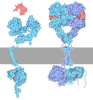
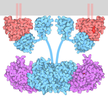
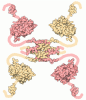
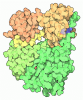
 Assembly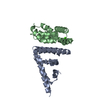


 Escherichia coli BL21(DE3) (bacteria) / References: UniProt: P42224
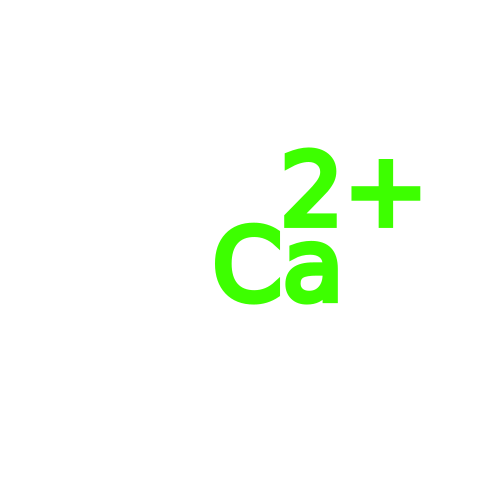 Mass: 40.078 Da / Num. of mol.: 1 / Source method: obtained synthetically / Formula: Ca
 Mass: 18.015 Da / Num. of mol.: 163 / Source method: isolated from a natural source / Formula: H2O
 Sample preparation
 / Beamline: BL38B1 / Wavelength: 1 Å
 Processing