negative regulation of hydrogen peroxide metabolic process / cellular response to topologically incorrect protein / polyubiquitinated misfolded protein transport / negative regulation of aggrephagy / negative regulation of protein-containing complex disassembly / response to misfolded protein / positive regulation of protein oligomerization / type 2 mitophagy / aggresome assembly / : ...negative regulation of hydrogen peroxide metabolic process / cellular response to topologically incorrect protein / polyubiquitinated misfolded protein transport / negative regulation of aggrephagy / negative regulation of protein-containing complex disassembly / response to misfolded protein / positive regulation of protein oligomerization / type 2 mitophagy / aggresome assembly / : / : / protein modification process => GO:0036211 / : / regulation of autophagy of mitochondrion / peroxidase inhibitor activity / Cargo trafficking to the periciliary membrane / deacetylase activity / Transcriptional regulation by RUNX2 / tubulin deacetylase activity / positive regulation of type 2 mitophagy / tubulin deacetylation / lysosome localization / cilium disassembly / ATPase inhibitor activity / misfolded protein binding / positive regulation of intracellular estrogen receptor signaling pathway / aggresome / cytoplasmic ubiquitin ligase complex / protein deacetylation / regulation of androgen receptor signaling pathway / histone deacetylase activity / Transferases; Acyltransferases; Aminoacyltransferases / protein lysine deacetylase activity / Hydrolases; Acting on carbon-nitrogen bonds, other than peptide bonds; In linear amides / mitochondrion transport along microtubule / positive regulation of protein monoubiquitination / microtubule associated complex / Notch-HLH transcription pathway / negative regulation of gene expression, epigenetic / RUNX2 regulates osteoblast differentiation / axonal transport of mitochondrion / histone deacetylase complex / regulation of microtubule-based movement / polyubiquitin modification-dependent protein binding / cell leading edge / positive regulation of epithelial cell migration / protein quality control for misfolded or incompletely synthesized proteins / dynein complex binding / Differentiation of naive CD4+ T cells to T helper 2 cells (Th2 cells) / negative regulation of proteolysis / Peptide chain elongation / Selenocysteine synthesis / HSF1 activation / Formation of a pool of free 40S subunits / positive regulation of intrinsic apoptotic signaling pathway by p53 class mediator / Eukaryotic Translation Termination / SRP-dependent cotranslational protein targeting to membrane / Response of EIF2AK4 (GCN2) to amino acid deficiency / Viral mRNA Translation / negative regulation of protein-containing complex assembly / alpha-tubulin binding / Nonsense Mediated Decay (NMD) independent of the Exon Junction Complex (EJC) / GTP hydrolysis and joining of the 60S ribosomal subunit / multivesicular body / cilium assembly / L13a-mediated translational silencing of Ceruloplasmin expression / Major pathway of rRNA processing in the nucleolus and cytosol / beta-tubulin binding / regulation of macroautophagy / Nonsense Mediated Decay (NMD) enhanced by the Exon Junction Complex (EJC) / axon cytoplasm / inclusion body / neuron projection morphogenesis / Maturation of protein E / Maturation of protein E / ER Quality Control Compartment (ERQC) / Myoclonic epilepsy of Lafora / regulation of neuron apoptotic process / FLT3 signaling by CBL mutants / regulation of mitochondrial membrane potential / IRAK2 mediated activation of TAK1 complex / Alpha-protein kinase 1 signaling pathway / Glycogen synthesis / IRAK1 recruits IKK complex / IRAK1 recruits IKK complex upon TLR7/8 or 9 stimulation / Prevention of phagosomal-lysosomal fusion / Endosomal Sorting Complex Required For Transport (ESCRT) / Membrane binding and targetting of GAG proteins / Regulation of TBK1, IKKε (IKBKE)-mediated activation of IRF3, IRF7 / Negative regulation of FLT3 / Regulation of TBK1, IKKε-mediated activation of IRF3, IRF7 upon TLR3 ligation / IRAK2 mediated activation of TAK1 complex upon TLR7/8 or 9 stimulation / Constitutive Signaling by NOTCH1 HD Domain Mutants / NOTCH2 Activation and Transmission of Signal to the Nucleus / TICAM1,TRAF6-dependent induction of TAK1 complex / PTK6 Regulates RTKs and Their Effectors AKT1 and DOK1 / TICAM1-dependent activation of IRF3/IRF7 / APC/C:Cdc20 mediated degradation of Cyclin B / Downregulation of ERBB4 signaling / positive regulation of protein ubiquitination Similarity search - Function
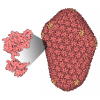
In the structure databanks used in Yorodumi, some data are registered as the other names, "COVID-19 virus" and "2019-nCoV". Here are the details of the virus and the list of structure data.
Jan 31, 2019. EMDB accession codes are about to change! (news from PDBe EMDB page)
EMDB accession codes are about to change! (news from PDBe EMDB page)
The allocation of 4 digits for EMDB accession codes will soon come to an end. Whilst these codes will remain in use, new EMDB accession codes will include an additional digit and will expand incrementally as the available range of codes is exhausted. The current 4-digit format prefixed with “EMD-” (i.e. EMD-XXXX) will advance to a 5-digit format (i.e. EMD-XXXXX), and so on. It is currently estimated that the 4-digit codes will be depleted around Spring 2019, at which point the 5-digit format will come into force.
The EM Navigator/Yorodumi systems omit the EMD- prefix.
Related info.:Q: What is EMD? / ID/Accession-code notation in Yorodumi/EM Navigator
Yorodumi is a browser for structure data from EMDB, PDB, SASBDB, etc.
This page is also the successor to EM Navigator detail page, and also detail information page/front-end page for Omokage search.
The word "yorodu" (or yorozu) is an old Japanese word meaning "ten thousand". "mi" (miru) is to see.
Related info.:EMDB / PDB / SASBDB / Comparison of 3 databanks / Yorodumi Search / Aug 31, 2016. New EM Navigator & Yorodumi / Yorodumi Papers / Jmol/JSmol / Function and homology information / Changes in new EM Navigator and Yorodumi
 Movie
Movie Controller


 Open data
 Basic information
 Components
 Keywords
 Function and homology information
 Homo sapiens (human)
 X-RAY DIFFRACTION /
  Authors
 Citation
 Structure visualization
 Downloads & links
 Other downloads
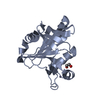


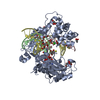

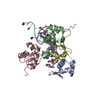
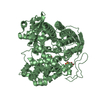
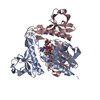
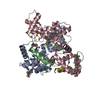
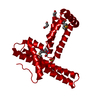

 PDBj
PDBj
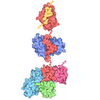
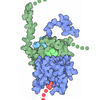
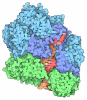
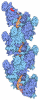
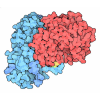
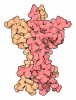
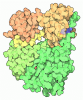
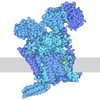
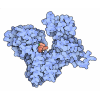
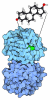
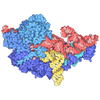
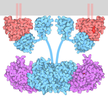
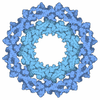
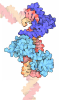
 Assembly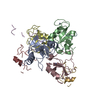

 Escherichia coli (E. coli) / Strain (production host): BL21 ROSETTA-R3 / References: UniProt: Q9UBN7, histone deacetylase
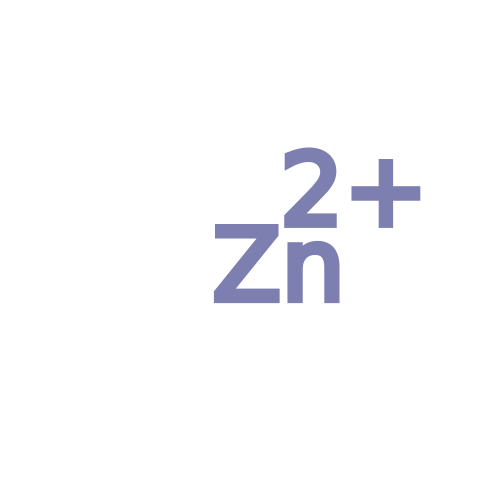 Mass: 65.409 Da / Num. of mol.: 12 / Source method: obtained synthetically / Formula: Zn
 Mass: 18.015 Da / Num. of mol.: 2 / Source method: isolated from a natural source / Formula: H2O
 Sample preparation
 / Beamline: 23-ID-B / Wavelength: 1.03317 Å
 Processing