- PDB-2n8j: Structure and 15N relaxation data of Calmodulin bound to the endo... -
+
Open data
ID or keywords:
Loading...
-
Basic information
Entry
Database: PDB / ID: 2n8j
Title
Structure and 15N relaxation data of Calmodulin bound to the endothelial Nitric Oxide Synthase Calmodulin Binding Domain Peptide at Physiological Calcium Concentration
Components
Calmodulin
Nitric oxide synthase, endothelial
Keywords
PROTEIN BINDING / Calmodulin / Nitric Oxide Synthase / eNOS / Dynamics / Order parameters
Function / homology
Function and homology information
NOSIP mediated eNOS trafficking / negative regulation of muscle hyperplasia / NOSTRIN mediated eNOS trafficking / tetrahydrobiopterin metabolic process / smooth muscle hyperplasia / regulation of systemic arterial blood pressure by endothelin / regulation of nervous system process / : / : / : ...NOSIP mediated eNOS trafficking / negative regulation of muscle hyperplasia / NOSTRIN mediated eNOS trafficking / tetrahydrobiopterin metabolic process / smooth muscle hyperplasia / regulation of systemic arterial blood pressure by endothelin / regulation of nervous system process / : / : / : / : / : / superoxide-generating NAD(P)H oxidase activity / : / positive regulation of protein autophosphorylation / pulmonary valve morphogenesis / negative regulation of peptidyl-threonine phosphorylation / response to fluid shear stress / negative regulation of biomineral tissue development / Nitric oxide stimulates guanylate cyclase / type 3 metabotropic glutamate receptor binding / endocardial cushion morphogenesis / ROS and RNS production in phagocytes / homeostasis of number of cells within a tissue / tetrahydrobiopterin binding / arginine binding / aortic valve morphogenesis / positive regulation of peptidyl-threonine phosphorylation / positive regulation of DNA binding / positive regulation of protein serine/threonine kinase activity / CaM pathway / Cam-PDE 1 activation / ventricular septum morphogenesis / Sodium/Calcium exchangers / blood vessel remodeling / Calmodulin induced events / Reduction of cytosolic Ca++ levels / Activation of Ca-permeable Kainate Receptor / CREB1 phosphorylation through the activation of CaMKII/CaMKK/CaMKIV cascasde / Loss of phosphorylation of MECP2 at T308 / CREB1 phosphorylation through the activation of Adenylate Cyclase / positive regulation of Notch signaling pathway / response to corticosterone / PKA activation / CaMK IV-mediated phosphorylation of CREB / CASP4 inflammasome assembly / Glycogen breakdown (glycogenolysis) / negative regulation of ryanodine-sensitive calcium-release channel activity / Activation of RAC1 downstream of NMDARs / organelle localization by membrane tethering / CLEC7A (Dectin-1) induces NFAT activation / : / negative regulation of high voltage-gated calcium channel activity / autophagosome membrane docking / cadmium ion binding / negative regulation of calcium ion export across plasma membrane / regulation of cardiac muscle cell action potential / regulation of synaptic vesicle exocytosis / presynaptic endocytosis / Synthesis of IP3 and IP4 in the cytosol / Phase 0 - rapid depolarisation / Negative regulation of NMDA receptor-mediated neuronal transmission / Unblocking of NMDA receptors, glutamate binding and activation / nitric-oxide synthase binding / calcineurin-mediated signaling / RHO GTPases activate PAKs / negative regulation of platelet activation / regulation of cell communication by electrical coupling involved in cardiac conduction / adenylate cyclase binding / nitric-oxide synthase (NADPH) / Uptake and function of anthrax toxins / Ion transport by P-type ATPases / protein phosphatase activator activity / Long-term potentiation / negative regulation of extrinsic apoptotic signaling pathway via death domain receptors / Calcineurin activates NFAT / regulation of calcium-mediated signaling / actin monomer binding / regulation of ryanodine-sensitive calcium-release channel activity / positive regulation of blood vessel endothelial cell migration / DARPP-32 events / nitric-oxide synthase activity / Regulation of MECP2 expression and activity / Smooth Muscle Contraction / endothelial cell migration / regulation of synaptic vesicle endocytosis / detection of calcium ion / L-arginine catabolic process / regulation of cardiac muscle contraction / cellular response to interferon-beta / blood vessel diameter maintenance / negative regulation of blood pressure / phosphatidylinositol 3-kinase binding / RHO GTPases activate IQGAPs / presynaptic cytosol / activation of adenylate cyclase activity / calcium channel inhibitor activity / catalytic complex / positive regulation of nitric-oxide synthase activity / nitric oxide metabolic process Similarity search - Function
In the structure databanks used in Yorodumi, some data are registered as the other names, "COVID-19 virus" and "2019-nCoV". Here are the details of the virus and the list of structure data.
Jan 31, 2019. EMDB accession codes are about to change! (news from PDBe EMDB page)
EMDB accession codes are about to change! (news from PDBe EMDB page)
The allocation of 4 digits for EMDB accession codes will soon come to an end. Whilst these codes will remain in use, new EMDB accession codes will include an additional digit and will expand incrementally as the available range of codes is exhausted. The current 4-digit format prefixed with “EMD-” (i.e. EMD-XXXX) will advance to a 5-digit format (i.e. EMD-XXXXX), and so on. It is currently estimated that the 4-digit codes will be depleted around Spring 2019, at which point the 5-digit format will come into force.
The EM Navigator/Yorodumi systems omit the EMD- prefix.
Related info.:Q: What is EMD? / ID/Accession-code notation in Yorodumi/EM Navigator
Yorodumi is a browser for structure data from EMDB, PDB, SASBDB, etc.
This page is also the successor to EM Navigator detail page, and also detail information page/front-end page for Omokage search.
The word "yorodu" (or yorozu) is an old Japanese word meaning "ten thousand". "mi" (miru) is to see.
Related info.:EMDB / PDB / SASBDB / Comparison of 3 databanks / Yorodumi Search / Aug 31, 2016. New EM Navigator & Yorodumi / Yorodumi Papers / Jmol/JSmol / Function and homology information / Changes in new EM Navigator and Yorodumi
 Movie
Movie Controller

 Yorodumi
 Open data
 Basic information
 Components
 Keywords
 Function and homology information
 Homo sapiens (human)
 Authors
 Citation
 Structure visualization
 Downloads & links
 Other downloads
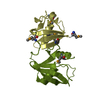
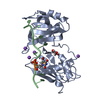
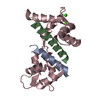
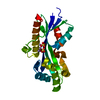
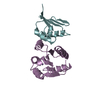
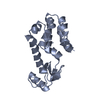
 PDBj
PDBj
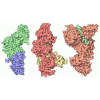
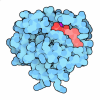
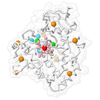

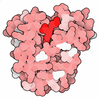
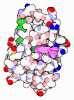
 Assembly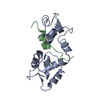

 Escherichia coli (E. coli) / References: UniProt: P62158, UniProt: P0DP23*PLUS
 HSQC
HSQC Sample preparation
 Processing