- PDB-2m5b: The NMR structure of the BID-BAK complex -
+
Open data
ID or keywords:
Loading...
-
Basic information
Entry
Database: PDB / ID: 2m5b
Title
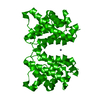
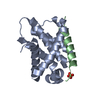
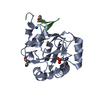
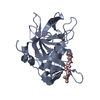
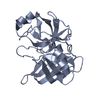
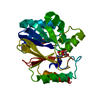
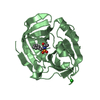
The NMR structure of the BID-BAK complex
Components
Bcl-2 homologous antagonist/killer
human_BID_BH3_SAHB
Keywords
APOPTOSIS / BCL-2 family effector BAK / BH3-only protein BID / effector direct activation / NMR solution structure of BID-BAK complex / mitochondrial outer membrane premeabilization
Function / homology
Function and homology information
cysteine-type endopeptidase regulator activity involved in apoptotic process / Activation, translocation and oligomerization of BAX / Activation and oligomerization of BAK protein / BAK complex / BH domain binding / Activation, myristolyation of BID and translocation to mitochondria / endocrine pancreas development / Release of apoptotic factors from the mitochondria / BH3-only proteins associate with and inactivate anti-apoptotic BCL-2 members / establishment or maintenance of transmembrane electrochemical gradient ...cysteine-type endopeptidase regulator activity involved in apoptotic process / Activation, translocation and oligomerization of BAX / Activation and oligomerization of BAK protein / BAK complex / BH domain binding / Activation, myristolyation of BID and translocation to mitochondria / endocrine pancreas development / Release of apoptotic factors from the mitochondria / BH3-only proteins associate with and inactivate anti-apoptotic BCL-2 members / establishment or maintenance of transmembrane electrochemical gradient / hepatocyte apoptotic process / establishment of protein localization to membrane / negative regulation of mitochondrial outer membrane permeabilization involved in apoptotic signaling pathway / positive regulation of mitochondrial outer membrane permeabilization involved in apoptotic signaling pathway / endoplasmic reticulum calcium ion homeostasis / death receptor binding / regulation of mitochondrial membrane permeability / response to UV-C / apoptotic mitochondrial changes / positive regulation of extrinsic apoptotic signaling pathway / Bcl-2 family protein complex / porin activity / pore complex / extrinsic apoptotic signaling pathway via death domain receptors / negative regulation of release of cytochrome c from mitochondria / positive regulation of IRE1-mediated unfolded protein response / TP53 Regulates Transcription of Genes Involved in Cytochrome C Release / positive regulation of release of cytochrome c from mitochondria / positive regulation of proteolysis / animal organ regeneration / intrinsic apoptotic signaling pathway in response to endoplasmic reticulum stress / extrinsic apoptotic signaling pathway in absence of ligand / cellular response to unfolded protein / positive regulation of intrinsic apoptotic signaling pathway / Pyroptosis / Activation of BAD and translocation to mitochondria / neuron apoptotic process / release of cytochrome c from mitochondria / intrinsic apoptotic signaling pathway / signal transduction in response to DNA damage / heat shock protein binding / supramolecular fiber organization / apoptotic signaling pathway / regulation of mitochondrial membrane potential / response to hydrogen peroxide / intrinsic apoptotic signaling pathway in response to DNA damage / positive regulation of protein-containing complex assembly / cellular response to mechanical stimulus / mitochondrial membrane / cellular response to UV / protein-folding chaperone binding / channel activity / protein-containing complex assembly / response to ethanol / transmembrane transporter binding / mitochondrial outer membrane / response to xenobiotic stimulus / apoptotic process / positive regulation of apoptotic process / negative regulation of cell population proliferation / protein heterodimerization activity / negative regulation of gene expression / ubiquitin protein ligase binding / negative regulation of apoptotic process / protein-containing complex binding / endoplasmic reticulum / protein homodimerization activity / mitochondrion / membrane / identical protein binding / cytosol / cytoplasm Similarity search - Function
BH3-interacting domain death agonist / BH3 interacting domain (BID) / Blc2-like / Apoptosis Regulator Bcl-x / Apoptosis regulator, Bcl-2, BH3 motif, conserved site / Apoptosis regulator, Bcl-2 family BH3 motif signature. / Apoptosis regulator, Bcl-2, BH1 motif, conserved site / Apoptosis regulator, Bcl-2 family BH1 motif signature. / Apoptosis regulator, Bcl-2, BH2 motif, conserved site / Apoptosis regulator, Bcl-2 family BH2 motif signature. ...BH3-interacting domain death agonist / BH3 interacting domain (BID) / Blc2-like / Apoptosis Regulator Bcl-x / Apoptosis regulator, Bcl-2, BH3 motif, conserved site / Apoptosis regulator, Bcl-2 family BH3 motif signature. / Apoptosis regulator, Bcl-2, BH1 motif, conserved site / Apoptosis regulator, Bcl-2 family BH1 motif signature. / Apoptosis regulator, Bcl-2, BH2 motif, conserved site / Apoptosis regulator, Bcl-2 family BH2 motif signature. / Bcl-2 family / BCL (B-Cell lymphoma); contains BH1, BH2 regions / Bcl2-like / Bcl-2, Bcl-2 homology region 1-3 / Apoptosis regulator proteins, Bcl-2 family / BCL2-like apoptosis inhibitors family profile. / Bcl-2-like superfamily / Orthogonal Bundle / Mainly Alpha Similarity search - Domain/homology
In the structure databanks used in Yorodumi, some data are registered as the other names, "COVID-19 virus" and "2019-nCoV". Here are the details of the virus and the list of structure data.
Jan 31, 2019. EMDB accession codes are about to change! (news from PDBe EMDB page)
EMDB accession codes are about to change! (news from PDBe EMDB page)
The allocation of 4 digits for EMDB accession codes will soon come to an end. Whilst these codes will remain in use, new EMDB accession codes will include an additional digit and will expand incrementally as the available range of codes is exhausted. The current 4-digit format prefixed with “EMD-” (i.e. EMD-XXXX) will advance to a 5-digit format (i.e. EMD-XXXXX), and so on. It is currently estimated that the 4-digit codes will be depleted around Spring 2019, at which point the 5-digit format will come into force.
The EM Navigator/Yorodumi systems omit the EMD- prefix.
Related info.:Q: What is EMD? / ID/Accession-code notation in Yorodumi/EM Navigator
Yorodumi is a browser for structure data from EMDB, PDB, SASBDB, etc.
This page is also the successor to EM Navigator detail page, and also detail information page/front-end page for Omokage search.
The word "yorodu" (or yorozu) is an old Japanese word meaning "ten thousand". "mi" (miru) is to see.
Related info.:EMDB / PDB / SASBDB / Comparison of 3 databanks / Yorodumi Search / Aug 31, 2016. New EM Navigator & Yorodumi / Yorodumi Papers / Jmol/JSmol / Function and homology information / Changes in new EM Navigator and Yorodumi
 Movie
Movie Controller


 Open data
 Basic information
 Components
 Keywords
 Function and homology information
 Homo sapiens (human)
 Authors
 Citation
 Structure visualization
 Downloads & links
 Other downloads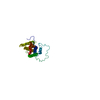
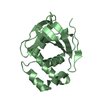
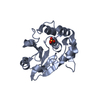
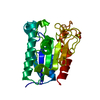
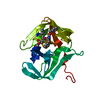
 PDBj
PDBj


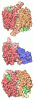
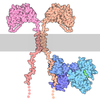
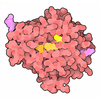
 Assembly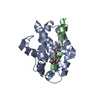

 Escherichia coli (E. coli) / References: UniProt: Q16611
 HSQC
HSQC Sample preparation
 Processing