 Movie
Movie Controller


+ Open data

- Basic information
| Entry | Database: PDB / ID: 26xh | |||||||||||||||||||||||||||
|---|---|---|---|---|---|---|---|---|---|---|---|---|---|---|---|---|---|---|---|---|---|---|---|---|---|---|---|---|
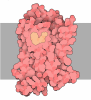
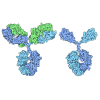
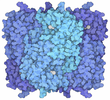
| Title | Cryo-EM structure of Maleic Acid bound OXGR1-Gq complex | |||||||||||||||||||||||||||
 Components Components |
| |||||||||||||||||||||||||||
 Keywords Keywords | MEMBRANE PROTEIN/IMMUNE SYSTEM / GPR99 / OXGR1 / Maleic Acid / GPCR / MEMBRANE PROTEIN-IMMUNE SYSTEM complex | |||||||||||||||||||||||||||
| Function / homology |  Function and homology information Function and homology informationpositive regulation of vascular associated smooth muscle contraction / Class A/1 (Rhodopsin-like receptors) / G protein-coupled receptor activity / Olfactory Signaling Pathway / phospholipase C-activating G protein-coupled receptor signaling pathway / Activation of the phototransduction cascade / G protein-coupled acetylcholine receptor signaling pathway / G beta:gamma signalling through PLC beta / Presynaptic function of Kainate receptors / Thromboxane signalling through TP receptor ...positive regulation of vascular associated smooth muscle contraction / Class A/1 (Rhodopsin-like receptors) / G protein-coupled receptor activity / Olfactory Signaling Pathway / phospholipase C-activating G protein-coupled receptor signaling pathway / Activation of the phototransduction cascade / G protein-coupled acetylcholine receptor signaling pathway / G beta:gamma signalling through PLC beta / Presynaptic function of Kainate receptors / Thromboxane signalling through TP receptor / Activation of G protein gated Potassium channels / Inhibition of voltage gated Ca2+ channels via Gbeta/gamma subunits / G-protein activation / Glucagon signaling in metabolic regulation / G beta:gamma signalling through CDC42 / Prostacyclin signalling through prostacyclin receptor / Synthesis, secretion, and inactivation of Glucagon-like Peptide-1 (GLP-1) / photoreceptor disc membrane / G beta:gamma signalling through BTK / ADP signalling through P2Y purinoceptor 12 / Sensory perception of sweet, bitter, and umami (glutamate) taste / Glucagon-type ligand receptors / Adrenaline,noradrenaline inhibits insulin secretion / Vasopressin regulates renal water homeostasis via Aquaporins / G alpha (z) signalling events / Glucagon-like Peptide-1 (GLP1) regulates insulin secretion / ADP signalling through P2Y purinoceptor 1 / cellular response to catecholamine stimulus / G beta:gamma signalling through PI3Kgamma / ADORA2B mediated anti-inflammatory cytokines production / adenylate cyclase-activating dopamine receptor signaling pathway / cellular response to prostaglandin E stimulus / Cooperation of PDCL (PhLP1) and TRiC/CCT in G-protein beta folding / GPER1 signaling / heterotrimeric G-protein complex / G alpha (12/13) signalling events / Inactivation, recovery and regulation of the phototransduction cascade / signaling receptor activity / G-protein beta-subunit binding / extracellular vesicle / Thrombin signalling through proteinase activated receptors (PARs) / signaling receptor complex adaptor activity / GTPase binding / Ca2+ pathway / High laminar flow shear stress activates signaling by PIEZO1 and PECAM1:CDH5:KDR in endothelial cells / G alpha (i) signalling events / G alpha (s) signalling events / G alpha (q) signalling events / Ras protein signal transduction / Extra-nuclear estrogen signaling / G protein-coupled receptor signaling pathway / lysosomal membrane / GTPase activity / synapse / protein-containing complex binding / signal transduction / extracellular exosome / membrane / plasma membrane / cytosol Similarity search - Function | |||||||||||||||||||||||||||
| Biological species |  Homo sapiens (human) Homo sapiens (human)  Lama glama (llama) Lama glama (llama) | |||||||||||||||||||||||||||
| Method | ELECTRON MICROSCOPY / single particle reconstruction / cryo EM / Resolution: 2.82 Å | |||||||||||||||||||||||||||
 Authors Authors | Zhang, X. / Liu, H. | |||||||||||||||||||||||||||
| Funding support |  China, 1items China, 1items
| |||||||||||||||||||||||||||
 Citation Citation | Journal: EMBO J / Year: 2026 Title: Molecular architecture of OXGR1 reveals an evolutionary conserved mechanisms for metabolite surveillance. Authors: Xinyue Zhang / Yujie Lu / Xinheng He / Shimeng Guo / Changyao Li / Yu Wang / Yuan Gao / Juxia Yao / Qingning Yuan / Yinshan Tang / Jing Hu / Wen Hu / Zijuan Luo / Kai Wu / Yue Wang / Wanchao ...Authors: Xinyue Zhang / Yujie Lu / Xinheng He / Shimeng Guo / Changyao Li / Yu Wang / Yuan Gao / Juxia Yao / Qingning Yuan / Yinshan Tang / Jing Hu / Wen Hu / Zijuan Luo / Kai Wu / Yue Wang / Wanchao Yin / Xin Xie / H Eric Xu / Heng Liu / Abstract: The ability of cells to sense and respond to metabolic signals is fundamental to life, yet the molecular mechanisms underlying metabolite surveillance remain incompletely understood. Here, we ...The ability of cells to sense and respond to metabolic signals is fundamental to life, yet the molecular mechanisms underlying metabolite surveillance remain incompletely understood. Here, we elucidate the structural basis of metabolite recognition by OXGR1, a G Protein-Coupled Receptor (GPCR) that senses key intermediates in the tricarboxylic acid (TCA) cycle. Using cryo-electron microscopy, we determined cryo-EM structures of OXGR1 bound to α-ketoglutarate (AKG), itaconate (ITA), and structurally related metabolites succinate (SUC) and maleate (MA). These structures reveal a positively charged binding pocket and an extensive hydrogen-bond network that mediate selective recognition of dicarboxylic acids. In addition, we identify a distinct arrangement of hydrophobic residues that modulates ligand potency and selectivity. Mutational analysis and molecular dynamics simulations further demonstrate that noncanonical micro-switch motifs, including FRY and NLxxY, are essential for ligand recognition and receptor activation. Comparative structural and evolutionary analyses indicate that these mechanisms are conserved across species, underscoring the critical role of OXGR1 in maintaining metabolic homeostasis. Together, our findings define a mechanistic framework for metabolite sensing by OXGR1 and provide a framework for therapeutic modulation of metabolic and inflammatory diseases. | |||||||||||||||||||||||||||
| History |
|
- Structure visualization
| Structure viewer | Molecule: MolmilJmol/JSmol |
|---|
- Downloads & links
-Download
| PDBx/mmCIF format | 26xh.cif.gz | 262.5 KB | Display | PDBx/mmCIF format |
|---|---|---|---|---|
| PDB format | pdb26xh.ent.gz | 203.4 KB | Display | PDB format |
| PDBx/mmJSON format | 26xh.json.gz | Tree view | PDBx/mmJSON format | |
| Others |  Other downloads Other downloads |
-Validation report
| Arichive directory | https://data.pdbj.org/pub/pdb/validation_reports/6x/26xhftp://data.pdbj.org/pub/pdb/validation_reports/6x/26xh | HTTPS FTP |
|---|
-Related structure data
| Related structure data |  80947MC  9m1rC  9m1sC  9m1uC  9uxnC  9uxoC  9uxpC  9uxqC M: map data used to model this data C: citing same article ( |
|---|---|
| Similar structure data |


-Links
 PDBj
PDBj
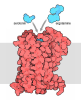
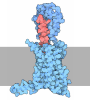

- Assembly
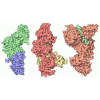
| Deposited unit | 
|
|---|---|
| 1 |
|
-Components
-Protein , 2 types, 2 molecules AR
| #1: Protein | Mass: 41632.219 Da / Num. of mol.: 1 Source method: isolated from a genetically manipulated source Source: (gene. exp.) Homo sapiens (human) / Production host:   Spodoptera frugiperda (fall armyworm) Spodoptera frugiperda (fall armyworm) |
|---|---|
| #4: Protein | Mass: 38284.020 Da / Num. of mol.: 1 Source method: isolated from a genetically manipulated source Source: (gene. exp.) Homo sapiens (human) / Gene: OXGR1, GPR80, GPR99, P2RY15, P2Y15 / Production host: Spodoptera frugiperda (fall armyworm) / References: UniProt: Q96P68 |
-Guanine nucleotide-binding protein ... , 2 types, 2 molecules GB
| #2: Protein | Mass: 7861.143 Da / Num. of mol.: 1 Source method: isolated from a genetically manipulated source Source: (gene. exp.) Homo sapiens (human) / Gene: GNG2 / Production host: Spodoptera frugiperda (fall armyworm) / References: UniProt: P59768 |
|---|---|
| #5: Protein | Mass: 38744.371 Da / Num. of mol.: 1 Source method: isolated from a genetically manipulated source Source: (gene. exp.) Homo sapiens (human) / Gene: GNB1 / Production host: Spodoptera frugiperda (fall armyworm) / References: UniProt: P62873 |
-Antibody , 2 types, 2 molecules NS
| #3: Antibody | Mass: 15140.742 Da / Num. of mol.: 1 Source method: isolated from a genetically manipulated source Source: (gene. exp.) Lama glama (llama) / Production host: Spodoptera frugiperda (fall armyworm) |
|---|---|
| #6: Antibody | Mass: 26293.299 Da / Num. of mol.: 1 Source method: isolated from a genetically manipulated source Source: (gene. exp.) Homo sapiens (human) / Production host: Spodoptera frugiperda (fall armyworm) |
-Non-polymers , 1 types, 1 molecules 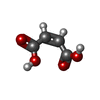
| #7: Chemical | ChemComp-MAE / 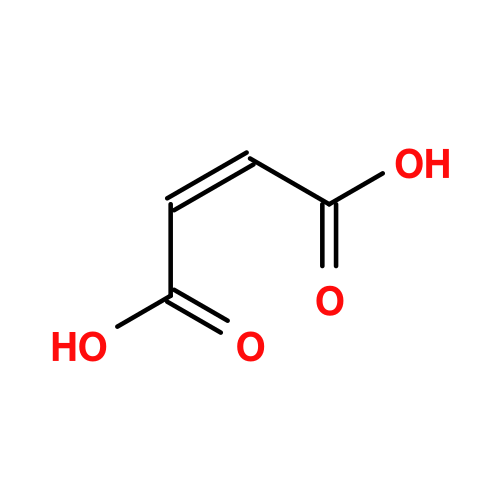 Mass: 116.072 Da / Num. of mol.: 1 / Source method: obtained synthetically / Formula: C4H4O4 / Feature type: SUBJECT OF INVESTIGATION Mass: 116.072 Da / Num. of mol.: 1 / Source method: obtained synthetically / Formula: C4H4O4 / Feature type: SUBJECT OF INVESTIGATION |
|---|
-Details
| Has ligand of interest | Y |
|---|---|
| Has protein modification | Y |
-Experimental details
-Experiment
| Experiment | Method: ELECTRON MICROSCOPY |
|---|---|
| EM experiment | Aggregation state: PARTICLE / 3D reconstruction method: single particle reconstruction |
- Sample preparation
| Component | Name: Cryo-EM structure of Maleic Acid bound OXGR1-Gq complex Type: COMPLEX / Entity ID: #1-#6 / Source: MULTIPLE SOURCES |
|---|---|
| Source (natural) | Organism: Homo sapiens (human) |
| Source (recombinant) | Organism: Spodoptera frugiperda (fall armyworm) |
| Buffer solution | pH: 7.4 |
| Specimen | Embedding applied: NO / Shadowing applied: NO / Staining applied: NO / Vitrification applied: YES |
| Vitrification | Cryogen name: ETHANE |
- Electron microscopy imaging
| Experimental equipment | 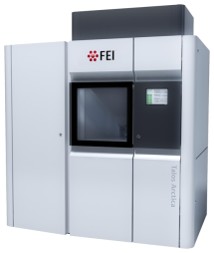 Model: Talos Arctica / Image courtesy: FEI Company |
|---|---|
| Microscopy | Model: FEI TALOS ARCTICA |
| Electron gun | Electron source:  FIELD EMISSION GUN / Accelerating voltage: 300 kV / Illumination mode: FLOOD BEAM FIELD EMISSION GUN / Accelerating voltage: 300 kV / Illumination mode: FLOOD BEAM |
| Electron lens | Mode: BRIGHT FIELD / Nominal defocus max: 2000 nm / Nominal defocus min: 1000 nm |
| Image recording | Electron dose: 50 e/Å2 / Film or detector model: GATAN K3 BIOQUANTUM (6k x 4k) |
- Processing
| EM software |
| |||||||||
|---|---|---|---|---|---|---|---|---|---|---|
| CTF correction | Type: NONE | |||||||||
| 3D reconstruction | Resolution: 2.82 Å / Resolution method: FSC 0.143 CUT-OFF / Num. of particles: 271436 / Symmetry type: POINT |
