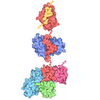
- PDB-1kla: SOLUTION STRUCTURE OF TGF-B1, NMR, MODELS 1-17 OF 33 STRUCTURES -
+
Open data
ID or keywords:
Loading...
-
Basic information
Entry
Database: PDB / ID: 1kla
Title
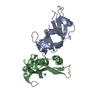
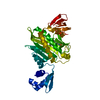
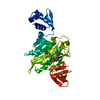
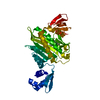
SOLUTION STRUCTURE OF TGF-B1, NMR, MODELS 1-17 OF 33 STRUCTURES
Components
TRANSFORMING GROWTH FACTOR-BETA 1
Keywords
GROWTH FACTOR / MITOGEN / GLYCOPROTEIN
Function / homology
Function and homology information
frontal suture morphogenesis / Influenza Virus Induced Apoptosis / adaptive immune response based on somatic recombination of immune receptors built from immunoglobulin superfamily domains / positive regulation of microglia differentiation / regulation of interleukin-23 production / positive regulation of primary miRNA processing / morphogenesis of a branching structure / negative regulation of skeletal muscle tissue development / embryonic liver development / regulation of striated muscle tissue development ...frontal suture morphogenesis / Influenza Virus Induced Apoptosis / adaptive immune response based on somatic recombination of immune receptors built from immunoglobulin superfamily domains / positive regulation of microglia differentiation / regulation of interleukin-23 production / positive regulation of primary miRNA processing / morphogenesis of a branching structure / negative regulation of skeletal muscle tissue development / embryonic liver development / regulation of striated muscle tissue development / response to laminar fluid shear stress / heart valve morphogenesis / macrophage derived foam cell differentiation / TGFBR2 MSI Frameshift Mutants in Cancer / negative regulation of MyD88-dependent toll-like receptor signaling pathway / regulation of protein import into nucleus / transforming growth factor beta complex / regulation of blood vessel remodeling / negative regulation of macrophage cytokine production / cellular response to acetaldehyde / connective tissue replacement involved in inflammatory response wound healing / negative regulation of natural killer cell mediated cytotoxicity directed against tumor cell target / negative regulation of hyaluronan biosynthetic process / myofibroblast differentiation / extracellular matrix assembly / type III transforming growth factor beta receptor binding / TGFBR2 Kinase Domain Mutants in Cancer / odontoblast differentiation / positive regulation of exit from mitosis / salivary gland morphogenesis / negative regulation of neuroblast proliferation / positive regulation of isotype switching to IgA isotypes / SMAD2/3 Phosphorylation Motif Mutants in Cancer / TGFBR1 KD Mutants in Cancer / positive regulation of mesenchymal stem cell proliferation / positive regulation of receptor signaling pathway via STAT / ATP biosynthetic process / membrane protein intracellular domain proteolysis / positive regulation of extracellular matrix assembly / negative regulation of myoblast differentiation / TGFBR3 regulates TGF-beta signaling / neural tube development / positive regulation of vasculature development / hyaluronan catabolic process / cell-cell junction organization / type II transforming growth factor beta receptor binding / negative regulation of extracellular matrix disassembly / positive regulation of branching involved in ureteric bud morphogenesis / receptor catabolic process / response to salt / positive regulation of cardiac muscle cell differentiation / TGFBR1 LBD Mutants in Cancer / regulatory T cell differentiation / negative regulation of cell-cell adhesion mediated by cadherin / positive regulation of chemotaxis / negative regulation of biomineral tissue development / type I transforming growth factor beta receptor binding / ureteric bud development / positive regulation of vascular permeability / oligodendrocyte development / positive regulation of mononuclear cell migration / response to vitamin D / odontogenesis of dentin-containing tooth / negative regulation of interleukin-17 production / face morphogenesis / digestive tract development / response to cholesterol / sprouting angiogenesis / positive regulation of chemokine (C-X-C motif) ligand 2 production / chondrocyte differentiation / lymph node development / positive regulation of fibroblast migration / aortic valve morphogenesis / phosphate-containing compound metabolic process / RUNX3 regulates CDKN1A transcription / positive regulation of interleukin-17 production / positive regulation of regulatory T cell differentiation / negative regulation of fat cell differentiation / Molecules associated with elastic fibres / negative regulation of release of sequestered calcium ion into cytosol / cellular response to dexamethasone stimulus / neural tube closure / cellular response to insulin-like growth factor stimulus / Syndecan interactions / negative regulation of cell cycle / inner ear development / ventricular cardiac muscle tissue morphogenesis / negative regulation of phagocytosis / defense response to fungus / response to immobilization stress / positive regulation of epidermal growth factor receptor signaling pathway / hematopoietic progenitor cell differentiation / vasculogenesis / positive regulation of collagen biosynthetic process / TGF-beta receptor signaling activates SMADs / response to progesterone / negative regulation of blood vessel endothelial cell migration / negative regulation of cell differentiation / positive regulation of protein metabolic process / positive regulation of SMAD protein signal transduction Similarity search - Function
In the structure databanks used in Yorodumi, some data are registered as the other names, "COVID-19 virus" and "2019-nCoV". Here are the details of the virus and the list of structure data.
Jan 31, 2019. EMDB accession codes are about to change! (news from PDBe EMDB page)
EMDB accession codes are about to change! (news from PDBe EMDB page)
The allocation of 4 digits for EMDB accession codes will soon come to an end. Whilst these codes will remain in use, new EMDB accession codes will include an additional digit and will expand incrementally as the available range of codes is exhausted. The current 4-digit format prefixed with “EMD-” (i.e. EMD-XXXX) will advance to a 5-digit format (i.e. EMD-XXXXX), and so on. It is currently estimated that the 4-digit codes will be depleted around Spring 2019, at which point the 5-digit format will come into force.
The EM Navigator/Yorodumi systems omit the EMD- prefix.
Related info.:Q: What is EMD? / ID/Accession-code notation in Yorodumi/EM Navigator
Yorodumi is a browser for structure data from EMDB, PDB, SASBDB, etc.
This page is also the successor to EM Navigator detail page, and also detail information page/front-end page for Omokage search.
The word "yorodu" (or yorozu) is an old Japanese word meaning "ten thousand". "mi" (miru) is to see.
Related info.:EMDB / PDB / SASBDB / Comparison of 3 databanks / Yorodumi Search / Aug 31, 2016. New EM Navigator & Yorodumi / Yorodumi Papers / Jmol/JSmol / Function and homology information / Changes in new EM Navigator and Yorodumi
 Movie
Movie Controller


 Open data
 Basic information
 Components
 Keywords
 Function and homology information
 Homo sapiens (human)
 Authors
 Citation
 Structure visualization
 Downloads & links
 Other downloads

 PDBj
PDBj

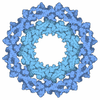
 Assembly

 Cricetulus griseus (Chinese hamster) / References: UniProt: P01137
 Sample preparation
 Processing
 X-PLOR