 Movie
Movie Controller


+ Open data

- Basic information
| Entry |  | ||||||||||||
|---|---|---|---|---|---|---|---|---|---|---|---|---|---|
| Title | GRM1-Acc State Conformation 2 | ||||||||||||
 Map data Map data | EM map | ||||||||||||
 Sample Sample |
| ||||||||||||
 Keywords Keywords | Receptor / MEMBRANE PROTEIN | ||||||||||||
| Function / homology |  Function and homology information Function and homology informationG protein-coupled neurotransmitter receptor activity / dendriole / G protein-coupled receptor homodimeric complex / G protein-coupled receptor dimeric complex / G protein-coupled receptor activity involved in regulation of postsynaptic membrane potential / synaptic signaling via neuropeptide / regulation of sensory perception of pain / adenylate cyclase inhibiting G protein-coupled glutamate receptor activity / phospholipase C-activating G protein-coupled glutamate receptor signaling pathway / G protein-coupled glutamate receptor signaling pathway ...G protein-coupled neurotransmitter receptor activity / dendriole / G protein-coupled receptor homodimeric complex / G protein-coupled receptor dimeric complex / G protein-coupled receptor activity involved in regulation of postsynaptic membrane potential / synaptic signaling via neuropeptide / regulation of sensory perception of pain / adenylate cyclase inhibiting G protein-coupled glutamate receptor activity / phospholipase C-activating G protein-coupled glutamate receptor signaling pathway / G protein-coupled glutamate receptor signaling pathway / Class C/3 (Metabotropic glutamate/pheromone receptors) / Neurexins and neuroligins / glutamate receptor activity / regulation of synaptic transmission, glutamatergic / sensory perception of pain / locomotory behavior / postsynaptic density membrane / Schaffer collateral - CA1 synapse / G protein-coupled receptor activity / phospholipase C-activating G protein-coupled receptor signaling pathway / Sensory perception of sweet, bitter, and umami (glutamate) taste / chemical synaptic transmission / G alpha (q) signalling events / positive regulation of MAPK cascade / postsynaptic membrane / G protein-coupled receptor signaling pathway / glutamatergic synapse / nucleus / plasma membrane Similarity search - Function | ||||||||||||
| Biological species |  Homo sapiens (human) Homo sapiens (human) | ||||||||||||
| Method | single particle reconstruction / cryo EM / Resolution: 3.2 Å | ||||||||||||
 Authors Authors | Lu Y / Wen TL / Shen YQ / Yang X | ||||||||||||
| Funding support |  China, 1 items China, 1 items
| ||||||||||||
 Citation Citation | Journal: Sci Adv / Year: 2026 Title: G protein selectivity in group I metabotropic glutamate receptors. Authors: Yue Lu / Tianlei Wen / Xuhang Lu / Guimin Zhang / Tingting Meng / Tianjin Liu / Xinyan Wang / Yuequan Shen / Xue Yang / Abstract: Metabotropic glutamate (mGlu) receptors are class C G protein-coupled receptor involved in synaptic transmission and neurological disorders. Group I mGlu receptors (mGlu1 and mGlu5) predominantly ...Metabotropic glutamate (mGlu) receptors are class C G protein-coupled receptor involved in synaptic transmission and neurological disorders. Group I mGlu receptors (mGlu1 and mGlu5) predominantly couple to G, whereas group II and III receptors primarily engage G. Although G-coupling mechanisms have been defined for several group II/III receptors, how group I receptors preferentially engage G remains unclear. Here we report cryo-electron microscopy structures of active mGlu-G protein complexes (mGlu1-G, mGlu1-G, mGlu5-G, and mGlu5-G) bound to l-glutamate and positive allosteric modulators (PAMs), together with two additional activated-state structures of mGlu1. Comparative structural and biochemical analyses identify a group I-specific ICL2 insertion that promotes preferential G engagement. Each receptor dimer asymmetrically binds one G protein heterotrimer via an intracellular pocket engaging the Gα amino-terminal helix. PAM binding to one 7TM domain induces W rotation and TM6 outward movement, bringing the two 7TMs into closer. These findings provide a structural basis for preferential G engagement and activation of group I mGlu receptors. | ||||||||||||
| History |
|
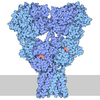
- Structure visualization
| Supplemental images |
|---|

- Downloads & links
-EMDB archive
| Map data | emd_81411.map.gz | 3 MB | EMDB map data format | |
|---|---|---|---|---|
| Header (meta data) | emd-81411-v30.xmlemd-81411.xml | 18.9 KB 18.9 KB | Display Display | EMDB header |
| Images |  emd_81411.png emd_81411.png | 55.2 KB | ||
| Filedesc metadata | emd-81411.cif.gz | 6.6 KB | ||
| Archive directory |  https://data.pdbj.org/pub/emdb/structures/EMD-81411ftp://data.pdbj.org/pub/emdb/structures/EMD-81411 https://data.pdbj.org/pub/emdb/structures/EMD-81411ftp://data.pdbj.org/pub/emdb/structures/EMD-81411 | HTTPS FTP |
-Related structure data
| Related structure data |  27tmMC  9wqkC  9wqlC  9wqmC  9wqnC  9wqoC C: citing same article ( M: atomic model generated by this map |
|---|---|
| Similar structure data |


-Links
| EMDB pages | EMDB (EBI/PDBe) / EMDataResource |
|---|---|
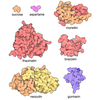
| Related items in Molecule of the Month |
-Map
| File | Download / File: emd_81411.map.gz / Format: CCP4 / Size: 216 MB / Type: IMAGE STORED AS FLOATING POINT NUMBER (4 BYTES) | ||||||||||||||||||||||||||||||||||||
|---|---|---|---|---|---|---|---|---|---|---|---|---|---|---|---|---|---|---|---|---|---|---|---|---|---|---|---|---|---|---|---|---|---|---|---|---|---|
| Annotation | EM map | ||||||||||||||||||||||||||||||||||||
| Projections & slices | Image control
Images are generated by Spider. | ||||||||||||||||||||||||||||||||||||
| Voxel size | X=Y=Z: 0.93 Å | ||||||||||||||||||||||||||||||||||||
| Density |
| ||||||||||||||||||||||||||||||||||||
| Symmetry | Space group: 1 | ||||||||||||||||||||||||||||||||||||
| Details | EMDB XML:
|
 Z (Sec.)
 Y (Row.)
 X (Col.)


-Supplemental data
- Sample components
-Entire : GRM1
| Entire | Name: GRM1 |
|---|---|
| Components |
|
-Supramolecule #1: GRM1
| Supramolecule | Name: GRM1 / type: complex / ID: 1 / Parent: 0 / Macromolecule list: #1 |
|---|---|
| Source (natural) | Organism: Homo sapiens (human) |
-Macromolecule #1: Metabotropic glutamate receptor 1
| Macromolecule | Name: Metabotropic glutamate receptor 1 / type: protein_or_peptide / ID: 1 / Number of copies: 2 / Enantiomer: LEVO |
|---|---|
| Source (natural) | Organism: Homo sapiens (human) |
| Molecular weight | Theoretical: 97.322344 KDa |
| Recombinant expression | Organism:  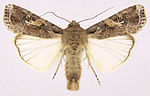 Spodoptera frugiperda (fall armyworm) Spodoptera frugiperda (fall armyworm) |
| Sequence | String: DYKDDDDKTG ASSQRSVARM DGDVIIGALF SVHHQPPAEK VPERKCGEIR EQYGIQRVEA MFHTLDKINA DPVLLPNITL GSEIRDSCW HSSVALEQSI EFIRDSLISI RDEKDGINRC LPDGQSLPPG RTKKPIAGVI GPGSSSVAIQ VQNLLQLFDI P QIAYSATS ...String: DYKDDDDKTG ASSQRSVARM DGDVIIGALF SVHHQPPAEK VPERKCGEIR EQYGIQRVEA MFHTLDKINA DPVLLPNITL GSEIRDSCW HSSVALEQSI EFIRDSLISI RDEKDGINRC LPDGQSLPPG RTKKPIAGVI GPGSSSVAIQ VQNLLQLFDI P QIAYSATS IDLSDKTLYK YFLRVVPSDT LQARAMLDIV KRYNWTYVSA VHTEGNYGES GMDAFKELAA QEGLCIAHSD KI YSNAGEK SFDRLLRKLR ERLPKARVVV CFCEGMTVRG LLSAMRRLGV VGEFSLIGSD GWADRDEVIE GYEVEANGGI TIK LQSPEV RSFDDYFLKL RLDTNTRNPW FPEFWQHRFQ CRLPGHLLEN PNFKRICTGN ESLEENYVQD SKMGFVINAI YAMA HGLQN MHHALCPGHV GLCDAMKPID GSKLLDFLIK SSFIGVSGEE VWFDEKGDAP GRYDIMNLQY TEANRYDYVH VGTWH EGVL NIDDYKIQMN KSGVVRSVCS EPCLKGQIKV IRKGEVSCCW ICTACKENEY VQDEFTCKAC DLGWWPNADL TGCEPI PVR YLEWSNIESI IAIAFSCLGI LVTLFVTLIF VLYRDTPVVK SSSRELCYII LAGIFLGYVC PFTLIAKPTT TSCYLQR LL VGLSSAMCYS ALVTKTNRIA RILAGSKKKI CTRKPRFMSA WAQVIIASIL ISVQLTLVVT LIIMEPPMPI LSYPSIKE V YLICNTSNLG VVAPLGYNGL LIMSCTYYAF KTRNVPANFN EAKYIAFTMY TTCIIWLAFV PIYFGSNYKI ITTCFAVSL SVTVALGCMF TPKMYIIIAK PERNVRSAFT TSDVVRMHVG DGKLPCRSNT FLNIFRRKKA GAGNANSNG UniProtKB: Metabotropic glutamate receptor 1 |
-Macromolecule #2: GAMMA-L-GLUTAMIC ACID
| Macromolecule | Name: GAMMA-L-GLUTAMIC ACID / type: ligand / ID: 2 / Number of copies: 2 / Formula: GGL |
|---|---|
| Molecular weight | Theoretical: 147.129 Da |
| Chemical component information | 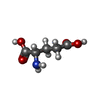 ChemComp-GGL: |
-Macromolecule #3: 2-acetamido-2-deoxy-beta-D-glucopyranose
| Macromolecule | Name: 2-acetamido-2-deoxy-beta-D-glucopyranose / type: ligand / ID: 3 / Number of copies: 8 / Formula: NAG |
|---|---|
| Molecular weight | Theoretical: 221.208 Da |
| Chemical component information | 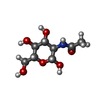 ChemComp-NAG: |
-Macromolecule #4: CHLORIDE ION
| Macromolecule | Name: CHLORIDE ION / type: ligand / ID: 4 / Number of copies: 2 / Formula: CL |
|---|---|
| Molecular weight | Theoretical: 35.453 Da |
-Macromolecule #5: CHOLESTEROL
| Macromolecule | Name: CHOLESTEROL / type: ligand / ID: 5 / Number of copies: 2 / Formula: CLR |
|---|---|
| Molecular weight | Theoretical: 386.654 Da |
| Chemical component information | 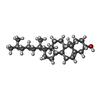 ChemComp-CLR: |
-Macromolecule #6: N-[4-(trifluoromethyl)-1,3-oxazol-2-yl]-9H-xanthene-9-carboxamide
| Macromolecule | Name: N-[4-(trifluoromethyl)-1,3-oxazol-2-yl]-9H-xanthene-9-carboxamide type: ligand / ID: 6 / Number of copies: 1 / Formula: A1EX5 |
|---|---|
| Molecular weight | Theoretical: 360.287 Da |
-Experimental details
-Structure determination
| Method | cryo EM |
|---|---|
 Processing Processing | single particle reconstruction |
| Aggregation state | particle |
-Sample preparation
| Buffer | pH: 7.2 |
|---|---|
| Vitrification | Cryogen name: ETHANE |
- Electron microscopy
| Microscope | TFS KRIOS |
|---|---|
| Image recording | Film or detector model: FEI FALCON IV (4k x 4k) / Average electron dose: 50.0 e/Å2 |
| Electron beam | Acceleration voltage: 300 kV / Electron source:  FIELD EMISSION GUN FIELD EMISSION GUN |
| Electron optics | Illumination mode: FLOOD BEAM / Imaging mode: BRIGHT FIELD / Nominal defocus max: 19.0 µm / Nominal defocus min: 6.0 µm |
| Experimental equipment |  Model: Titan Krios / Image courtesy: FEI Company |
