- EMDB-6497: Electron microscopy of apo human XPC complex -
+
Open data
ID or keywords:
Loading...
-
Basic information
Entry
Database: EMDB / ID: EMD-6497
Title
Electron microscopy of apo human XPC complex
Map data
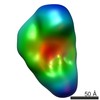
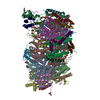
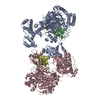
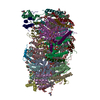
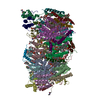
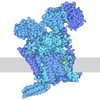
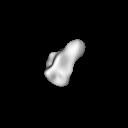
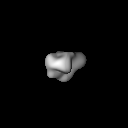
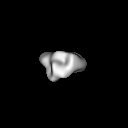
Reconstruction of apo human XPC complex solved by RELION
Sample
Sample: Apo human XPC complex by RELION
Protein or peptide: Xeroderma pigmentosum group C-complementing protein
Protein or peptide: RAD23 homolog B
Protein or peptide: Centrin-2
Keywords
transcription / DNA repair / stem cells
Function / homology
Function and homology information
heteroduplex DNA loop binding / nucleotide-excision repair factor 2 complex / XPC complex / nucleotide-excision repair complex / photoreceptor connecting cilium / regulation of proteasomal ubiquitin-dependent protein catabolic process / DNA damage sensor activity / heterotrimeric G-protein binding / transcription export complex 2 / response to auditory stimulus ...heteroduplex DNA loop binding / nucleotide-excision repair factor 2 complex / XPC complex / nucleotide-excision repair complex / photoreceptor connecting cilium / regulation of proteasomal ubiquitin-dependent protein catabolic process / DNA damage sensor activity / heterotrimeric G-protein binding / transcription export complex 2 / response to auditory stimulus / histone H4K20 demethylase activity / nuclear pore nuclear basket / bubble DNA binding / Oxidoreductases; Acting on paired donors, with incorporation or reduction of molecular oxygen; With 2-oxoglutarate as one donor, and incorporation of one atom of oxygen into each donor / sperm principal piece / embryonic organ development / UV-damage excision repair / regulation of mitotic cell cycle phase transition / centriole replication / proteasome binding / polyubiquitin modification-dependent protein binding / mismatch repair / SUMOylation of DNA damage response and repair proteins / mRNA export from nucleus / proteasome complex / Loss of Nlp from mitotic centrosomes / Loss of proteins required for interphase microtubule organization from the centrosome / Recruitment of mitotic centrosome proteins and complexes / centriole / Recruitment of NuMA to mitotic centrosomes / Anchoring of the basal body to the plasma membrane / sperm midpiece / AURKA Activation by TPX2 / regulation of cytokinesis / site of DNA damage / Josephin domain DUBs / ubiquitin binding / N-glycan trimming in the ER and Calnexin/Calreticulin cycle / nucleotide-excision repair / microtubule cytoskeleton organization / DNA Damage Recognition in GG-NER / G-protein beta/gamma-subunit complex binding / apical part of cell / Formation of Incision Complex in GG-NER / Regulation of PLK1 Activity at G2/M Transition / mitotic cell cycle / protein transport / single-stranded DNA binding / ciliary basal body / spermatogenesis / microtubule binding / damaged DNA binding / proteasome-mediated ubiquitin-dependent protein catabolic process / RNA polymerase II-specific DNA-binding transcription factor binding / transcription coactivator activity / response to xenobiotic stimulus / RNA polymerase II cis-regulatory region sequence-specific DNA binding / cell division / DNA repair / centrosome / calcium ion binding / positive regulation of DNA-templated transcription / protein-containing complex binding / chromatin / positive regulation of transcription by RNA polymerase II / DNA-templated transcription / nucleoplasm / nucleus / plasma membrane / cytosol / cytoplasm Similarity search - Function
Journal: Proc Natl Acad Sci U S A / Year: 2015 Title: Architecture of the human XPC DNA repair and stem cell coactivator complex. Authors: Elisa T Zhang / Yuan He / Patricia Grob / Yick W Fong / Eva Nogales / Robert Tjian / Abstract: The Xeroderma pigmentosum complementation group C (XPC) complex is a versatile factor involved in both nucleotide excision repair and transcriptional coactivation as a critical component of the ...The Xeroderma pigmentosum complementation group C (XPC) complex is a versatile factor involved in both nucleotide excision repair and transcriptional coactivation as a critical component of the NANOG, OCT4, and SOX2 pluripotency gene regulatory network. Here we present the structure of the human holo-XPC complex determined by single-particle electron microscopy to reveal a flexible, ear-shaped structure that undergoes localized loss of order upon DNA binding. We also determined the structure of the complete yeast homolog Rad4 holo-complex to find a similar overall architecture to the human complex, consistent with their shared DNA repair functions. Localized differences between these structures reflect an intriguing phylogenetic divergence in transcriptional capabilities that we present here. Having positioned the constituent subunits by tagging and deletion, we propose a model of key interaction interfaces that reveals the structural basis for this difference in functional conservation. Together, our findings establish a framework for understanding the structure-function relationships of the XPC complex in the interplay between transcription and DNA repair.
History
Deposition
Nov 1, 2015
-
Header (metadata) release
Nov 18, 2015
-
Map release
Nov 18, 2015
-
Update
Dec 16, 2015
-
Current status
Dec 16, 2015
Processing site: RCSB / Status: Released
-
Structure visualization
Movie
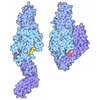
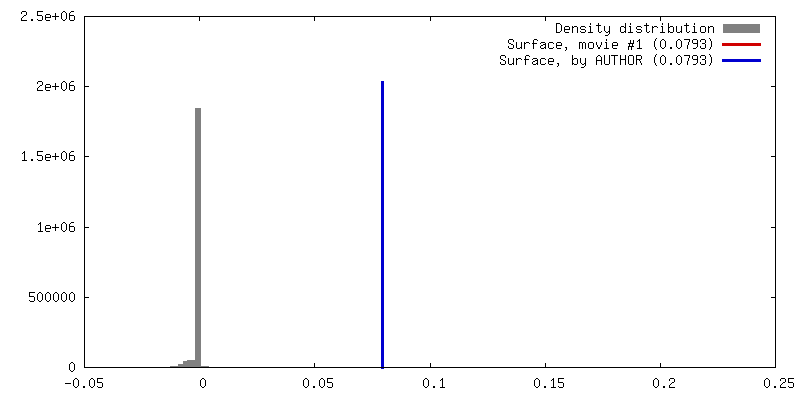
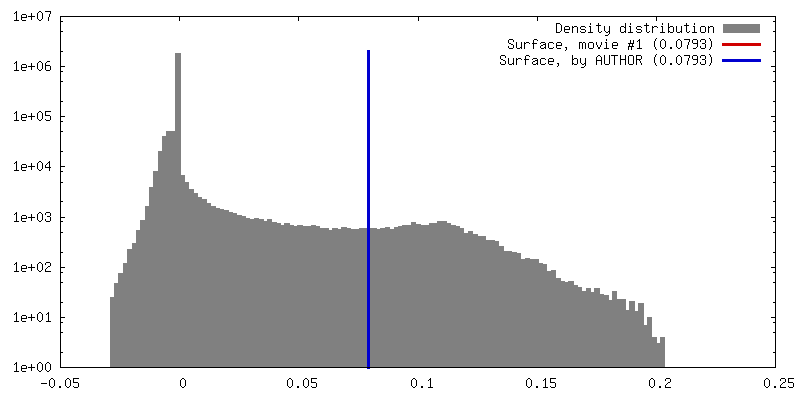
Surface view with section colored by density value
Protein or peptide: Xeroderma pigmentosum group C-complementing protein
Protein or peptide: RAD23 homolog B
Protein or peptide: Centrin-2
-
Supramolecule #1000: Apo human XPC complex by RELION
Supramolecule
Name: Apo human XPC complex by RELION / type: sample / ID: 1000 Details: Monodisperse. Thawed from -80 degrees Celsius and placed on ice immediately prior to grid preparation. Oligomeric state: heterotrimer / Number unique components: 3
Macromolecule #1: Xeroderma pigmentosum group C-complementing protein
Macromolecule
Name: Xeroderma pigmentosum group C-complementing protein / type: protein_or_peptide / ID: 1 Name.synonym: XPC, p125, DNA repair protein complementing XP-C cells Details: contains N-terminal 6xHis and TEV cleavage site / Number of copies: 1 / Oligomeric state: monomer / Recombinant expression: Yes
Source (natural)
Organism: Homo sapiens (human) / synonym: human / Location in cell: nucleus, cytoplasm
Type: NEGATIVE Details: Grids with adsorbed protein were floated on 2 successive droplets of buffer G (300 mM KCl, 25 mM HEPES ph 7.6, 3% w/v trehalose, 0.01% NP-40 alternative, 1 mM TCEP, 1 mM DTT, 0.1 mM EDTA, 1 ...Details: Grids with adsorbed protein were floated on 2 successive droplets of buffer G (300 mM KCl, 25 mM HEPES ph 7.6, 3% w/v trehalose, 0.01% NP-40 alternative, 1 mM TCEP, 1 mM DTT, 0.1 mM EDTA, 1 mM MgCl2) and subsequently floated on 4 successive 1% w/v uranyl droplets for 10 seconds each.
Grid
Details: 400 mesh copper grid with thin carbon support
Vitrification
Cryogen name: NONE / Instrument: OTHER
-
Electron microscopy
Microscope
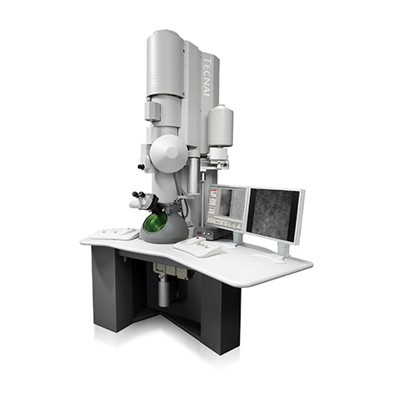
FEI TECNAI F20
Alignment procedure
Legacy - Astigmatism: Astigmatism was corrected at 80,000 times and 280,000 times magnification.
Date
Mar 22, 2014
Image recording
Category: CCD / Film or detector model: GATAN ULTRASCAN 4000 (4k x 4k) / Number real images: 587 / Average electron dose: 20 e/Å2 / Bits/pixel: 32
Tilt angle min
0
Tilt angle max
0
Electron beam
Acceleration voltage: 120 kV / Electron source: FIELD EMISSION GUN
In the structure databanks used in Yorodumi, some data are registered as the other names, "COVID-19 virus" and "2019-nCoV". Here are the details of the virus and the list of structure data.
Jan 31, 2019. EMDB accession codes are about to change! (news from PDBe EMDB page)
EMDB accession codes are about to change! (news from PDBe EMDB page)
The allocation of 4 digits for EMDB accession codes will soon come to an end. Whilst these codes will remain in use, new EMDB accession codes will include an additional digit and will expand incrementally as the available range of codes is exhausted. The current 4-digit format prefixed with “EMD-” (i.e. EMD-XXXX) will advance to a 5-digit format (i.e. EMD-XXXXX), and so on. It is currently estimated that the 4-digit codes will be depleted around Spring 2019, at which point the 5-digit format will come into force.
The EM Navigator/Yorodumi systems omit the EMD- prefix.
Related info.:Q: What is EMD? / ID/Accession-code notation in Yorodumi/EM Navigator
Yorodumi is a browser for structure data from EMDB, PDB, SASBDB, etc.
This page is also the successor to EM Navigator detail page, and also detail information page/front-end page for Omokage search.
The word "yorodu" (or yorozu) is an old Japanese word meaning "ten thousand". "mi" (miru) is to see.
Related info.:EMDB / PDB / SASBDB / Comparison of 3 databanks / Yorodumi Search / Aug 31, 2016. New EM Navigator & Yorodumi / Yorodumi Papers / Jmol/JSmol / Function and homology information / Changes in new EM Navigator and Yorodumi
 Movie
Movie Controller


 Open data
 Basic information
 Map data
 Sample
 Keywords
 Function and homology information
 Homo sapiens (human)
 Authors
 Citation
 Structure visualization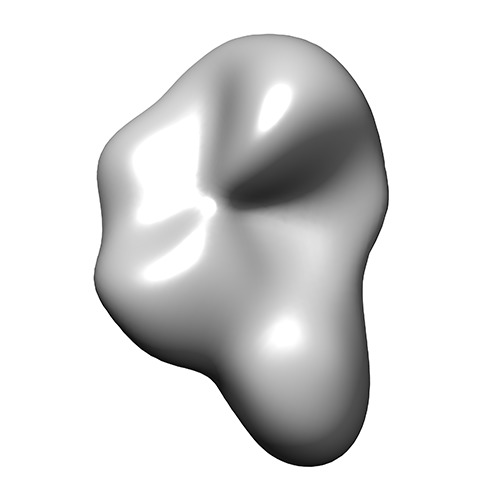
 Downloads & links
 https://data.pdbj.org/pub/emdb/structures/EMD-6497


 Z (Sec.)
 Y (Row.)
 X (Col.)
















 Sample components
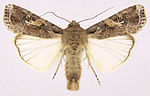 Spodoptera frugiperda (fall armyworm) / Recombinant cell: Sf9
 Processing
 Electron microscopy
 FIELD EMISSION GUN