National Natural Science Foundation of China (NSFC)
China
Citation
Journal: Nat Commun / Year: 2026 Title: Doublet microtubule-associated tektins and enzymes differentially regulate sperm flagellar integrity and motility. Authors: Qi Liu / Lunni Zhou / Xiaochen Liang / Pengyu Chen / Bo Li / Shuo Yang / Yuqi Liu / Haibo Zhao / Jin Hu / Shan Feng / Shanshan Xie / Jianping Wu / Miao Gui / Abstract: Doublet microtubule (DMT)-associated proteins assemble and drive sperm flagella, which are essential for successful fertilization. However, the exact roles of different DMT-associated proteins in ...Doublet microtubule (DMT)-associated proteins assemble and drive sperm flagella, which are essential for successful fertilization. However, the exact roles of different DMT-associated proteins in sperm function and the underlying molecular mechanisms remain elusive. Here, we generate four gene-knockout mice based on high-resolution structures targeting distinct DMT components: two intermediate filament-like tektins (TEKT1, TEKT5) and two enzymes (TSSK6, DUSP21). The depletion of TEKT1, shared by sperm flagella and motile cilia, causes male infertility characterized by impaired sperm motility and loss of the tektin bundle, whereas sperm-specific Tekt5 knockout (KO) mice remain fertile with largely normal flagellar function, indicating functional divergence within the tektin family. Tssk6 KO spermatozoa exhibit severely disturbed morphology and motility, resulting in homozygote infertility and heterozygote subfertility. Phosphoproteomics reveals dysregulated phosphorylation of axonemal proteins, highlighting the critical role of kinase-mediated signaling in regulating sperm motility. Conversely, Dusp21 KO mice display no fertility or sperm motility defects, suggesting compensatory phosphatase activity. Phenotypic comparisons between Tekt1 and Tssk6 KO mice suggest their involvement in distinct subtypes of asthenozoospermia. Overall, this study elucidates how filamentous and enzymatic DMT proteins govern sperm function through divergent mechanisms, which have implications for molecular diagnosis of male infertility.
In the structure databanks used in Yorodumi, some data are registered as the other names, "COVID-19 virus" and "2019-nCoV". Here are the details of the virus and the list of structure data.
Jan 31, 2019. EMDB accession codes are about to change! (news from PDBe EMDB page)
EMDB accession codes are about to change! (news from PDBe EMDB page)
The allocation of 4 digits for EMDB accession codes will soon come to an end. Whilst these codes will remain in use, new EMDB accession codes will include an additional digit and will expand incrementally as the available range of codes is exhausted. The current 4-digit format prefixed with “EMD-” (i.e. EMD-XXXX) will advance to a 5-digit format (i.e. EMD-XXXXX), and so on. It is currently estimated that the 4-digit codes will be depleted around Spring 2019, at which point the 5-digit format will come into force.
The EM Navigator/Yorodumi systems omit the EMD- prefix.
Related info.:Q: What is EMD? / ID/Accession-code notation in Yorodumi/EM Navigator
Yorodumi is a browser for structure data from EMDB, PDB, SASBDB, etc.
This page is also the successor to EM Navigator detail page, and also detail information page/front-end page for Omokage search.
The word "yorodu" (or yorozu) is an old Japanese word meaning "ten thousand". "mi" (miru) is to see.
Related info.:EMDB / PDB / SASBDB / Comparison of 3 databanks / Yorodumi Search / Aug 31, 2016. New EM Navigator & Yorodumi / Yorodumi Papers / Jmol/JSmol / Function and homology information / Changes in new EM Navigator and Yorodumi
 Movie
Movie Controller

 Yorodumi
 Open data
 Basic information
 Map data
 Sample
 Keywords
 Mus musculus (house mouse)
 Authors
 China, 1 items
  Citation
 Structure visualization
 Downloads & links
 EMDB map data format
 emd_64625.png
 http://ftp.pdbj.org/pub/emdb/structures/EMD-64625


 Z (Sec.)
 Y (Row.)
 X (Col.)


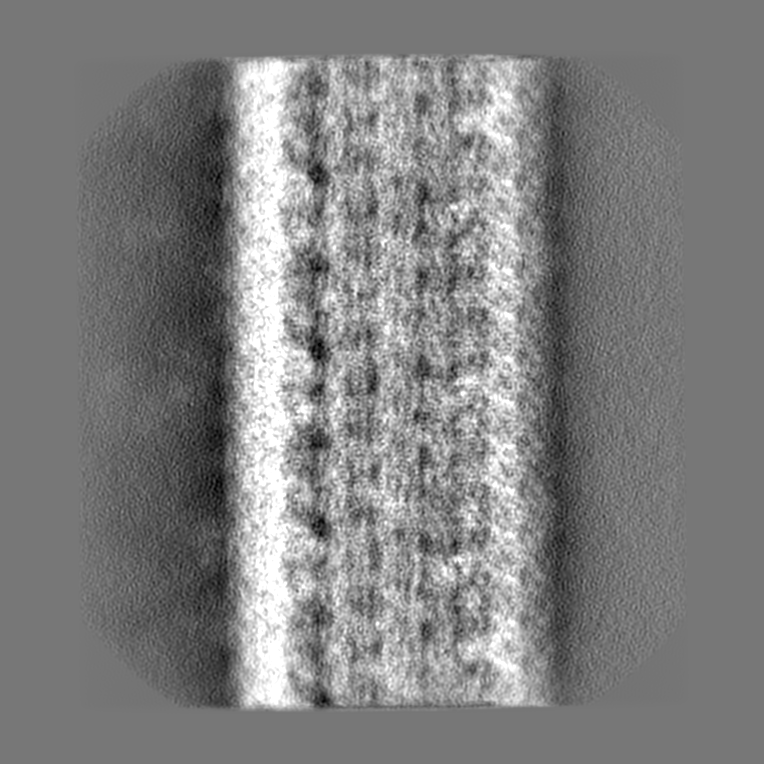


 Sample components
 Processing
 Electron microscopy
 FIELD EMISSION GUN