[English] 日本語
Yorodumi
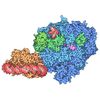
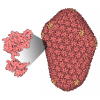
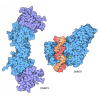
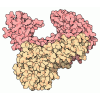
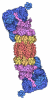
- EMDB-53237: DNA-PK bound to 153 bp H2AX nucleosome with ATPyS -

+
Open data


ID or keywords:

Loading...

-
Basic information

Entry
Database: EMDB / ID: EMD-53237
TitleDNA-PK bound to 153 bp H2AX nucleosome with ATPyS
Map data
Sample
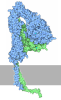
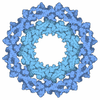
  • Complex: DNA-PK dimer bound to 153bp H2AX nucleosomes with ATPyS
    • Protein or peptide: DNA-dependent protein kinase catalytic subunit
    • Protein or peptide: X-ray repair cross-complementing protein 5
    • Protein or peptide: Histone H2AX
    • Protein or peptide: Histone H2B type 1-J
    • Protein or peptide: Histone H3.1
    • Protein or peptide: Histone H4
    • Protein or peptide: X-ray repair cross-complementing protein 6
    • DNA: DNA
    • DNA: DNA
KeywordsDNA-binding protein / NHEJ / Ku70/80 / nucleosome / DNA BINDING PROTEIN
Function / homology
Function and homology information


positive regulation of platelet formation / Ku70:Ku80 complex / T cell receptor V(D)J recombination / negative regulation of t-circle formation / pro-B cell differentiation / DNA end binding / DNA-dependent protein kinase activity / small-subunit processome assembly / positive regulation of lymphocyte differentiation / histone H2AXS139 kinase activity ...positive regulation of platelet formation / Ku70:Ku80 complex / T cell receptor V(D)J recombination / negative regulation of t-circle formation / pro-B cell differentiation / DNA end binding / DNA-dependent protein kinase activity / small-subunit processome assembly / positive regulation of lymphocyte differentiation / histone H2AXS139 kinase activity / DNA-dependent protein kinase complex / DNA-dependent protein kinase-DNA ligase 4 complex / immunoglobulin V(D)J recombination / nonhomologous end joining complex / immature B cell differentiation / regulation of smooth muscle cell proliferation / cellular response to X-ray / regulation of epithelial cell proliferation / double-strand break repair via alternative nonhomologous end joining / XY body / double-strand break repair via classical nonhomologous end joining / nuclear telomere cap complex / protein localization to site of double-strand break / chromatin-protein adaptor activity / Cytosolic sensors of pathogen-associated DNA / telomere capping / IRF3-mediated induction of type I IFN / regulation of hematopoietic stem cell differentiation / recombinational repair / positive regulation of neurogenesis / regulation of telomere maintenance / U3 snoRNA binding / protein localization to chromosome, telomeric region / maturation of 5.8S rRNA / T cell lineage commitment / cellular hyperosmotic salinity response / negative regulation of cGAS/STING signaling pathway / positive regulation of double-strand break repair via nonhomologous end joining / response to ionizing radiation / B cell lineage commitment / 2-LTR circle formation / hematopoietic stem cell proliferation / telomeric DNA binding / negative regulation of protein phosphorylation / positive regulation of protein kinase activity / Lyases; Carbon-oxygen lyases; Other carbon-oxygen lyases / site of DNA damage / peptidyl-threonine phosphorylation / 5'-deoxyribose-5-phosphate lyase activity / hematopoietic stem cell differentiation / negative regulation of tumor necrosis factor-mediated signaling pathway / ATP-dependent activity, acting on DNA / somitogenesis / ectopic germ cell programmed cell death / telomere maintenance via telomerase / negative regulation of megakaryocyte differentiation / protein localization to CENP-A containing chromatin / Chromatin modifying enzymes / Replacement of protamines by nucleosomes in the male pronucleus / CENP-A containing nucleosome / mitotic G1 DNA damage checkpoint signaling / Packaging Of Telomere Ends / neurogenesis / Recognition and association of DNA glycosylase with site containing an affected purine / Cleavage of the damaged purine / Deposition of new CENPA-containing nucleosomes at the centromere / telomere organization / Recognition and association of DNA glycosylase with site containing an affected pyrimidine / Cleavage of the damaged pyrimidine / Interleukin-7 signaling / activation of innate immune response / DNA helicase activity / telomere maintenance / RNA Polymerase I Promoter Opening / epigenetic regulation of gene expression / positive regulation of erythrocyte differentiation / Inhibition of DNA recombination at telomere / Assembly of the ORC complex at the origin of replication / cyclin binding / Meiotic synapsis / DNA damage checkpoint signaling / SUMOylation of chromatin organization proteins / Regulation of endogenous retroelements by the Human Silencing Hub (HUSH) complex / positive regulation of DNA repair / DNA methylation / replication fork / positive regulation of translation / Condensation of Prophase Chromosomes / cellular response to leukemia inhibitory factor / Chromatin modifications during the maternal to zygotic transition (MZT) / SIRT1 negatively regulates rRNA expression / HCMV Late Events / condensed nuclear chromosome / ERCC6 (CSB) and EHMT2 (G9a) positively regulate rRNA expression / response to gamma radiation / PRC2 methylates histones and DNA / Regulation of endogenous retroelements by KRAB-ZFP proteins / innate immune response in mucosa / Defective pyroptosis / meiotic cell cycle
Similarity search - Function
DNA-dependent protein kinase catalytic subunit, CC3 / DNA-dependent protein kinase catalytic subunit, catalytic domain / DNA-dependent protein kinase catalytic subunit, CC5 / DNA-dependent protein kinase catalytic subunit, CC1/2 / DNA-PKcs, N-terminal / DNA-dependent protein kinase catalytic subunit, CC3 / DNA-PKcs, CC5 / DNA-PKcs, N-terminal / DNA-dependent protein kinase catalytic subunit, CC1/2 / NUC194 ...DNA-dependent protein kinase catalytic subunit, CC3 / DNA-dependent protein kinase catalytic subunit, catalytic domain / DNA-dependent protein kinase catalytic subunit, CC5 / DNA-dependent protein kinase catalytic subunit, CC1/2 / DNA-PKcs, N-terminal / DNA-dependent protein kinase catalytic subunit, CC3 / DNA-PKcs, CC5 / DNA-PKcs, N-terminal / DNA-dependent protein kinase catalytic subunit, CC1/2 / NUC194 / Ku70, bridge and pillars domain superfamily / : / Ku70 / Ku, C-terminal / Ku, C-terminal domain superfamily / Ku C terminal domain like / Ku80 / Ku70/Ku80 C-terminal arm / Ku70/Ku80 C-terminal arm / Ku70/Ku80, N-terminal alpha/beta / Ku70/Ku80 N-terminal alpha/beta domain / Ku70/Ku80 beta-barrel domain / Ku70 and Ku80 are 70kDa and 80kDa subunits of the Lupus Ku autoantigen / Ku70/Ku80 beta-barrel domain / SPOC-like, C-terminal domain superfamily / SAP domain superfamily / SAP motif profile. / SAP domain / Putative DNA-binding (bihelical) motif predicted to be involved in chromosomal organisation / SAP domain / : / FATC domain / PIK-related kinase, FAT / FAT domain / FATC / FATC domain / PIK-related kinase / FAT domain profile. / FATC domain profile. / Phosphatidylinositol 3- and 4-kinases signature 1. / Phosphatidylinositol 3/4-kinase, conserved site / Phosphatidylinositol 3- and 4-kinases signature 2. / Phosphatidylinositol 3-/4-kinase, catalytic domain superfamily / Phosphoinositide 3-kinase, catalytic domain / Phosphatidylinositol 3- and 4-kinase / Phosphatidylinositol 3- and 4-kinases catalytic domain profile. / Phosphatidylinositol 3-/4-kinase, catalytic domain / von Willebrand factor (vWF) type A domain / von Willebrand factor, type A / von Willebrand factor A-like domain superfamily / : / Histone H2B signature. / Histone H2A conserved site / Histone H2A signature. / Histone H2B / Histone H2B / Histone H2A, C-terminal domain / C-terminus of histone H2A / Histone 2A / Histone H2A / TATA box binding protein associated factor / TATA box binding protein associated factor (TAF), histone-like fold domain / Histone H4, conserved site / Histone H4 signature. / Histone H4 / Histone H4 / CENP-T/Histone H4, histone fold / Centromere kinetochore component CENP-T histone fold / Histone H3 signature 1. / Histone H3 signature 2. / Histone H3 / Histone H3/CENP-A / Histone H2A/H2B/H3 / Core histone H2A/H2B/H3/H4 domain / Histone-fold / Armadillo-like helical / Armadillo-type fold / Protein kinase-like domain superfamily
Similarity search - Domain/homology
Histone H2B type 1-J / X-ray repair cross-complementing protein 6 / X-ray repair cross-complementing protein 5 / Histone H2AX / Histone H4 / Histone H3.1 / DNA-dependent protein kinase catalytic subunit
Similarity search - Component
Biological speciesHomo sapiens (human)
Methodsingle particle reconstruction / cryo EM / Resolution: 5.0 Å
AuthorsHall C / Chaplin AK
Funding support Canada, United Kingdom, 2 items
OrganizationGrant numberCountry
Medical Research Council (MRC, Canada)MR/X00029X/1 Canada
The Lister Institute of Preventive Medicine United Kingdom
CitationJournal: Nat Commun / Year: 2025
Title: Cryo-EM structures of NHEJ assemblies with nucleosomes.
Authors: Chloe Hall / Philippe Frit / Antonia Kefala-Stavridi / Amandine Pelletier / Steven W Hardwick / Himani Amin / Matthew K Bilyard / Taiana Maia De Oliviera / Ammarah Tariq / Sayma Zahid / ...Authors: Chloe Hall / Philippe Frit / Antonia Kefala-Stavridi / Amandine Pelletier / Steven W Hardwick / Himani Amin / Matthew K Bilyard / Taiana Maia De Oliviera / Ammarah Tariq / Sayma Zahid / Dimitri Y Chirgadze / Shankar Balasubramanian / Katheryn Meek / Virginie Ropars / Jean-Baptiste Charbonnier / Mauro Modesti / Patrick Calsou / Sébastien Britton / Tom L Blundell / Thomas Schalch / Amanda K Chaplin /
Abstract: DNA double-strand breaks (DSBs) are highly deleterious lesions that can trigger cell death or carcinogenesis if unrepaired or misrepaired. In mammals, most DSBs are repaired by non-homologous end ...DNA double-strand breaks (DSBs) are highly deleterious lesions that can trigger cell death or carcinogenesis if unrepaired or misrepaired. In mammals, most DSBs are repaired by non-homologous end joining (NHEJ), which begins when Ku70/80 binds DNA ends and recruits DNA-PKcs to form the DNA-PK holoenzyme. Although recent cryo-EM studies have resolved several NHEJ assemblies, how these factors access DSBs within nucleosomes remains unclear. Here, we present cryo-EM structures of human Ku70/80 and DNA-PK bound to nucleosomes. Ku70/80 binds the DNA end and bends it away from the nucleosome core, while the Ku70 C-terminal SAP domain makes an additional, specific DNA contact. Our DNA-PK-nucleosome structure further reveals the opening of the Ku80 vWA domain, and we show that non-hydrolysable ATP promotes synapsis by stabilising the Ku80-mediated DNA-PK dimer. These structures reveal a model for DSB recognition on nucleosomal DNA and provide insights relevant to targeting NHEJ in cancer therapy.
History
DepositionMar 24, 2025-
Header (metadata) releaseJan 14, 2026-
Map releaseJan 14, 2026-
UpdateJan 14, 2026-
Current statusJan 14, 2026Processing site: PDBe / Status: Released

-
Structure visualization

Supplemental images

Downloads & links

-
Map

FileDownload / File: emd_53237.map.gz / Format: CCP4 / Size: 282.6 MB / Type: IMAGE STORED AS FLOATING POINT NUMBER (4 BYTES)
Projections & slices

Image control

Size
Brightness
Contrast
Others
AxesZ (Sec.)Y (Row.)X (Col.)
2.47 Å/pix.
x 420 pix.
= 1038.24 Å
2.47 Å/pix.
x 420 pix.
= 1038.24 Å
2.47 Å/pix.
x 420 pix.
= 1038.24 Å

Surface

Projections

Slices (1/3)

Slices (1/2)

Slices (2/3)

Images are generated by Spider.

Voxel sizeX=Y=Z: 2.472 Å
Density
Contour LevelBy AUTHOR: 0.21
Minimum - Maximum-0.605988 - 1.9936726
Average (Standard dev.)-0.00024356754 (±0.035231475)
SymmetrySpace group: 1
Details

EMDB XML:

Map geometry
Axis orderXYZ
Origin000
Dimensions420420420
Spacing420420420
CellA=B=C: 1038.24 Å
α=β=γ: 90.0 °

-
Supplemental data

-
Additional map: #1

Fileemd_53237_additional_1.map
Projections & Slices
AxesZYX

Projections

Slices (1/2)
Density Histograms

-
Half map: #2

Fileemd_53237_half_map_1.map
Projections & Slices
AxesZYX

Projections

Slices (1/2)
Density Histograms

-
Half map: #1

Fileemd_53237_half_map_2.map
Projections & Slices
AxesZYX

Projections

Slices (1/2)
Density Histograms

-
Sample components

+
Entire : DNA-PK dimer bound to 153bp H2AX nucleosomes with ATPyS

EntireName: DNA-PK dimer bound to 153bp H2AX nucleosomes with ATPyS
Components
  • Complex: DNA-PK dimer bound to 153bp H2AX nucleosomes with ATPyS
    • Protein or peptide: DNA-dependent protein kinase catalytic subunit
    • Protein or peptide: X-ray repair cross-complementing protein 5
    • Protein or peptide: Histone H2AX
    • Protein or peptide: Histone H2B type 1-J
    • Protein or peptide: Histone H3.1
    • Protein or peptide: Histone H4
    • Protein or peptide: X-ray repair cross-complementing protein 6
    • DNA: DNA
    • DNA: DNA

+
Supramolecule #1: DNA-PK dimer bound to 153bp H2AX nucleosomes with ATPyS

SupramoleculeName: DNA-PK dimer bound to 153bp H2AX nucleosomes with ATPyS
type: complex / ID: 1 / Parent: 0 / Macromolecule list: all
Source (natural)Organism: Homo sapiens (human)
Molecular weightTheoretical: 1.95 MDa

+
Macromolecule #1: DNA-dependent protein kinase catalytic subunit

MacromoleculeName: DNA-dependent protein kinase catalytic subunit / type: protein_or_peptide / ID: 1 / Number of copies: 2 / Enantiomer: LEVO / EC number: non-specific serine/threonine protein kinase
Source (natural)Organism: Homo sapiens (human)
Molecular weightTheoretical: 469.673219 KDa
SequenceString: MAGSGAGVRC SLLRLQETLS AADRCGAALA GHQLIRGLGQ ECVLSSSPAV LALQTSLVFS RDFGLLVFVR KSLNSIEFRE CREEILKFL CIFLEKMGQK IAPYSVEIKN TCTSVYTKDR AAKCKIPALD LLIKLLQTFR SSRLMDEFKI GELFSKFYGE L ALKKKIPD ...String:
MAGSGAGVRC SLLRLQETLS AADRCGAALA GHQLIRGLGQ ECVLSSSPAV LALQTSLVFS RDFGLLVFVR KSLNSIEFRE CREEILKFL CIFLEKMGQK IAPYSVEIKN TCTSVYTKDR AAKCKIPALD LLIKLLQTFR SSRLMDEFKI GELFSKFYGE L ALKKKIPD TVLEKVYELL GLLGEVHPSE MINNAENLFR AFLGELKTQM TSAVREPKLP VLAGCLKGLS SLLCNFTKSM EE DPQTSRE IFNFVLKAIR PQIDLKRYAV PSAGLRLFAL HASQFSTCLL DNYVSLFEVL LKWCAHTNVE LKKAALSALE SFL KQVSNM VAKNAEMHKN KLQYFMEQFY GIIRNVDSNN KELSIAIRGY GLFAGPCKVI NAKDVDFMYV ELIQRCKQMF LTQT DTGDD RVYQMPSFLQ SVASVLLYLD TVPEVYTPVL EHLVVMQIDS FPQYSPKMQL VCCRAIVKVF LALAAKGPVL RNCIS TVVH QGLIRICSKP VVLPKGPESE SEDHRASGEV RTGKWKVPTY KDYVDLFRHL LSSDQMMDSI LADEAFFSVN SSSESL NHL LYDEFVKSVL KIVEKLDLTL EIQTVGEQEN GDEAPGVWMI PTSDPAANLH PAKPKDFSAF INLVEFCREI LPEKQAE FF EPWVYSFSYE LILQSTRLPL ISGFYKLLSI TVRNAKKIKY FEGVSPKSLK HSPEDPEKYS CFALFVKFGK EVAVKMKQ Y KDELLASCLT FLLSLPHNII ELDVRAYVPA LQMAFKLGLS YTPLAEVGLN ALEEWSIYID RHVMQPYYKD ILPCLDGYL KTSALSDETK NNWEVSALSR AAQKGFNKVV LKHLKKTKNL SSNEAISLEE IRIRVVQMLG SLGGQINKNL LTVTSSDEMM KSYVAWDRE KRLSFAVPFR EMKPVIFLDV FLPRVTELAL TASDRQTKVA ACELLHSMVM FMLGKATQMP EGGQGAPPMY Q LYKRTFPV LLRLACDVDQ VTRQLYEPLV MQLIHWFTNN KKFESQDTVA LLEAILDGIV DPVDSTLRDF CGRCIREFLK WS IKQITPQ QQEKSPVNTK SLFKRLYSLA LHPNAFKRLG ASLAFNNIYR EFREEESLVE QFVFEALVIY MESLALAHAD EKS LGTIQQ CCDAIDHLCR IIEKKHVSLN KAKKRRLPRG FPPSASLCLL DLVKWLLAHC GRPQTECRHK SIELFYKFVP LLPG NRSPN LWLKDVLKEE GVSFLINTFE GGGCGQPSGI LAQPTLLYLR GPFSLQATLC WLDLLLAALE CYNTFIGERT VGALQ VLGT EAQSSLLKAV AFFLESIAMH DIIAAEKCFG TGAAGNRTSP QEGERYNYSK CTVVVRIMEF TTTLLNTSPE GWKLLK KDL CNTHLMRVLV QTLCEPASIG FNIGDVQVMA HLPDVCVNLM KALKMSPYKD ILETHLREKI TAQSIEELCA VNLYGPD AQ VDRSRLAAVV SACKQLHRAG LLHNILPSQS TDLHHSVGTE LLSLVYKGIA PGDERQCLPS LDLSCKQLAS GLLELAFA F GGLCERLVSL LLNPAVLSTA SLGSSQGSVI HFSHGEYFYS LFSETINTEL LKNLDLAVLE LMQSSVDNTK MVSAVLNGM LDQSFRERAN QKHQGLKLAT TILQHWKKCD SWWAKDSPLE TKMAVLALLA KILQIDSSVS FNTSHGSFPE VFTTYISLLA DTKLDLHLK GQAVTLLPFF TSLTGGSLEE LRRVLEQLIV AHFPMQSREF PPGTPRFNNY VDCMKKFLDA LELSQSPMLL E LMTEVLCR EQQHVMEELF QSSFRRIARR GSCVTQVGLL ESVYEMFRKD DPRLSFTRQS FVDRSLLTLL WHCSLDALRE FF STIVVDA IDVLKSRFTK LNESTFDTQI TKKMGYYKIL DVMYSRLPKD DVHAKESKIN QVFHGSCITE GNELTKTLIK LCY DAFTEN MAGENQLLER RRLYHCAAYN CAISVICCVF NELKFYQGFL FSEKPEKNLL IFENLIDLKR RYNFPVEVEV PMER KKKYI EIRKEAREAA NGDSDGPSYM SSLSYLADST LSEEMSQFDF STGVQSYSYS SQDPRPATGR FRRREQRDPT VHDDV LELE MDELNRHECM APLTALVKHM HRSLGPPQGE EDSVPRDLPS WMKFLHGKLG NPIVPLNIRL FLAKLVINTE EVFRPY AKH WLSPLLQLAA SENNGGEGIH YMVVEIVATI LSWTGLATPT GVPKDEVLAN RLLNFLMKHV FHPKRAVFRH NLEIIKT LV ECWKDCLSIP YRLIFEKFSG KDPNSKDNSV GIQLLGIVMA NDLPPYDPQC GIQSSEYFQA LVNNMSFVRY KEVYAAAA E VLGLILRYVM ERKNILEESL CELVAKQLKQ HQNTMEDKFI VCLNKVTKSF PPLADRFMNA VFFLLPKFHG VLKTLCLEV VLCRVEGMTE LYFQLKSKDF VQVMRHRDDE RQKVCLDIIY KMMPKLKPVE LRELLNPVVE FVSHPSTTCR EQMYNILMWI HDNYRDPES ETDNDSQEIF KLAKDVLIQG LIDENPGLQL IIRNFWSHET RLPSNTLDRL LALNSLYSPK IEVHFLSLAT N FLLEMTSM SPDYPNPMFE HPLSECEFQE YTIDSDWRFR STVLTPMFVE TQASQGTLQT RTQEGSLSAR WPVAGQIRAT QQ QHDFTLT QTADGRSSFD WLTGSSTDPL VDHTSPSSDS LLFAHKRSER LQRAPLKSVG PDFGKKRLGL PGDEVDNKVK GAA GRTDLL RLRRRFMRDQ EKLSLMYARK GVAEQKREKE IKSELKMKQD AQVVLYRSYR HGDLPDIQIK HSSLITPLQA VAQR DPIIA KQLFSSLFSG ILKEMDKFKT LSEKNNITQK LLQDFNRFLN TTFSFFPPFV SCIQDISCQH AALLSLDPAA VSAGC LASL QQPVGIRLLE EALLRLLPAE LPAKRVRGKA RLPPDVLRWV ELAKLYRSIG EYDVLRGIFT SEIGTKQITQ SALLAE ARS DYSEAAKQYD EALNKQDWVD GEPTEAEKDF WELASLDCYN HLAEWKSLEY CSTASIDSEN PPDLNKIWSE PFYQETY LP YMIRSKLKLL LQGEADQSLL TFIDKAMHGE LQKAILELHY SQELSLLYLL QDDVDRAKYY IQNGIQSFMQ NYSSIDVL L HQSRLTKLQS VQALTEIQEF ISFISKQGNL SSQVPLKRLL NTWTNRYPDA KMDPMNIWDD IITNRCFFLS KIEEKLTPL PEDNSMNVDQ DGDPSDRMEV QEQEEDISSL IRSCKFSMKM KMIDSARKQN NFSLAMKLLK ELHKESKTRD DWLVSWVQSY CRLSHCRSR SQGCSEQVLT VLKTVSLLDE NNVSSYLSKN ILAFRDQNIL LGTTYRIIAN ALSSEPACLA EIEEDKARRI L ELSGSSSE DSEKVIAGLY QRAFQHLSEA VQAAEEEAQP PSWSCGPAAG VIDAYMTLAD FCDQQLRKEE ENASVIDSAE LQ AYPALVV EKMLKALKLN SNEARLKFPR LLQIIERYPE ETLSLMTKEI SSVPCWQFIS WISHMVALLD KDQAVAVQHS VEE ITDNYP QAIVYPFIIS SESYSFKDTS TGHKNKEFVA RIKSKLDQGG VIQDFINALD QLSNPELLFK DWSNDVRAEL AKTP VNKKN IEKMYERMYA ALGDPKAPGL GAFRRKFIQT FGKEFDKHFG KGGSKLLRMK LSDFNDITNM LLLKMNKDSK PPGNL KECS PWMSDFKVEF LRNELEIPGQ YDGRGKPLPE YHVRIAGFDE RVTVMASLRR PKRIIIRGHD EREHPFLVKG GEDLRQ DQR VEQLFQVMNG ILAQDSACSQ RALQLRTYSV VPMTSRLGLI EWLENTVTLK DLLLNTMSQE EKAAYLSDPR APPCEYK DW LTKMSGKHDV GAYMLMYKGA NRTETVTSFR KRESKVPADL LKRAFVRMST SPEAFLALRS HFASSHALIC ISHWILGI G DRHLNNFMVA METGGVIGID FGHAFGSATQ FLPVPELMPF RLTRQFINLM LPMKETGLMY SIMVHALRAF RSDPGLLTN TMDVFVKEPS FDWKNFEQKM LKKGGSWIQE INVAEKNWYP RQKICYAKRK LAGANPAVIT CDELLLGHEK APAFRDYVAV ARGSKDHNI RAQEPESGLS EETQVKCLMD QATDPNILGR TWEGWEPWM

UniProtKB: DNA-dependent protein kinase catalytic subunit

+
Macromolecule #2: X-ray repair cross-complementing protein 5
MacromoleculeName: X-ray repair cross-complementing protein 5 / type: protein_or_peptide / ID: 2 / Number of copies: 4 / Enantiomer: LEVO
EC number: Hydrolases; Acting on acid anhydrides; Acting on acid anhydrides to facilitate cellular and subcellular movement
Source (natural)Organism: Homo sapiens (human)
Molecular weightTheoretical: 82.812438 KDa
Recombinant expressionOrganism: Spodoptera frugiperda (fall armyworm)
SequenceString: MVRSGNKAAV VLCMDVGFTM SNSIPGIESP FEQAKKVITM FVQRQVFAEN KDEIALVLFG TDGTDNPLSG GDQYQNITVH RHLMLPDFD LLEDIESKIQ PGSQQADFLD ALIVSMDVIQ HETIGKKFEK RHIEIFTDLS SRFSKSQLDI IIHSLKKCDI S LQFFLPFS ...String:
MVRSGNKAAV VLCMDVGFTM SNSIPGIESP FEQAKKVITM FVQRQVFAEN KDEIALVLFG TDGTDNPLSG GDQYQNITVH RHLMLPDFD LLEDIESKIQ PGSQQADFLD ALIVSMDVIQ HETIGKKFEK RHIEIFTDLS SRFSKSQLDI IIHSLKKCDI S LQFFLPFS LGKEDGSGDR GDGPFRLGGH GPSFPLKGIT EQQKEGLEIV KMVMISLEGE DGLDEIYSFS ESLRKLCVFK KI ERHSIHW PCRLTIGSNL SIRIAAYKSI LQERVKKTWT VVDAKTLKKE DIQKETVYCL NDDDETEVLK EDIIQGFRYG SDI VPFSKV DEEQMKYKSE GKCFSVLGFC KSSQVQRRFF MGNQVLKVFA ARDDEAAAVA LSSLIHALDD LDMVAIVRYA YDKR ANPQV GVAFPHIKHN YECLVYVQLP FMEDLRQYMF SSLKNSKKYA PTEAQLNAVD ALIDSMSLAK KDEKTDTLED LFPTT KIPN PRFQRLFQCL LHRALHPREP LPPIQQHIWN MLNPPAEVTT KSQIPLSKIK TLFPLIEAKK KDQVTAQEIF QDNHED GPT AKKLKTEQGG AHFSVSSLAE GSVTSVGSVN PAENFRVLVK QKKASFEEAS NQLINHIEQF LDTNETPYFM KSIDCIR AF REEAIKFSEE QRFNNFLKAL QEKVEIKQLN HFWEIVVQDG ITLITKEEAS GSSVTAEEAK KFLAPKDKPS GDTAAVFE E GGDVDDLLDM I

UniProtKB: X-ray repair cross-complementing protein 5

+
Macromolecule #3: Histone H2AX

MacromoleculeName: Histone H2AX / type: protein_or_peptide / ID: 3 / Number of copies: 4 / Enantiomer: LEVO
Source (natural)Organism: Homo sapiens (human)
Molecular weightTheoretical: 15.172605 KDa
Recombinant expressionOrganism: Escherichia coli (E. coli)
SequenceString:
MSGRGKTGGK ARAKAKSRSS RAGLQFPVGR VHRLLRKGHY AERVGAGAPV YLAAVLEYLT AEILELAGNA ARDNKKTRII PRHLQLAIR NDEELNKLLG GVTIAQGGVL PNIQAVLLPK KTSATVGPKA PSGGKKATQA SQEY

UniProtKB: Histone H2AX

+
Macromolecule #4: Histone H2B type 1-J

MacromoleculeName: Histone H2B type 1-J / type: protein_or_peptide / ID: 4 / Number of copies: 4 / Enantiomer: LEVO
Source (natural)Organism: Homo sapiens (human)
Molecular weightTheoretical: 13.935239 KDa
Recombinant expressionOrganism: Escherichia coli (E. coli)
SequenceString:
MPEPAKSAPA PKKGSKKAVT KAQKKDGKKR KRSRKESYSI YVYKVLKQVH PDTGISSKAM GIMNSFVNDI FERIAGEASR LAHYNKRST ITSREIQTAV RLLLPGELAK HAVSEGTKAV TKYTSAK

UniProtKB: Histone H2B type 1-J

+
Macromolecule #5: Histone H3.1

MacromoleculeName: Histone H3.1 / type: protein_or_peptide / ID: 5 / Number of copies: 4 / Enantiomer: LEVO
Source (natural)Organism: Homo sapiens (human)
Molecular weightTheoretical: 15.437167 KDa
Recombinant expressionOrganism: Escherichia coli (E. coli)
SequenceString:
MARTKQTARK STGGKAPRKQ LATKAARKSA PATGGVKKPH RYRPGTVALR EIRRYQKSTE LLIRKLPFQR LVREIAQDFK TDLRFQSSA VMALQEACEA YLVGLFEDTN LCAIHAKRVT IMPKDIQLAR RIRGERA

UniProtKB: Histone H3.1

+
Macromolecule #6: Histone H4

MacromoleculeName: Histone H4 / type: protein_or_peptide / ID: 6 / Number of copies: 4 / Enantiomer: LEVO
Source (natural)Organism: Homo sapiens (human)
Molecular weightTheoretical: 11.394426 KDa
Recombinant expressionOrganism: Escherichia coli (E. coli)
SequenceString:
MSGRGKGGKG LGKGGAKRHR KVLRDNIQGI TKPAIRRLAR RGGVKRISGL IYEETRGVLK VFLENVIRDA VTYTEHAKRK TVTAMDVVY ALKRQGRTLY GFGG

UniProtKB: Histone H4

+
Macromolecule #7: X-ray repair cross-complementing protein 6

MacromoleculeName: X-ray repair cross-complementing protein 6 / type: protein_or_peptide / ID: 7 / Number of copies: 4 / Enantiomer: LEVO
EC number: Hydrolases; Acting on acid anhydrides; Acting on acid anhydrides to facilitate cellular and subcellular movement
Source (natural)Organism: Homo sapiens (human)
Molecular weightTheoretical: 69.945039 KDa
Recombinant expressionOrganism: Spodoptera frugiperda (fall armyworm)
SequenceString: MSGWESYYKT EGDEEAEEEQ EENLEASGDY KYSGRDSLIF LVDASKAMFE SQSEDELTPF DMSIQCIQSV YISKIISSDR DLLAVVFYG TEKDKNSVNF KNIYVLQELD NPGAKRILEL DQFKGQQGQK RFQDMMGHGS DYSLSEVLWV CANLFSDVQF K MSHKRIML ...String:
MSGWESYYKT EGDEEAEEEQ EENLEASGDY KYSGRDSLIF LVDASKAMFE SQSEDELTPF DMSIQCIQSV YISKIISSDR DLLAVVFYG TEKDKNSVNF KNIYVLQELD NPGAKRILEL DQFKGQQGQK RFQDMMGHGS DYSLSEVLWV CANLFSDVQF K MSHKRIML FTNEDNPHGN DSAKASRART KAGDLRDTGI FLDLMHLKKP GGFDISLFYR DIISIAEDED LRVHFEESSK LE DLLRKVR AKETRKRALS RLKLKLNKDI VISVGIYNLV QKALKPPPIK LYRETNEPVK TKTRTFNTST GGLLLPSDTK RSQ IYGSRQ IILEKEETEE LKRFDDPGLM LMGFKPLVLL KKHHYLRPSL FVYPEESLVI GSSTLFSALL IKCLEKEVAA LCRY TPRRN IPPYFVALVP QEEELDDQKI QVTPPGFQLV FLPFADDKRK MPFTEKIMAT PEQVGKMKAI VEKLRFTYRS DSFEN PVLQ QHFRNLEALA LDLMEPEQAV DLTLPKVEAM NKRLGSLVDE FKELVYPPDY NPEGKVTKRK HDNEGSGSKR PKVEYS EEE LKTHISKGTL GKFTVPMLKE ACRAYGLKSG LKKQELLEAL TKHFQD

UniProtKB: X-ray repair cross-complementing protein 6

+
Macromolecule #8: DNA

MacromoleculeName: DNA / type: dna / ID: 8 / Number of copies: 2 / Classification: DNA
Source (natural)Organism: Homo sapiens (human)
Molecular weightTheoretical: 46.998945 KDa
SequenceString: (DA)(DT)(DC)(DC)(DT)(DG)(DG)(DA)(DG)(DA) (DA)(DT)(DC)(DC)(DC)(DG)(DG)(DT)(DG)(DC) (DC)(DG)(DA)(DG)(DG)(DC)(DC)(DG)(DC) (DT)(DC)(DA)(DA)(DT)(DT)(DG)(DG)(DT)(DC) (DG) (DT)(DA)(DG)(DA)(DC)(DA) ...String:
(DA)(DT)(DC)(DC)(DT)(DG)(DG)(DA)(DG)(DA) (DA)(DT)(DC)(DC)(DC)(DG)(DG)(DT)(DG)(DC) (DC)(DG)(DA)(DG)(DG)(DC)(DC)(DG)(DC) (DT)(DC)(DA)(DA)(DT)(DT)(DG)(DG)(DT)(DC) (DG) (DT)(DA)(DG)(DA)(DC)(DA)(DG)(DC) (DT)(DC)(DT)(DA)(DG)(DC)(DA)(DC)(DC)(DG) (DC)(DT) (DT)(DA)(DA)(DA)(DC)(DG)(DC) (DA)(DC)(DG)(DT)(DA)(DC)(DG)(DC)(DG)(DC) (DT)(DG)(DT) (DC)(DC)(DC)(DC)(DC)(DG) (DC)(DG)(DT)(DT)(DT)(DT)(DA)(DA)(DC)(DC) (DG)(DC)(DC)(DA) (DA)(DG)(DG)(DG)(DG) (DA)(DT)(DT)(DA)(DC)(DT)(DC)(DC)(DC)(DT) (DA)(DG)(DT)(DC)(DT) (DC)(DC)(DA)(DG) (DG)(DC)(DA)(DC)(DG)(DT)(DG)(DT)(DC)(DA) (DG)(DA)(DT)(DA)(DT)(DA) (DT)(DA)(DC) (DA)(DT)(DC)(DC)(DT)(DG)(DT)(DG)(DA)(DT)

+
Macromolecule #9: DNA

MacromoleculeName: DNA / type: dna / ID: 9 / Number of copies: 2 / Classification: DNA
Source (natural)Organism: Homo sapiens (human)
Molecular weightTheoretical: 47.457234 KDa
SequenceString: (DA)(DT)(DC)(DA)(DC)(DA)(DG)(DG)(DA)(DT) (DG)(DT)(DA)(DT)(DA)(DT)(DA)(DT)(DC)(DT) (DG)(DA)(DC)(DA)(DC)(DG)(DT)(DG)(DC) (DC)(DT)(DG)(DG)(DA)(DG)(DA)(DC)(DT)(DA) (DG) (DG)(DG)(DA)(DG)(DT)(DA) ...String:
(DA)(DT)(DC)(DA)(DC)(DA)(DG)(DG)(DA)(DT) (DG)(DT)(DA)(DT)(DA)(DT)(DA)(DT)(DC)(DT) (DG)(DA)(DC)(DA)(DC)(DG)(DT)(DG)(DC) (DC)(DT)(DG)(DG)(DA)(DG)(DA)(DC)(DT)(DA) (DG) (DG)(DG)(DA)(DG)(DT)(DA)(DA)(DT) (DC)(DC)(DC)(DC)(DT)(DT)(DG)(DG)(DC)(DG) (DG)(DT) (DT)(DA)(DA)(DA)(DA)(DC)(DG) (DC)(DG)(DG)(DG)(DG)(DG)(DA)(DC)(DA)(DG) (DC)(DG)(DC) (DG)(DT)(DA)(DC)(DG)(DT) (DG)(DC)(DG)(DT)(DT)(DT)(DA)(DA)(DG)(DC) (DG)(DG)(DT)(DG) (DC)(DT)(DA)(DG)(DA) (DG)(DC)(DT)(DG)(DT)(DC)(DT)(DA)(DC)(DG) (DA)(DC)(DC)(DA)(DA) (DT)(DT)(DG)(DA) (DG)(DC)(DG)(DG)(DC)(DC)(DT)(DC)(DG)(DG) (DC)(DA)(DC)(DC)(DG)(DG) (DG)(DA)(DT) (DT)(DC)(DT)(DC)(DC)(DA)(DG)(DG)(DA)(DT)

-
Experimental details

-
Structure determination

Methodcryo EM
Processingsingle particle reconstruction
Aggregation stateparticle

-
Sample preparation

BufferpH: 7.4
GridModel: Quantifoil R1.2/1.3 / Material: COPPER / Mesh: 300 / Pretreatment - Type: GLOW DISCHARGE / Pretreatment - Time: 30 sec. / Pretreatment - Atmosphere: AIR / Details: 30mA
VitrificationCryogen name: ETHANE

-
Electron microscopy

MicroscopeTFS KRIOS
Image recordingFilm or detector model: GATAN K3 (6k x 4k) / Average electron dose: 50.87 e/Å2
Electron beamAcceleration voltage: 300 kV / Electron source: FIELD EMISSION GUN
Electron opticsIllumination mode: FLOOD BEAM / Imaging mode: BRIGHT FIELD / Nominal defocus max: 2.0 µm / Nominal defocus min: 0.8 µm
Sample stageSpecimen holder model: FEI TITAN KRIOS AUTOGRID HOLDER
Experimental equipment
Model: Titan Krios / Image courtesy: FEI Company

+
Image processing

CTF correctionType: PHASE FLIPPING AND AMPLITUDE CORRECTION
Startup modelType of model: PDB ENTRY
PDB model - PDB ID:
Final reconstructionResolution.type: BY AUTHOR / Resolution: 5.0 Å / Resolution method: FSC 0.143 CUT-OFF / Software - Name: PHENIX / Number images used: 77373
Initial angle assignmentType: MAXIMUM LIKELIHOOD
Final angle assignmentType: MAXIMUM LIKELIHOOD
FSC plot (resolution estimation)

+
About Yorodumi

-
News

-
Feb 9, 2022. New format data for meta-information of EMDB entries

New format data for meta-information of EMDB entries

  • Version 3 of the EMDB header file is now the official format.
  • The previous official version 1.9 will be removed from the archive.

Related info.:EMDB header

External links:wwPDB to switch to version 3 of the EMDB data model

-
Aug 12, 2020. Covid-19 info

Covid-19 info

URL: https://pdbj.org/emnavi/covid19.php

New page: Covid-19 featured information page in EM Navigator.

Related info.:Covid-19 info / Mar 5, 2020. Novel coronavirus structure data

+
Mar 5, 2020. Novel coronavirus structure data

Novel coronavirus structure data

Related info.:Yorodumi Speices / Aug 12, 2020. Covid-19 info

External links:COVID-19 featured content - PDBj / Molecule of the Month (242):Coronavirus Proteases

+
Jan 31, 2019. EMDB accession codes are about to change! (news from PDBe EMDB page)

EMDB accession codes are about to change! (news from PDBe EMDB page)

  • The allocation of 4 digits for EMDB accession codes will soon come to an end. Whilst these codes will remain in use, new EMDB accession codes will include an additional digit and will expand incrementally as the available range of codes is exhausted. The current 4-digit format prefixed with “EMD-” (i.e. EMD-XXXX) will advance to a 5-digit format (i.e. EMD-XXXXX), and so on. It is currently estimated that the 4-digit codes will be depleted around Spring 2019, at which point the 5-digit format will come into force.
  • The EM Navigator/Yorodumi systems omit the EMD- prefix.

Related info.:Q: What is EMD? / ID/Accession-code notation in Yorodumi/EM Navigator

External links:EMDB Accession Codes are Changing Soon! / Contact to PDBj

+
Jul 12, 2017. Major update of PDB

Major update of PDB

  • wwPDB released updated PDB data conforming to the new PDBx/mmCIF dictionary.
  • This is a major update changing the version number from 4 to 5, and with Remediation, in which all the entries are updated.
  • In this update, many items about electron microscopy experimental information are reorganized (e.g. em_software).
  • Now, EM Navigator and Yorodumi are based on the updated data.

External links:wwPDB Remediation / Enriched Model Files Conforming to OneDep Data Standards Now Available in the PDB FTP Archive

-
Yorodumi

Thousand views of thousand structures

  • Yorodumi is a browser for structure data from EMDB, PDB, SASBDB, etc.
  • This page is also the successor to EM Navigator detail page, and also detail information page/front-end page for Omokage search.
  • The word "yorodu" (or yorozu) is an old Japanese word meaning "ten thousand". "mi" (miru) is to see.

Related info.:EMDB / PDB / SASBDB / Comparison of 3 databanks / Yorodumi Search / Aug 31, 2016. New EM Navigator & Yorodumi / Yorodumi Papers / Jmol/JSmol / Function and homology information / Changes in new EM Navigator and Yorodumi

Read more