positive regulation of mesenchymal stem cell proliferation / homologous chromosome pairing at meiosis / negative regulation of monoatomic ion transmembrane transport / RHOBTB3 ATPase cycle / positive regulation by virus of viral protein levels in host cell / spindle assembly involved in female meiosis / epigenetic programming in the zygotic pronuclei / cyclin-dependent protein serine/threonine kinase regulator activity / UV-damage excision repair / biological process involved in interaction with symbiont ...positive regulation of mesenchymal stem cell proliferation / homologous chromosome pairing at meiosis / negative regulation of monoatomic ion transmembrane transport / RHOBTB3 ATPase cycle / positive regulation by virus of viral protein levels in host cell / spindle assembly involved in female meiosis / epigenetic programming in the zygotic pronuclei / cyclin-dependent protein serine/threonine kinase regulator activity / UV-damage excision repair / biological process involved in interaction with symbiont / regulation of mitotic cell cycle phase transition / cyclin A1-CDK2 complex / cyclin E2-CDK2 complex / cyclin E1-CDK2 complex / limb development / cyclin A2-CDK2 complex / positive regulation of DNA-templated DNA replication initiation / G2 Phase / Y chromosome / cyclin-dependent protein kinase activity / regulation of heterochromatin organization / WD40-repeat domain binding / Phosphorylation of proteins involved in G1/S transition by active Cyclin E:Cdk2 complexes / positive regulation of heterochromatin formation / p53-Dependent G1 DNA Damage Response / X chromosome / PTK6 Regulates Cell Cycle / G1/S-Specific Transcription / Cul4A-RING E3 ubiquitin ligase complex / Cul4-RING E3 ubiquitin ligase complex / regulation of anaphase-promoting complex-dependent catabolic process / Cul4B-RING E3 ubiquitin ligase complex / Defective binding of RB1 mutants to E2F1,(E2F2, E2F3) / centriole replication / ubiquitin ligase complex scaffold activity / Association of TriC/CCT with target proteins during biosynthesis / Regulation of APC/C activators between G1/S and early anaphase / negative regulation of reproductive process / negative regulation of developmental process / telomere maintenance in response to DNA damage / centrosome duplication / microtubule organizing center / G0 and Early G1 / locomotory exploration behavior / viral release from host cell / Telomere Extension By Telomerase / Activation of the pre-replicative complex / cullin family protein binding / DNA replication initiation / cyclin-dependent kinase / cyclin-dependent protein serine/threonine kinase activity / TP53 Regulates Transcription of Genes Involved in G1 Cell Cycle Arrest / ectopic germ cell programmed cell death / positive regulation of G1/S transition of mitotic cell cycle / Activation of ATR in response to replication stress / Regulation of MITF-M-dependent genes involved in cell cycle and proliferation / Cajal body / positive regulation of Wnt signaling pathway / Cyclin E associated events during G1/S transition / positive regulation of viral genome replication / Cyclin A:Cdk2-associated events at S phase entry / negative regulation of protein-containing complex assembly / cyclin-dependent protein kinase holoenzyme complex / Cyclin A/B1/B2 associated events during G2/M transition / regulation of G2/M transition of mitotic cell cycle / condensed chromosome / mitotic G1 DNA damage checkpoint signaling / negative regulation of protein localization to chromatin / cellular response to nitric oxide / proteasomal protein catabolic process / post-translational protein modification / regulation of mitotic cell cycle / positive regulation of gluconeogenesis / telomere maintenance / cyclin binding / positive regulation of DNA replication / peptidyl-serine phosphorylation / male germ cell nucleus / meiotic cell cycle / nucleotide-excision repair / potassium ion transport / sperm end piece / positive regulation of protein-containing complex assembly / G1/S transition of mitotic cell cycle / Recognition of DNA damage by PCNA-containing replication complex / regulation of circadian rhythm / DNA Damage Recognition in GG-NER / DNA Damage/Telomere Stress Induced Senescence / CDK-mediated phosphorylation and removal of Cdc6 / Meiotic recombination / G2/M transition of mitotic cell cycle / SCF(Skp2)-mediated degradation of p27/p21 / Dual Incision in GG-NER / Transcription-Coupled Nucleotide Excision Repair (TC-NER) / Formation of TC-NER Pre-Incision Complex / Transcriptional regulation of granulopoiesis / Wnt signaling pathway / Formation of Incision Complex in GG-NER / Orc1 removal from chromatin / Dual incision in TC-NER 類似検索 - 分子機能
Yippee/Mis18/Cereblon / Yippee zinc-binding/DNA-binding /Mis18, centromere assembly / CULT domain / CULT domain profile. / Cyclin, C-terminal domain / : / Cyclins signature. / Cyclin / Lon N-terminal domain profile. / Lon protease, N-terminal domain ...Yippee/Mis18/Cereblon / Yippee zinc-binding/DNA-binding /Mis18, centromere assembly / CULT domain / CULT domain profile. / Cyclin, C-terminal domain / : / Cyclins signature. / Cyclin / Lon N-terminal domain profile. / Lon protease, N-terminal domain / Lon protease, N-terminal domain superfamily / ATP-dependent protease La (LON) substrate-binding domain / Found in ATP-dependent protease La (LON) / Cyclin, C-terminal domain / Cyclin_C / : / RSE1/DDB1/CPSF1 second beta-propeller / Cleavage/polyadenylation specificity factor, A subunit, C-terminal / Cleavage/polyadenylation specificity factor, A subunit, N-terminal / : / CPSF A subunit region / RSE1/DDB1/CPSF1 first beta-propeller / Cyclin, N-terminal / Cyclin, N-terminal domain / PUA-like superfamily / Cyclin-like / domain present in cyclins, TFIIB and Retinoblastoma / Cyclin-like superfamily / : / Serine/threonine-protein kinase, active site / Serine/Threonine protein kinases active-site signature. / Protein kinase domain / Serine/Threonine protein kinases, catalytic domain / WD40-repeat-containing domain superfamily / WD40/YVTN repeat-like-containing domain superfamily / Protein kinase, ATP binding site / Protein kinases ATP-binding region signature. / Protein kinase domain profile. / Protein kinase domain / Protein kinase-like domain superfamily 類似検索 - ドメイン・相同性
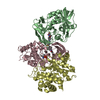
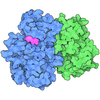
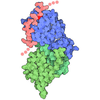
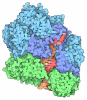
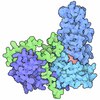
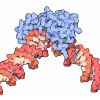
G1/S-specific cyclin-E1 / Cyclin-dependent kinase 2 / DNA damage-binding protein 1 / Protein cereblon 類似検索 - 構成要素
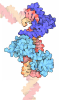
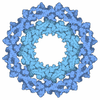
ジャーナル: Cell Chem Biol / 年: 2025 タイトル: CDK2 heterobifunctional degraders co-degrade CDK2 and cyclin E resulting in efficacy in CCNE1-amplified and overexpressed cancers. 著者: Nicholas Kwiatkowski / Tong Liang / Zhe Sha / Philip N Collier / Annan Yang / Murugappan Sathappa / Atanu Paul / Lijing Su / Xiaozhang Zheng / Robert Aversa / Kunhua Li / Revonda Mehovic / ...著者: Nicholas Kwiatkowski / Tong Liang / Zhe Sha / Philip N Collier / Annan Yang / Murugappan Sathappa / Atanu Paul / Lijing Su / Xiaozhang Zheng / Robert Aversa / Kunhua Li / Revonda Mehovic / Christina Kolodzy / Susanne B Breitkopf / Dapeng Chen / Charles L Howarth / Karen Yuan / Hakryul Jo / Joseph D Growney / Matthew Weiss / Juliet Williams / 要旨: CCNE1 amplification drives aberrant CDK2-cyclin E1 activity in cancer. Despite activity of CDK2 inhibitors, their therapeutic margins are limited by poor CDK selectivity. We developed a degrader with ...CCNE1 amplification drives aberrant CDK2-cyclin E1 activity in cancer. Despite activity of CDK2 inhibitors, their therapeutic margins are limited by poor CDK selectivity. We developed a degrader with high selectivity for CDK2 over CDK1 that also unexpectedly led to cyclin E1 degradation and potent and complete suppression of RB phosphorylation at concentrations with low CDK2 occupancy and negligible CDK1 degradation. Co-depletion of CDK2 and cyclin E1 also resensitized palbociclib-adapted breast cancer cells to cell cycle blockade. Overall, the improved potency and selectivity of the degrader for CDK2 over small-molecule inhibitors drives antiproliferative activity with greater specificity for CCNE1 cancer cells and RB dependency. Using an orally administered degrader, we demonstrate deep and sustained RB pathway suppression, which is needed to induce stasis in CCNE1 tumors. These results highlight the potential of this modality to target CDK2 potently and selectivity in this biomarker-defined patient population with high unmet need.
 ムービー
ムービー コントローラー

 万見
万見 データを開く
 基本情報
基本情報
 マップデータ
 試料
試料 キーワード
キーワード 機能・相同性情報
 Homo sapiens (ヒト)
 データ登録者
 米国, 1件
  引用
引用 構造の表示
構造の表示
 ダウンロードとリンク
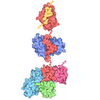
 emd_46464.png
 http://ftp.pdbj.org/pub/emdb/structures/EMD-46464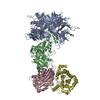



 Z (Sec.)
 Y (Row.)
 X (Col.)






 試料の構成要素
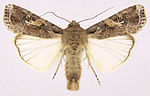 Spodoptera frugiperda (ツマジロクサヨトウ)
 解析
解析 電子顕微鏡法
 FIELD EMISSION GUN

