outer dynein arm docking complex / mucociliary clearance / protein localization to motile cilium / regulation of cilium movement / outer acrosomal membrane / regulation of brood size / establishment of left/right asymmetry / 9+0 motile cilium / sperm flagellum assembly / manchette assembly ...outer dynein arm docking complex / mucociliary clearance / protein localization to motile cilium / regulation of cilium movement / outer acrosomal membrane / regulation of brood size / establishment of left/right asymmetry / 9+0 motile cilium / sperm flagellum assembly / manchette assembly / epithelial cilium movement involved in determination of left/right asymmetry / axonemal A tubule inner sheath / axonemal B tubule inner sheath / regulation of flagellated sperm motility / protein polyglutamylation / cerebral cortex cell migration / regulation of calcineurin-NFAT signaling cascade / positive regulation of feeding behavior / Intraflagellar transport / Resolution of Sister Chromatid Cohesion / EML4 and NUDC in mitotic spindle formation / COPI-independent Golgi-to-ER retrograde traffic / COPI-mediated anterograde transport / outer dynein arm assembly / cilium-dependent cell motility / regulation of cilium beat frequency involved in ciliary motility / 9+2 motile cilium / regulation of store-operated calcium entry / MHC class II antigen presentation / cilium movement involved in cell motility / HSP90 chaperone cycle for steroid hormone receptors (SHR) in the presence of ligand / acrosomal membrane / axoneme assembly / regulation of cilium assembly / Aggrephagy / cilium movement / Separation of Sister Chromatids / calcium ion sensor activity / Loss of Nlp from mitotic centrosomes / Recruitment of mitotic centrosome proteins and complexes / Loss of proteins required for interphase microtubule organization from the centrosome / Recruitment of NuMA to mitotic centrosomes / Anchoring of the basal body to the plasma membrane / AURKA Activation by TPX2 / cilium organization / Regulation of PLK1 Activity at G2/M Transition / axonemal microtubule / gamma-tubulin ring complex / 9+0 non-motile cilium / ciliary rootlet / manchette / positive regulation of cell motility / sperm head-tail coupling apparatus / determination of left/right symmetry / 3'-5'-DNA exonuclease activity / UTP biosynthetic process / CTP biosynthetic process / ciliary transition zone / DNA catabolic process / motile cilium / nucleoside diphosphate kinase activity / Neutrophil degranulation / sperm principal piece / GTP biosynthetic process / Hydrolases; Acting on ester bonds; Exodeoxyribonucleases producing 5'-phosphomonoesters / centriolar satellite / AMP binding / ciliary base / regulation of dendrite morphogenesis / flagellated sperm motility / sperm end piece / microtubule organizing center / mitotic cytokinesis / regulation of signal transduction / regulation of cell division / ciliary tip / axoneme / alpha-tubulin binding / sperm flagellum / cilium assembly / cytoplasmic microtubule / beta-tubulin binding / centriole / microtubule-based process / sperm midpiece / Hsp70 protein binding / acrosomal vesicle / mitotic spindle organization / Hsp90 protein binding / mitotic spindle / G protein-coupled receptor binding / spindle / structural constituent of cytoskeleton / microtubule cytoskeleton / mitotic cell cycle / neuron differentiation / cilium / double-stranded RNA binding / microtubule / actin binding Similarity search - Function
Outer dynein arm-docking complex subunit 4 / Protein of unknown function DUF4541 / : / Cilia and flagella associated protein 90 / Protein of unknown function DUF4586 / Outer dynein arm-docking complex subunit 3 / Cilia-and flagella-associated protein 96 / FAM183 family / FAM183A and FAM183B related / : ...Outer dynein arm-docking complex subunit 4 / Protein of unknown function DUF4541 / : / Cilia and flagella associated protein 90 / Protein of unknown function DUF4586 / Outer dynein arm-docking complex subunit 3 / Cilia-and flagella-associated protein 96 / FAM183 family / FAM183A and FAM183B related / : / Echinoderm microtubule-associated protein first beta-propeller / Sperm-tail PG-rich repeat / Sperm-associated antigen 8 / Cilia- and flagella-associated protein 95 / NDPK7, first NDPk domain / Cilia- and flagella-associated protein 107 / : / : / : / Sperm-tail PG-rich repeat / Protein CFAP95 / ODAD1 central coiled coil region / Cilia- and flagella-associated protein 143 / Cilia and flagella associated protein 107 / Tektin / Cilia- and flagella-associated protein 276 / Sperm acrosome-associated protein 9 / : / Tektin family / Protein of unknown function (DUF3695) / Sperm acrosome-associated protein 9 / DJBP, EF-hand domain / EF-hand domain / Uncharacterised protein FAM166/UPF0605 / Cilia- and flagella-associated protein 77 / Protein Flattop / Ciliary microtubule inner protein 2B-like / Cilia- and flagella-associated protein 77 / Flattop / Nucleoside diphosphate kinase 7 / Piercer of microtubule wall 1/2 / Piercer of microtubule wall 1/2 / Cilia- and flagella-associated protein 141 / Cilia- and flagella-associated protein 141 / Cilia- and flagella-associated protein 161-like domain / : / : / EFHB C-terminal EF-hand domain / : / : / Nucleoside diphosphate kinase 7 N-terminal PH domain / Meiosis-specific nuclear structural protein 1 / Cilia- and flagella-associated protein 45 / NDPK7, second NDPk domain / Cilia- and flagella- associated protein 210 / CFAP53/TCHP / Trichohyalin-plectin-homology domain / Trichohyalin-plectin-homology domain / RIB43A / RIB43A / DM10 domain / EF-hand domain-containing protein EFHC1/EFHC2/EFHB / DM10 domain / DM10 domain profile. / Domains in hypothetical proteins in Drosophila, C. elegans and mammals. Occurs singly in some nucleoside diphosphate kinases. / Enkurin domain / : / Calmodulin-binding / Enkurin domain profile. / : / CFA20 domain / Cilia- and flagella-associated protein 20/CFAP20DC / CFA20 domain / Parkin co-regulated protein / Parkin co-regulated protein / Recoverin family / EF hand / Nucleoside diphosphate kinase / Nucleoside diphosphate kinase (NDPK)-like domain profile. / Nucleoside diphosphate kinase-like domain / Nucleoside diphosphate kinase / NDK / Nucleoside diphosphate kinase-like domain superfamily / EF-hand domain pair / Armadillo/plakoglobin ARM repeat profile. / Armadillo/beta-catenin-like repeat / Armadillo/beta-catenin-like repeats / Armadillo / Tetratricopeptide repeat / TPR repeat region circular profile. / Alpha tubulin / Tubulin-beta mRNA autoregulation signal. / Beta tubulin, autoregulation binding site / TPR repeat profile. / Beta tubulin / Tubulin / Tubulin, C-terminal / Tubulin C-terminal domain / Tubulin, conserved site / Tubulin subunits alpha, beta, and gamma signature. Similarity search - Domain/homology
Piercer of microtubule wall 2 protein / Cilia and flagella associated protein 77 / Cilia and flagella associated protein 90 / Sperm acrosome associated 9 / EF-hand domain-containing family member C2 / Ciliary microtubule associated protein 1C / EF-hand calcium-binding domain-containing protein 6 / Outer dynein arm-docking complex subunit 4 / Parkin coregulated gene protein / Tektin-3 ...Piercer of microtubule wall 2 protein / Cilia and flagella associated protein 77 / Cilia and flagella associated protein 90 / Sperm acrosome associated 9 / EF-hand domain-containing family member C2 / Ciliary microtubule associated protein 1C / EF-hand calcium-binding domain-containing protein 6 / Outer dynein arm-docking complex subunit 4 / Parkin coregulated gene protein / Tektin-3 / Outer dynein arm-docking complex subunit 3 / Cilia- and flagella-associated protein 144 / Enkurin / Outer dynein arm-docking complex subunit 2 / Cilia- and flagella-associated protein 276 / Cilia- and flagella- associated protein 210 / Cilia- and flagella-associated protein 52 / EF-hand domain-containing protein 1 / Sperm-associated antigen 8 / EF-hand domain-containing family member B / Outer dynein arm-docking complex subunit 1 / Cilia-and flagella-associated protein 96 / Cilia- and flagella-associated protein 53 / Cilia- and flagella-associated protein 161 / Tubulin alpha-1D chain / Meiosis-specific nuclear structural protein 1 / Tektin-2 / Cilia- and flagella-associated protein 107 / Tektin-4 / Ciliary microtubule inner protein 2B / Tektin-1 / Calaxin / Cilia- and flagella-associated protein 141 / Cilia- and flagella-associated protein 95 / RIB43A-like with coiled-coils protein 2 / Cilia- and flagella-associated protein 45 / Piercer of microtubule wall 1 protein / Tubulin beta-4B chain / Protein Flattop / Nucleoside diphosphate kinase 7 / Cilia- and flagella-associated protein 20 Similarity search - Component
Biological species
Bos taurus (domestic cattle)
Method
single particle reconstruction / cryo EM / Resolution: 3.52 Å
National Institutes of Health/National Institute of General Medical Sciences (NIH/NIGMS)
1R01 GM138854
United States
Citation
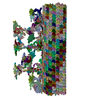
Journal: Nature / Year: 2025 Title: Structural diversity of axonemes across mammalian motile cilia. Authors: Miguel Ricardo Leung / Chen Sun / Jianwei Zeng / Jacob R Anderson / Qingwei Niu / Wei Huang / Willem E M Noteborn / Alan Brown / Tzviya Zeev-Ben-Mordehai / Rui Zhang / Abstract: Reproduction, development and homeostasis depend on motile cilia, whose rhythmic beating is powered by a microtubule-based molecular machine called the axoneme. Although an atomic model of the ...Reproduction, development and homeostasis depend on motile cilia, whose rhythmic beating is powered by a microtubule-based molecular machine called the axoneme. Although an atomic model of the axoneme is available for the alga Chlamydomonas reinhardtii, structures of mammalian axonemes are incomplete. Furthermore, we do not fully understand how molecular structures of axonemes vary across motile-ciliated cell types in the body. Here we use cryoelectron microscopy, cryoelectron tomography and proteomics to resolve the 96-nm modular repeat of axonemal doublet microtubules (DMTs) from both sperm flagella and epithelial cilia of the oviduct, brain ventricles and respiratory tract. We find that sperm DMTs are the most specialized, with epithelial cilia having only minor differences across tissues. We build a model of the mammalian sperm DMT, defining the positions and interactions of 181 proteins including 34 newly identified proteins. We elucidate the composition of radial spoke 3 and uncover binding sites of kinases associated with regeneration of ATP and regulation of ciliary motility. We discover a sperm-specific, axoneme-tethered T-complex protein ring complex (TRiC) chaperone that may contribute to construction or maintenance of the long flagella of mammalian sperm. We resolve axonemal dyneins in their prestroke states, illuminating conformational changes that occur during ciliary movement. Our results illustrate how elements of chemical and mechanical regulation are embedded within the axoneme, providing valuable resources for understanding the aetiology of ciliopathy and infertility, and exemplifying the discovery power of modern structural biology.
In the structure databanks used in Yorodumi, some data are registered as the other names, "COVID-19 virus" and "2019-nCoV". Here are the details of the virus and the list of structure data.
Jan 31, 2019. EMDB accession codes are about to change! (news from PDBe EMDB page)
EMDB accession codes are about to change! (news from PDBe EMDB page)
The allocation of 4 digits for EMDB accession codes will soon come to an end. Whilst these codes will remain in use, new EMDB accession codes will include an additional digit and will expand incrementally as the available range of codes is exhausted. The current 4-digit format prefixed with “EMD-” (i.e. EMD-XXXX) will advance to a 5-digit format (i.e. EMD-XXXXX), and so on. It is currently estimated that the 4-digit codes will be depleted around Spring 2019, at which point the 5-digit format will come into force.
The EM Navigator/Yorodumi systems omit the EMD- prefix.
Related info.:Q: What is EMD? / ID/Accession-code notation in Yorodumi/EM Navigator
Yorodumi is a browser for structure data from EMDB, PDB, SASBDB, etc.
This page is also the successor to EM Navigator detail page, and also detail information page/front-end page for Omokage search.
The word "yorodu" (or yorozu) is an old Japanese word meaning "ten thousand". "mi" (miru) is to see.
Related info.:EMDB / PDB / SASBDB / Comparison of 3 databanks / Yorodumi Search / Aug 31, 2016. New EM Navigator & Yorodumi / Yorodumi Papers / Jmol/JSmol / Function and homology information / Changes in new EM Navigator and Yorodumi
 Movie
Movie Controller

 Yorodumi
 Open data
 Basic information
 Map data
 Sample
 Keywords
 Function and homology information
 Bos taurus (domestic cattle)
 Authors
 United States, 1 items
  Citation
 Structure visualization
 Downloads & links
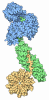
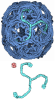
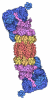
 emd_45801.png
 https://data.pdbj.org/pub/emdb/structures/EMD-45801

















 Z (Sec.)
 Y (Row.)
 X (Col.)


 Sample components
 Processing
 Electron microscopy
 FIELD EMISSION GUN


