National Institutes of Health/National Institute of Diabetes and Digestive and Kidney Disease (NIH/NIDDK)
DK123194
United States
Cancer Prevention and Research Institute of Texas (CPRIT)
RR190106
United States
Welch Foundation
I-2046-20200401
United States
Welch Foundation
I-2046-20230405
United States
Citation
Journal: Nat Commun / Year: 2025 Title: A repurposed AMP binding domain reveals mitochondrial protein AMPylation as a regulator of cellular metabolism. Authors: Abner Gonzalez / Alex Pon / Kelly Servage / Krzysztof Pawłowski / Yan Han / Anju Sreelatha / Abstract: Protein AMPylation, the covalent addition of adenosine monophosphate (AMP) to protein substrates, has been known as a post translational modification for over 50 years. Research in this field is ...Protein AMPylation, the covalent addition of adenosine monophosphate (AMP) to protein substrates, has been known as a post translational modification for over 50 years. Research in this field is largely underdeveloped due to the lack of tools that enable the systematic identification of AMPylated substrates. Here, we address this gap by developing an enrichment technique to isolate and study AMPylated proteins using a nucleotide-binding protein, hinT. Cryo-EM reconstruction of an AMPylated protein bound to hinT provides a structural basis for AMP selectivity. Using structure guided mutagenesis, we optimize enrichment to identify novel substrates of the evolutionarily conserved AMPylase, Selenoprotein O. We show that mammalian Selenoprotein O regulates metabolic flux through AMPylation of key mitochondrial proteins including glutamate dehydrogenase and pyruvate dehydrogenase. Our findings highlight the broader significance of AMPylation, an emerging post translational modification with critical roles in signal transduction and disease pathology. Furthermore, we establish a powerful enrichment platform for the discovery of novel AMPylated proteins to study the mechanisms and significance of protein AMPylation in cellular function.
In the structure databanks used in Yorodumi, some data are registered as the other names, "COVID-19 virus" and "2019-nCoV". Here are the details of the virus and the list of structure data.
Jan 31, 2019. EMDB accession codes are about to change! (news from PDBe EMDB page)
EMDB accession codes are about to change! (news from PDBe EMDB page)
The allocation of 4 digits for EMDB accession codes will soon come to an end. Whilst these codes will remain in use, new EMDB accession codes will include an additional digit and will expand incrementally as the available range of codes is exhausted. The current 4-digit format prefixed with “EMD-” (i.e. EMD-XXXX) will advance to a 5-digit format (i.e. EMD-XXXXX), and so on. It is currently estimated that the 4-digit codes will be depleted around Spring 2019, at which point the 5-digit format will come into force.
The EM Navigator/Yorodumi systems omit the EMD- prefix.
Related info.:Q: What is EMD? / ID/Accession-code notation in Yorodumi/EM Navigator
Yorodumi is a browser for structure data from EMDB, PDB, SASBDB, etc.
This page is also the successor to EM Navigator detail page, and also detail information page/front-end page for Omokage search.
The word "yorodu" (or yorozu) is an old Japanese word meaning "ten thousand". "mi" (miru) is to see.
Related info.:EMDB / PDB / SASBDB / Comparison of 3 databanks / Yorodumi Search / Aug 31, 2016. New EM Navigator & Yorodumi / Yorodumi Papers / Jmol/JSmol / Function and homology information / Changes in new EM Navigator and Yorodumi
 Movie
Movie Controller


 Open data
 Basic information
 Map data
 Sample
 Keywords
 Function and homology information
 Escherichia coli (E. coli)
 Authors
 United States, 4 items
  Citation
 Structure visualization
 Downloads & links
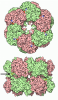
 emd_42896.png
 http://ftp.pdbj.org/pub/emdb/structures/EMD-42896



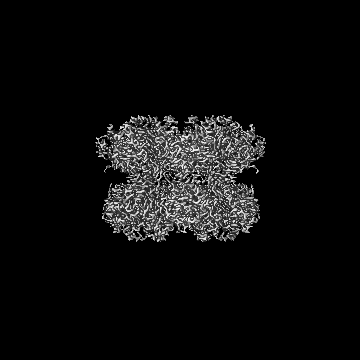
 Z (Sec.)
 Y (Row.)
 X (Col.)







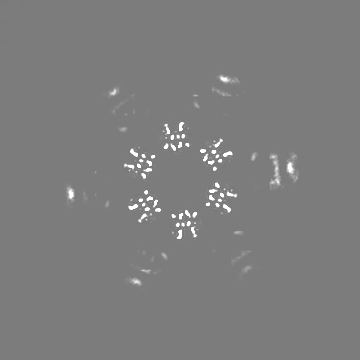





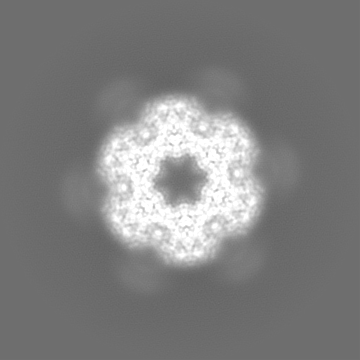


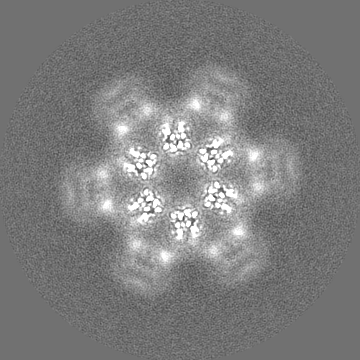


 Sample components
 Processing
 Electron microscopy
 FIELD EMISSION GUN

