 ムービー
ムービー コントローラー


+ データを開く

- 基本情報
基本情報
| 登録情報 |  | |||||||||
|---|---|---|---|---|---|---|---|---|---|---|
| タイトル | Cryo-EM structure of human GPR4-Gs complex | |||||||||
 マップデータ マップデータ | ||||||||||
 試料 試料 |
| |||||||||
 キーワード キーワード | GPCR / class A / GPR4-Gs / cryo-EM / protein sensing / active state / MEMBRANE PROTEIN/IMMUNE SYSTEM / MEMBRANE PROTEIN-IMMUNE SYSTEM complex | |||||||||
| 機能・相同性 |  機能・相同性情報 機能・相同性情報glomerular mesangial cell development / Class A/1 (Rhodopsin-like receptors) / regulation of vascular permeability / G-protein activation / Activation of the phototransduction cascade / Glucagon-type ligand receptors / Thromboxane signalling through TP receptor / Sensory perception of sweet, bitter, and umami (glutamate) taste / G beta:gamma signalling through PI3Kgamma / G beta:gamma signalling through CDC42 ...glomerular mesangial cell development / Class A/1 (Rhodopsin-like receptors) / regulation of vascular permeability / G-protein activation / Activation of the phototransduction cascade / Glucagon-type ligand receptors / Thromboxane signalling through TP receptor / Sensory perception of sweet, bitter, and umami (glutamate) taste / G beta:gamma signalling through PI3Kgamma / G beta:gamma signalling through CDC42 / Cooperation of PDCL (PhLP1) and TRiC/CCT in G-protein beta folding / Activation of G protein gated Potassium channels / Inhibition of voltage gated Ca2+ channels via Gbeta/gamma subunits / Ca2+ pathway / G alpha (z) signalling events / High laminar flow shear stress activates signaling by PIEZO1 and PECAM1:CDH5:KDR in endothelial cells / Glucagon-like Peptide-1 (GLP1) regulates insulin secretion / Vasopressin regulates renal water homeostasis via Aquaporins / Adrenaline,noradrenaline inhibits insulin secretion / ADP signalling through P2Y purinoceptor 12 / G alpha (q) signalling events / angiogenesis involved in wound healing / G alpha (i) signalling events / Thrombin signalling through proteinase activated receptors (PARs) / Activation of G protein gated Potassium channels / G-protein activation / G beta:gamma signalling through PI3Kgamma / Prostacyclin signalling through prostacyclin receptor / G beta:gamma signalling through PLC beta / ADP signalling through P2Y purinoceptor 1 / Thromboxane signalling through TP receptor / Presynaptic function of Kainate receptors / G beta:gamma signalling through CDC42 / Inhibition of voltage gated Ca2+ channels via Gbeta/gamma subunits / G alpha (12/13) signalling events / Glucagon-type ligand receptors / G beta:gamma signalling through BTK / ADP signalling through P2Y purinoceptor 12 / Adrenaline,noradrenaline inhibits insulin secretion / Cooperation of PDCL (PhLP1) and TRiC/CCT in G-protein beta folding / Ca2+ pathway / G alpha (z) signalling events / Thrombin signalling through proteinase activated receptors (PARs) / response to acidic pH / Extra-nuclear estrogen signaling / G alpha (s) signalling events / G alpha (q) signalling events / photoreceptor outer segment membrane / spectrin binding / G alpha (i) signalling events / Glucagon-like Peptide-1 (GLP1) regulates insulin secretion / High laminar flow shear stress activates signaling by PIEZO1 and PECAM1:CDH5:KDR in endothelial cells / Vasopressin regulates renal water homeostasis via Aquaporins / alkylglycerophosphoethanolamine phosphodiesterase activity / positive regulation of Rho protein signal transduction / adenylate cyclase-activating G protein-coupled bile acid receptor signaling pathway / adenylate cyclase-activating serotonin receptor signaling pathway / regulation of skeletal muscle contraction / PKA activation in glucagon signalling / hair follicle placode formation / developmental growth / intracellular transport / photoreceptor outer segment / D1 dopamine receptor binding / regulation of cell adhesion / vascular endothelial cell response to laminar fluid shear stress / renal water homeostasis / activation of adenylate cyclase activity / Hedgehog 'off' state / cellular response to acidic pH / adenylate cyclase-activating adrenergic receptor signaling pathway / cardiac muscle cell apoptotic process / photoreceptor inner segment / cellular response to glucagon stimulus / intracellular glucose homeostasis / negative regulation of angiogenesis / positive regulation of insulin secretion involved in cellular response to glucose stimulus / adenylate cyclase activator activity / trans-Golgi network membrane / negative regulation of inflammatory response to antigenic stimulus / response to prostaglandin E / bone development / platelet aggregation / G protein-coupled receptor activity / cognition / G-protein beta/gamma-subunit complex binding / positive regulation of insulin secretion / positive regulation of inflammatory response / Glucagon signaling in metabolic regulation / Prostacyclin signalling through prostacyclin receptor / sensory perception of smell / Glucagon-type ligand receptors / Vasopressin regulates renal water homeostasis via Aquaporins / Glucagon-like Peptide-1 (GLP1) regulates insulin secretion / G alpha (z) signalling events / cellular response to catecholamine stimulus / ADORA2B mediated anti-inflammatory cytokines production / adenylate cyclase-activating dopamine receptor signaling pathway / GPER1 signaling / cellular response to prostaglandin E stimulus 類似検索 - 分子機能 | |||||||||
| 生物種 |  Homo sapiens (ヒト) / Homo sapiens (ヒト) /   Rattus norvegicus (ドブネズミ) / Rattus norvegicus (ドブネズミ) /  Bos taurus (ウシ) / synthetic construct (人工物) Bos taurus (ウシ) / synthetic construct (人工物) | |||||||||
| 手法 | 単粒子再構成法 / クライオ電子顕微鏡法 / 解像度: 2.4 Å | |||||||||
 データ登録者 データ登録者 | Chen LN / Mao CY / Cheng SZ / Liu YF / Fu YF / Ma XY / Xu P / Ji SY / Wang WW / Shen DD ...Chen LN / Mao CY / Cheng SZ / Liu YF / Fu YF / Ma XY / Xu P / Ji SY / Wang WW / Shen DD / Zhang HB / Shen QY / Chai R / Zhang M / Yang L / Han F / Cai XJ / Zhang Y | |||||||||
| 資金援助 | 1件
| |||||||||
 引用 引用 | ジャーナル: Mol Cell / 年: 2025 タイトル: Proton perception and activation of a proton-sensing GPCR. 著者: Li-Nan Chen / Hui Zhou / Kun Xi / Shizhuo Cheng / Yongfeng Liu / Yifan Fu / Xiangyu Ma / Ping Xu / Su-Yu Ji / Wei-Wei Wang / Dan-Dan Shen / Huibing Zhang / Qingya Shen / Renjie Chai / Min ...著者: Li-Nan Chen / Hui Zhou / Kun Xi / Shizhuo Cheng / Yongfeng Liu / Yifan Fu / Xiangyu Ma / Ping Xu / Su-Yu Ji / Wei-Wei Wang / Dan-Dan Shen / Huibing Zhang / Qingya Shen / Renjie Chai / Min Zhang / Lin Yang / Feng Han / Chunyou Mao / Xiujun Cai / Yan Zhang /  要旨: Maintaining pH at cellular, tissular, and systemic levels is essential for human health. Proton-sensing GPCRs regulate physiological and pathological processes by sensing the extracellular acidity. ...Maintaining pH at cellular, tissular, and systemic levels is essential for human health. Proton-sensing GPCRs regulate physiological and pathological processes by sensing the extracellular acidity. However, the molecular mechanism of proton sensing and activation of these receptors remains elusive. Here, we present cryoelectron microscopy (cryo-EM) structures of human GPR4, a prototypical proton-sensing GPCR, in its inactive and active states. Our studies reveal that three extracellular histidine residues are crucial for proton sensing of human GPR4. The binding of protons induces substantial conformational changes in GPR4's ECLs, particularly in ECL2, which transforms from a helix-loop to a β-turn-β configuration. This transformation leads to the rearrangements of H-bond network and hydrophobic packing, relayed by non-canonical motifs to accommodate G proteins. Furthermore, the antagonist NE52-QQ57 hinders human GPR4 activation by preventing hydrophobic stacking rearrangement. Our findings provide a molecular framework for understanding the activation mechanism of a human proton-sensing GPCR, aiding future drug discovery. | |||||||||
| 履歴 |
|
- 構造の表示
構造の表示
| 添付画像 |
|---|

- ダウンロードとリンク
-EMDBアーカイブ
| マップデータ | emd_39865.map.gz | 29.2 MB | EMDBマップデータ形式 | |
|---|---|---|---|---|
| ヘッダ (付随情報) | emd-39865-v30.xmlemd-39865.xml | 25 KB 25 KB | 表示 表示 | EMDBヘッダ |
| 画像 |  emd_39865.png emd_39865.png | 86 KB | ||
| Filedesc metadata | emd-39865.cif.gz | 7.2 KB | ||
| その他 | emd_39865_half_map_1.map.gzemd_39865_half_map_2.map.gz | 33.1 MB 33.1 MB | ||
| アーカイブディレクトリ |  http://ftp.pdbj.org/pub/emdb/structures/EMD-39865ftp://ftp.pdbj.org/pub/emdb/structures/EMD-39865 http://ftp.pdbj.org/pub/emdb/structures/EMD-39865ftp://ftp.pdbj.org/pub/emdb/structures/EMD-39865 | HTTPS FTP |
-関連構造データ


-リンク
| EMDBのページ | EMDB (EBI/PDBe) / EMDataResource |
|---|---|
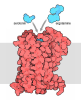
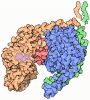
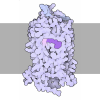
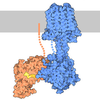
| 「今月の分子」の関連する項目 |

-マップ
| ファイル | ダウンロード / ファイル: emd_39865.map.gz / 形式: CCP4 / 大きさ: 42.9 MB / タイプ: IMAGE STORED AS FLOATING POINT NUMBER (4 BYTES) | ||||||||||||||||||||||||||||||||||||
|---|---|---|---|---|---|---|---|---|---|---|---|---|---|---|---|---|---|---|---|---|---|---|---|---|---|---|---|---|---|---|---|---|---|---|---|---|---|
| 投影像・断面図 | 画像のコントロール
画像は Spider により作成 | ||||||||||||||||||||||||||||||||||||
| ボクセルのサイズ | X=Y=Z: 0.93 Å | ||||||||||||||||||||||||||||||||||||
| 密度 |
| ||||||||||||||||||||||||||||||||||||
| 対称性 | 空間群: 1 | ||||||||||||||||||||||||||||||||||||
| 詳細 | EMDB XML:
|
 Z (Sec.)
 Y (Row.)
 X (Col.)


-添付データ
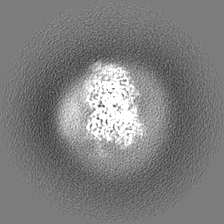
-ハーフマップ: #2
| ファイル | emd_39865_half_map_1.map | ||||||||||||
|---|---|---|---|---|---|---|---|---|---|---|---|---|---|
| 投影像・断面図 |
| ||||||||||||
| 密度ヒストグラム |
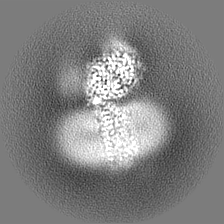


-ハーフマップ: #1
| ファイル | emd_39865_half_map_2.map | ||||||||||||
|---|---|---|---|---|---|---|---|---|---|---|---|---|---|
| 投影像・断面図 |
| ||||||||||||
| 密度ヒストグラム |


- 試料の構成要素
-全体 : Cryo-EM structure of human GPR4-Gs complex
| 全体 | 名称: Cryo-EM structure of human GPR4-Gs complex |
|---|---|
| 要素 |
|
-超分子 #1: Cryo-EM structure of human GPR4-Gs complex
| 超分子 | 名称: Cryo-EM structure of human GPR4-Gs complex / タイプ: complex / ID: 1 / 親要素: 0 / 含まれる分子: #1-#5 |
|---|---|
| 由来(天然) | 生物種: Homo sapiens (ヒト) |
-分子 #1: Guanine nucleotide-binding protein G(I)/G(S)/G(T) subunit beta-1
| 分子 | 名称: Guanine nucleotide-binding protein G(I)/G(S)/G(T) subunit beta-1 タイプ: protein_or_peptide / ID: 1 / コピー数: 1 / 光学異性体: LEVO |
|---|---|
| 由来(天然) | 生物種: Rattus norvegicus (ドブネズミ) |
| 分子量 | 理論値: 37.198656 KDa |
| 組換発現 | 生物種:  Trichoplusia ni (イラクサキンウワバ) Trichoplusia ni (イラクサキンウワバ) |
| 配列 | 文字列: ELDQLRQEAE QLKNQIRDAR KACADATLSQ ITNNIDPVGR IQMRTRRTLR GHLAKIYAMH WGTDSRLLVS ASQDGKLIIW DSYTTNKVH AIPLRSSWVM TCAYAPSGNY VACGGLDNIC SIYNLKTREG NVRVSRELAG HTGYLSCCRF LDDNQIVTSS G DTTCALWD ...文字列: ELDQLRQEAE QLKNQIRDAR KACADATLSQ ITNNIDPVGR IQMRTRRTLR GHLAKIYAMH WGTDSRLLVS ASQDGKLIIW DSYTTNKVH AIPLRSSWVM TCAYAPSGNY VACGGLDNIC SIYNLKTREG NVRVSRELAG HTGYLSCCRF LDDNQIVTSS G DTTCALWD IETGQQTTTF TGHTGDVMSL SLAPDTRLFV SGACDASAKL WDVREGMCRQ TFTGHESDIN AICFFPNGNA FA TGSDDAT CRLFDLRADQ ELMTYSHDNI ICGITSVSFS KSGRLLLAGY DDFNCNVWDA LKADRAGVLA GHDNRVSCLG VTD DGMAVA TGSWDSFLKI WN UniProtKB: Guanine nucleotide-binding protein G(I)/G(S)/G(T) subunit beta-1 |
-分子 #2: Isoform Gnas-2 of Guanine nucleotide-binding protein G(s) subunit...
| 分子 | 名称: Isoform Gnas-2 of Guanine nucleotide-binding protein G(s) subunit alpha isoforms short タイプ: protein_or_peptide / ID: 2 / コピー数: 1 / 光学異性体: LEVO EC番号: 加水分解酵素; 酸無水物に作用; GTPに作用・細胞または細胞小器官の運動に関与 |
|---|---|
| 由来(天然) | 生物種: Homo sapiens (ヒト) |
| 分子量 | 理論値: 43.234875 KDa |
| 組換発現 | 生物種: Trichoplusia ni (イラクサキンウワバ) |
| 配列 | 文字列: DQRNEEKAQR EANKKIEKQL QKDKQVYRAT HRLLLLGAGE SGKSTIVKQM RILHVNGFNG DSEKATKVQD IKNNLKEAIE TIVAAMSNL VPPVELANPE NQFRVDYILS VMNVPDFDFP PEFYEHAKAL WEDEGVRACY ERSNEYQLID CAQYFLDKID V IKQADYVP ...文字列: DQRNEEKAQR EANKKIEKQL QKDKQVYRAT HRLLLLGAGE SGKSTIVKQM RILHVNGFNG DSEKATKVQD IKNNLKEAIE TIVAAMSNL VPPVELANPE NQFRVDYILS VMNVPDFDFP PEFYEHAKAL WEDEGVRACY ERSNEYQLID CAQYFLDKID V IKQADYVP SDQDLLRCRV LTSGIFETKF QVDKVNFHMF DVGAQRDERR KWIQCFNDVT AIIFVVASSS YNMVIREDNQ TN RLQAALK LFDSIWNNKW LRDTSVILFL NKQDLLAEKV LAGKSKIEDY FPEFARYTTP EDATPEPGED PRVTRAKYFI RDE FLRIST ASGDGRHYCY PHFTCAVDTE NIRRVFNDCR DIIQRMHLRQ YELL UniProtKB: Guanine nucleotide-binding protein G(s) subunit alpha isoforms short |
-分子 #3: Guanine nucleotide-binding protein G(I)/G(S)/G(O) subunit gamma-2
| 分子 | 名称: Guanine nucleotide-binding protein G(I)/G(S)/G(O) subunit gamma-2 タイプ: protein_or_peptide / ID: 3 / コピー数: 1 / 光学異性体: LEVO |
|---|---|
| 由来(天然) | 生物種: Bos taurus (ウシ) |
| 分子量 | 理論値: 6.261229 KDa |
| 組換発現 | 生物種: Trichoplusia ni (イラクサキンウワバ) |
| 配列 | 文字列: TASIAQARKL VEQLKMEANI DRIKVSKAAA DLMAYCEAHA KEDPLLTPVP ASENPFR UniProtKB: Guanine nucleotide-binding protein G(I)/G(S)/G(O) subunit gamma-2 |
-分子 #4: Nanobody-35
| 分子 | 名称: Nanobody-35 / タイプ: protein_or_peptide / ID: 4 / コピー数: 1 / 光学異性体: LEVO |
|---|---|
| 由来(天然) | 生物種: synthetic construct (人工物) |
| 分子量 | 理論値: 13.711284 KDa |
| 組換発現 | 生物種:   Escherichia coli (大腸菌) Escherichia coli (大腸菌) |
| 配列 | 文字列: QVQLQESGGG LVQPGGSLRL SCAASGFTFS NYKMNWVRQA PGKGLEWVSD ISQSGASISY TGSVKGRFTI SRDNAKNTLY LQMNSLKPE DTAVYYCARC PAPFTRDCFD VTSTTYAYRG QGTQVTV |
-分子 #5: G-protein coupled receptor 4
| 分子 | 名称: G-protein coupled receptor 4 / タイプ: protein_or_peptide / ID: 5 / コピー数: 1 / 光学異性体: LEVO |
|---|---|
| 由来(天然) | 生物種: Homo sapiens (ヒト) |
| 分子量 | 理論値: 34.657527 KDa |
| 組換発現 | 生物種: Homo sapiens (ヒト) |
| 配列 | 文字列: GCHVDSRVDH LFPPSLYIFV IGVGLPTNCL ALWAAYRQVQ QRNELGVYLM NLSIADLLYI CTLPLWVDYF LHHDNWIHGP GSCKLFGFI FYTNIYISIA FLCCISVDRY LAVAHPLRFA RLRRVKTAVA VSSVVWATEL GANSAPLFHD ELFRDRYNHT F CFEKFPME ...文字列: GCHVDSRVDH LFPPSLYIFV IGVGLPTNCL ALWAAYRQVQ QRNELGVYLM NLSIADLLYI CTLPLWVDYF LHHDNWIHGP GSCKLFGFI FYTNIYISIA FLCCISVDRY LAVAHPLRFA RLRRVKTAVA VSSVVWATEL GANSAPLFHD ELFRDRYNHT F CFEKFPME GWVAWMNLYR VFVGFLFPWA LMLLSYRGIL RAVRGSVSTE RQEKAKIKRL ALSLIAIVLV CFAPYHVLLL SR SAIYLGR PWDCGFEERV FSAYHSSLAF TSLNCVADPI LYCLVNEGAR SDVAKALHNL LRFLAS UniProtKB: G-protein coupled receptor 4 |
-分子 #6: CHOLESTEROL
| 分子 | 名称: CHOLESTEROL / タイプ: ligand / ID: 6 / コピー数: 2 / 式: CLR |
|---|---|
| 分子量 | 理論値: 386.654 Da |
| Chemical component information | 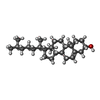 ChemComp-CLR: |
-分子 #7: water
| 分子 | 名称: water / タイプ: ligand / ID: 7 / コピー数: 1 / 式: HOH |
|---|---|
| 分子量 | 理論値: 18.015 Da |
| Chemical component information |  ChemComp-HOH: |
-実験情報
-構造解析
| 手法 | クライオ電子顕微鏡法 |
|---|---|
 解析 解析 | 単粒子再構成法 |
| 試料の集合状態 | particle |
-試料調製
| 緩衝液 | pH: 6 |
|---|---|
| 凍結 | 凍結剤: ETHANE |
- 電子顕微鏡法
| 顕微鏡 | TFS KRIOS |
|---|---|
| 撮影 | フィルム・検出器のモデル: FEI FALCON IV (4k x 4k) 平均電子線量: 52.0 e/Å2 |
| 電子線 | 加速電圧: 300 kV / 電子線源:  FIELD EMISSION GUN FIELD EMISSION GUN |
| 電子光学系 | 照射モード: FLOOD BEAM / 撮影モード: BRIGHT FIELD / Cs: 2.7 mm / 最大 デフォーカス(公称値): 1.5 µm 最小 デフォーカス(公称値): 0.7000000000000001 µm |
| 試料ステージ | 試料ホルダーモデル: FEI TITAN KRIOS AUTOGRID HOLDER ホルダー冷却材: NITROGEN |
| 実験機器 |  モデル: Titan Krios / 画像提供: FEI Company |
