[English] 日本語
Yorodumi
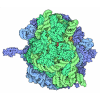
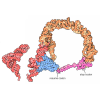
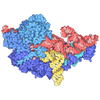
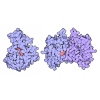
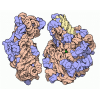
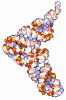
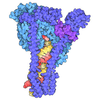
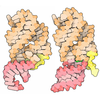
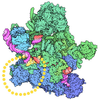
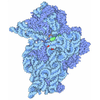
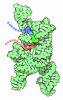
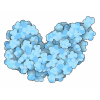
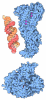
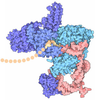
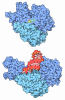
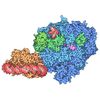
- PDB-9ske: Model of M. pneumoniae 50S RRF EF-G -

+
Open data


ID or keywords:

Loading...

-
Basic information

Entry
Database: PDB / ID: 9ske
TitleModel of M. pneumoniae 50S RRF EF-G
Components
  • (50S ribosomal protein ...) x 6
  • (Large ribosomal subunit protein ...) x 24
  • 23S ribosomal RNA
  • 5S ribosomal RNA
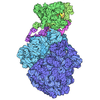
  • Elongation factor G
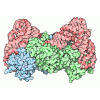
  • Ribosome-recycling factor
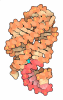
  • tRNA-Phe
KeywordsTRANSLATION / 50S / ribosome
Function / homology
Function and homology information


ribosome disassembly / ribosomal large subunit binding / translation elongation factor activity / translational termination / transferase activity / large ribosomal subunit / 5S rRNA binding / ribosomal large subunit assembly / large ribosomal subunit rRNA binding / tRNA binding ...ribosome disassembly / ribosomal large subunit binding / translation elongation factor activity / translational termination / transferase activity / large ribosomal subunit / 5S rRNA binding / ribosomal large subunit assembly / large ribosomal subunit rRNA binding / tRNA binding / cytosolic large ribosomal subunit / cytoplasmic translation / response to antibiotic / rRNA binding / negative regulation of translation / ribonucleoprotein complex / structural constituent of ribosome / ribosome / translation / mRNA binding / GTPase activity / GTP binding / cytoplasm
Similarity search - Function
Ribosome recycling factor / Ribosome recycling factor domain / RRF superfamily / Ribosome recycling factor / Translation elongation factor EFG/EF2 / : / Elongation factor G, domain III / EFG, domain V / Ribosomal protein L7/L12, oligomerisation / Ribosomal protein L7/L12, oligomerisation domain superfamily ...Ribosome recycling factor / Ribosome recycling factor domain / RRF superfamily / Ribosome recycling factor / Translation elongation factor EFG/EF2 / : / Elongation factor G, domain III / EFG, domain V / Ribosomal protein L7/L12, oligomerisation / Ribosomal protein L7/L12, oligomerisation domain superfamily / Ribosomal protein L7/L12 dimerisation domain / Ribosomal protein L7/L12 / Ribosomal protein L7/L12, C-terminal / Ribosomal protein L7/L12 C-terminal domain / Ribosomal protein L7/L12, C-terminal/adaptor protein ClpS-like / Ribosomal protein uL10 C-terminal region / Elongation Factor G, domain II / Elongation Factor G, domain III / Ribosomal protein L10, eubacterial, conserved site / Ribosomal protein L10 signature. / Ribosomal protein L10 / Elongation factor G, domain IV / Translation elongation factor EFG/EF2, domain IV / Elongation factor G, domain IV / Elongation factor G C-terminus / Elongation factor EFG, domain V-like / Elongation factor G C-terminus / EF-G domain III/V-like / : / Tr-type G domain, conserved site / Translational (tr)-type guanine nucleotide-binding (G) domain signature. / : / Translation elongation factor EFTu-like, domain 2 / Ribosomal protein L11, bacterial-type / Elongation factor Tu domain 2 / Ribosomal protein L31 type A / Translational (tr)-type GTP-binding domain / Elongation factor Tu GTP binding domain / Translational (tr)-type guanine nucleotide-binding (G) domain profile. / Ribosomal protein L31 signature. / Ribosomal protein L31 / Ribosomal protein L31 superfamily / Ribosomal protein L31 / Ribosomal protein L11, conserved site / Ribosomal protein L11 signature. / Ribosomal protein L10-like domain superfamily / Ribosomal protein L10P / Ribosomal protein L10 / Ribosomal protein L9 signature. / Ribosomal protein L16 signature 1. / Ribosomal protein L21, conserved site / Ribosomal protein L21 signature. / Ribosomal protein L9, bacteria/chloroplast / Ribosomal protein L6, conserved site / Ribosomal protein L9, C-terminal / Ribosomal protein L9, C-terminal domain / Ribosomal protein L6 signature 1. / Ribosomal protein L9, C-terminal domain superfamily / : / Ribosomal protein L11, N-terminal / Ribosomal protein L11, N-terminal domain / Ribosomal protein L16 signature 2. / Ribosomal protein L11/L12 / Ribosomal protein L11, C-terminal / Ribosomal protein L11, C-terminal domain superfamily / Ribosomal protein L11/L12, N-terminal domain superfamily / Ribosomal protein L11/L12 / Ribosomal protein L16, conserved site / Ribosomal protein L11, RNA binding domain / Ribosomal protein L17 signature. / Ribosomal protein L36 signature. / : / Ribosomal protein L33, conserved site / Ribosomal protein L33 signature. / Ribosomal protein L28/L24 superfamily / Ribosomal protein L32p, bacterial type / Ribosomal protein L35, conserved site / Ribosomal protein L35 signature. / Ribosomal protein L9 / Ribosomal protein L9, N-terminal domain superfamily / Ribosomal protein L9, N-terminal / Ribosomal protein L9, N-terminal domain / Ribosomal protein L28 / Ribosomal protein L35, non-mitochondrial / Ribosomal protein L18, bacterial-type / : / Ribosomal protein L6, bacterial-type / Ribosomal protein L5, bacterial-type / Ribosomal protein L9/RNase H1, N-terminal / Ribosomal protein L19, conserved site / Ribosomal protein L19 signature. / : / Ribosomal protein L20 signature. / Ribosomal protein L36 / Ribosomal protein L36 superfamily / Ribosomal protein L36 / Ribosomal protein L34, conserved site / Ribosomal protein L34 signature. / Ribosomal protein L14P, bacterial-type / Ribosomal protein L27, conserved site
Similarity search - Domain/homology
: / : / RNA / RNA (> 10) / RNA (> 100) / RNA (> 1000) / Large ribosomal subunit protein uL16 / Large ribosomal subunit protein bL36 / Large ribosomal subunit protein bL19 / Ribosome-recycling factor ...: / : / RNA / RNA (> 10) / RNA (> 100) / RNA (> 1000) / Large ribosomal subunit protein uL16 / Large ribosomal subunit protein bL36 / Large ribosomal subunit protein bL19 / Ribosome-recycling factor / Large ribosomal subunit protein bL28 / Large ribosomal subunit protein uL13 / Large ribosomal subunit protein bL32 / Large ribosomal subunit protein bL12 / Large ribosomal subunit protein uL10 / Large ribosomal subunit protein bL35 / Large ribosomal subunit protein bL27 / Large ribosomal subunit protein bL9 / Elongation factor G / Large ribosomal subunit protein uL11 / Large ribosomal subunit protein uL22 / Large ribosomal subunit protein uL2 / Large ribosomal subunit protein uL23 / Large ribosomal subunit protein uL4 / Large ribosomal subunit protein uL3 / Large ribosomal subunit protein bL34 / Large ribosomal subunit protein bL33A / Large ribosomal subunit protein bL31 / Large ribosomal subunit protein bL20 / Large ribosomal subunit protein bL21 / Large ribosomal subunit protein uL15 / Large ribosomal subunit protein uL18 / Large ribosomal subunit protein uL6 / Large ribosomal subunit protein uL5 / Large ribosomal subunit protein uL24 / Large ribosomal subunit protein uL14 / Large ribosomal subunit protein uL29 / Large ribosomal subunit protein bL17
Similarity search - Component
Biological speciesMycoplasmoides pneumoniae M129 (bacteria)
MethodELECTRON MICROSCOPY / subtomogram averaging / cryo EM / Resolution: 4.8 Å
AuthorsDobbs, J.M. / Mahamid, J.
Funding support United States, Denmark, 2items
OrganizationGrant numberCountry
Chan Zuckerberg Initiative2021-234620 United States
Independent Research Fund Denmark - Medical Sciences0106-00010A Denmark
CitationJournal: Cell / Year: 2026
Title: Single-cell visual proteomics of a minimal bacterium reveals structural coordination of gene expression machineries.
Authors: Joseph M Dobbs / Rasmus K Jensen / Julia Mahamid /
Abstract: Translation is a central process in gene expression. Its regulation is complex, depends on factors that include cell state and the subcellular environment, and is subject to modulation via crosstalk ...Translation is a central process in gene expression. Its regulation is complex, depends on factors that include cell state and the subcellular environment, and is subject to modulation via crosstalk to processes such as transcription or translocation. Here, we used cryo-electron tomography of native and antibiotic-perturbed Mycoplasma pneumoniae cells to resolve 140 maps that recapitulate bacterial translation during the initiation, elongation, and recycling phases. We visualized multiple transcription-translation complexes, allowing us to propose a threading-based translation reinitiation mechanism and to provide structural evidence for a long-hypothesized supercomplex that coordinates transcription, translation, and membrane attachment. We resolved abundant membrane-associated large ribosomal subunits and suggest that dissociation from membranes depends on the conditional initiation of new translation, consistent with a potentially conserved mechanism in mammalian cells. This work visualizes the multilayered control of bacterial translation and demonstrates the power of in-cell structural biology to investigate regulatory circuits in gene expression.
History
DepositionSep 2, 2025Deposition site: PDBE / Processing site: PDBE
Revision 1.0Sep 23, 2026Provider: repository / Type: Initial release
Revision 1.1Oct 7, 2026Group: Database references / Category: citation / citation_author
Item: _citation.journal_abbrev / _citation.journal_id_CSD ..._citation.journal_abbrev / _citation.journal_id_CSD / _citation.journal_id_ISSN / _citation.pdbx_database_id_DOI / _citation.pdbx_database_id_PubMed / _citation.title / _citation.year / _citation_author.identifier_ORCID

-
Structure visualization

Structure viewerMolecule:
MolmilJmol/JSmol

Downloads & links

-
Assembly

Deposited unit
0: Large ribosomal subunit protein bL34
1: 50S ribosomal protein L35
2: 50S ribosomal protein L36
3: 23S ribosomal RNA
4: 5S ribosomal RNA
7: Ribosome-recycling factor
8: tRNA-Phe
A: Elongation factor G
B: 50S ribosomal protein L7/L12
C: 50S ribosomal protein L7/L12
D: 50S ribosomal protein L7/L12
E: 50S ribosomal protein L7/L12
F: 50S ribosomal protein L10
a: Large ribosomal subunit protein uL2
b: Large ribosomal subunit protein uL3
c: Large ribosomal subunit protein uL4
d: Large ribosomal subunit protein uL5
e: Large ribosomal subunit protein uL6
f: Large ribosomal subunit protein bL9
h: Large ribosomal subunit protein uL11
i: Large ribosomal subunit protein uL13
j: 50S ribosomal protein L14
k: Large ribosomal subunit protein uL15
l: Large ribosomal subunit protein uL16
m: Large ribosomal subunit protein bL17
n: Large ribosomal subunit protein uL18
o: Large ribosomal subunit protein bL19
p: Large ribosomal subunit protein bL20
q: Large ribosomal subunit protein bL21
r: Large ribosomal subunit protein uL22
s: Large ribosomal subunit protein uL23
t: 50S ribosomal protein L24
u: Large ribosomal subunit protein bL27
v: Large ribosomal subunit protein bL28
w: Large ribosomal subunit protein uL29
x: Large ribosomal subunit protein bL31
y: Large ribosomal subunit protein bL32
z: Large ribosomal subunit protein bL33A


Theoretical massNumber of molelcules
Total (without water)1,541,07638
Polymers1,541,07638
Non-polymers00
Water00
1


  • Idetical with deposited unit
  • defined by author&software
  • Evidence: electron microscopy, not applicable
TypeNameSymmetry operationNumber
identity operation1_555x,y,z1

-
Components

+
Large ribosomal subunit protein ... , 24 types, 24 molecules 0abcdefhiklmnopqrsuvwxyz

#1: Protein/peptide Large ribosomal subunit protein bL34 / 50S ribosomal protein L34


Mass: 5459.579 Da / Num. of mol.: 1 / Source method: isolated from a natural source / Source: (natural) Mycoplasmoides pneumoniae M129 (bacteria) / References: UniProt: P78006
#11: Protein Large ribosomal subunit protein uL2 / 50S ribosomal protein L2


Mass: 31672.504 Da / Num. of mol.: 1 / Source method: isolated from a natural source / Source: (natural) Mycoplasmoides pneumoniae M129 (bacteria) / References: UniProt: P75577
#12: Protein Large ribosomal subunit protein uL3 / 50S ribosomal protein L3


Mass: 25067.930 Da / Num. of mol.: 1 / Source method: isolated from a natural source / Source: (natural) Mycoplasmoides pneumoniae M129 (bacteria) / References: UniProt: P75580
#13: Protein Large ribosomal subunit protein uL4 / 50S ribosomal protein L4


Mass: 23372.195 Da / Num. of mol.: 1 / Source method: isolated from a natural source / Source: (natural) Mycoplasmoides pneumoniae M129 (bacteria) / References: UniProt: P75579
#14: Protein Large ribosomal subunit protein uL5 / 50S ribosomal protein L5


Mass: 19740.176 Da / Num. of mol.: 1 / Source method: isolated from a natural source / Source: (natural) Mycoplasmoides pneumoniae M129 (bacteria) / References: UniProt: Q50306
#15: Protein Large ribosomal subunit protein uL6 / 50S ribosomal protein L6


Mass: 19789.082 Da / Num. of mol.: 1 / Source method: isolated from a natural source / Source: (natural) Mycoplasmoides pneumoniae M129 (bacteria) / References: UniProt: Q50303
#16: Protein Large ribosomal subunit protein bL9 / 50S ribosomal protein L9


Mass: 16785.572 Da / Num. of mol.: 1 / Source method: isolated from a natural source / Source: (natural) Mycoplasmoides pneumoniae M129 (bacteria) / References: UniProt: P75540
#17: Protein Large ribosomal subunit protein uL11 / 50S ribosomal protein L11


Mass: 13741.302 Da / Num. of mol.: 1 / Source method: isolated from a natural source / Source: (natural) Mycoplasmoides pneumoniae M129 (bacteria) / References: UniProt: P75550
#18: Protein Large ribosomal subunit protein uL13 / 50S ribosomal protein L13


Mass: 16562.150 Da / Num. of mol.: 1 / Source method: isolated from a natural source / Source: (natural) Mycoplasmoides pneumoniae M129 (bacteria) / References: UniProt: P75178
#20: Protein Large ribosomal subunit protein uL15 / 50S ribosomal protein L15


Mass: 16379.320 Da / Num. of mol.: 1 / Source method: isolated from a natural source / Source: (natural) Mycoplasmoides pneumoniae M129 (bacteria) / References: UniProt: Q50300
#21: Protein Large ribosomal subunit protein uL16 / 50S ribosomal protein L16


Mass: 15389.190 Da / Num. of mol.: 1 / Source method: isolated from a natural source / Source: (natural) Mycoplasmoides pneumoniae M129 (bacteria) / References: UniProt: P41204
#22: Protein Large ribosomal subunit protein bL17 / 50S ribosomal protein L17


Mass: 13646.918 Da / Num. of mol.: 1 / Source method: isolated from a natural source / Source: (natural) Mycoplasmoides pneumoniae M129 (bacteria) / References: UniProt: Q59547
#23: Protein Large ribosomal subunit protein uL18 / 50S ribosomal protein L18


Mass: 13073.256 Da / Num. of mol.: 1 / Source method: isolated from a natural source / Source: (natural) Mycoplasmoides pneumoniae M129 (bacteria) / References: UniProt: Q50302
#24: Protein Large ribosomal subunit protein bL19 / 50S ribosomal protein L19


Mass: 13352.644 Da / Num. of mol.: 1 / Source method: isolated from a natural source / Source: (natural) Mycoplasmoides pneumoniae M129 (bacteria) / References: UniProt: P75133
#25: Protein Large ribosomal subunit protein bL20 / 50S ribosomal protein L20


Mass: 13463.974 Da / Num. of mol.: 1 / Source method: isolated from a natural source / Source: (natural) Mycoplasmoides pneumoniae M129 (bacteria) / References: UniProt: P78023
#26: Protein Large ribosomal subunit protein bL21 / 50S ribosomal protein L21


Mass: 11549.737 Da / Num. of mol.: 1 / Source method: isolated from a natural source / Source: (natural) Mycoplasmoides pneumoniae M129 (bacteria) / References: UniProt: P78026
#27: Protein Large ribosomal subunit protein uL22 / 50S ribosomal protein L22


Mass: 15328.029 Da / Num. of mol.: 1 / Source method: isolated from a natural source / Source: (natural) Mycoplasmoides pneumoniae M129 (bacteria) / References: UniProt: P75575
#28: Protein Large ribosomal subunit protein uL23 / 50S ribosomal protein L23


Mass: 10231.326 Da / Num. of mol.: 1 / Source method: isolated from a natural source / Source: (natural) Mycoplasmoides pneumoniae M129 (bacteria) / References: UniProt: P75578
#30: Protein Large ribosomal subunit protein bL27 / 50S ribosomal protein L27


Mass: 9363.845 Da / Num. of mol.: 1 / Source method: isolated from a natural source / Source: (natural) Mycoplasmoides pneumoniae M129 (bacteria) / References: UniProt: P75458
#31: Protein Large ribosomal subunit protein bL28 / 50S ribosomal protein L28


Mass: 7331.629 Da / Num. of mol.: 1 / Source method: isolated from a natural source / Source: (natural) Mycoplasmoides pneumoniae M129 (bacteria) / References: UniProt: P75171
#32: Protein Large ribosomal subunit protein uL29 / 50S ribosomal protein L29


Mass: 12613.771 Da / Num. of mol.: 1 / Source method: isolated from a natural source / Source: (natural) Mycoplasmoides pneumoniae M129 (bacteria) / References: UniProt: Q50310
#33: Protein/peptide Large ribosomal subunit protein bL31 / 50S ribosomal protein L31


Mass: 4936.662 Da / Num. of mol.: 1 / Source method: isolated from a natural source / Source: (natural) Mycoplasmoides pneumoniae M129 (bacteria) / References: UniProt: P78020
#34: Protein Large ribosomal subunit protein bL32 / 50S ribosomal protein L32


Mass: 6510.702 Da / Num. of mol.: 1 / Source method: isolated from a natural source / Source: (natural) Mycoplasmoides pneumoniae M129 (bacteria) / References: UniProt: P75238
#35: Protein/peptide Large ribosomal subunit protein bL33A / 50S ribosomal protein L33 1


Mass: 5881.043 Da / Num. of mol.: 1 / Source method: isolated from a natural source / Source: (natural) Mycoplasmoides pneumoniae M129 (bacteria) / References: UniProt: P78015

-
50S ribosomal protein ... , 6 types, 9 molecules 12BCDEFjt

#2: Protein 50S ribosomal protein L35


Mass: 6793.135 Da / Num. of mol.: 1 / Source method: isolated from a natural source / Source: (natural) Mycoplasmoides pneumoniae M129 (bacteria) / References: UniProt: P75447
#3: Protein/peptide 50S ribosomal protein L36


Mass: 4400.488 Da / Num. of mol.: 1 / Source method: isolated from a natural source / Source: (natural) Mycoplasmoides pneumoniae M129 (bacteria) / References: UniProt: P52864
#9: Protein
50S ribosomal protein L7/L12


Mass: 13122.264 Da / Num. of mol.: 4 / Source method: isolated from a natural source / Source: (natural) Mycoplasmoides pneumoniae M129 (bacteria) / References: UniProt: P75239
#10: Protein 50S ribosomal protein L10


Mass: 17645.719 Da / Num. of mol.: 1 / Source method: isolated from a natural source / Source: (natural) Mycoplasmoides pneumoniae M129 (bacteria) / References: UniProt: P75240
#19: Protein 50S ribosomal protein L14


Mass: 13478.906 Da / Num. of mol.: 1 / Source method: isolated from a natural source / Source: (natural) Mycoplasmoides pneumoniae M129 (bacteria) / References: UniProt: Q50308
#29: Protein 50S ribosomal protein L24


Mass: 12461.865 Da / Num. of mol.: 1 / Source method: isolated from a natural source / Source: (natural) Mycoplasmoides pneumoniae M129 (bacteria) / References: UniProt: Q50307

-
RNA chain , 3 types, 3 molecules 348

#4: RNA chain 23S ribosomal RNA


Mass: 936409.688 Da / Num. of mol.: 1 / Source method: isolated from a natural source / Source: (natural) Mycoplasmoides pneumoniae M129 (bacteria) / References: GenBank: 26117688
#5: RNA chain 5S ribosomal RNA


Mass: 34796.676 Da / Num. of mol.: 1 / Source method: isolated from a natural source / Source: (natural) Mycoplasmoides pneumoniae M129 (bacteria) / References: GenBank: 3042778399
#7: RNA chain tRNA-Phe


Mass: 24470.521 Da / Num. of mol.: 1 / Source method: isolated from a natural source / Source: (natural) Mycoplasmoides pneumoniae M129 (bacteria) / References: GenBank: 3042778399

-
Protein , 2 types, 2 molecules 7A

#6: Protein Ribosome-recycling factor / RRF / Ribosome-releasing factor


Mass: 21701.047 Da / Num. of mol.: 1 / Source method: isolated from a natural source / Source: (natural) Mycoplasmoides pneumoniae M129 (bacteria) / References: UniProt: P75161
#8: Protein Elongation factor G / EF-G


Mass: 75186.750 Da / Num. of mol.: 1 / Source method: isolated from a natural source / Source: (natural) Mycoplasmoides pneumoniae M129 (bacteria) / References: UniProt: P75544

-
Details

Has protein modificationY

-
Experimental details

-
Experiment

ExperimentMethod: ELECTRON MICROSCOPY
EM experimentAggregation state: CELL / 3D reconstruction method: subtomogram averaging

-
Sample preparation

ComponentName: Mycoplasma cell / Type: CELL / Entity ID: all / Source: NATURAL
Source (natural)Organism: Mycoplasmoides pneumoniae M129 (bacteria)
Buffer solutionpH: 7
SpecimenEmbedding applied: NO / Shadowing applied: NO / Staining applied: NO / Vitrification applied: YES
VitrificationCryogen name: ETHANE-PROPANE

-
Electron microscopy imaging

Experimental equipment
Model: Titan Krios / Image courtesy: FEI Company
MicroscopyModel: TFS KRIOS
Electron gunElectron source: FIELD EMISSION GUN / Accelerating voltage: 300 kV / Illumination mode: FLOOD BEAM
Electron lensMode: BRIGHT FIELD / Nominal defocus max: 5000 nm / Nominal defocus min: 2500 nm
Image recordingElectron dose: 3.2 e/Å2 / Avg electron dose per subtomogram: 120 e/Å2 / Film or detector model: GATAN K3 BIOQUANTUM (6k x 4k)

-
Processing

EM software
IDNameCategory
1Warpvolume selection
12M3D reconstruction
CTF correctionType: PHASE FLIPPING AND AMPLITUDE CORRECTION
SymmetryPoint symmetry: C1 (asymmetric)
3D reconstructionResolution: 4.8 Å / Resolution method: FSC 0.143 CUT-OFF / Num. of particles: 7524 / Symmetry type: POINT
EM volume selectionNum. of tomograms: 254 / Num. of volumes extracted: 323168
Atomic model buildingProtocol: RIGID BODY FIT / Details: Rigid body fit in ChimeraX

+
About Yorodumi

-
News

-
Feb 9, 2022. New format data for meta-information of EMDB entries

New format data for meta-information of EMDB entries

  • Version 3 of the EMDB header file is now the official format.
  • The previous official version 1.9 will be removed from the archive.

Related info.:EMDB header

External links:wwPDB to switch to version 3 of the EMDB data model

-
Aug 12, 2020. Covid-19 info

Covid-19 info

URL: https://pdbj.org/emnavi/covid19.php

New page: Covid-19 featured information page in EM Navigator.

Related info.:Covid-19 info / Mar 5, 2020. Novel coronavirus structure data

+
Mar 5, 2020. Novel coronavirus structure data

Novel coronavirus structure data

Related info.:Yorodumi Speices / Aug 12, 2020. Covid-19 info

External links:COVID-19 featured content - PDBj / Molecule of the Month (242):Coronavirus Proteases

+
Jan 31, 2019. EMDB accession codes are about to change! (news from PDBe EMDB page)

EMDB accession codes are about to change! (news from PDBe EMDB page)

  • The allocation of 4 digits for EMDB accession codes will soon come to an end. Whilst these codes will remain in use, new EMDB accession codes will include an additional digit and will expand incrementally as the available range of codes is exhausted. The current 4-digit format prefixed with “EMD-” (i.e. EMD-XXXX) will advance to a 5-digit format (i.e. EMD-XXXXX), and so on. It is currently estimated that the 4-digit codes will be depleted around Spring 2019, at which point the 5-digit format will come into force.
  • The EM Navigator/Yorodumi systems omit the EMD- prefix.

Related info.:Q: What is EMD? / ID/Accession-code notation in Yorodumi/EM Navigator

External links:EMDB Accession Codes are Changing Soon! / Contact to PDBj

+
Jul 12, 2017. Major update of PDB

Major update of PDB

  • wwPDB released updated PDB data conforming to the new PDBx/mmCIF dictionary.
  • This is a major update changing the version number from 4 to 5, and with Remediation, in which all the entries are updated.
  • In this update, many items about electron microscopy experimental information are reorganized (e.g. em_software).
  • Now, EM Navigator and Yorodumi are based on the updated data.

External links:wwPDB Remediation / Enriched Model Files Conforming to OneDep Data Standards Now Available in the PDB FTP Archive

-
Yorodumi

Thousand views of thousand structures

  • Yorodumi is a browser for structure data from EMDB, PDB, SASBDB, etc.
  • This page is also the successor to EM Navigator detail page, and also detail information page/front-end page for Omokage search.
  • The word "yorodu" (or yorozu) is an old Japanese word meaning "ten thousand". "mi" (miru) is to see.

Related info.:EMDB / PDB / SASBDB / Comparison of 3 databanks / Yorodumi Search / Aug 31, 2016. New EM Navigator & Yorodumi / Yorodumi Papers / Jmol/JSmol / Function and homology information / Changes in new EM Navigator and Yorodumi

Read more