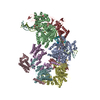
ムービー
ムービー コントローラー


+ データを開く

- 基本情報
基本情報
| 登録情報 | データベース: PDB / ID: 9pd5 | |||||||||||||||||||||||||||
|---|---|---|---|---|---|---|---|---|---|---|---|---|---|---|---|---|---|---|---|---|---|---|---|---|---|---|---|---|
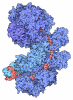
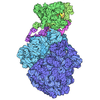
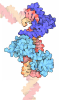
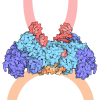
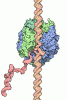
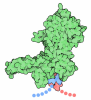
| タイトル | NER dual incision complex - NoF | |||||||||||||||||||||||||||
 要素 要素 |
| |||||||||||||||||||||||||||
 キーワード キーワード | DNA BINDING PROTEIN/DNA / NER / XPA / XPG / XPF / DNA BINDING PROTEIN / DNA BINDING PROTEIN-DNA complex | |||||||||||||||||||||||||||
| 機能・相同性 |  機能・相同性情報 機能・相同性情報nucleotide-excision repair factor 1 complex / nucleotide-excision repair involved in interstrand cross-link repair / nucleotide-excision repair, DNA damage recognition / nucleotide-excision repair complex / MMXD complex / core TFIIH complex portion of holo TFIIH complex / Cytosolic iron-sulfur cluster assembly / central nervous system myelin formation / base-excision repair, AP site formation / positive regulation of mitotic recombination ...nucleotide-excision repair factor 1 complex / nucleotide-excision repair involved in interstrand cross-link repair / nucleotide-excision repair, DNA damage recognition / nucleotide-excision repair complex / MMXD complex / core TFIIH complex portion of holo TFIIH complex / Cytosolic iron-sulfur cluster assembly / central nervous system myelin formation / base-excision repair, AP site formation / positive regulation of mitotic recombination / hair cell differentiation / nucleotide-excision repair factor 3 complex / nucleotide-excision repair, preincision complex assembly / hair follicle maturation / CAK-ERCC2 complex / bubble DNA binding / embryonic cleavage / UV protection / regulation of cyclin-dependent protein serine/threonine kinase activity / transcription factor TFIIH core complex / transcription factor TFIIH holo complex / DNA 5'-3' helicase / G protein-coupled receptor internalization / hydrolase activity, acting on ester bonds / response to UV-C / nuclear thyroid hormone receptor binding / transcription preinitiation complex / RNA Polymerase I Transcription Termination / UV-damage excision repair / transcription factor TFIID complex / regulation of mitotic cell cycle phase transition / RNA polymerase II general transcription initiation factor activity / erythrocyte maturation / hematopoietic stem cell proliferation / RNA Pol II CTD phosphorylation and interaction with CE during HIV infection / RNA Pol II CTD phosphorylation and interaction with CE / spinal cord development / Formation of the Early Elongation Complex / Formation of the HIV-1 Early Elongation Complex / mRNA Capping / bone mineralization / HIV Transcription Initiation / RNA Polymerase II HIV Promoter Escape / Transcription of the HIV genome / RNA Polymerase II Promoter Escape / RNA Polymerase II Transcription Pre-Initiation And Promoter Opening / RNA Polymerase II Transcription Initiation / RNA Polymerase II Transcription Initiation And Promoter Clearance / ATPase activator activity / RNA polymerase II complex binding / 3'-5' DNA helicase activity / DNA 3'-5' helicase / DNA topological change / intrinsic apoptotic signaling pathway by p53 class mediator / RNA Polymerase I Transcription Initiation / hematopoietic stem cell differentiation / embryonic organ development / positive regulation of transcription initiation by RNA polymerase II / protein localization to nucleus / Tat-mediated elongation of the HIV-1 transcript / Formation of HIV-1 elongation complex containing HIV-1 Tat / response to UV / transcription elongation by RNA polymerase I / Formation of HIV elongation complex in the absence of HIV Tat / transcription by RNA polymerase I / RNA Polymerase II Transcription Elongation / Formation of RNA Pol II elongation complex / extracellular matrix organization / transcription-coupled nucleotide-excision repair / hormone-mediated signaling pathway / RNA Polymerase II Pre-transcription Events / insulin-like growth factor receptor signaling pathway / DNA helicase activity / regulation of autophagy / determination of adult lifespan / post-embryonic development / maturation of SSU-rRNA from tricistronic rRNA transcript (SSU-rRNA, 5.8S rRNA, LSU-rRNA) / nucleotide-excision repair / TP53 Regulates Transcription of DNA Repair Genes / DNA endonuclease activity / transcription initiation at RNA polymerase II promoter / promoter-specific chromatin binding / chromosome segregation / RNA Polymerase I Promoter Escape / transcription elongation by RNA polymerase II / cellular response to gamma radiation / base-excision repair / NoRC negatively regulates rRNA expression / double-strand break repair via homologous recombination / Dual Incision in GG-NER / Transcription-Coupled Nucleotide Excision Repair (TC-NER) / multicellular organism growth / spindle / response to toxic substance / Formation of TC-NER Pre-Incision Complex / enzyme activator activity / intrinsic apoptotic signaling pathway in response to DNA damage / Formation of Incision Complex in GG-NER / Dual incision in TC-NER / Gap-filling DNA repair synthesis and ligation in TC-NER 類似検索 - 分子機能 | |||||||||||||||||||||||||||
| 生物種 |  Homo sapiens (ヒト) Homo sapiens (ヒト)synthetic construct (人工物) | |||||||||||||||||||||||||||
| 手法 | 電子顕微鏡法 / 単粒子再構成法 / クライオ電子顕微鏡法 / 解像度: 5.7 Å | |||||||||||||||||||||||||||
 データ登録者 データ登録者 | Li, C.L. / Kim, J. / Yang, W. | |||||||||||||||||||||||||||
| 資金援助 |  米国, 1件 米国, 1件
| |||||||||||||||||||||||||||
 引用 引用 | ジャーナル: Nature / 年: 2026 タイトル: Pre-incision structures reveal principles of DNA nucleotide excision repair. 著者: Eric C L Li / Jinseok Kim / Sem J Brussee / Kaoru Sugasawa / Martijn S Luijsterburg / Wei Yang /   要旨: Nucleotide excision repair (NER) removes bulky adducts from genomic DNA and prevents the ultraviolet light-sensitivity disease xeroderma pigmentosum, cancer and premature ageing. After initial lesion ...Nucleotide excision repair (NER) removes bulky adducts from genomic DNA and prevents the ultraviolet light-sensitivity disease xeroderma pigmentosum, cancer and premature ageing. After initial lesion recognition by XPC in global genome repair or by stalled RNA polymerases in transcription-coupled repair, a lesion and surrounding DNA duplex are unwound by TFIIH, which includes the ATPases XPB and XPD, and additional NER factors XPA, XPF, XPG and RPA, to form a DNA bubble comprising around 27 nucleotides. The double strand-single strand (ds-ss) junction-specific endonucleases XPF and XPG cleave DNA on the 5' and 3' sides of the lesion, respectively. Here we report the functional steps and atomic structures of the ATPase-driven and lesion-dependent DNA bubble formation and arrangement of the complete NER factors for dual incision. The unwinding of nearly 30 base pairs of DNA depends mainly on the double strand DNA translocase XPB and the duplex dividers XPA and XPF. XPD binds the lesion strand with XPF at the 5' ds-ss junction. XPF cuts the lesion strand only after XPG binds the 3' ds-ss junction. The ERCC1 subunit of XPF facilitates DNA strand separation and recruitment of RPA to the non-lesion strand. These findings provide insights on the causes of human diseases and potential targets for enhancing chemotherapeutic efficacy. | |||||||||||||||||||||||||||
| 履歴 |
|
- 構造の表示
構造の表示
| 構造ビューア | 分子: MolmilJmol/JSmol |
|---|
- ダウンロードとリンク
-ダウンロード
| PDBx/mmCIF形式 | 9pd5.cif.gz | 582.9 KB | 表示 | PDBx/mmCIF形式 |
|---|---|---|---|---|
| PDB形式 | pdb9pd5.ent.gz | 442 KB | 表示 | PDB形式 |
| PDBx/mmJSON形式 | 9pd5.json.gz | ツリー表示 | PDBx/mmJSON形式 | |
| その他 |  その他のダウンロード その他のダウンロード |
-検証レポート
| アーカイブディレクトリ | https://data.pdbj.org/pub/pdb/validation_reports/pd/9pd5ftp://data.pdbj.org/pub/pdb/validation_reports/pd/9pd5 | HTTPS FTP |
|---|
-関連構造データ


-リンク
 PDBj
PDBj

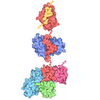
- 集合体
集合体
| 登録構造単位 | 
|
|---|---|
| 1 |
|
-要素
-タンパク質 , 4種, 4分子 ABKS
| #1: タンパク質 | 分子量: 89404.734 Da / 分子数: 1 / 由来タイプ: 組換発現 / 由来: (組換発現) Homo sapiens (ヒト) / 遺伝子: ERCC3, XPB, XPBC発現宿主:  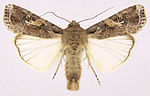 Spodoptera frugiperda (ツマジロクサヨトウ) Spodoptera frugiperda (ツマジロクサヨトウ)参照: UniProt: P19447, DNA helicase |
|---|---|
| #2: タンパク質 | 分子量: 88018.047 Da / 分子数: 1 / 由来タイプ: 組換発現 / 由来: (組換発現) Homo sapiens (ヒト) / 遺伝子: ERCC2, XPD, XPDC発現宿主: Spodoptera frugiperda (ツマジロクサヨトウ)参照: UniProt: P18074, DNA helicase |
| #8: タンパク質 | 分子量: 31422.053 Da / 分子数: 1 / 由来タイプ: 組換発現 / 由来: (組換発現) Homo sapiens (ヒト) / 遺伝子: XPA, XPAC / 発現宿主:   Escherichia coli (大腸菌) / 参照: UniProt: P23025 Escherichia coli (大腸菌) / 参照: UniProt: P23025 |
| #11: タンパク質 | 分子量: 133490.547 Da / 分子数: 1 / 由来タイプ: 組換発現 / 由来: (組換発現) Homo sapiens (ヒト) / 遺伝子: ERCC5, ERCM2, XPG, XPGC発現宿主: Spodoptera frugiperda (ツマジロクサヨトウ)参照: UniProt: P28715, 加水分解酵素; エステル加水分解酵素 |
-General transcription factor IIH subunit ... , 5種, 5分子 CDEFG
| #3: タンパク質 | 分子量: 62116.492 Da / 分子数: 1 / 由来タイプ: 組換発現 / 由来: (組換発現) Homo sapiens (ヒト) / 遺伝子: GTF2H1, BTF2発現宿主: Spodoptera frugiperda (ツマジロクサヨトウ)参照: UniProt: P32780 |
|---|---|
| #4: タンパク質 | 分子量: 52245.156 Da / 分子数: 1 / 由来タイプ: 組換発現 / 由来: (組換発現) Homo sapiens (ヒト) / 遺伝子: GTF2H4発現宿主: Spodoptera frugiperda (ツマジロクサヨトウ)参照: UniProt: Q92759 |
| #5: タンパク質 | 分子量: 44481.996 Da / 分子数: 1 / 由来タイプ: 組換発現 / 由来: (組換発現) Homo sapiens (ヒト) / 遺伝子: GTF2H2, BTF2P44発現宿主: Spodoptera frugiperda (ツマジロクサヨトウ)参照: UniProt: Q13888 |
| #6: タンパク質 | 分子量: 34416.008 Da / 分子数: 1 / 由来タイプ: 組換発現 / 由来: (組換発現) Homo sapiens (ヒト) / 遺伝子: GTF2H3発現宿主: Spodoptera frugiperda (ツマジロクサヨトウ)参照: UniProt: Q13889 |
| #7: タンパク質 | 分子量: 8060.362 Da / 分子数: 1 / 由来タイプ: 組換発現 / 由来: (組換発現) Homo sapiens (ヒト) / 遺伝子: GTF2H5, C6orf175, TTDA発現宿主: Spodoptera frugiperda (ツマジロクサヨトウ)参照: UniProt: Q6ZYL4 |
-DNA鎖 , 2種, 2分子 LM
| #9: DNA鎖 | 分子量: 28476.338 Da / 分子数: 1 / 由来タイプ: 合成 / 由来: (合成) synthetic construct (人工物) |
|---|---|
| #10: DNA鎖 | 分子量: 29180.648 Da / 分子数: 1 / 由来タイプ: 合成 / 由来: (合成) synthetic construct (人工物) |
-非ポリマー , 2種, 7分子 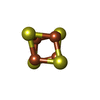

| #12: 化合物 | ChemComp-SF4 / 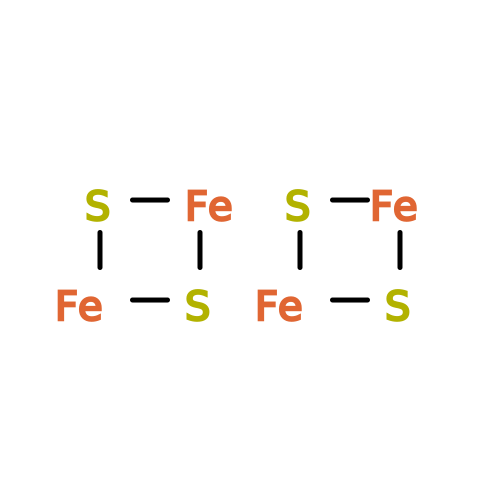 分子量: 351.640 Da / 分子数: 1 / 由来タイプ: 合成 / 式: Fe4S4 分子量: 351.640 Da / 分子数: 1 / 由来タイプ: 合成 / 式: Fe4S4 |
|---|---|
| #13: 化合物 | ChemComp-ZN /  分子量: 65.409 Da / 分子数: 6 / 由来タイプ: 合成 / 式: Zn 分子量: 65.409 Da / 分子数: 6 / 由来タイプ: 合成 / 式: Zn |
-詳細
| 研究の焦点であるリガンドがあるか | N |
|---|---|
| Has protein modification | N |
-実験情報
-実験
| 実験 | 手法: 電子顕微鏡法 |
|---|---|
| EM実験 | 試料の集合状態: PARTICLE / 3次元再構成法: 単粒子再構成法 |
- 試料調製
試料調製
| 構成要素 | 名称: NER dual incision complex without XPF / タイプ: COMPLEX / Entity ID: #1, #3-#10, #2, #11 / 由来: RECOMBINANT | |||||||||||||||||||||||||||||||||||
|---|---|---|---|---|---|---|---|---|---|---|---|---|---|---|---|---|---|---|---|---|---|---|---|---|---|---|---|---|---|---|---|---|---|---|---|---|
| 分子量 | 値: 0.88 MDa / 実験値: NO | |||||||||||||||||||||||||||||||||||
| 由来(天然) | 生物種: Homo sapiens (ヒト) | |||||||||||||||||||||||||||||||||||
| 由来(組換発現) | 生物種: Spodoptera frugiperda (ツマジロクサヨトウ) | |||||||||||||||||||||||||||||||||||
| 緩衝液 | pH: 8 | |||||||||||||||||||||||||||||||||||
| 緩衝液成分 |
| |||||||||||||||||||||||||||||||||||
| 試料 | 濃度: 0.4 mg/ml / 包埋: NO / シャドウイング: NO / 染色: NO / 凍結: YES | |||||||||||||||||||||||||||||||||||
| 試料支持 | グリッドの材料: COPPER / グリッドのサイズ: 300 divisions/in. / グリッドのタイプ: Quantifoil R1.2/1.3 | |||||||||||||||||||||||||||||||||||
| 急速凍結 | 装置: FEI VITROBOT MARK IV / 凍結剤: ETHANE / 湿度: 100 % / 凍結前の試料温度: 277.15 K |
- 電子顕微鏡撮影
| 実験機器 |  モデル: Titan Krios / 画像提供: FEI Company |
|---|---|
| 顕微鏡 | モデル: TFS KRIOS |
| 電子銃 | 電子線源:  FIELD EMISSION GUN / 加速電圧: 300 kV / 照射モード: FLOOD BEAM FIELD EMISSION GUN / 加速電圧: 300 kV / 照射モード: FLOOD BEAM |
| 電子レンズ | モード: BRIGHT FIELD / 倍率(公称値): 81000 X / 最大 デフォーカス(公称値): 2400 nm / 最小 デフォーカス(公称値): 800 nm / Cs: 2.7 mm / C2レンズ絞り径: 70 µm / アライメント法: COMA FREE |
| 試料ホルダ | 凍結剤: NITROGEN 試料ホルダーモデル: FEI TITAN KRIOS AUTOGRID HOLDER |
| 撮影 | 平均露光時間: 3 sec. / 電子線照射量: 50 e/Å2 / フィルム・検出器のモデル: GATAN K3 (6k x 4k) / 撮影したグリッド数: 1 / 実像数: 13842 |
- 解析
解析
| EMソフトウェア |
| ||||||||||||||||||||||||||||||||||||
|---|---|---|---|---|---|---|---|---|---|---|---|---|---|---|---|---|---|---|---|---|---|---|---|---|---|---|---|---|---|---|---|---|---|---|---|---|---|
| CTF補正 | タイプ: PHASE FLIPPING AND AMPLITUDE CORRECTION | ||||||||||||||||||||||||||||||||||||
| 対称性 | 点対称性: C1 (非対称) | ||||||||||||||||||||||||||||||||||||
| 3次元再構成 | 解像度: 5.7 Å / 解像度の算出法: FSC 0.143 CUT-OFF / 粒子像の数: 64352 / アルゴリズム: FOURIER SPACE / クラス平均像の数: 1 / 対称性のタイプ: POINT | ||||||||||||||||||||||||||||||||||||
| 原子モデル構築 | プロトコル: AB INITIO MODEL / 空間: REAL | ||||||||||||||||||||||||||||||||||||
| 原子モデル構築 | PDB-ID: 8ebt Accession code: 8ebt / 詳細: C7CAD / Source name: PDB / タイプ: experimental model | ||||||||||||||||||||||||||||||||||||
| 精密化 | 最高解像度: 5.7 Å 立体化学のターゲット値: REAL-SPACE (WEIGHTED MAP SUM AT ATOM CENTERS) | ||||||||||||||||||||||||||||||||||||
| 拘束条件 |
|