[日本語] English
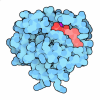
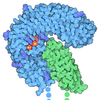
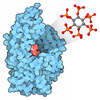
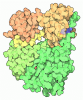
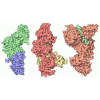
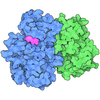
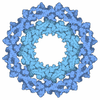
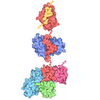
- PDB-9o65: Cryo-EM structure of SHOC2-KRAS-PP1CA (SKP) complex -

+
データを開く


IDまたはキーワード:

読み込み中...

-
基本情報

登録情報
データベース: PDB / ID: 9o65
タイトルCryo-EM structure of SHOC2-KRAS-PP1CA (SKP) complex
要素
  • Isoform 2B of GTPase KRas
  • Leucine-rich repeat protein SHOC-2
  • Serine/threonine-protein phosphatase PP1-alpha catalytic subunit
キーワードSIGNALING PROTEIN / KRAS / SHOC2 / PP1CA
機能・相同性
機能・相同性情報


cellular response to growth hormone stimulus / regulation of glycogen catabolic process / positive regulation of termination of RNA polymerase II transcription, poly(A)-coupled / PTW/PP1 phosphatase complex / negative regulation of neural precursor cell proliferation / protein phosphatase type 1 complex / glycogen granule / RNA polymerase II promoter clearance / RNA polymerase II CTD heptapeptide repeat S5 phosphatase activity / nerve growth factor signaling pathway ...cellular response to growth hormone stimulus / regulation of glycogen catabolic process / positive regulation of termination of RNA polymerase II transcription, poly(A)-coupled / PTW/PP1 phosphatase complex / negative regulation of neural precursor cell proliferation / protein phosphatase type 1 complex / glycogen granule / RNA polymerase II promoter clearance / RNA polymerase II CTD heptapeptide repeat S5 phosphatase activity / nerve growth factor signaling pathway / cyclic-GMP-AMP transmembrane import across plasma membrane / cadherin binding involved in cell-cell adhesion / protein phosphatase 1 binding / regulation of translational initiation in response to stress / protein phosphatase regulator activity / SHOC2 M1731 mutant abolishes MRAS complex function / Gain-of-function MRAS complexes activate RAF signaling / positive regulation of extrinsic apoptotic signaling pathway in absence of ligand / positive regulation of Ras protein signal transduction / regulation of canonical Wnt signaling pathway / protein dephosphorylation / response to mineralocorticoid / GMP binding / forebrain astrocyte development / Phosphorylation and nuclear translocation of the CRY:PER:kinase complex / LRR domain binding / glycogen metabolic process / protein-serine/threonine phosphatase / negative regulation of neuron differentiation / branching morphogenesis of an epithelial tube / regulation of synaptic transmission, GABAergic / Triglyceride catabolism / negative regulation of epithelial cell differentiation / entrainment of circadian clock by photoperiod / response to isolation stress / response to gravity / epithelial tube branching involved in lung morphogenesis / type I pneumocyte differentiation / protein serine/threonine phosphatase activity / telomere maintenance in response to DNA damage / phosphatase activity / Rac protein signal transduction / Maturation of hRSV A proteins / regulation of MAPK cascade / myoblast proliferation / Signaling by RAS GAP mutants / Signaling by RAS GTPase mutants / Activation of RAS in B cells / negative regulation of transcription elongation by RNA polymerase II / RAS signaling downstream of NF1 loss-of-function variants / transition metal ion binding / fibroblast growth factor receptor signaling pathway / RUNX3 regulates p14-ARF / positive regulation of glial cell proliferation / skeletal muscle cell differentiation / SOS-mediated signalling / Activated NTRK3 signals through RAS / Activated NTRK2 signals through RAS / DARPP-32 events / SHC1 events in ERBB4 signaling / positive regulation of glycogen biosynthetic process / cardiac muscle cell proliferation / Signalling to RAS / ribonucleoprotein complex binding / SHC-related events triggered by IGF1R / Activated NTRK2 signals through FRS2 and FRS3 / Estrogen-stimulated signaling through PRKCZ / positive regulation of Rac protein signal transduction / SHC-mediated cascade:FGFR3 / glial cell proliferation / MET activates RAS signaling / SHC-mediated cascade:FGFR2 / SHC-mediated cascade:FGFR4 / Signaling by PDGFRA transmembrane, juxtamembrane and kinase domain mutants / Signaling by PDGFRA extracellular domain mutants / PTK6 Regulates RHO GTPases, RAS GTPase and MAP kinases / Erythropoietin activates RAS / SHC-mediated cascade:FGFR1 / Signaling by FGFR4 in disease / Signaling by CSF3 (G-CSF) / FRS-mediated FGFR3 signaling / Signaling by FLT3 ITD and TKD mutants / FRS-mediated FGFR2 signaling / FRS-mediated FGFR4 signaling / p38MAPK events / Signaling by FGFR3 in disease / FRS-mediated FGFR1 signaling / protein-membrane adaptor activity / Tie2 Signaling / striated muscle cell differentiation / Signaling by FGFR2 in disease / phosphoprotein phosphatase activity / GRB2 events in EGFR signaling / Signaling by FLT3 fusion proteins / SHC1 events in EGFR signaling / FLT3 Signaling / Signaling by FGFR1 in disease / EGFR Transactivation by Gastrin / positive regulation of neuron differentiation / NCAM signaling for neurite out-growth
類似検索 - 分子機能
Serine-threonine protein phosphatase, N-terminal / : / Serine-threonine protein phosphatase N-terminal domain / : / Serine/threonine specific protein phosphatases signature. / Protein phosphatase 2A homologues, catalytic domain. / Serine/threonine-specific protein phosphatase/bis(5-nucleosyl)-tetraphosphatase / : / Leucine-rich repeat region / Leucine-rich repeats, bacterial type ...Serine-threonine protein phosphatase, N-terminal / : / Serine-threonine protein phosphatase N-terminal domain / : / Serine/threonine specific protein phosphatases signature. / Protein phosphatase 2A homologues, catalytic domain. / Serine/threonine-specific protein phosphatase/bis(5-nucleosyl)-tetraphosphatase / : / Leucine-rich repeat region / Leucine-rich repeats, bacterial type / Leucine-rich repeat, SDS22-like subfamily / Calcineurin-like phosphoesterase domain, ApaH type / Calcineurin-like phosphoesterase / Metallo-dependent phosphatase-like / Small GTPase, Ras-type / Small GTPase Ras domain profile. / Leucine rich repeat / Leucine-rich repeat, typical subtype / Leucine-rich repeats, typical (most populated) subfamily / Ran (Ras-related nuclear proteins) /TC4 subfamily of small GTPases / Leucine-rich repeat profile. / Leucine-rich repeat / Rho (Ras homology) subfamily of Ras-like small GTPases / Ras subfamily of RAS small GTPases / Small GTPase / Ras family / Rab subfamily of small GTPases / Leucine-rich repeat domain superfamily / Small GTP-binding protein domain / P-loop containing nucleoside triphosphate hydrolase
類似検索 - ドメイン・相同性
PHOSPHOAMINOPHOSPHONIC ACID-GUANYLATE ESTER / : / GTPase KRas / Serine/threonine-protein phosphatase PP1-alpha catalytic subunit / Leucine-rich repeat protein SHOC-2
類似検索 - 構成要素
生物種Homo sapiens (ヒト)
手法電子顕微鏡法 / 単粒子再構成法 / クライオ電子顕微鏡法 / 解像度: 3 Å
データ登録者Finci, L.I. / Bonsor, D.A. / Simanshu, D.K.
資金援助 米国, 1件
組織認可番号
National Institutes of Health/National Cancer Institute (NIH/NCI)75N91019D00024 米国
引用ジャーナル: Nat Commun / : 2026
タイトル: Structure of SHOC2-KRAS-PP1C complex reveals RAS isoform-specific determinants and insights into targeting complex assembly by RAS inhibitors.
著者: Daniel A Bonsor / Lorenzo I Finci / Jacob R Potter / Lucy C Young / Vanessa E Wall / Ruby Goldstein de Salazar / Katie R Geis / Tyler Stephens / Joseph Finney / Dwight V Nissley / Frank ...著者: Daniel A Bonsor / Lorenzo I Finci / Jacob R Potter / Lucy C Young / Vanessa E Wall / Ruby Goldstein de Salazar / Katie R Geis / Tyler Stephens / Joseph Finney / Dwight V Nissley / Frank McCormick / Dhirendra K Simanshu /
要旨: RAF activation is essential for MAPK signaling and is mediated by RAS binding and the dephosphorylation of a conserved phosphoserine by the SHOC2-RAS-PP1C complex. MRAS forms a high-affinity SHOC2- ...RAF activation is essential for MAPK signaling and is mediated by RAS binding and the dephosphorylation of a conserved phosphoserine by the SHOC2-RAS-PP1C complex. MRAS forms a high-affinity SHOC2-MRAS-PP1C (SMP) complex, while canonical RAS isoforms (KRAS, HRAS, NRAS) form analogous but lower-affinity assemblies. Yet, cancers driven by oncogenic KRAS, HRAS, or NRAS remain strongly SHOC2-dependent, suggesting that these weaker complexes contribute to tumorigenesis. To elucidate how canonical RAS proteins form lower-affinity ternary complexes, the cryo-EM structure of the SHOC2-KRAS-PP1C (SKP) complex stabilized by Noonan syndrome mutations is described. The SKP architecture is similar to the SMP complex but forms fewer contacts and buries less surface area due to the absence of MRAS-specific structural features in KRAS that enhance complex stability. RAS inhibitors MRTX1133 and RMC-6236 alter Switch-I/II conformations, thereby blocking SKP assembly more effectively than they disrupt preformed complexes. These RAS inhibitors do not affect SMP formation because they do not bind MRAS. Since MRAS is upregulated in resistance to KRAS inhibition, we characterize a MRAS mutant capable of binding MRTX1133. This MRAS mutant can form an SMP complex, but MRTX1133 blocks its assembly, demonstrating the feasibility of dual SKP and SMP targeting. Overall, our findings define isoform-specific differences in SHOC2-RAS-PP1C complex formation and support a strategy to prevent both SKP and SMP assemblies to overcome resistance in RAS-driven cancers.
履歴
登録2025年4月11日登録サイト: RCSB / 処理サイト: RCSB
改定 1.02026年1月21日Provider: repository / タイプ: Initial release
改定 1.02026年1月21日Data content type: EM metadata / Data content type: EM metadata / Provider: repository / タイプ: Initial release
改定 1.02026年1月21日Data content type: Additional map / Part number: 1 / Data content type: Additional map / Provider: repository / タイプ: Initial release
改定 1.02026年1月21日Data content type: FSC / Data content type: FSC / Provider: repository / タイプ: Initial release
改定 1.02026年1月21日Data content type: Half map / Part number: 1 / Data content type: Half map / Provider: repository / タイプ: Initial release
改定 1.02026年1月21日Data content type: Half map / Part number: 2 / Data content type: Half map / Provider: repository / タイプ: Initial release
改定 1.02026年1月21日Data content type: Image / Data content type: Image / Provider: repository / タイプ: Initial release
改定 1.02026年1月21日Data content type: Primary map / Data content type: Primary map / Provider: repository / タイプ: Initial release
改定 1.12026年2月25日Group: Data collection / Database references / カテゴリ: citation / em_admin
Item: _citation.journal_volume / _citation.page_first ..._citation.journal_volume / _citation.page_first / _citation.page_last / _em_admin.last_update
改定 1.12026年2月25日Data content type: EM metadata / Data content type: EM metadata / EM metadata / Group: Database references / Experimental summary / Data content type: EM metadata / EM metadata / カテゴリ: citation / em_admin
Data content type: EM metadata / EM metadata ...EM metadata / EM metadata / EM metadata / EM metadata
Item: _citation.journal_volume / _citation.page_first ..._citation.journal_volume / _citation.page_first / _citation.page_last / _em_admin.last_update

-
構造の表示

構造ビューア分子:
MolmilJmol/JSmol

ダウンロードとリンク

-
集合体

登録構造単位
A: Leucine-rich repeat protein SHOC-2
B: Isoform 2B of GTPase KRas
C: Serine/threonine-protein phosphatase PP1-alpha catalytic subunit
ヘテロ分子


分子量 (理論値)分子数
合計 (水以外)122,4567
ポリマ-121,8003
非ポリマー6564
00
1


  • 登録構造と同一
  • 登録者が定義した集合体
  • 根拠: 電子顕微鏡法, not applicable
タイプ名称対称操作
identity operation1_5551

-
要素

-
タンパク質 , 3種, 3分子 ABC

#1: タンパク質 Leucine-rich repeat protein SHOC-2 / Protein soc-2 homolog / Protein sur-8 homolog


分子量: 64954.840 Da / 分子数: 1 / 変異: M173I / 由来タイプ: 組換発現 / 由来: (組換発現) Homo sapiens (ヒト) / 遺伝子: SHOC2, KIAA0862 / 発現宿主: Trichoplusia ni (イラクサキンウワバ) / 参照: UniProt: Q9UQ13

#2: タンパク質 Isoform 2B of GTPase KRas / K-Ras 2 / Ki-Ras / c-K-ras / c-Ki-ras


分子量: 19300.824 Da / 分子数: 1 / 変異: Q61R / 由来タイプ: 組換発現 / 由来: (組換発現) Homo sapiens (ヒト) / 遺伝子: KRAS, KRAS2, RASK2 / 発現宿主: Trichoplusia ni (イラクサキンウワバ) / 参照: UniProt: P01116, small monomeric GTPase
#3: タンパク質 Serine/threonine-protein phosphatase PP1-alpha catalytic subunit / PP-1A


分子量: 37543.984 Da / 分子数: 1 / 変異: P50R / 由来タイプ: 組換発現 / 由来: (組換発現) Homo sapiens (ヒト) / 遺伝子: PPP1CA, PPP1A / 発現宿主: Trichoplusia ni (イラクサキンウワバ)
参照: UniProt: P62136, protein-serine/threonine phosphatase

-
非ポリマー , 3種, 4分子

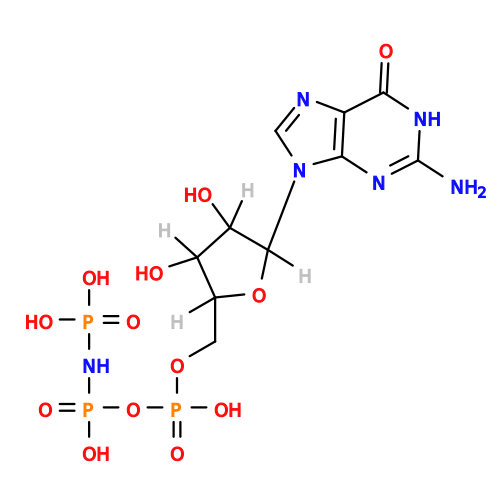
#4: 化合物 ChemComp-GNP / PHOSPHOAMINOPHOSPHONIC ACID-GUANYLATE ESTER


分子量: 522.196 Da / 分子数: 1 / 由来タイプ: 合成 / : C10H17N6O13P3
コメント: GppNHp, GMPPNP, エネルギー貯蔵分子類似体*YM
#5: 化合物 ChemComp-MG / MAGNESIUM ION


分子量: 24.305 Da / 分子数: 1 / 由来タイプ: 合成 / : Mg
#6: 化合物 ChemComp-MN / MANGANESE (II) ION


分子量: 54.938 Da / 分子数: 2 / 由来タイプ: 合成 / : Mn

-
詳細

研究の焦点であるリガンドがあるかN
Has protein modificationN

-
実験情報

-
実験

実験手法: 電子顕微鏡法
EM実験試料の集合状態: PARTICLE / 3次元再構成法: 単粒子再構成法

-
試料調製

構成要素名称: Ternary complex of SHOC2, KRAS, and PP1CA / タイプ: COMPLEX / Entity ID: #1-#3 / 由来: RECOMBINANT
分子量: 0.12 MDa / 実験値: YES
由来(天然)生物種: Homo sapiens (ヒト)
由来(組換発現)生物種: Trichoplusia ni (イラクサキンウワバ)
緩衝液pH: 7.4
緩衝液成分
ID濃度名称Buffer-ID
120 mMHEPESC8H18N2O4S1
2150 mMsodium chlorideNaCl1
31 mMTCEPC9H15O6P1
41 mMMagnesium ChlorideMgCl21
試料濃度: 0.08 mg/ml / 包埋: NO / シャドウイング: NO / 染色: NO / 凍結: YES
試料支持グリッドの材料: GRAPHENE OXIDE / グリッドのサイズ: 200 divisions/in. / グリッドのタイプ: Quantifoil R2/2
急速凍結装置: FEI VITROBOT MARK IV / 凍結剤: ETHANE / 湿度: 95 %

-
電子顕微鏡撮影

実験機器
モデル: Titan Krios / 画像提供: FEI Company
顕微鏡モデル: TFS KRIOS
電子銃電子線源: FIELD EMISSION GUN / 加速電圧: 300 kV / 照射モード: FLOOD BEAM
電子レンズモード: BRIGHT FIELD / 倍率(公称値): 105000 X / 最大 デフォーカス(公称値): 2250 nm / 最小 デフォーカス(公称値): 750 nm
撮影電子線照射量: 52.3 e/Å2
フィルム・検出器のモデル: GATAN K3 BIOQUANTUM (6k x 4k)

-
解析

EMソフトウェア
ID名称バージョンカテゴリ
1Topaz粒子像選択
2PHENIX1.20.1_4487モデル精密化
3Latitude画像取得
5cryoSPARCCTF補正
10cryoSPARC初期オイラー角割当
11cryoSPARC最終オイラー角割当
12cryoSPARC分類
13cryoSPARC3次元再構成
CTF補正タイプ: PHASE FLIPPING AND AMPLITUDE CORRECTION
粒子像の選択選択した粒子像数: 518550
3次元再構成解像度: 3 Å / 解像度の算出法: FSC 0.143 CUT-OFF / 粒子像の数: 199681 / 対称性のタイプ: POINT
精密化最高解像度: 3 Å
立体化学のターゲット値: REAL-SPACE (WEIGHTED MAP SUM AT ATOM CENTERS)

+
万見について

-
お知らせ

-
2022年2月9日: EMDBエントリの付随情報ファイルのフォーマットが新しくなりました

EMDBエントリの付随情報ファイルのフォーマットが新しくなりました

  • EMDBのヘッダファイルのバージョン3が、公式のフォーマットとなりました。
  • これまでは公式だったバージョン1.9は、アーカイブから削除されます。

関連情報:EMDBヘッダ

外部リンク:wwPDBはEMDBデータモデルのバージョン3へ移行します

-
2020年8月12日: 新型コロナ情報

新型コロナ情報

URL: https://pdbj.org/emnavi/covid19.php

新ページ: EM Navigatorに新型コロナウイルスの特設ページを開設しました。

関連情報:Covid-19情報 / 2020年3月5日: 新型コロナウイルスの構造データ

+
2020年3月5日: 新型コロナウイルスの構造データ

新型コロナウイルスの構造データ

関連情報:万見生物種 / 2020年8月12日: 新型コロナ情報

外部リンク:COVID-19特集ページ - PDBj / 今月の分子2020年2月:コロナウイルスプロテーアーゼ

+
2019年1月31日: EMDBのIDの桁数の変更

EMDBのIDの桁数の変更

  • EMDBエントリに付与されているアクセスコード(EMDB-ID)は4桁の数字(例、EMD-1234)でしたが、間もなく枯渇します。これまでの4桁のID番号は4桁のまま変更されませんが、4桁の数字を使い切った後に発行されるIDは5桁以上の数字(例、EMD-12345)になります。5桁のIDは2019年の春頃から発行される見通しです。
  • EM Navigator/万見では、接頭語「EMD-」は省略されています。

関連情報:Q: 「EMD」とは何ですか? / 万見/EM NavigatorにおけるID/アクセスコードの表記

外部リンク:EMDB Accession Codes are Changing Soon! / PDBjへお問い合わせ

+
2017年7月12日: PDB大規模アップデート

PDB大規模アップデート

  • 新バージョンのPDBx/mmCIF辞書形式に基づくデータがリリースされました。
  • 今回の更新はバージョン番号が4から5になる大規模なもので、全エントリデータの書き換えが行われる「Remediation」というアップデートに該当します。
  • このバージョンアップで、電子顕微鏡の実験手法に関する多くの項目の書式が改定されました(例:em_softwareなど)。
  • EM NavigatorとYorodumiでも、この改定に基づいた表示内容になります。

外部リンク:wwPDB Remediation / OneDepデータ基準に準拠した、より強化された内容のモデル構造ファイルが、PDBアーカイブで公開されました。

-
万見 (Yorodumi)

幾万の構造データを、幾万の視点から

  • 万見(Yorodumi)は、EMDB/PDB/SASBDBなどの構造データを閲覧するためのページです。
  • EM Navigatorの詳細ページの後継、Omokage検索のフロントエンドも兼ねています。

関連情報:EMDB / PDB / SASBDB / 3つのデータバンクの比較 / 万見検索 / 2016年8月31日: 新しいEM Navigatorと万見 / 万見文献 / Jmol/JSmol / 機能・相同性情報 / 新しいEM Navigatorと万見の変更点

他の情報も見る