 ムービー
ムービー コントローラー


+ データを開く

- 基本情報
基本情報
| 登録情報 | データベース: PDB / ID: 9kfj | ||||||||||||
|---|---|---|---|---|---|---|---|---|---|---|---|---|---|
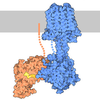
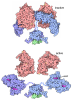
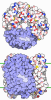
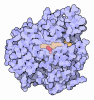
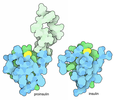
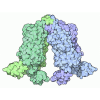
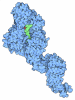
| タイトル | Cryo-EM structure of the compound 4-bound human relaxin family peptide receptor 3 (RXFP3)-Gi complex | ||||||||||||
 要素 要素 |
| ||||||||||||
 キーワード キーワード | STRUCTURAL PROTEIN/IMMUNE SYSTEM / human relaxin family peptide receptor 3 / G protein-coupled receptor / ligand recognition / STRUCTURAL PROTEIN / STRUCTURAL PROTEIN-IMMUNE SYSTEM complex | ||||||||||||
| 機能・相同性 |  機能・相同性情報 機能・相同性情報Relaxin receptors / galanin receptor activity / negative regulation of adenylate cyclase-activating adrenergic receptor signaling pathway / negative regulation of calcium ion-dependent exocytosis / G protein-coupled adenosine receptor signaling pathway / negative regulation of adenylate cyclase activity / positive regulation of neural precursor cell proliferation / negative regulation of synaptic transmission / positive regulation of urine volume / gamma-aminobutyric acid signaling pathway ...Relaxin receptors / galanin receptor activity / negative regulation of adenylate cyclase-activating adrenergic receptor signaling pathway / negative regulation of calcium ion-dependent exocytosis / G protein-coupled adenosine receptor signaling pathway / negative regulation of adenylate cyclase activity / positive regulation of neural precursor cell proliferation / negative regulation of synaptic transmission / positive regulation of urine volume / gamma-aminobutyric acid signaling pathway / positive regulation of cytokinesis / regulation of calcium ion transport / negative regulation of apoptotic signaling pathway / neuronal dense core vesicle / positive regulation of vascular associated smooth muscle cell proliferation / positive regulation of superoxide anion generation / Adenylate cyclase inhibitory pathway / response to nutrient / hippocampal mossy fiber to CA3 synapse / Regulation of insulin secretion / neuropeptide signaling pathway / electron transport chain / G protein-coupled receptor binding / G protein-coupled receptor activity / G-protein beta/gamma-subunit complex binding / adenylate cyclase-inhibiting G protein-coupled receptor signaling pathway / Olfactory Signaling Pathway / Activation of the phototransduction cascade / G protein-coupled acetylcholine receptor signaling pathway / G beta:gamma signalling through PLC beta / Presynaptic function of Kainate receptors / Thromboxane signalling through TP receptor / Activation of G protein gated Potassium channels / Inhibition of voltage gated Ca2+ channels via Gbeta/gamma subunits / G-protein activation / Glucagon signaling in metabolic regulation / G beta:gamma signalling through CDC42 / Prostacyclin signalling through prostacyclin receptor / G beta:gamma signalling through BTK / Synthesis, secretion, and inactivation of Glucagon-like Peptide-1 (GLP-1) / photoreceptor disc membrane / ADP signalling through P2Y purinoceptor 12 / Sensory perception of sweet, bitter, and umami (glutamate) taste / Glucagon-type ligand receptors / Adrenaline,noradrenaline inhibits insulin secretion / Vasopressin regulates renal water homeostasis via Aquaporins / Glucagon-like Peptide-1 (GLP1) regulates insulin secretion / G alpha (z) signalling events / cellular response to catecholamine stimulus / ADP signalling through P2Y purinoceptor 1 / ADORA2B mediated anti-inflammatory cytokines production / G beta:gamma signalling through PI3Kgamma / adenylate cyclase-activating dopamine receptor signaling pathway / Cooperation of PDCL (PhLP1) and TRiC/CCT in G-protein beta folding / GPER1 signaling / cellular response to prostaglandin E stimulus / heterotrimeric G-protein complex / G-protein beta-subunit binding / G alpha (12/13) signalling events / Inactivation, recovery and regulation of the phototransduction cascade / extracellular vesicle / sensory perception of taste / adenylate cyclase-activating G protein-coupled receptor signaling pathway / Thrombin signalling through proteinase activated receptors (PARs) / signaling receptor complex adaptor activity / retina development in camera-type eye / GTPase binding / cell body / fibroblast proliferation / Ca2+ pathway / midbody / High laminar flow shear stress activates signaling by PIEZO1 and PECAM1:CDH5:KDR in endothelial cells / G alpha (i) signalling events / G alpha (s) signalling events / phospholipase C-activating G protein-coupled receptor signaling pathway / G alpha (q) signalling events / 加水分解酵素; 酸無水物に作用; GTPに作用・細胞または細胞小器官の運動に関与 / Ras protein signal transduction / periplasmic space / electron transfer activity / positive regulation of ERK1 and ERK2 cascade / cell population proliferation / Extra-nuclear estrogen signaling / ciliary basal body / positive regulation of cell migration / iron ion binding / G protein-coupled receptor signaling pathway / cell division / lysosomal membrane / GTPase activity / heme binding / positive regulation of cell population proliferation / centrosome / synapse / dendrite / GTP binding / protein-containing complex binding / signal transduction / extracellular exosome / nucleoplasm 類似検索 - 分子機能 | ||||||||||||
| 生物種 |   Escherichia coli (大腸菌) Escherichia coli (大腸菌) Homo sapiens (ヒト) Homo sapiens (ヒト)synthetic construct (人工物) | ||||||||||||
| 手法 | 電子顕微鏡法 / 単粒子再構成法 / クライオ電子顕微鏡法 / 解像度: 3.1 Å | ||||||||||||
 データ登録者 データ登録者 | Chen, Y. / Zhou, Q.T. / Yan, S.Y. / Yan, J.H. / Yang, D.H. / Chen, J. / Wang, M.W. | ||||||||||||
| 資金援助 |  中国, 3件 中国, 3件
| ||||||||||||
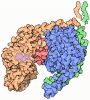
 引用 引用 | ジャーナル: Commun Biol / 年: 2025 タイトル: Molecular mechanism underlying non-discriminatory recognition of relaxin-3 by RXFP3 and RXFP4. 著者: Yan Chen / Qingtong Zhou / Shiyu Yan / Jiahui Yan / Dehua Yang / Jian Chen / Ming-Wei Wang / 要旨: The human relaxin family peptide receptors RXFP3 and RXFP4 play important physiological roles through interactions with endogenous hormones, relaxin-3 and insulin-like peptide 5 (INSL5). They are ...The human relaxin family peptide receptors RXFP3 and RXFP4 play important physiological roles through interactions with endogenous hormones, relaxin-3 and insulin-like peptide 5 (INSL5). They are implicated in certain neurological and metabolic disorders. While INSL5 only activates RXFP4, relaxin-3 is recognized by both receptors. Here, we report the cryo-electron microscopy structures of RXFP3-G complexes bound by relaxin-3 or a small-molecule dual agonist (compound 4), and relaxin-3 in complex with RXFP4-G, with global resolutions of 2.91 Å, 2.95 Å, and 3.10 Å, respectively. It is found that relaxin-3 adopts a conserved binding conformation within the transmembrane domain (TMD) bundle of RXFP3 and RXFP4, where the C-terminal tip residues of its B chain, R26 and W27, make extensive contacts with conserved receptor residues, thereby activating RXFP3 and RXFP4. Compound 4 mimics these key interactions by binding to both receptors. In contrast, the C-terminal residues composition and TMD-binding angle of INSL5 in RXFP4 differ significantly from that of relaxin-3, ensuring its selectivity for RXFP4. These findings deepen our understanding about the structural basis of ligand recognition and selectivity in this G protein-coupled receptor subfamily. | ||||||||||||
| 履歴 |
|
- 構造の表示
構造の表示
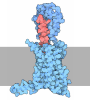
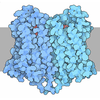
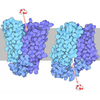
| 構造ビューア | 分子: MolmilJmol/JSmol |
|---|
- ダウンロードとリンク
-ダウンロード
| PDBx/mmCIF形式 | 9kfj.cif.gz | 227.4 KB | 表示 | PDBx/mmCIF形式 |
|---|---|---|---|---|
| PDB形式 | pdb9kfj.ent.gz | 168.6 KB | 表示 | PDB形式 |
| PDBx/mmJSON形式 | 9kfj.json.gz | ツリー表示 | PDBx/mmJSON形式 | |
| その他 |  その他のダウンロード その他のダウンロード |
-検証レポート
| アーカイブディレクトリ | https://data.pdbj.org/pub/pdb/validation_reports/kf/9kfjftp://data.pdbj.org/pub/pdb/validation_reports/kf/9kfj | HTTPS FTP |
|---|
-関連構造データ


-リンク
 PDBj
PDBj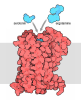


- 集合体
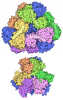
集合体
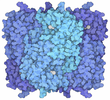
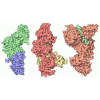
| 登録構造単位 | 
|
|---|---|
| 1 |
|
-要素
-Guanine nucleotide-binding protein ... , 3種, 3分子 GIT
| #2: タンパク質 | 分子量: 6089.048 Da / 分子数: 1 / 由来タイプ: 組換発現 / 由来: (組換発現) Homo sapiens (ヒト) / 遺伝子: GNG2発現宿主:   Spodoptera frugiperda (ツマジロクサヨトウ) Spodoptera frugiperda (ツマジロクサヨトウ)参照: UniProt: P59768 |
|---|---|
| #3: タンパク質 | 分子量: 40502.863 Da / 分子数: 1 / 変異: S47N,G204A,E246A,A327S / 由来タイプ: 組換発現 / 由来: (組換発現) Homo sapiens (ヒト) / 遺伝子: GNAI2, GNAI2B発現宿主: Spodoptera frugiperda (ツマジロクサヨトウ)参照: UniProt: P04899 |
| #5: タンパク質 | 分子量: 37198.656 Da / 分子数: 1 / 由来タイプ: 組換発現 / 由来: (組換発現) Homo sapiens (ヒト) / 遺伝子: GNB1発現宿主: Spodoptera frugiperda (ツマジロクサヨトウ)参照: UniProt: P62873 |
-タンパク質 / 抗体 / 非ポリマー , 3種, 3分子 CS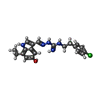
| #1: タンパク質 | 分子量: 84607.453 Da / 分子数: 1 / 変異: M29W, H124I, R128L / 由来タイプ: 組換発現 / 詳細: BRIL 由来: (組換発現) Escherichia coli (大腸菌), (組換発現) Homo sapiens (ヒト), (組換発現) synthetic construct (人工物)遺伝子: cybC, RXFP3, GPCR135, RLN3R1, SALPR 発現宿主: Spodoptera frugiperda (ツマジロクサヨトウ)参照: UniProt: P0ABE7, UniProt: Q9NSD7 |
|---|---|
| #4: 抗体 | 分子量: 26277.299 Da / 分子数: 1 / 由来タイプ: 組換発現 / 由来: (組換発現) synthetic construct (人工物) 発現宿主: Spodoptera frugiperda (ツマジロクサヨトウ) |
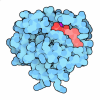
| #6: 化合物 | ChemComp-IYF / 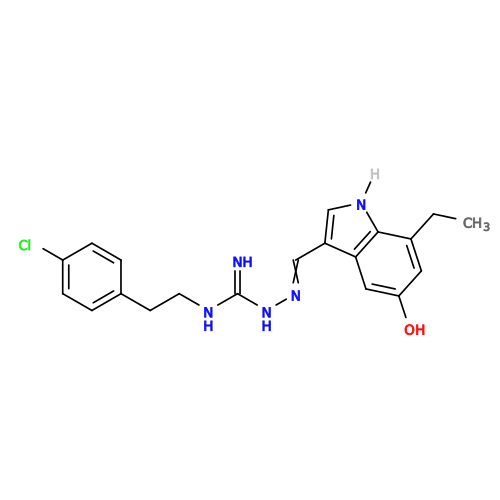 分子量: 383.875 Da / 分子数: 1 / 由来タイプ: 合成 / 式: C20H22ClN5O / タイプ: SUBJECT OF INVESTIGATION 分子量: 383.875 Da / 分子数: 1 / 由来タイプ: 合成 / 式: C20H22ClN5O / タイプ: SUBJECT OF INVESTIGATION |
-詳細
| 研究の焦点であるリガンドがあるか | Y |
|---|---|
| Has protein modification | Y |
-実験情報
-実験
| 実験 | 手法: 電子顕微鏡法 |
|---|---|
| EM実験 | 試料の集合状態: PARTICLE / 3次元再構成法: 単粒子再構成法 |
- 試料調製
試料調製
| 構成要素 |
| ||||||||||||||||||||||||||||||
|---|---|---|---|---|---|---|---|---|---|---|---|---|---|---|---|---|---|---|---|---|---|---|---|---|---|---|---|---|---|---|---|
| 由来(天然) |
| ||||||||||||||||||||||||||||||
| 由来(組換発現) |
| ||||||||||||||||||||||||||||||
| 緩衝液 | pH: 7.4 | ||||||||||||||||||||||||||||||
| 試料 | 包埋: NO / シャドウイング: NO / 染色: NO / 凍結: YES | ||||||||||||||||||||||||||||||
| 急速凍結 | 凍結剤: ETHANE |
- 電子顕微鏡撮影
| 実験機器 | 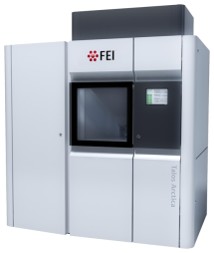 モデル: Talos Arctica / 画像提供: FEI Company |
|---|---|
| 顕微鏡 | モデル: FEI TALOS ARCTICA |
| 電子銃 | 電子線源: OTHER / 加速電圧: 300 kV / 照射モード: OTHER |
| 電子レンズ | モード: BRIGHT FIELD / 最大 デフォーカス(公称値): 2000 nm / 最小 デフォーカス(公称値): 1000 nm |
| 撮影 | 電子線照射量: 80 e/Å2 / フィルム・検出器のモデル: GATAN K3 (6k x 4k) |
- 解析
解析
| EMソフトウェア | 名称: PHENIX / カテゴリ: モデル精密化 | ||||||||||||||||||||||||
|---|---|---|---|---|---|---|---|---|---|---|---|---|---|---|---|---|---|---|---|---|---|---|---|---|---|
| CTF補正 | タイプ: PHASE FLIPPING AND AMPLITUDE CORRECTION | ||||||||||||||||||||||||
| 3次元再構成 | 解像度: 3.1 Å / 解像度の算出法: FSC 0.143 CUT-OFF / 粒子像の数: 407171 / 対称性のタイプ: POINT | ||||||||||||||||||||||||
| 精密化 | 立体化学のターゲット値: REAL-SPACE (WEIGHTED MAP SUM AT ATOM CENTERS) | ||||||||||||||||||||||||
| 拘束条件 |
|
