protein acetyllysine N-acetyltransferase / histone deacetylase activity, NAD-dependent / negative regulation of helicase activity / Loss of function of TP53 in cancer due to loss of tetramerization ability / Regulation of TP53 Expression / signal transduction by p53 class mediator / negative regulation of G1 to G0 transition / negative regulation of glucose catabolic process to lactate via pyruvate / Transcriptional activation of cell cycle inhibitor p21 / regulation of intrinsic apoptotic signaling pathway by p53 class mediator ...protein acetyllysine N-acetyltransferase / histone deacetylase activity, NAD-dependent / negative regulation of helicase activity / Loss of function of TP53 in cancer due to loss of tetramerization ability / Regulation of TP53 Expression / signal transduction by p53 class mediator / negative regulation of G1 to G0 transition / negative regulation of glucose catabolic process to lactate via pyruvate / Transcriptional activation of cell cycle inhibitor p21 / regulation of intrinsic apoptotic signaling pathway by p53 class mediator / negative regulation of pentose-phosphate shunt / ATP-dependent DNA/DNA annealing activity / Activation of NOXA and translocation to mitochondria / regulation of cell cycle G2/M phase transition / oligodendrocyte apoptotic process / negative regulation of miRNA processing / intrinsic apoptotic signaling pathway in response to hypoxia / regulation of fibroblast apoptotic process / positive regulation of thymocyte apoptotic process / oxidative stress-induced premature senescence / regulation of tissue remodeling / positive regulation of mitochondrial membrane permeability / mRNA transcription / bone marrow development / circadian behavior / positive regulation of programmed necrotic cell death / T cell proliferation involved in immune response / regulation of mitochondrial membrane permeability involved in apoptotic process / histone deacetylase regulator activity / RUNX3 regulates CDKN1A transcription / germ cell nucleus / homolactic fermentation / TP53 Regulates Transcription of Death Receptors and Ligands / Activation of PUMA and translocation to mitochondria / TP53 regulates transcription of additional cell cycle genes whose exact role in the p53 pathway remain uncertain / regulation of DNA damage response, signal transduction by p53 class mediator / negative regulation of glial cell proliferation / Regulation of TP53 Activity through Association with Co-factors / negative regulation of neuroblast proliferation / mitochondrial DNA repair / T cell lineage commitment / Formation of Senescence-Associated Heterochromatin Foci (SAHF) / thymocyte apoptotic process / ER overload response / TP53 Regulates Transcription of Caspase Activators and Caspases / cardiac septum morphogenesis / B cell lineage commitment / entrainment of circadian clock by photoperiod / negative regulation of mitophagy / negative regulation of DNA replication / Zygotic genome activation (ZGA) / Association of TriC/CCT with target proteins during biosynthesis / PI5P Regulates TP53 Acetylation / TP53 Regulates Transcription of Genes Involved in Cytochrome C Release / necroptotic process / positive regulation of release of cytochrome c from mitochondria / negative regulation of telomere maintenance via telomerase / cellular response to actinomycin D / SUMOylation of transcription factors / TP53 regulates transcription of several additional cell death genes whose specific roles in p53-dependent apoptosis remain uncertain / TFIID-class transcription factor complex binding / intrinsic apoptotic signaling pathway by p53 class mediator / negative regulation of reactive oxygen species metabolic process / rRNA transcription / Transcriptional Regulation by VENTX / cellular response to UV-C / viral process / replicative senescence / general transcription initiation factor binding / intrinsic apoptotic signaling pathway in response to endoplasmic reticulum stress / NAD+ binding / positive regulation of RNA polymerase II transcription preinitiation complex assembly / neuroblast proliferation / intrinsic apoptotic signaling pathway in response to DNA damage by p53 class mediator / Pyroptosis / positive regulation of execution phase of apoptosis / embryonic organ development / hematopoietic stem cell differentiation / response to X-ray / chromosome organization / type II interferon-mediated signaling pathway / TP53 Regulates Transcription of Genes Involved in G1 Cell Cycle Arrest / somitogenesis / hematopoietic progenitor cell differentiation / positive regulation of cardiac muscle cell apoptotic process / core promoter sequence-specific DNA binding / glial cell proliferation / negative regulation of stem cell proliferation / negative regulation of fibroblast proliferation / cellular response to glucose starvation / mitophagy / cis-regulatory region sequence-specific DNA binding / Regulation of TP53 Activity through Acetylation / positive regulation of intrinsic apoptotic signaling pathway / 14-3-3 protein binding / response to salt stress / negative regulation of proteolysis / mitotic G1 DNA damage checkpoint signaling / cardiac muscle cell apoptotic process / transcription repressor complex 類似検索 - 分子機能
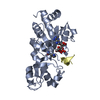
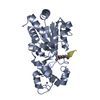
THE INHIBITOR OCZ (A1247), ACETYLATED LYSINE ALY (P 382) AND SUBSTRATE ACETYL RIBOSE OAD (A 1249) ...THE INHIBITOR OCZ (A1247), ACETYLATED LYSINE ALY (P 382) AND SUBSTRATE ACETYL RIBOSE OAD (A 1249) BIND ALTERNATIVELY TO THE SAME BINDING SITE GIVING RISE TO MICROHETEROGENEITY.
解像度: 1.9→40.32 Å / Cor.coef. Fo:Fc: 0.961 / Cor.coef. Fo:Fc free: 0.939 / SU B: 4.883 / SU ML: 0.077 / 交差検証法: THROUGHOUT / ESU R: 0.124 / ESU R Free: 0.118 / 立体化学のターゲット値: MAXIMUM LIKELIHOOD 詳細: HYDROGENS HAVE BEEN ADDED IN THE RIDING POSITIONS. U VALUES WITH TLS ADDED
Rfactor
反射数
%反射
Selection details
Rfree
0.19357
1241
5 %
RANDOM
Rwork
0.1593
-
-
-
obs
0.16104
23580
99.84 %
-
溶媒の処理
イオンプローブ半径: 0.8 Å / 減衰半径: 0.8 Å / VDWプローブ半径: 1.2 Å / 溶媒モデル: MASK
 ムービー
ムービー コントローラー


 データを開く
 基本情報
基本情報 要素
要素 キーワード
キーワード 機能・相同性情報
 THERMOTOGA MARITIMA (バクテリア)
 HOMO SAPIENS (ヒト)
 X線回折 /
  データ登録者
 引用
引用 構造の表示
構造の表示 ダウンロードとリンク
 その他のダウンロード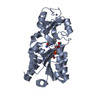

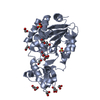
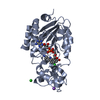

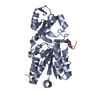
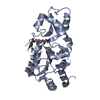
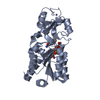
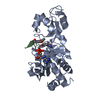
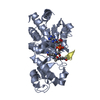
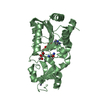
 PDBj
PDBj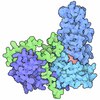
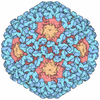
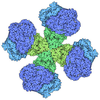
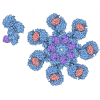
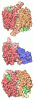
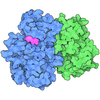
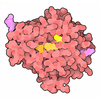
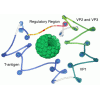
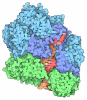
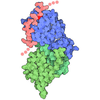
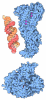
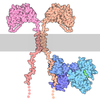
 集合体
集合体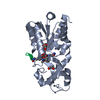
 ESCHERICHIA COLI (大腸菌) / 株 (発現宿主): BL21(DE3)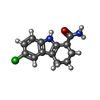

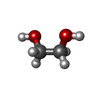
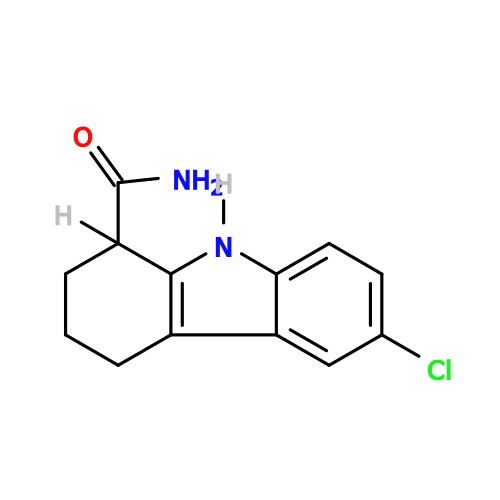 分子量: 248.708 Da / 分子数: 1 / 由来タイプ: 合成 / 式: C13H13ClN2O
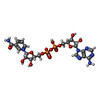
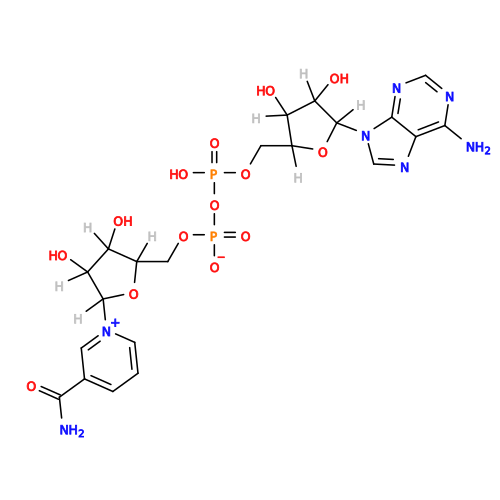 分子量: 663.425 Da / 分子数: 1 / 由来タイプ: 合成 / 式: C21H27N7O14P2 / コメント: NAD*YM
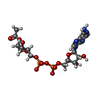
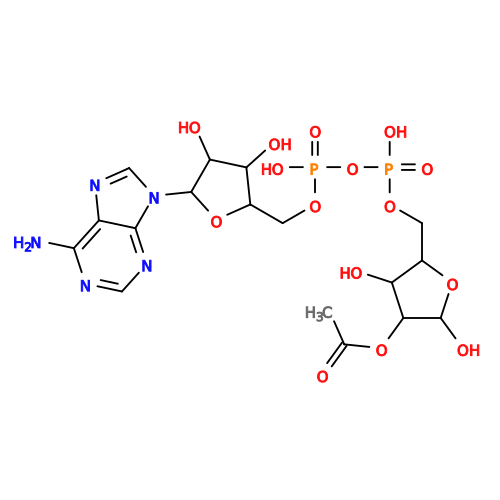 タイプ: RNA linking / 分子量: 601.352 Da / 分子数: 1 / 由来タイプ: 合成 / 式: C17H25N5O15P2
 分子量: 65.409 Da / 分子数: 1 / 由来タイプ: 合成 / 式: Zn
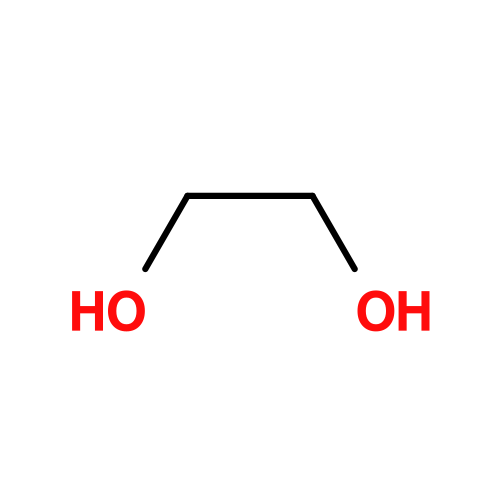 分子量: 62.068 Da / 分子数: 1 / 由来タイプ: 合成 / 式: C2H6O2
 試料調製
試料調製 / ビームライン: 14.1 / 波長: 0.91998
  解析
解析