 ムービー
ムービー コントローラー


+ データを開く

- 基本情報
基本情報
| 登録情報 | データベース: EMDB / ID: EMD-3906 | |||||||||
|---|---|---|---|---|---|---|---|---|---|---|
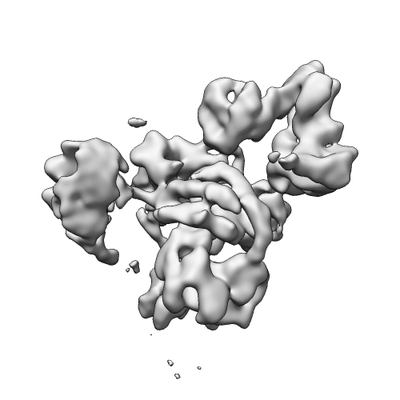
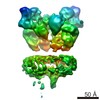
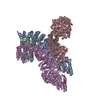
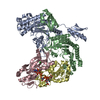
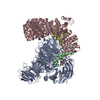
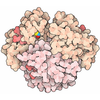
| タイトル | Cryo-EM density map of the human PLC editing module | |||||||||
 マップデータ マップデータ | CryoEM map of a protein complex | |||||||||
 試料 試料 |
| |||||||||
 キーワード キーワード | adaptive immunity / antigen processing / chaperone / MHC class I / IMMUNE SYSTEM | |||||||||
| 機能・相同性 |  機能・相同性情報 機能・相同性情報MHC class Ib protein complex assembly / peptide antigen stabilization / Tapasin-ERp57 complex / response to biphenyl / Calnexin/calreticulin cycle / MHC class I protein complex binding / cytolytic granule / TAP2 binding / TAP1 binding / protein disulfide-isomerase ...MHC class Ib protein complex assembly / peptide antigen stabilization / Tapasin-ERp57 complex / response to biphenyl / Calnexin/calreticulin cycle / MHC class I protein complex binding / cytolytic granule / TAP2 binding / TAP1 binding / protein disulfide-isomerase / nuclear receptor-mediated glucocorticoid signaling pathway / positive regulation of dendritic cell chemotaxis / Assembly of Viral Components at the Budding Site / ATF6 (ATF6-alpha) activates chaperone genes / cortical granule / negative regulation of trophoblast cell migration / cellular response to electrical stimulus / response to peptide / regulation of meiotic nuclear division / negative regulation of retinoic acid receptor signaling pathway / : / complement component C1q complex binding / endoplasmic reticulum quality control compartment / protein folding in endoplasmic reticulum / sarcoplasmic reticulum lumen / disulfide oxidoreductase activity / negative regulation of intracellular steroid hormone receptor signaling pathway / regulation of protein complex stability / nuclear export signal receptor activity / C-type glycerophospholipase activity / cardiac muscle cell differentiation / retrograde vesicle-mediated transport, Golgi to endoplasmic reticulum / cellular response to interleukin-7 / cortical actin cytoskeleton organization / positive regulation of extrinsic apoptotic signaling pathway / response to glycoside / positive regulation of memory T cell activation / T cell mediated cytotoxicity directed against tumor cell target / TAP complex binding / Scavenging by Class A Receptors / positive regulation of CD8-positive, alpha-beta T cell activation / Golgi medial cisterna / CD8-positive, alpha-beta T cell activation / positive regulation of CD8-positive, alpha-beta T cell proliferation / nuclear androgen receptor binding / Scavenging by Class F Receptors / cellular response to lithium ion / negative regulation of neuron differentiation / CD8 receptor binding / protein disulfide isomerase activity / response to testosterone / antigen processing and presentation of exogenous peptide antigen via MHC class I / lncRNA binding / beta-2-microglobulin binding / endoplasmic reticulum exit site / smooth endoplasmic reticulum / MHC class I protein binding / TAP binding / hormone binding / antigen processing and presentation of endogenous peptide antigen via MHC class I via ER pathway, TAP-dependent / protection from natural killer cell mediated cytotoxicity / protein-disulfide reductase activity / molecular sequestering activity / antigen processing and presentation of endogenous peptide antigen via MHC class Ib / antigen processing and presentation of endogenous peptide antigen via MHC class I via ER pathway, TAP-independent / protein localization to nucleus / detection of bacterium / T cell receptor binding / phagocytic vesicle / extrinsic apoptotic signaling pathway / ERAD pathway / positive regulation of cell cycle / endocytic vesicle lumen / positive regulation of substrate adhesion-dependent cell spreading / endoplasmic reticulum-Golgi intermediate compartment membrane / protein folding chaperone / positive regulation of endothelial cell migration / peptide binding / acrosomal vesicle / negative regulation of iron ion transport / protein export from nucleus / positive regulation of phagocytosis / response to endoplasmic reticulum stress / early endosome lumen / Nef mediated downregulation of MHC class I complex cell surface expression / DAP12 interactions / protein maturation / transferrin transport / negative regulation of receptor-mediated endocytosis / cellular response to iron ion / Endosomal/Vacuolar pathway / Antigen Presentation: Folding, assembly and peptide loading of class I MHC / peptide antigen assembly with MHC class II protein complex / lumenal side of endoplasmic reticulum membrane / cellular response to iron(III) ion / MHC class II protein complex / negative regulation of forebrain neuron differentiation / antigen processing and presentation of exogenous protein antigen via MHC class Ib, TAP-dependent / ER to Golgi transport vesicle membrane / peptide antigen assembly with MHC class I protein complex 類似検索 - 分子機能 | |||||||||
| 生物種 |  Homo sapiens (ヒト) Homo sapiens (ヒト) | |||||||||
| 手法 | 単粒子再構成法 / クライオ電子顕微鏡法 / 解像度: 5.8 Å | |||||||||
 データ登録者 データ登録者 | Januliene D / Blees A / Trowitzsch S / Tampe R / Moeller A | |||||||||
| 資金援助 |  ドイツ, 2件 ドイツ, 2件
| |||||||||
 引用 引用 | ジャーナル: Nature / 年: 2017 タイトル: Structure of the human MHC-I peptide-loading complex. 著者: Andreas Blees / Dovile Januliene / Tommy Hofmann / Nicole Koller / Carla Schmidt / Simon Trowitzsch / Arne Moeller / Robert Tampé / 要旨: The peptide-loading complex (PLC) is a transient, multisubunit membrane complex in the endoplasmic reticulum that is essential for establishing a hierarchical immune response. The PLC coordinates ...The peptide-loading complex (PLC) is a transient, multisubunit membrane complex in the endoplasmic reticulum that is essential for establishing a hierarchical immune response. The PLC coordinates peptide translocation into the endoplasmic reticulum with loading and editing of major histocompatibility complex class I (MHC-I) molecules. After final proofreading in the PLC, stable peptide-MHC-I complexes are released to the cell surface to evoke a T-cell response against infected or malignant cells. Sampling of different MHC-I allomorphs requires the precise coordination of seven different subunits in a single macromolecular assembly, including the transporter associated with antigen processing (TAP1 and TAP2, jointly referred to as TAP), the oxidoreductase ERp57, the MHC-I heterodimer, and the chaperones tapasin and calreticulin. The molecular organization of and mechanistic events that take place in the PLC are unknown owing to the heterogeneous composition and intrinsically dynamic nature of the complex. Here, we isolate human PLC from Burkitt's lymphoma cells using an engineered viral inhibitor as bait and determine the structure of native PLC by electron cryo-microscopy. Two endoplasmic reticulum-resident editing modules composed of tapasin, calreticulin, ERp57, and MHC-I are centred around TAP in a pseudo-symmetric orientation. A multivalent chaperone network within and across the editing modules establishes the proofreading function at two lateral binding platforms for MHC-I molecules. The lectin-like domain of calreticulin senses the MHC-I glycan, whereas the P domain reaches over the MHC-I peptide-binding pocket towards ERp57. This arrangement allows tapasin to facilitate peptide editing by clamping MHC-I. The translocation pathway of TAP opens out into a large endoplasmic reticulum lumenal cavity, confined by the membrane entry points of tapasin and MHC-I. Two lateral windows channel the antigenic peptides to MHC-I. Structures of PLC captured at distinct assembly states provide mechanistic insight into the recruitment and release of MHC-I. Our work defines the molecular symbiosis of an ABC transporter and an endoplasmic reticulum chaperone network in MHC-I assembly and provides insight into the onset of the adaptive immune response. | |||||||||
| 履歴 |
|
- 構造の表示
構造の表示
| ムービー |
ムービービューア |
|---|---|
| 構造ビューア | EMマップ: SurfViewMolmilJmol/JSmol |
| 添付画像 |
- ダウンロードとリンク
-EMDBアーカイブ
| マップデータ | emd_3906.map.gz | 25.5 MB | EMDBマップデータ形式 | |
|---|---|---|---|---|
| ヘッダ (付随情報) | emd-3906-v30.xmlemd-3906.xml | 16 KB 16 KB | 表示 表示 | EMDBヘッダ |
| 画像 | 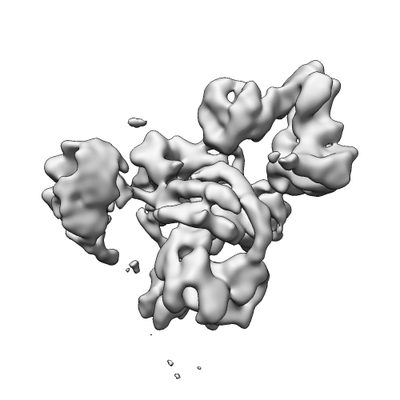 emd_3906.png emd_3906.png | 44.5 KB | ||
| Filedesc metadata | emd-3906.cif.gz | 6.6 KB | ||
| アーカイブディレクトリ |  http://ftp.pdbj.org/pub/emdb/structures/EMD-3906ftp://ftp.pdbj.org/pub/emdb/structures/EMD-3906 http://ftp.pdbj.org/pub/emdb/structures/EMD-3906ftp://ftp.pdbj.org/pub/emdb/structures/EMD-3906 | HTTPS FTP |
-関連構造データ
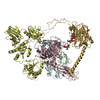
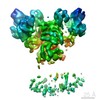


-リンク
| EMDBのページ | EMDB (EBI/PDBe) / EMDataResource |
|---|---|
| 「今月の分子」の関連する項目 |
-マップ
| ファイル | ダウンロード / ファイル: emd_3906.map.gz / 形式: CCP4 / 大きさ: 30.5 MB / タイプ: IMAGE STORED AS FLOATING POINT NUMBER (4 BYTES) | ||||||||||||||||||||||||||||||||||||||||||||||||||||||||||||
|---|---|---|---|---|---|---|---|---|---|---|---|---|---|---|---|---|---|---|---|---|---|---|---|---|---|---|---|---|---|---|---|---|---|---|---|---|---|---|---|---|---|---|---|---|---|---|---|---|---|---|---|---|---|---|---|---|---|---|---|---|---|
| 注釈 | CryoEM map of a protein complex | ||||||||||||||||||||||||||||||||||||||||||||||||||||||||||||
| 投影像・断面図 | 画像のコントロール
画像は Spider により作成 | ||||||||||||||||||||||||||||||||||||||||||||||||||||||||||||
| ボクセルのサイズ | X=Y=Z: 1.077 Å | ||||||||||||||||||||||||||||||||||||||||||||||||||||||||||||
| 密度 |
| ||||||||||||||||||||||||||||||||||||||||||||||||||||||||||||
| 対称性 | 空間群: 1 | ||||||||||||||||||||||||||||||||||||||||||||||||||||||||||||
| 詳細 | EMDB XML:
CCP4マップ ヘッダ情報:
| ||||||||||||||||||||||||||||||||||||||||||||||||||||||||||||
 Z (Sec.)
 Y (Row.)
 X (Col.)


-添付データ
- 試料の構成要素
-全体 : Protein Complex
| 全体 | 名称: Protein Complex |
|---|---|
| 要素 |
|
-超分子 #1: Protein Complex
| 超分子 | 名称: Protein Complex / タイプ: complex / ID: 1 / 親要素: 0 / 含まれる分子: all |
|---|---|
| 由来(天然) | 生物種: Homo sapiens (ヒト) |
-分子 #1: Beta-2-microglobulin
| 分子 | 名称: Beta-2-microglobulin / タイプ: protein_or_peptide / ID: 1 / コピー数: 1 / 光学異性体: LEVO |
|---|---|
| 由来(天然) | 生物種: Homo sapiens (ヒト) |
| 分子量 | 理論値: 11.74816 KDa |
| 配列 | 文字列: IQRTPKIQVY SRHPAENGKS NFLNCYVSGF HPSDIEVDLL KNGERIEKVE HSDLSFSKDW SFYLLYYTEF TPTEKDEYAC RVNHVTLSQ PKIVKWDRDM UniProtKB: Beta-2-microglobulin |
-分子 #2: Tapasin
| 分子 | 名称: Tapasin / タイプ: protein_or_peptide / ID: 2 / コピー数: 1 / 光学異性体: LEVO |
|---|---|
| 由来(天然) | 生物種: Homo sapiens (ヒト) |
| 分子量 | 理論値: 45.761184 KDa |
| 配列 | 文字列: GPAVIECWFV EDASGKGLAK RPGALLLRQG PGEPPPRPDL DPELYLSVHD PAGALQAAFR RYPRGAPAPH CEMSRFVPLP ASAKWASGL TPAQNCPRAL DGAWLMVSIS SPVLSLSSLL RPQPEPQQEP VLITMATVVL TVLTHTPAPR VRLGQDALLD L SFAYMPPT ...文字列: GPAVIECWFV EDASGKGLAK RPGALLLRQG PGEPPPRPDL DPELYLSVHD PAGALQAAFR RYPRGAPAPH CEMSRFVPLP ASAKWASGL TPAQNCPRAL DGAWLMVSIS SPVLSLSSLL RPQPEPQQEP VLITMATVVL TVLTHTPAPR VRLGQDALLD L SFAYMPPT SEAASSLAPG PPPFGLEWRR QHLGKGHLLL AATPGLNGQM PAAQEGAVAF AAWDDDEPWG PWTGNGTFWL PR VQPFQEG TYLATIHLPY LQGQVTLELA VYKPPKVSLM PATLARAAPG EAPPELLCLV SHFYPSGGLE VEWELRGGPG GRS QKAEGQ RWLSALRHHS DGSVSLSGHL QPPPVTTEQH GARYACRIHH PSLPASGRSA EVTLEVAGLS GPSLEDSVGL FLSA FLLLG LFKALGWAAV YLSTCKDSKK KAE UniProtKB: Tapasin |
-分子 #3: Protein disulfide-isomerase A3
| 分子 | 名称: Protein disulfide-isomerase A3 / タイプ: protein_or_peptide / ID: 3 / コピー数: 1 / 光学異性体: LEVO / EC番号: protein disulfide-isomerase |
|---|---|
| 由来(天然) | 生物種: Homo sapiens (ヒト) |
| 分子量 | 理論値: 54.341102 KDa |
| 配列 | 文字列: SDVLELTDDN FESRISDTGS AGLMLVEFFA PWCGHCKRLA PEYEAAATRL KGIVPLAKVD CTANTNTCNK YGVSGYPTLK IFRDGEEAG AYDGPRTADG IVSHLKKQAG PASVPLRTEE EFKKFISDKD ASIVGFFDDS FSEAHSEFLK AASNLRDNYR F AHTNVESL ...文字列: SDVLELTDDN FESRISDTGS AGLMLVEFFA PWCGHCKRLA PEYEAAATRL KGIVPLAKVD CTANTNTCNK YGVSGYPTLK IFRDGEEAG AYDGPRTADG IVSHLKKQAG PASVPLRTEE EFKKFISDKD ASIVGFFDDS FSEAHSEFLK AASNLRDNYR F AHTNVESL VNEYDDNGEG IILFRPSHLT NKFEDKTVAY TEQKMTSGKI KKFIQENIFG ICPHMTEDNK DLIQGKDLLI AY YDVDYEK NAKGSNYWRN RVMMVAKKFL DAGHKLNFAV ASRKTFSHEL SDFGLESTAG EIPVVAIRTA KGEKFVMQEE FSR DGKALE RFLQDYFDGN LKRYLKSEPI PESNDGPVKV VVAENFDEIV NNENKDVLIE FYAPWCGHCK NLEPKYKELG EKLS KDPNI VIAKMDATAN DVPSPYEVRG FPTIYFSPAN KKLNPKKYEG GRELSDFISY LQREATNPPV IQEEKPKKKK KAQED L UniProtKB: Protein disulfide-isomerase A3 |
-分子 #4: HLA class I histocompatibility antigen, A-3 alpha chain
| 分子 | 名称: HLA class I histocompatibility antigen, A-3 alpha chain タイプ: protein_or_peptide / ID: 4 / コピー数: 1 / 光学異性体: LEVO |
|---|---|
| 由来(天然) | 生物種: Homo sapiens (ヒト) |
| 分子量 | 理論値: 38.363535 KDa |
| 配列 | 文字列: GSHSMRYFFT SVSRPGRGEP RFIAVGYVDD TQFVRFDSDA ASQRMEPRAP WIEQEGPEYW DQETRNVKAQ SQTDRVDLGT LRGYYNQSE AGSHTIQIMY GCDVGSDGRF LRGYRQDAYD GKDYIALNED LRSWTAADMA AQITKRKWEA AHEAEQLRAY L DGTCVEWL ...文字列: GSHSMRYFFT SVSRPGRGEP RFIAVGYVDD TQFVRFDSDA ASQRMEPRAP WIEQEGPEYW DQETRNVKAQ SQTDRVDLGT LRGYYNQSE AGSHTIQIMY GCDVGSDGRF LRGYRQDAYD GKDYIALNED LRSWTAADMA AQITKRKWEA AHEAEQLRAY L DGTCVEWL RRYLENGKET LQRTDPPKTH MTHHPISDHE ATLRCWALGF YPAEITLTWQ RDGEDQTQDT ELVETRPAGD GT FQKWAAV VVPSGEEQRY TCHVQHEGLP KPLTLRWELS SQPTIPIVGI IAGLVLLGAV ITGAVVAAVM WRRKSSDRKG GSY TQAASS DSAQGSDVSL TACKV UniProtKB: HLA class I histocompatibility antigen, A alpha chain |
-分子 #5: Calreticulin
| 分子 | 名称: Calreticulin / タイプ: protein_or_peptide / ID: 5 / コピー数: 1 / 光学異性体: LEVO |
|---|---|
| 由来(天然) | 生物種: Homo sapiens (ヒト) |
| 分子量 | 理論値: 46.507145 KDa |
| 配列 | 文字列: EPAVYFKEQF LDGDGWTSRW IESKHKSDFG KFVLSSGKFY GDEEKDKGLQ TSQDARFYAL SASFEPFSNK GQTLVVQFTV KHEQNIDCG GGYVKLFPNS LDQTDMHGDS EYNIMFGPDI CGPGTKKVHV IFNYKGKNVL INKDIRSKDD EFTHLYTLIV R PDNTYEVK ...文字列: EPAVYFKEQF LDGDGWTSRW IESKHKSDFG KFVLSSGKFY GDEEKDKGLQ TSQDARFYAL SASFEPFSNK GQTLVVQFTV KHEQNIDCG GGYVKLFPNS LDQTDMHGDS EYNIMFGPDI CGPGTKKVHV IFNYKGKNVL INKDIRSKDD EFTHLYTLIV R PDNTYEVK IDNSQVESGS LEDDWDFLPP KKIKDPDASK PEDWDERAKI DDPTDSKPED WDKPEHIPDP DAKKPEDWDE EM DGEWEPP VIQNPEYKGE WKPRQIDNPD YKGTWIHPEI DNPEYSPDPS IYAYDNFGVL GLDLWQVKSG TIFDNFLITN DEA YAEEFG NETWGVTKAA EKQMKDKQDE EQRLKEEEED KKRKEEEEAE DKEDDEDKDE DEEDEEDKEE DEEEDVPGQA KDEL UniProtKB: Calreticulin |
-実験情報
-構造解析
| 手法 | クライオ電子顕微鏡法 |
|---|---|
 解析 解析 | 単粒子再構成法 |
| 試料の集合状態 | particle |
-試料調製
| 濃度 | 2 mg/mL |
|---|---|
| 緩衝液 | pH: 7.5 |
| グリッド | モデル: C-flat-2/2 / 前処理 - タイプ: GLOW DISCHARGE |
| 凍結 | 凍結剤: ETHANE / チャンバー内湿度: 100 % / チャンバー内温度: 277 K / 装置: FEI VITROBOT MARK IV |
- 電子顕微鏡法
| 顕微鏡 | FEI TITAN KRIOS |
|---|---|
| 撮影 | フィルム・検出器のモデル: GATAN K2 QUANTUM (4k x 4k) 検出モード: COUNTING / 平均電子線量: 55.0 e/Å2 |
| 電子線 | 加速電圧: 300 kV / 電子線源:  FIELD EMISSION GUN FIELD EMISSION GUN |
| 電子光学系 | 照射モード: FLOOD BEAM / 撮影モード: BRIGHT FIELD |
| 実験機器 |  モデル: Titan Krios / 画像提供: FEI Company |
-画像解析
| 初期モデル | モデルのタイプ: OTHER 詳細: Selected particles from the best 2D class averages were subjected to 3D-classification in Relion, using a low-pass filtered global average as a starting model. The best map was then used as ...詳細: Selected particles from the best 2D class averages were subjected to 3D-classification in Relion, using a low-pass filtered global average as a starting model. The best map was then used as an initial model for subsequent 3D classification. |
|---|---|
| 最終 再構成 | 想定した対称性 - 点群: C1 (非対称) / 解像度のタイプ: BY AUTHOR / 解像度: 5.8 Å / 解像度の算出法: FSC 0.143 CUT-OFF / ソフトウェア - 名称: FREALIGN (ver. X) / 使用した粒子像数: 141078 |
| 初期 角度割当 | タイプ: ANGULAR RECONSTITUTION / ソフトウェア - 名称: RELION (ver. 2.1) |
| 最終 角度割当 | タイプ: ANGULAR RECONSTITUTION |
