 ムービー
ムービー コントローラー


+ データを開く

- 基本情報
基本情報
| 登録情報 | データベース: EMDB / ID: EMD-13140 | |||||||||
|---|---|---|---|---|---|---|---|---|---|---|
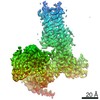
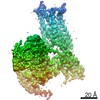
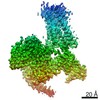
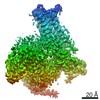
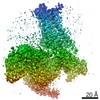
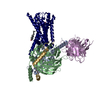
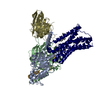
| タイトル | Human Neurokinin 1 receptor (NK1R) substance P Gq chimera (mGsqi) complex | |||||||||
 マップデータ マップデータ | processed map | |||||||||
 試料 試料 |
| |||||||||
 キーワード キーワード | Receptor / Complex / Eukaryotic protein / Membrane protein | |||||||||
| 機能・相同性 |  機能・相同性情報 機能・相同性情報substance P receptor activity / tachykinin receptor activity / phospholipase C-activating tachykinin receptor signaling pathway / positive regulation of flagellated sperm motility / aggressive behavior / Tachykinin receptors bind tachykinins / positive regulation of uterine smooth muscle contraction / positive regulation of synaptic transmission, cholinergic / detection of abiotic stimulus / sperm ejaculation ...substance P receptor activity / tachykinin receptor activity / phospholipase C-activating tachykinin receptor signaling pathway / positive regulation of flagellated sperm motility / aggressive behavior / Tachykinin receptors bind tachykinins / positive regulation of uterine smooth muscle contraction / positive regulation of synaptic transmission, cholinergic / detection of abiotic stimulus / sperm ejaculation / tachykinin receptor signaling pathway / positive regulation of lymphocyte proliferation / sperm head / response to ozone / operant conditioning / positive regulation of action potential / positive regulation of blood pressure / response to auditory stimulus / smooth muscle contraction involved in micturition / regulation of smooth muscle cell proliferation / positive regulation of vascular permeability / positive regulation of hormone secretion / regulation of smooth muscle cell migration / positive regulation of ossification / positive regulation of leukocyte migration / eating behavior / angiotensin-mediated drinking behavior / behavioral response to pain / positive regulation of epithelial cell migration / response to electrical stimulus / positive regulation of vasoconstriction / associative learning / sperm flagellum / long-term memory / adenylate cyclase inhibitor activity / positive regulation of protein localization to cell cortex / positive regulation of stress fiber assembly / T cell migration / positive regulation of relaxation of smooth muscle / Adenylate cyclase inhibitory pathway / D2 dopamine receptor binding / response to progesterone / adenylate cyclase-inhibiting serotonin receptor signaling pathway / G protein-coupled serotonin receptor binding / cellular response to forskolin / regulation of mitotic spindle organization / positive regulation of epithelial cell proliferation / chemokine-mediated signaling pathway / positive regulation of synaptic transmission, GABAergic / response to nicotine / Regulation of insulin secretion / neuropeptide signaling pathway / response to prostaglandin E / positive regulation of cholesterol biosynthetic process / negative regulation of insulin secretion / G protein-coupled receptor binding / response to peptide hormone / adenylate cyclase-modulating G protein-coupled receptor signaling pathway / G-protein beta/gamma-subunit complex binding / centriolar satellite / adenylate cyclase-inhibiting G protein-coupled receptor signaling pathway / Olfactory Signaling Pathway / Activation of the phototransduction cascade / G protein-coupled acetylcholine receptor signaling pathway / G beta:gamma signalling through PLC beta / Presynaptic function of Kainate receptors / Thromboxane signalling through TP receptor / Activation of G protein gated Potassium channels / Inhibition of voltage gated Ca2+ channels via Gbeta/gamma subunits / G-protein activation / Glucagon signaling in metabolic regulation / G beta:gamma signalling through CDC42 / Prostacyclin signalling through prostacyclin receptor / G beta:gamma signalling through BTK / Synthesis, secretion, and inactivation of Glucagon-like Peptide-1 (GLP-1) / photoreceptor disc membrane / ADP signalling through P2Y purinoceptor 12 / Sensory perception of sweet, bitter, and umami (glutamate) taste / Glucagon-type ligand receptors / GDP binding / Adrenaline,noradrenaline inhibits insulin secretion / Vasopressin regulates renal water homeostasis via Aquaporins / Glucagon-like Peptide-1 (GLP1) regulates insulin secretion / G alpha (z) signalling events / response to estradiol / cellular response to catecholamine stimulus / ADP signalling through P2Y purinoceptor 1 / ADORA2B mediated anti-inflammatory cytokines production / G beta:gamma signalling through PI3Kgamma / adenylate cyclase-activating dopamine receptor signaling pathway / Cargo recognition for clathrin-mediated endocytosis / Cooperation of PDCL (PhLP1) and TRiC/CCT in G-protein beta folding / GPER1 signaling / cellular response to prostaglandin E stimulus / heterotrimeric G-protein complex / G-protein beta-subunit binding / G alpha (12/13) signalling events / Inactivation, recovery and regulation of the phototransduction cascade / extracellular vesicle / sensory perception of taste 類似検索 - 分子機能 | |||||||||
| 生物種 |  Homo sapiens (ヒト) / Homo sapiens (ヒト) /   Mus musculus (ハツカネズミ) Mus musculus (ハツカネズミ) | |||||||||
| 手法 | 単粒子再構成法 / クライオ電子顕微鏡法 / 解像度: 2.71 Å | |||||||||
 データ登録者 データ登録者 | Thom C / Ehrenmann J | |||||||||
| 資金援助 |  スイス, 2件 スイス, 2件
| |||||||||
 引用 引用 | ジャーナル: Sci Adv / 年: 2021 タイトル: Structures of neurokinin 1 receptor in complex with G and G proteins reveal substance P binding mode and unique activation features. 著者: Cristian Thom / Janosch Ehrenmann / Santiago Vacca / Yann Waltenspühl / Jendrik Schöppe / Ohad Medalia / Andreas Plückthun / 要旨: The neurokinin 1 receptor (NKR) is involved in inflammation and pain transmission. This pathophysiologically important G protein–coupled receptor is predominantly activated by its cognate agonist ...The neurokinin 1 receptor (NKR) is involved in inflammation and pain transmission. This pathophysiologically important G protein–coupled receptor is predominantly activated by its cognate agonist substance P (SP) but also by the closely related neurokinins A and B. Here, we report cryo–electron microscopy structures of SP-bound NKR in complex with its primary downstream signal mediators, G and G. Our structures reveal how a polar network at the extracellular, solvent-exposed receptor surface shapes the orthosteric pocket and that NKR adopts a noncanonical active-state conformation with an interface for G protein binding, which is distinct from previously reported structures. Detailed comparisons with antagonist-bound NKR crystal structures reveal that insurmountable antagonists induce a distinct and long-lasting receptor conformation that sterically blocks SP binding. Together, our structures provide important structural insights into ligand and G protein promiscuity, the lack of basal signaling, and agonist- and antagonist-induced conformations in the neurokinin receptor family. | |||||||||
| 履歴 |
|
- 構造の表示
構造の表示
| ムービー |
ムービービューア |
|---|---|
| 構造ビューア | EMマップ: SurfViewMolmilJmol/JSmol |
| 添付画像 |

- ダウンロードとリンク
-EMDBアーカイブ
| マップデータ | emd_13140.map.gz | 258.7 MB | EMDBマップデータ形式 | |
|---|---|---|---|---|
| ヘッダ (付随情報) | emd-13140-v30.xmlemd-13140.xml | 22.3 KB 22.3 KB | 表示 表示 | EMDBヘッダ |
| 画像 | 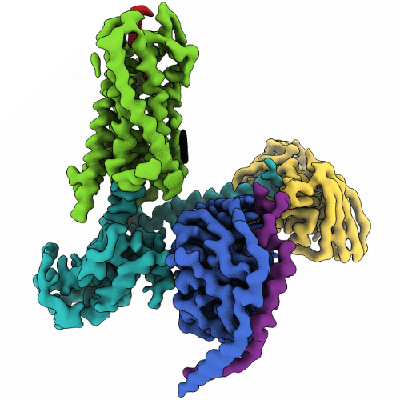 emd_13140.png emd_13140.png | 47.4 KB | ||
| Filedesc metadata | emd-13140.cif.gz | 7.1 KB | ||
| その他 | emd_13140_additional_1.map.gz | 135.3 MB | ||
| アーカイブディレクトリ |  http://ftp.pdbj.org/pub/emdb/structures/EMD-13140ftp://ftp.pdbj.org/pub/emdb/structures/EMD-13140 http://ftp.pdbj.org/pub/emdb/structures/EMD-13140ftp://ftp.pdbj.org/pub/emdb/structures/EMD-13140 | HTTPS FTP |
-関連構造データ


-リンク
| EMDBのページ | EMDB (EBI/PDBe) / EMDataResource |
|---|---|
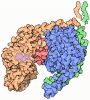
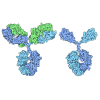
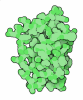
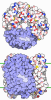
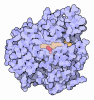
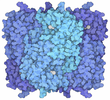
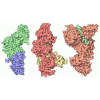
| 「今月の分子」の関連する項目 |

-マップ
| ファイル | ダウンロード / ファイル: emd_13140.map.gz / 形式: CCP4 / 大きさ: 274.6 MB / タイプ: IMAGE STORED AS FLOATING POINT NUMBER (4 BYTES) | ||||||||||||||||||||||||||||||||||||||||||||||||||||||||||||
|---|---|---|---|---|---|---|---|---|---|---|---|---|---|---|---|---|---|---|---|---|---|---|---|---|---|---|---|---|---|---|---|---|---|---|---|---|---|---|---|---|---|---|---|---|---|---|---|---|---|---|---|---|---|---|---|---|---|---|---|---|---|
| 注釈 | processed map | ||||||||||||||||||||||||||||||||||||||||||||||||||||||||||||
| 投影像・断面図 | 画像のコントロール
画像は Spider により作成 | ||||||||||||||||||||||||||||||||||||||||||||||||||||||||||||
| ボクセルのサイズ | X=Y=Z: 0.651 Å | ||||||||||||||||||||||||||||||||||||||||||||||||||||||||||||
| 密度 |
| ||||||||||||||||||||||||||||||||||||||||||||||||||||||||||||
| 対称性 | 空間群: 1 | ||||||||||||||||||||||||||||||||||||||||||||||||||||||||||||
| 詳細 | EMDB XML:
CCP4マップ ヘッダ情報:
| ||||||||||||||||||||||||||||||||||||||||||||||||||||||||||||
 Z (Sec.)
 Y (Row.)
 X (Col.)


-添付データ
-追加マップ: raw map
| ファイル | emd_13140_additional_1.map | ||||||||||||
|---|---|---|---|---|---|---|---|---|---|---|---|---|---|
| 注釈 | raw map | ||||||||||||
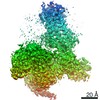
| 投影像・断面図 |
| ||||||||||||
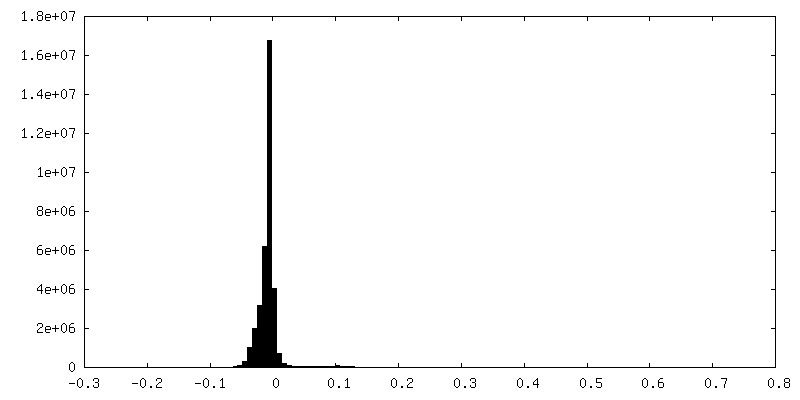
| 密度ヒストグラム |



- 試料の構成要素
-全体 : NK1R in complex with Substance P, heterotrimeric mini-Gq chimera ...
| 全体 | 名称: NK1R in complex with Substance P, heterotrimeric mini-Gq chimera (Gsqi) and scFv16 |
|---|---|
| 要素 |
|
-超分子 #1: NK1R in complex with Substance P, heterotrimeric mini-Gq chimera ...
| 超分子 | 名称: NK1R in complex with Substance P, heterotrimeric mini-Gq chimera (Gsqi) and scFv16 タイプ: complex / ID: 1 / 親要素: 0 / 含まれる分子: #1-#6 |
|---|---|
| 由来(天然) | 生物種: Homo sapiens (ヒト) |
-分子 #1: Antibody fragment scFv16
| 分子 | 名称: Antibody fragment scFv16 / タイプ: protein_or_peptide / ID: 1 / コピー数: 1 / 光学異性体: LEVO |
|---|---|
| 由来(天然) | 生物種: Mus musculus (ハツカネズミ) |
| 分子量 | 理論値: 32.409229 KDa |
| 組換発現 | 生物種:   Spodoptera frugiperda (ツマジロクサヨトウ) Spodoptera frugiperda (ツマジロクサヨトウ) |
| 配列 | 文字列: MKFLVNVALV FMVVYISYIY ADYKDDDDKH HHHHHHHHHL EVLFQGPDVQ LVESGGGLVQ PGGSRKLSCS ASGFAFSSFG MHWVRQAPE KGLEWVAYIS SGSGTIYYAD TVKGRFTISR DDPKNTLFLQ MTSLRSEDTA MYYCVRSIYY YGSSPFDFWG Q GTTLTVSS ...文字列: MKFLVNVALV FMVVYISYIY ADYKDDDDKH HHHHHHHHHL EVLFQGPDVQ LVESGGGLVQ PGGSRKLSCS ASGFAFSSFG MHWVRQAPE KGLEWVAYIS SGSGTIYYAD TVKGRFTISR DDPKNTLFLQ MTSLRSEDTA MYYCVRSIYY YGSSPFDFWG Q GTTLTVSS GGGGSGGGGS GGGGSDIVMT QATSSVPVTP GESVSISCRS SKSLLHSNGN TYLYWFLQRP GQSPQLLIYR MS NLASGVP DRFSGSGSGT AFTLTISRLE AEDVGVYYCM QHLEYPLTFG AGTKLELKAA A |
-分子 #2: Guanine nucleotide-binding protein G(I)/G(S)/G(T) subunit beta-1
| 分子 | 名称: Guanine nucleotide-binding protein G(I)/G(S)/G(T) subunit beta-1 タイプ: protein_or_peptide / ID: 2 / コピー数: 1 / 光学異性体: LEVO |
|---|---|
| 由来(天然) | 生物種: Homo sapiens (ヒト) |
| 分子量 | 理論値: 39.086641 KDa |
| 組換発現 | 生物種: Spodoptera frugiperda (ツマジロクサヨトウ) |
| 配列 | 文字列: MHHHHHHHHH HGSSGSELDQ LRQEAEQLKN QIRDARKACA DATLSQITNN IDPVGRIQMR TRRTLRGHLA KIYAMHWGTD SRLLVSASQ DGKLIIWDSY TTNKVHAIPL RSSWVMTCAY APSGNYVACG GLDNICSIYN LKTREGNVRV SRELAGHTGY L SCCRFLDD ...文字列: MHHHHHHHHH HGSSGSELDQ LRQEAEQLKN QIRDARKACA DATLSQITNN IDPVGRIQMR TRRTLRGHLA KIYAMHWGTD SRLLVSASQ DGKLIIWDSY TTNKVHAIPL RSSWVMTCAY APSGNYVACG GLDNICSIYN LKTREGNVRV SRELAGHTGY L SCCRFLDD NQIVTSSGDT TCALWDIETG QQTTTFTGHT GDVMSLSLAP DTRLFVSGAC DASAKLWDVR EGMCRQTFTG HE SDINAIC FFPNGNAFAT GSDDATCRLF DLRADQELMT YSHDNIICGI TSVSFSKSGR LLLAGYDDFN CNVWDALKAD RAG VLAGHD NRVSCLGVTD DGMAVATGSW DSFLKIWN UniProtKB: Guanine nucleotide-binding protein G(I)/G(S)/G(T) subunit beta-1 |
-分子 #3: Guanine nucleotide-binding protein G(I)/G(S)/G(O) subunit gamma-2
| 分子 | 名称: Guanine nucleotide-binding protein G(I)/G(S)/G(O) subunit gamma-2 タイプ: protein_or_peptide / ID: 3 / コピー数: 1 / 光学異性体: LEVO |
|---|---|
| 由来(天然) | 生物種: Homo sapiens (ヒト) |
| 分子量 | 理論値: 7.861143 KDa |
| 組換発現 | 生物種: Spodoptera frugiperda (ツマジロクサヨトウ) |
| 配列 | 文字列: MASNNTASIA QARKLVEQLK MEANIDRIKV SKAAADLMAY CEAHAKEDPL LTPVPASENP FREKKFFCAI L UniProtKB: Guanine nucleotide-binding protein G(I)/G(S)/G(O) subunit gamma-2 |
-分子 #4: Guanine nucleotide-binding protein G(i) subunit alpha-1,Guanine n...
| 分子 | 名称: Guanine nucleotide-binding protein G(i) subunit alpha-1,Guanine nucleotide-binding protein G(s) subunit alpha isoforms short タイプ: protein_or_peptide / ID: 4 / コピー数: 1 / 光学異性体: LEVO |
|---|---|
| 由来(天然) | 生物種: Homo sapiens (ヒト) |
| 分子量 | 理論値: 28.304219 KDa |
| 組換発現 | 生物種: Spodoptera frugiperda (ツマジロクサヨトウ) |
| 配列 | 文字列: MGCTLSAEDK AAVERSKMIE KQLQKDKQVY RATHRLLLLG ADNSGKSTIV KQMRILHGGS GGSGGTSGIF ETKFQVDKVN FHMFDVGGQ RDERRKWIQC FNDVTAIIFV VDSSDYNRLQ EALNLFKSIW NNRWLRTISV ILFLNKQDLL AEKVLAGKSK I EDYFPEFA ...文字列: MGCTLSAEDK AAVERSKMIE KQLQKDKQVY RATHRLLLLG ADNSGKSTIV KQMRILHGGS GGSGGTSGIF ETKFQVDKVN FHMFDVGGQ RDERRKWIQC FNDVTAIIFV VDSSDYNRLQ EALNLFKSIW NNRWLRTISV ILFLNKQDLL AEKVLAGKSK I EDYFPEFA RYTTPEDATP EPGEDPRVTR AKYFIRDEFL RISTASGDGR HYCYPHFTCA VDTENARRIF NDCKDIILQM NL REYNLV UniProtKB: Guanine nucleotide-binding protein G(i) subunit alpha-1, Guanine nucleotide-binding protein G(s) subunit alpha |
-分子 #5: Substance-P receptor
| 分子 | 名称: Substance-P receptor / タイプ: protein_or_peptide / ID: 5 / コピー数: 1 / 光学異性体: LEVO |
|---|---|
| 由来(天然) | 生物種: Homo sapiens (ヒト) |
| 分子量 | 理論値: 44.218668 KDa |
| 組換発現 | 生物種: Spodoptera frugiperda (ツマジロクサヨトウ) |
| 配列 | 文字列: MKFLVNVALV FMVVYISYIY ADYKDDDDKH HHHHHHHHHL EVLFQGPMDN VLPVDSDLSP NISTNTSEPN QFVQPAWQIV LWAAAYTVI VVTSVVGNVV VMWIILAHKR MRTVTNYFLV NLAFAEASMA AFNTVVNFTY AVHNEWYYGL FYCKFHNFFP I AAVFASIY ...文字列: MKFLVNVALV FMVVYISYIY ADYKDDDDKH HHHHHHHHHL EVLFQGPMDN VLPVDSDLSP NISTNTSEPN QFVQPAWQIV LWAAAYTVI VVTSVVGNVV VMWIILAHKR MRTVTNYFLV NLAFAEASMA AFNTVVNFTY AVHNEWYYGL FYCKFHNFFP I AAVFASIY SMTAVAFDRY MAIIHPLQPR LSATATKVVI CVIWVLALLL AFPQGYYSTT ETMPSRVVCM IEWPEHPNKI YE KVYHICV TVLIYFLPLL VIGYAYTVVG ITLWASEIPG DSSDRYHEQV SAKRKVVKMM IVVVCTFAIC WLPFHIFFLL PYI NPDLYL KKFIQQVYLA IMWLAMSSTM YNPIIYCCLN DRFRLGFKHA FRCCPFISAG DYEGLE UniProtKB: Substance-P receptor |
-分子 #6: Substance P
| 分子 | 名称: Substance P / タイプ: protein_or_peptide / ID: 6 / コピー数: 1 / 光学異性体: LEVO |
|---|---|
| 由来(天然) | 生物種: Homo sapiens (ヒト) |
| 分子量 | 理論値: 1.348637 KDa |
| 配列 | 文字列: RPKPQQFFGL M(NH2) |
-分子 #7: CHOLESTEROL
| 分子 | 名称: CHOLESTEROL / タイプ: ligand / ID: 7 / コピー数: 1 / 式: CLR |
|---|---|
| 分子量 | 理論値: 386.654 Da |
| Chemical component information | 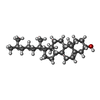 ChemComp-CLR: |
-実験情報
-構造解析
| 手法 | クライオ電子顕微鏡法 |
|---|---|
 解析 解析 | 単粒子再構成法 |
| 試料の集合状態 | particle |
-試料調製
| 濃度 | 1 mg/mL |
|---|---|
| 緩衝液 | pH: 7.5 |
| グリッド | モデル: Quantifoil R1.2/1.3 / 材質: GOLD / 支持フィルム - 材質: CARBON / 支持フィルム - トポロジー: HOLEY |
| 凍結 | 凍結剤: ETHANE / チャンバー内湿度: 100 % / チャンバー内温度: 277 K / 装置: FEI VITROBOT MARK IV |
- 電子顕微鏡法
| 顕微鏡 | FEI TITAN KRIOS |
|---|---|
| 撮影 | フィルム・検出器のモデル: GATAN K3 BIOQUANTUM (6k x 4k) 平均電子線量: 62.51 e/Å2 |
| 電子線 | 加速電圧: 300 kV / 電子線源:  FIELD EMISSION GUN FIELD EMISSION GUN |
| 電子光学系 | 最小 デフォーカス(補正後): 0.8 µm / 照射モード: FLOOD BEAM / 撮影モード: BRIGHT FIELD / Cs: 2.7 mm / 最大 デフォーカス(公称値): 2.4 µm / 倍率(公称値): 130000 |
| 試料ステージ | ホルダー冷却材: NITROGEN |
| 実験機器 |  モデル: Titan Krios / 画像提供: FEI Company |
