 Movie
Movie Controller

[English] 日本語
 Yorodumi
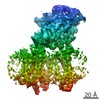
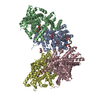
- EMDB-0957: Molecular basis for inhibition of human gamma-secretase by small ... -
+ Open data

- Basic information
| Entry | Database: EMDB / ID: EMD-0957 | |||||||||
|---|---|---|---|---|---|---|---|---|---|---|
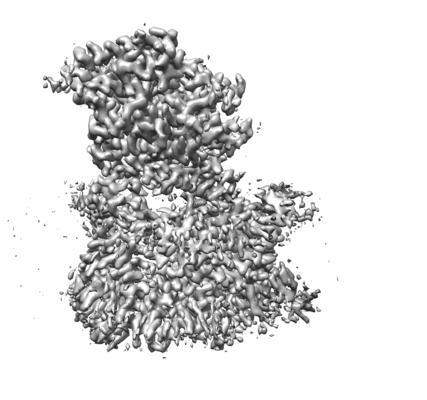
| Title | Molecular basis for inhibition of human gamma-secretase by small molecule | |||||||||
 Map data Map data | ||||||||||
 Sample Sample |
| |||||||||
 Keywords Keywords | Inhibitor / MEMBRANE PROTEIN | |||||||||
| Function / homology |  Function and homology information Function and homology informationpositive regulation of endopeptidase activity / gamma-secretase complex / aspartic endopeptidase activity, intramembrane cleaving / Noncanonical activation of NOTCH3 / protein catabolic process at postsynapse / TGFBR3 PTM regulation / Notch receptor processing / skin morphogenesis / membrane protein intracellular domain proteolysis / NOTCH4 Activation and Transmission of Signal to the Nucleus ...positive regulation of endopeptidase activity / gamma-secretase complex / aspartic endopeptidase activity, intramembrane cleaving / Noncanonical activation of NOTCH3 / protein catabolic process at postsynapse / TGFBR3 PTM regulation / Notch receptor processing / skin morphogenesis / membrane protein intracellular domain proteolysis / NOTCH4 Activation and Transmission of Signal to the Nucleus / ciliary rootlet / neural retina development / Regulated proteolysis of p75NTR / mitochondria-associated endoplasmic reticulum membrane contact site / aggresome / amyloid precursor protein metabolic process / endoplasmic reticulum calcium ion homeostasis / regulation of synaptic vesicle cycle / regulation of postsynapse organization / astrocyte activation involved in immune response / regulation of neuron projection development / regulation of canonical Wnt signaling pathway / Hydrolases; Acting on peptide bonds (peptidases); Aspartic endopeptidases / Golgi cisterna membrane / growth factor receptor binding / azurophil granule membrane / positive regulation of amyloid fibril formation / positive regulation of dendritic spine development / amyloid-beta formation / amyloid precursor protein catabolic process / membrane protein ectodomain proteolysis / smooth endoplasmic reticulum / positive regulation of receptor recycling / nuclear outer membrane / EPH-ephrin mediated repulsion of cells / cerebellum development / Notch signaling pathway / negative regulation of ubiquitin-dependent protein catabolic process / Nuclear signaling by ERBB4 / endopeptidase activator activity / calcium ion homeostasis / Degradation of the extracellular matrix / rough endoplasmic reticulum / neuron projection maintenance / astrocyte activation / positive regulation of glycolytic process / NOTCH2 Activation and Transmission of Signal to the Nucleus / NRIF signals cell death from the nucleus / Activated NOTCH1 Transmits Signal to the Nucleus / dendritic shaft / protein processing / PDZ domain binding / neuromuscular junction / cell-cell adhesion / NOTCH3 Activation and Transmission of Signal to the Nucleus / memory / sarcolemma / synapse organization / beta-catenin binding / Constitutive Signaling by NOTCH1 PEST Domain Mutants / Constitutive Signaling by NOTCH1 HD+PEST Domain Mutants / cellular response to amyloid-beta / kinetochore / calcium channel activity / positive regulation of tumor necrosis factor production / melanosome / regulation of gene expression / positive regulation of proteasomal ubiquitin-dependent protein catabolic process / negative regulation of neuron apoptotic process / synaptic vesicle / nuclear membrane / ATPase binding / growth cone / presynaptic membrane / early endosome membrane / endopeptidase activity / cell cortex / aspartic-type endopeptidase activity / molecular adaptor activity / early endosome / learning or memory / protein-macromolecule adaptor activity / postsynapse / endosome membrane / neuron projection / intracellular signal transduction / mitochondrial inner membrane / cadherin binding / membrane raft / Amyloid fiber formation / negative regulation of gene expression / Golgi membrane / focal adhesion / lysosomal membrane / apoptotic process / centrosome / neuronal cell body / positive regulation of gene expression / negative regulation of apoptotic process / Neutrophil degranulation Similarity search - Function | |||||||||
| Biological species |  Homo sapiens (human) Homo sapiens (human) | |||||||||
| Method | single particle reconstruction / cryo EM / Resolution: 3.0 Å | |||||||||
 Authors Authors | Yang G / Zhou R | |||||||||
| Funding support |  China, 1 items China, 1 items
| |||||||||
 Citation Citation | Journal: Cell / Year: 2021 Title: Structural basis of γ-secretase inhibition and modulation by small molecule drugs. Authors: Guanghui Yang / Rui Zhou / Xuefei Guo / Chuangye Yan / Jianlin Lei / Yigong Shi / Abstract: Development of γ-secretase inhibitors (GSIs) and modulators (GSMs) represents an attractive therapeutic opportunity for Alzheimer's disease (AD) and cancers. However, how these GSIs and GSMs target ...Development of γ-secretase inhibitors (GSIs) and modulators (GSMs) represents an attractive therapeutic opportunity for Alzheimer's disease (AD) and cancers. However, how these GSIs and GSMs target γ-secretase has remained largely unknown. Here, we report the cryoelectron microscopy (cryo-EM) structures of human γ-secretase bound individually to two GSI clinical candidates, Semagacestat and Avagacestat, a transition state analog GSI L685,458, and a classic GSM E2012, at overall resolutions of 2.6-3.1 Å. Remarkably, each of the GSIs occupies the same general location on presenilin 1 (PS1) that accommodates the β strand from amyloid precursor protein or Notch, interfering with substrate recruitment. L685,458 directly coordinates the two catalytic aspartate residues of PS1. E2012 binds to an allosteric site of γ-secretase on the extracellular side, potentially explaining its modulating activity. Structural analysis reveals a set of shared themes and variations for inhibitor and modulator recognition that will guide development of the next-generation substrate-selective inhibitors. | |||||||||
| History |
|
- Structure visualization
| Movie |
Movie viewer |
|---|---|
| Structure viewer | EM map: SurfViewMolmilJmol/JSmol |
| Supplemental images |
- Downloads & links
-EMDB archive
| Map data | emd_0957.map.gz | 116.8 MB | EMDB map data format | |
|---|---|---|---|---|
| Header (meta data) | emd-0957-v30.xmlemd-0957.xml | 17.9 KB 17.9 KB | Display Display | EMDB header |
| Images |  emd_0957.png emd_0957.png | 145.7 KB | ||
| Filedesc metadata | emd-0957.cif.gz | 7.1 KB | ||
| Archive directory |  https://data.pdbj.org/pub/emdb/structures/EMD-0957ftp://data.pdbj.org/pub/emdb/structures/EMD-0957 https://data.pdbj.org/pub/emdb/structures/EMD-0957ftp://data.pdbj.org/pub/emdb/structures/EMD-0957 | HTTPS FTP |
-Related structure data
| Related structure data |  6lr4MC  0944C  6lqgC  7c9iC 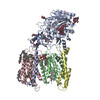 7d8xC C: citing same article ( M: atomic model generated by this map |
|---|---|
| Similar structure data |



-Links
| EMDB pages | EMDB (EBI/PDBe) / EMDataResource |
|---|---|
| Related items in Molecule of the Month |



-Map
| File | Download / File: emd_0957.map.gz / Format: CCP4 / Size: 125 MB / Type: IMAGE STORED AS FLOATING POINT NUMBER (4 BYTES) | ||||||||||||||||||||||||||||||||||||||||||||||||||||||||||||
|---|---|---|---|---|---|---|---|---|---|---|---|---|---|---|---|---|---|---|---|---|---|---|---|---|---|---|---|---|---|---|---|---|---|---|---|---|---|---|---|---|---|---|---|---|---|---|---|---|---|---|---|---|---|---|---|---|---|---|---|---|---|
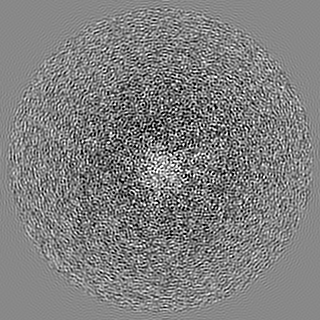
| Projections & slices | Image control
Images are generated by Spider. | ||||||||||||||||||||||||||||||||||||||||||||||||||||||||||||
| Voxel size | X=Y=Z: 1.091 Å | ||||||||||||||||||||||||||||||||||||||||||||||||||||||||||||
| Density |
| ||||||||||||||||||||||||||||||||||||||||||||||||||||||||||||
| Symmetry | Space group: 1 | ||||||||||||||||||||||||||||||||||||||||||||||||||||||||||||
| Details | EMDB XML:
CCP4 map header:
| ||||||||||||||||||||||||||||||||||||||||||||||||||||||||||||
 Z (Sec.)
 Y (Row.)
 X (Col.)




-Supplemental data
- Sample components
-Entire : human gamma-secretase
| Entire | Name: human gamma-secretase |
|---|---|
| Components |
|
-Supramolecule #1: human gamma-secretase
| Supramolecule | Name: human gamma-secretase / type: complex / ID: 1 / Parent: 0 / Macromolecule list: #1-#4 |
|---|---|
| Source (natural) | Organism: Homo sapiens (human) |
-Macromolecule #1: Nicastrin
| Macromolecule | Name: Nicastrin / type: protein_or_peptide / ID: 1 / Number of copies: 1 / Enantiomer: LEVO |
|---|---|
| Source (natural) | Organism: Homo sapiens (human) |
| Molecular weight | Theoretical: 78.48357 KDa |
| Recombinant expression | Organism: Homo sapiens (human) |
| Sequence | String: MATAGGGSGA DPGSRGLLRL LSFCVLLAGL CRGNSVERKI YIPLNKTAPC VRLLNATHQI GCQSSISGDT GVIHVVEKEE DLQWVLTDG PNPPYMVLLE SKHFTRDLME KLKGRTSRIA GLAVSLTKPS PASGFSPSVQ CPNDGFGVYS NSYGPEFAHC R EIQWNSLG ...String: MATAGGGSGA DPGSRGLLRL LSFCVLLAGL CRGNSVERKI YIPLNKTAPC VRLLNATHQI GCQSSISGDT GVIHVVEKEE DLQWVLTDG PNPPYMVLLE SKHFTRDLME KLKGRTSRIA GLAVSLTKPS PASGFSPSVQ CPNDGFGVYS NSYGPEFAHC R EIQWNSLG NGLAYEDFSF PIFLLEDENE TKVIKQCYQD HNLSQNGSAP TFPLCAMQLF SHMHAVISTA TCMRRSSIQS TF SINPEIV CDPLSDYNVW SMLKPINTTG TLKPDDRVVV AATRLDSRSF FWNVAPGAES AVASFVTQLA AAEALQKAPD VTT LPRNVM FVFFQGETFD YIGSSRMVYD MEKGKFPVQL ENVDSFVELG QVALRTSLEL WMHTDPVSQK NESVRNQVED LLAT LEKSG AGVPAVILRR PNQSQPLPPS SLQRFLRARN ISGVVLADHS GAFHNKYYQS IYDTAENINV SYPEWLSPEE DLNFV TDTA KALADVATVL GRALYELAGG TNFSDTVQAD PQTVTRLLYG FLIKANNSWF QSILRQDLRS YLGDGPLQHY IAVSSP TNT TYVVQYALAN LTGTVVNLTR EQCQDPSKVP SENKDLYEYS WVQGPLHSNE TDRLPRCVRS TARLARALSP AFELSQW SS TEYSTWTESR WKDIRARIFL IASKELELIT LTVGFGILIF SLIVTYCINA KADVLFIAPR EPGAVSY UniProtKB: Nicastrin |
-Macromolecule #2: Presenilin-1
| Macromolecule | Name: Presenilin-1 / type: protein_or_peptide / ID: 2 / Number of copies: 1 / Enantiomer: LEVO EC number: Hydrolases; Acting on peptide bonds (peptidases); Aspartic endopeptidases |
|---|---|
| Source (natural) | Organism: Homo sapiens (human) |
| Molecular weight | Theoretical: 52.713535 KDa |
| Recombinant expression | Organism: Homo sapiens (human) |
| Sequence | String: MTELPAPLSY FQNAQMSEDN HLSNTVRSQN DNRERQEHND RRSLGHPEPL SNGRPQGNSR QVVEQDEEED EELTLKYGAK HVIMLFVPV TLCMVVVVAT IKSVSFYTRK DGQLIYTPFT EDTETVGQRA LHSILNAAIM ISVIVVMTIL LVVLYKYRCY K VIHAWLII ...String: MTELPAPLSY FQNAQMSEDN HLSNTVRSQN DNRERQEHND RRSLGHPEPL SNGRPQGNSR QVVEQDEEED EELTLKYGAK HVIMLFVPV TLCMVVVVAT IKSVSFYTRK DGQLIYTPFT EDTETVGQRA LHSILNAAIM ISVIVVMTIL LVVLYKYRCY K VIHAWLII SSLLLLFFFS FIYLGEVFKT YNVAVDYITV ALLIWNFGVV GMISIHWKGP LRLQQAYLIM ISALMALVFI KY LPEWTAW LILAVISVYD LVAVLCPKGP LRMLVETAQE RNETLFPALI YSSTMVWLVN MAEGDPEAQR RVSKNSKYNA EST ERESQD TVAENDDGGF SEEWEAQRDS HLGPHRSTPE SRAAVQELSS SILAGEDPEE RGVKLGLGDF IFYSVLVGKA SATA SGDWN TTIACFVAIL IGLCLTLLLL AIFKKALPAL PISITFGLVF YFATDYLVQP FMDQLAFHQF YI UniProtKB: Presenilin-1 |
-Macromolecule #3: Gamma-secretase subunit APH-1A
| Macromolecule | Name: Gamma-secretase subunit APH-1A / type: protein_or_peptide / ID: 3 / Number of copies: 1 / Enantiomer: LEVO |
|---|---|
| Source (natural) | Organism: Homo sapiens (human) |
| Molecular weight | Theoretical: 29.017943 KDa |
| Recombinant expression | Organism: Homo sapiens (human) |
| Sequence | String: MGAAVFFGCT FVAFGPAFAL FLITVAGDPL RVIILVAGAF FWLVSLLLAS VVWFILVHVT DRSDARLQYG LLIFGAAVSV LLQEVFRFA YYKLLKKADE GLASLSEDGR SPISIRQMAY VSGLSFGIIS GVFSVINILA DALGPGVVGI HGDSPYYFLT S AFLTAAII ...String: MGAAVFFGCT FVAFGPAFAL FLITVAGDPL RVIILVAGAF FWLVSLLLAS VVWFILVHVT DRSDARLQYG LLIFGAAVSV LLQEVFRFA YYKLLKKADE GLASLSEDGR SPISIRQMAY VSGLSFGIIS GVFSVINILA DALGPGVVGI HGDSPYYFLT S AFLTAAII LLHTFWGVVF FDACERRRYW ALGLVVGSHL LTSGLTFLNP WYEASLLPIY AVTVSMGLWA FITAGGSLRS IQ RSLLCRR QEDSRVMVYS ALRIPPED UniProtKB: Gamma-secretase subunit APH-1A |
-Macromolecule #4: Gamma-secretase subunit PEN-2
| Macromolecule | Name: Gamma-secretase subunit PEN-2 / type: protein_or_peptide / ID: 4 / Number of copies: 1 / Enantiomer: LEVO |
|---|---|
| Source (natural) | Organism: Homo sapiens (human) |
| Molecular weight | Theoretical: 16.49868 KDa |
| Recombinant expression | Organism: Homo sapiens (human) |
| Sequence | String: MASWSHPQFE KGGGARGGSG GGSWSHPQFE KGFDYKDDDD KGTNLERVSN EEKLNLCRKY YLGGFAFLPF LWLVNIFWFF REAFLVPAY TEQSQIKGYV WRSAVGFLFW VIVLTSWITI FQIYRPRWGA LGDYLSFTIP LGTP UniProtKB: Gamma-secretase subunit PEN-2 |
-Macromolecule #7: 2-acetamido-2-deoxy-beta-D-glucopyranose
| Macromolecule | Name: 2-acetamido-2-deoxy-beta-D-glucopyranose / type: ligand / ID: 7 / Number of copies: 6 / Formula: NAG |
|---|---|
| Molecular weight | Theoretical: 221.208 Da |
| Chemical component information | 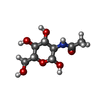 ChemComp-NAG: |
-Macromolecule #8: 1,2-DIACYL-SN-GLYCERO-3-PHOSPHOCHOLINE
| Macromolecule | Name: 1,2-DIACYL-SN-GLYCERO-3-PHOSPHOCHOLINE / type: ligand / ID: 8 / Number of copies: 2 / Formula: PC1 |
|---|---|
| Molecular weight | Theoretical: 790.145 Da |
| Chemical component information | 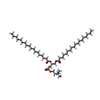 ChemComp-PC1: |
-Macromolecule #9: (2S)-2-hydroxy-3-methyl-N-[(2S)-1-[[(5S)-3-methyl-4-oxo-2,5-dihyd...
| Macromolecule | Name: (2S)-2-hydroxy-3-methyl-N-[(2S)-1-[[(5S)-3-methyl-4-oxo-2,5-dihydro-1H-3-benzazepin-5-yl]amino]-1-oxopropan-2-yl]butanamide type: ligand / ID: 9 / Number of copies: 1 / Formula: ESF |
|---|---|
| Molecular weight | Theoretical: 361.435 Da |
| Chemical component information | 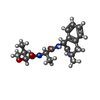 ChemComp-ESF: |
-Macromolecule #10: CHOLESTEROL
| Macromolecule | Name: CHOLESTEROL / type: ligand / ID: 10 / Number of copies: 3 / Formula: CLR |
|---|---|
| Molecular weight | Theoretical: 386.654 Da |
| Chemical component information | 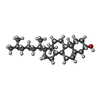 ChemComp-CLR: |
-Experimental details
-Structure determination
| Method | cryo EM |
|---|---|
 Processing Processing | single particle reconstruction |
| Aggregation state | particle |
-Sample preparation
| Buffer | pH: 7.4 |
|---|---|
| Vitrification | Cryogen name: ETHANE |
- Electron microscopy
| Microscope | FEI TITAN KRIOS |
|---|---|
| Image recording | Film or detector model: GATAN K2 SUMMIT (4k x 4k) / Detector mode: SUPER-RESOLUTION / Average electron dose: 1.5625 e/Å2 |
| Electron beam | Acceleration voltage: 300 kV / Electron source:  FIELD EMISSION GUN FIELD EMISSION GUN |
| Electron optics | Illumination mode: FLOOD BEAM / Imaging mode: BRIGHT FIELD |
| Experimental equipment |  Model: Titan Krios / Image courtesy: FEI Company |
