 Movie
Movie Controller
 Structure viewers
 About Yorodumi Papers


+Search query
-Structure paper
| Title | A belt-buckle checkpoint regulates the onset of botulinum neurotoxin intoxication. |
|---|---|
| Journal, issue, pages | Nat Commun, Vol. 17, Issue 1, Year 2026 |
| Publish date | Jun 23, 2026 |
 Authors Authors | Baohua Chen / Linfeng Gao / Melvin Bönninger / Ting Huang / Nadja Krez / Weihua Wen / Mark Bowen / Jianlong Lou / James D Marks / Andreas Rummel / Rongsheng Jin /   |
| PubMed Abstract | Fast-acting botulinum neurotoxins (BoNTs) are highly desirable for both medical and aesthetic indications, but the underlying mechanism for the differing onset of BoNTs' action remains unknown. Here, ...Fast-acting botulinum neurotoxins (BoNTs) are highly desirable for both medical and aesthetic indications, but the underlying mechanism for the differing onset of BoNTs' action remains unknown. Here, we demonstrate that the "belt" of BoNTs, a largely unstructured loop wrapping around their catalytic light chain (LC), is key to onset of intoxication. The more flexible BoNT/E belt promotes quicker LC translocation into the neuronal cytosol, leading to faster onset of action compared to BoNT/A. Furthermore, we discover a "belt-buckle" checkpoint that regulates this process. By loosening the BoNT/A belt-buckle via protein engineering, we enhance its sensitivity to acidic pH, leading to an accelerated onset of action. Conversely, locking the belt-buckle with an antibody neutralizes BoNT/A. Our findings open avenues for developing fast-acting BoNTs and effective countermeasures. |
 External links External links | Nat Commun / PubMed:42337249 / PubMed Central |
| Methods | EM (single particle) |
| Resolution | 3.06 - 11.0 Å |
| Structure data | EMDB-46409, PDB-9czb: EMDB-46410, PDB-9czc:  EMDB-46800: CryoEM structure of BoNT/E at pH5, class 2  EMDB-46801: CryoEM structure of BoNT/E at pH5, class 3  EMDB-46802: CryoEM structure of BoNT/E at pH5, class 4  EMDB-46803: CryoEM structure of BoNT/E at pH5, class 5, BoNT/A-like EMDB-49339, PDB-9ney:  EMDB-76739: The density map of BoNT/A mutant (BoNT/A-WFY) |
| Source |
|
 Keywords Keywords | TOXIN / Botulinum neurotoxin / IMMUNE SYSTEM/TOXIN / BoNT / antibody / IMMUNE SYSTEM-TOXIN complex |


 Clostridium botulinum E1 str. 'BoNT E Beluga' (bacteria)
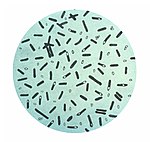 clostridium botulinum (bacteria)
 homo sapiens (human)