 Movie
Movie Controller

[English] 日本語
 Yorodumi
- PDB-9ney: The structure of BoNT/A in complex with a neutralizing antibody 2G11 -
+ Open data

- Basic information
| Entry | Database: PDB / ID: 9ney | ||||||||||||||||||||||||
|---|---|---|---|---|---|---|---|---|---|---|---|---|---|---|---|---|---|---|---|---|---|---|---|---|---|
| Title | The structure of BoNT/A in complex with a neutralizing antibody 2G11 | ||||||||||||||||||||||||
 Components Components |
| ||||||||||||||||||||||||
 Keywords Keywords | IMMUNE SYSTEM/TOXIN / BoNT / antibody / IMMUNE SYSTEM-TOXIN complex | ||||||||||||||||||||||||
| Function / homology |  Function and homology information Function and homology informationsymbiont-mediated suppression of host exocytosis / Toxicity of botulinum toxin type A (botA) / ganglioside GT1b binding / bontoxilysin / host cell presynaptic membrane / host cell cytoplasmic vesicle / host cell cytosol / transmembrane protein transporter activity / metalloendopeptidase activity / proteolysis ...symbiont-mediated suppression of host exocytosis / Toxicity of botulinum toxin type A (botA) / ganglioside GT1b binding / bontoxilysin / host cell presynaptic membrane / host cell cytoplasmic vesicle / host cell cytosol / transmembrane protein transporter activity / metalloendopeptidase activity / proteolysis / zinc ion binding / extracellular region Similarity search - Function | ||||||||||||||||||||||||
| Biological species |  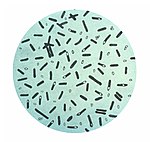 Clostridium botulinum (bacteria) Clostridium botulinum (bacteria) Homo sapiens (human) Homo sapiens (human) | ||||||||||||||||||||||||
| Method | ELECTRON MICROSCOPY / single particle reconstruction / cryo EM / Resolution: 3.06 Å | ||||||||||||||||||||||||
 Authors Authors | Chen, B. / Jin, R. | ||||||||||||||||||||||||
| Funding support |  United States, 1items United States, 1items
| ||||||||||||||||||||||||
 Citation Citation | Journal: Nat Commun / Year: 2026 Title: A belt-buckle checkpoint regulates the onset of botulinum neurotoxin intoxication. Authors: Baohua Chen / Linfeng Gao / Melvin Bönninger / Ting Huang / Nadja Krez / Weihua Wen / Mark Bowen / Jianlong Lou / James D Marks / Andreas Rummel / Rongsheng Jin /  Abstract: Fast-acting botulinum neurotoxins (BoNTs) are highly desirable for both medical and aesthetic indications, but the underlying mechanism for the differing onset of BoNTs' action remains unknown. Here, ...Fast-acting botulinum neurotoxins (BoNTs) are highly desirable for both medical and aesthetic indications, but the underlying mechanism for the differing onset of BoNTs' action remains unknown. Here, we demonstrate that the "belt" of BoNTs, a largely unstructured loop wrapping around their catalytic light chain (LC), is key to onset of intoxication. The more flexible BoNT/E belt promotes quicker LC translocation into the neuronal cytosol, leading to faster onset of action compared to BoNT/A. Furthermore, we discover a "belt-buckle" checkpoint that regulates this process. By loosening the BoNT/A belt-buckle via protein engineering, we enhance its sensitivity to acidic pH, leading to an accelerated onset of action. Conversely, locking the belt-buckle with an antibody neutralizes BoNT/A. Our findings open avenues for developing fast-acting BoNTs and effective countermeasures. | ||||||||||||||||||||||||
| History |
|
- Structure visualization
| Structure viewer | Molecule: MolmilJmol/JSmol |
|---|
- Downloads & links
-Download
| PDBx/mmCIF format | 9ney.cif.gz | 226.7 KB | Display | PDBx/mmCIF format |
|---|---|---|---|---|
| PDB format | pdb9ney.ent.gz | 167.9 KB | Display | PDB format |
| PDBx/mmJSON format | 9ney.json.gz | Tree view | PDBx/mmJSON format | |
| Others |  Other downloads Other downloads |
-Validation report
| Arichive directory | https://data.pdbj.org/pub/pdb/validation_reports/ne/9neyftp://data.pdbj.org/pub/pdb/validation_reports/ne/9ney | HTTPS FTP |
|---|
-Related structure data
| Related structure data |  49339MC  9czbC  9czcC M: map data used to model this data C: citing same article ( |
|---|---|
| Similar structure data |


-Links
 PDBj
PDBj
- Assembly
| Deposited unit | 
|
|---|---|
| 1 |
|
-Components
| #1: Protein | Mass: 149862.266 Da / Num. of mol.: 1 Source method: isolated from a genetically manipulated source Source: (gene. exp.) Clostridium botulinum (bacteria) / Gene: botA, atx, bonT / Production host:  Escherichia coli (E. coli) / References: UniProt: P0DPI0 Escherichia coli (E. coli) / References: UniProt: P0DPI0 |
|---|---|
| #2: Antibody | Mass: 23483.307 Da / Num. of mol.: 1 Source method: isolated from a genetically manipulated source Source: (gene. exp.) Homo sapiens (human) / Production host:   Cricetulus griseus (Chinese hamster) Cricetulus griseus (Chinese hamster) |
| #3: Antibody | Mass: 23414.908 Da / Num. of mol.: 1 Source method: isolated from a genetically manipulated source Source: (gene. exp.) Homo sapiens (human) / Production host: Cricetulus griseus (Chinese hamster) |
| Has protein modification | Y |
-Experimental details
-Experiment
| Experiment | Method: ELECTRON MICROSCOPY |
|---|---|
| EM experiment | Aggregation state: PARTICLE / 3D reconstruction method: single particle reconstruction |
- Sample preparation
| Component | Name: BoNT-antibody / Type: COMPLEX / Entity ID: all / Source: RECOMBINANT |
|---|---|
| Molecular weight | Value: 0.2 MDa / Experimental value: NO |
| Source (natural) | Organism: Clostridium botulinum (bacteria) |
| Source (recombinant) | Organism: Escherichia coli (E. coli) |
| Buffer solution | pH: 7.5 |
| Specimen | Embedding applied: NO / Shadowing applied: NO / Staining applied: NO / Vitrification applied: YES |
| Vitrification | Cryogen name: PROPANE |
- Electron microscopy imaging
| Experimental equipment |  Model: Titan Krios / Image courtesy: FEI Company |
|---|---|
| Microscopy | Model: TFS KRIOS |
| Electron gun | Electron source:  FIELD EMISSION GUN / Accelerating voltage: 300 kV / Illumination mode: SPOT SCAN FIELD EMISSION GUN / Accelerating voltage: 300 kV / Illumination mode: SPOT SCAN |
| Electron lens | Mode: BRIGHT FIELD / Nominal defocus max: 2200 nm / Nominal defocus min: 800 nm |
| Image recording | Electron dose: 50 e/Å2 / Film or detector model: GATAN K3 BIOCONTINUUM (6k x 4k) |
- Processing
| EM software | Name: PHENIX / Version: 1.21.2_5419 / Category: model refinement | ||||||||||||||||||||||||
|---|---|---|---|---|---|---|---|---|---|---|---|---|---|---|---|---|---|---|---|---|---|---|---|---|---|
| CTF correction | Type: PHASE FLIPPING AND AMPLITUDE CORRECTION | ||||||||||||||||||||||||
| 3D reconstruction | Resolution: 3.06 Å / Resolution method: FSC 0.143 CUT-OFF / Num. of particles: 730074 / Symmetry type: POINT | ||||||||||||||||||||||||
| Refine LS restraints |
|
