 Movie
Movie Controller

[English] 日本語
 Yorodumi
- PDB-9ztp: Nucleosome with an SSB at SHL +5.3 in complex with human PARP2 an... -
+ Open data

- Basic information
| Entry | Database: PDB / ID: 9ztp | ||||||||||||
|---|---|---|---|---|---|---|---|---|---|---|---|---|---|
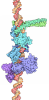
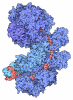
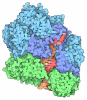
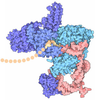
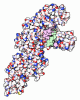
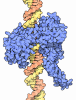
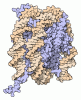
| Title | Nucleosome with an SSB at SHL +5.3 in complex with human PARP2 and HPF1, Class 3 | ||||||||||||
 Components Components |
| ||||||||||||
 Keywords Keywords | DNA BINDING PROTEIN/DNA / DNA damage binding protein / DNA BINDING PROTEIN / DNA BINDING PROTEIN-DNA complex | ||||||||||||
| Function / homology |  Function and homology information Function and homology informationHDMs demethylate histones / PKMTs methylate histone lysines / Interleukin-7 signaling / Chromatin modifying enzymes / SUMOylation of chromatin organization proteins / Recruitment and ATM-mediated phosphorylation of repair and signaling proteins at DNA double strand breaks / RMTs methylate histone arginines / E3 ubiquitin ligases ubiquitinate target proteins / RCAF complex / Factors involved in megakaryocyte development and platelet production ...HDMs demethylate histones / PKMTs methylate histone lysines / Interleukin-7 signaling / Chromatin modifying enzymes / SUMOylation of chromatin organization proteins / Recruitment and ATM-mediated phosphorylation of repair and signaling proteins at DNA double strand breaks / RMTs methylate histone arginines / E3 ubiquitin ligases ubiquitinate target proteins / RCAF complex / Factors involved in megakaryocyte development and platelet production / SIRT1 negatively regulates rRNA expression / NoRC negatively regulates rRNA expression / Activated PKN1 stimulates transcription of AR (androgen receptor) regulated genes KLK2 and KLK3 / CHD6, CHD7, CHD8, CHD9 subfamily / polytene chromosome band / PRC2 methylates histones and DNA / Ub-specific processing proteases / Negative Regulation of CDH1 Gene Transcription / Interaction of NuRD complexes with transcription factors / MLL4 and MLL3 complexes regulate expression of PPARG target genes in adipogenesis and hepatic steatosis / Regulation of PD-L1(CD274) transcription / larval somatic muscle development / RNA Polymerase I Promoter Escape / RUNX1 regulates genes involved in megakaryocyte differentiation and platelet function / Senescence-Associated Secretory Phenotype (SASP) / CHD1 and CHD2 subfamily / Regulation of endogenous retroelements by KRAB-ZFP proteins / Transcriptional regulation by small RNAs / Estrogen-dependent gene expression / Assembly of the ORC complex at the origin of replication / Oxidative Stress Induced Senescence / HATs acetylate histones / poly-ADP-D-ribose binding / polytene chromosome / NAD+-protein-serine ADP-ribosyltransferase activity / NAD DNA ADP-ribosyltransferase activity / DNA ADP-ribosylation / poly-ADP-D-ribose modification-dependent protein binding / HDR through MMEJ (alt-NHEJ) / NAD+ ADP-ribosyltransferase / protein auto-ADP-ribosylation / NAD+-protein-aspartate ADP-ribosyltransferase activity / protein poly-ADP-ribosylation / NAD+-protein-glutamate ADP-ribosyltransferase activity / decidualization / NAD+-protein mono-ADP-ribosyltransferase activity / nuclear chromosome / Transferases; Glycosyltransferases; Pentosyltransferases / POLB-Dependent Long Patch Base Excision Repair / NAD+ poly-ADP-ribosyltransferase activity / DNA repair-dependent chromatin remodeling / nucleosome binding / site of DNA damage / DNA Damage Recognition in GG-NER / Dual Incision in GG-NER / nucleosomal DNA binding / Formation of Incision Complex in GG-NER / structural constituent of chromatin / nucleosome assembly / nucleosome / chromatin organization / heterochromatin formation / damaged DNA binding / DNA repair / protein heterodimerization activity / chromosome / chromatin binding / DNA damage response / nucleolus / protein-containing complex binding / chromatin / DNA binding / nucleoplasm / nucleus Similarity search - Function | ||||||||||||
| Biological species |   Drosophila melanogaster (fruit fly) Drosophila melanogaster (fruit fly)  Mus musculus (house mouse) Mus musculus (house mouse) Homo sapiens (human) Homo sapiens (human)synthetic construct (others) | ||||||||||||
| Method | ELECTRON MICROSCOPY / single particle reconstruction / cryo EM / Resolution: 2.49 Å | ||||||||||||
 Authors Authors | Kim, T.H. / Jayathilake, C. / Virk, R.K. / Gregory-Lott, E.R. | ||||||||||||
| Funding support |  United States, 3items United States, 3items
| ||||||||||||
 Citation Citation | Journal: Nucleic Acids Res / Year: 2026 Title: Structural basis of PARP2 recognition of nucleosomal DNA breaks and inhibitor trapping. Authors: Chathuni Jayathilake / Emily R Gregory-Lott / Rajbinder K Virk / Grace K Koh / Eun Cho / Tae Hun Kim / Abstract: Single-strand DNA breaks are among the most frequent forms of DNA damage, yet how PARP2 recognizes these lesions within the constrained geometry of chromatin remains unclear. Here we use cryogenic ...Single-strand DNA breaks are among the most frequent forms of DNA damage, yet how PARP2 recognizes these lesions within the constrained geometry of chromatin remains unclear. Here we use cryogenic electron microscopy (cryo-EM) to determine structures of PARP2 and HPF1 bound to nucleosomes containing a site-specific single-strand break (SSB) at superhelical location + 5.3. The structures reveal a multivalent binding mode in which the Trp-Gly-Arg (WGR) domain engages the break while the helical domain and HPF1 contact the opposing DNA gyre, spanning both DNA gyres of the nucleosome. This configuration explains the higher affinity of PARP2 for nucleosomal SSBs relative to free DNA. 3D classification resolves multiple PARP2-bound states with distinct WGR orientations and DNA backbone distortions, revealing structural plasticity during damage recognition. Comparative analysis shows that HPF1 constrains the conformational ensemble of PARP2 and promotes a defined catalytic domain architecture compatible with histone PARylation. PARP inhibitors (olaparib, talazoparib, EB-47) stabilize WGR-helical domain interfaces and make the ADP-ribosyltransferase-HPF1 catalytic module dynamic, consistent with reverse allosteric retention on damaged chromatin, while also promoting asymmetric nucleosomal DNA unwrapping. Together, these structures provide a chromatin-context framework for understanding PARP2 recognition of nucleosomal DNA breaks and how PARPis reshape these interactions to promote PARP retention and local chromatin remodeling. | ||||||||||||
| History |
|
- Structure visualization
| Structure viewer | Molecule: MolmilJmol/JSmol |
|---|
- Downloads & links
-Download
| PDBx/mmCIF format | 9ztp.cif.gz | 759.7 KB | Display | PDBx/mmCIF format |
|---|---|---|---|---|
| PDB format | pdb9ztp.ent.gz | 616.3 KB | Display | PDB format |
| PDBx/mmJSON format | 9ztp.json.gz | Tree view | PDBx/mmJSON format | |
| Others |  Other downloads Other downloads |
-Validation report
| Arichive directory | https://data.pdbj.org/pub/pdb/validation_reports/zt/9ztpftp://data.pdbj.org/pub/pdb/validation_reports/zt/9ztp | HTTPS FTP |
|---|
-Related structure data
| Related structure data |  74768MC  9tunC  9ylrC  9zs5C  9zs6C  9zsgC  9zsiC  9zsjC  9zskC  9zslC  9zsmC  9zsoC  9zspC  9zsqC  9zsrC  9zssC  9zstC  9zsuC  9zswC  9zsxC  9zsyC  9zszC  9ztaC  9ztdC  9zteC  9ztfC  9ztgC  9zthC  9ztiC  9ztmC  9ztnC  9ztoC  9ztqC  9ztrC  9ztsC  9ztuC  9ztwC  9ztxC  9ztyC  9ztzC  9zu0C  9zu5C  9zu7C  9zu8C  9zuaC  9zxlC  9zy2C  9zycC  9zzzC C: citing same article ( M: map data used to model this data |
|---|---|
| Similar structure data |


-Links
 PDBj
PDBj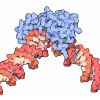
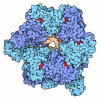
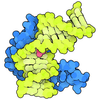
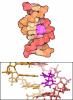

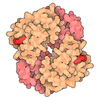
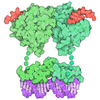
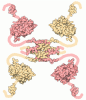
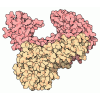
- Assembly
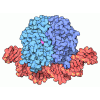
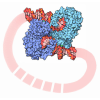
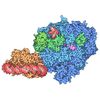
| Deposited unit | 
|
|---|---|
| 1 |
|
-Components
-Protein , 5 types, 9 molecules ABCDEFGHP
| #1: Protein | Mass: 13388.727 Da / Num. of mol.: 2 Source method: isolated from a genetically manipulated source Source: (gene. exp.) Drosophila melanogaster (fruit fly)Gene: His2A, H2a, His2A:CG31618, CG31618, His2A:CG33808, CG33808, His2A:CG33814, CG33814, His2A:CG33817, CG33817, His2A:CG33820, CG33820, His2A:CG33823, CG33823, His2A:CG33826, CG33826, His2A: ...Gene: His2A, H2a, His2A:CG31618, CG31618, His2A:CG33808, CG33808, His2A:CG33814, CG33814, His2A:CG33817, CG33817, His2A:CG33820, CG33820, His2A:CG33823, CG33823, His2A:CG33826, CG33826, His2A:CG33829, CG33829, His2A:CG33832, CG33832, His2A:CG33835, CG33835, His2A:CG33838, CG33838, His2A:CG33841, CG33841, His2A:CG33844, CG33844, His2A:CG33847, CG33847, His2A:CG33850, CG33850, His2A:CG33862, CG33862, His2A:CG33865, CG33865 Production host:   Escherichia coli (E. coli) / References: UniProt: P84051 Escherichia coli (E. coli) / References: UniProt: P84051#2: Protein | Mass: 13897.275 Da / Num. of mol.: 2 Source method: isolated from a genetically manipulated source Source: (gene. exp.) Drosophila melanogaster (fruit fly)Gene: His2B, His2B:CG17949, CG17949, His2B:CG33868, CG33868, His2B:CG33870, CG33870, His2B:CG33872, CG33872, His2B:CG33874, CG33874, His2B:CG33876, CG33876, His2B:CG33878, CG33878, His2B:CG33880, ...Gene: His2B, His2B:CG17949, CG17949, His2B:CG33868, CG33868, His2B:CG33870, CG33870, His2B:CG33872, CG33872, His2B:CG33874, CG33874, His2B:CG33876, CG33876, His2B:CG33878, CG33878, His2B:CG33880, CG33880, His2B:CG33882, CG33882, His2B:CG33884, CG33884, His2B:CG33886, CG33886, His2B:CG33888, CG33888, His2B:CG33890, CG33890, His2B:CG33892, CG33892, His2B:CG33894, CG33894, His2B:CG33896, CG33896, His2B:CG33898, CG33898, His2B:CG33900, CG33900, His2B:CG33902, CG33902, His2B:CG33904, CG33904, His2B:CG33906, CG33906, His2B:CG33908, CG33908, His2B:CG33910, CG33910 Production host: Escherichia coli (E. coli) / References: UniProt: P02283#3: Protein | Mass: 15405.036 Da / Num. of mol.: 2 / Mutation: C111S Source method: isolated from a genetically manipulated source Source: (gene. exp.) Drosophila melanogaster (fruit fly)Gene: His3, His3:CG31613, CG31613, His3:CG33803, CG33803, His3:CG33806, CG33806, His3:CG33809, CG33809, His3:CG33812, CG33812, His3:CG33815, CG33815, His3:CG33818, CG33818, His3:CG33821, CG33821, ...Gene: His3, His3:CG31613, CG31613, His3:CG33803, CG33803, His3:CG33806, CG33806, His3:CG33809, CG33809, His3:CG33812, CG33812, His3:CG33815, CG33815, His3:CG33818, CG33818, His3:CG33821, CG33821, His3:CG33824, CG33824, His3:CG33827, CG33827, His3:CG33830, CG33830, His3:CG33833, CG33833, His3:CG33836, CG33836, His3:CG33839, CG33839, His3:CG33842, CG33842, His3:CG33845, CG33845, His3:CG33848, CG33848, His3:CG33851, CG33851, His3:CG33854, CG33854, His3:CG33857, CG33857, His3:CG33860, CG33860, His3:CG33863, CG33863, His3:CG33866, CG33866 Production host: Escherichia coli (E. coli) / References: UniProt: P02299#4: Protein | Mass: 11521.611 Da / Num. of mol.: 2 Source method: isolated from a genetically manipulated source Source: (gene. exp.) Drosophila melanogaster (fruit fly)Gene: His4, H4, His4r, H4r, CG3379, His4:CG31611, CG31611, His4:CG33869, CG33869, His4:CG33871, CG33871, His4:CG33873, CG33873, His4:CG33875, CG33875, His4:CG33877, CG33877, His4:CG33879, CG33879, ...Gene: His4, H4, His4r, H4r, CG3379, His4:CG31611, CG31611, His4:CG33869, CG33869, His4:CG33871, CG33871, His4:CG33873, CG33873, His4:CG33875, CG33875, His4:CG33877, CG33877, His4:CG33879, CG33879, His4:CG33881, CG33881, His4:CG33883, CG33883, His4:CG33885, CG33885, His4:CG33887, CG33887, His4:CG33889, CG33889, His4:CG33891, CG33891, His4:CG33893, CG33893, His4:CG33895, CG33895, His4:CG33897, CG33897, His4:CG33899, CG33899, His4:CG33901, CG33901, His4:CG33903, CG33903, His4:CG33905, CG33905, His4:CG33907, CG33907, His4:CG33909, CG33909 Production host: Escherichia coli (E. coli) / References: UniProt: P84040#9: Protein | | Mass: 56503.555 Da / Num. of mol.: 1 Source method: isolated from a genetically manipulated source Source: (gene. exp.) Homo sapiens (human) / Gene: PARP2, ADPRT2, ADPRTL2 / Production host: Escherichia coli (E. coli)References: UniProt: Q9UGN5, NAD+ ADP-ribosyltransferase, Transferases; Glycosyltransferases; Pentosyltransferases |
|---|
-DNA chain , 3 types, 3 molecules KLM
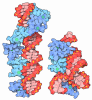
| #6: DNA chain | Mass: 39859.379 Da / Num. of mol.: 1 / Source method: obtained synthetically / Source: (synth.) synthetic construct (others) |
|---|---|
| #7: DNA chain | Mass: 7054.583 Da / Num. of mol.: 1 / Source method: obtained synthetically / Source: (synth.) synthetic construct (others) |
| #8: DNA chain | Mass: 47497.258 Da / Num. of mol.: 1 / Source method: obtained synthetically / Source: (synth.) synthetic construct (others) |
-Antibody , 1 types, 2 molecules IJ
| #5: Antibody | Mass: 29631.662 Da / Num. of mol.: 2 Source method: isolated from a genetically manipulated source Source: (gene. exp.) Mus musculus (house mouse) / Production host: Escherichia coli (E. coli) |
|---|
-Details
| Has protein modification | Y |
|---|
-Experimental details
-Experiment
| Experiment | Method: ELECTRON MICROSCOPY |
|---|---|
| EM experiment | Aggregation state: PARTICLE / 3D reconstruction method: single particle reconstruction |
- Sample preparation
| Component | Name: Nucleosome with an SSB at SHL +5.3 in complex with human PARP2 and HPF1 Type: COMPLEX / Entity ID: all / Source: MULTIPLE SOURCES |
|---|---|
| Molecular weight | Experimental value: NO |
| Buffer solution | pH: 7.4 |
| Specimen | Embedding applied: NO / Shadowing applied: NO / Staining applied: NO / Vitrification applied: YES |
| Specimen support | Grid type: Quantifoil R2/1 |
| Vitrification | Cryogen name: ETHANE / Humidity: 100 % |
- Electron microscopy imaging
| Experimental equipment |  Model: Titan Krios / Image courtesy: FEI Company |
|---|---|
| Microscopy | Model: TFS KRIOS |
| Electron gun | Electron source:  FIELD EMISSION GUN / Accelerating voltage: 300 kV / Illumination mode: FLOOD BEAM FIELD EMISSION GUN / Accelerating voltage: 300 kV / Illumination mode: FLOOD BEAM |
| Electron lens | Mode: BRIGHT FIELD / Nominal defocus max: 1800 nm / Nominal defocus min: 800 nm |
| Image recording | Electron dose: 45 e/Å2 / Film or detector model: GATAN K3 BIOQUANTUM (6k x 4k) |
- Processing
| EM software |
| ||||||||||||||||||||||||||||
|---|---|---|---|---|---|---|---|---|---|---|---|---|---|---|---|---|---|---|---|---|---|---|---|---|---|---|---|---|---|
| CTF correction | Type: PHASE FLIPPING AND AMPLITUDE CORRECTION | ||||||||||||||||||||||||||||
| 3D reconstruction | Resolution: 2.49 Å / Resolution method: FSC 0.143 CUT-OFF / Num. of particles: 90585 / Symmetry type: POINT |
