National Institutes of Health/National Institute of General Medical Sciences (NIH/NIGMS)
R35GM140892
United States
Citation
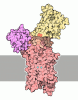
Journal: Sci Adv / Year: 2026 Title: Structural and mutational insights define ERMA as the ER Mg ATPase and reservoir gatekeeper. Authors: Manigandan Venkatesan / Michael L Oldham / Ning Shi / Adhishree Chidambaram / Neelanjan Vishnu / Abitha K Madesh / Kristen Bentz / Peter B Stathopulos / Ravi C Kalathur / Youxing Jiang / Muniswamy Madesh / Abstract: Magnesium (Mg) is the most abundant divalent cation in cells, yet the mechanisms mediating its organellar transport remain poorly defined. We identify endoplasmic reticulum (ER) Mg adenosine ...Magnesium (Mg) is the most abundant divalent cation in cells, yet the mechanisms mediating its organellar transport remain poorly defined. We identify endoplasmic reticulum (ER) Mg adenosine triphosphatase (ATPase) (ERMA) as the transporter that drives Mg uptake into the ER lumen, establishing the ER as a bi-ionic intracellular reservoir. MagFRET biosensors targeted to the ER demonstrate that ERMA mediates dynamic ER Mg storage and robust adenosine 5'-triphosphate-dependent Mg uptake reaching 15 to 30 millimolar. Cryo-electron microscopy structures of human and mouse ERMA reveal a P-type ATPase fold with an unwound transmembrane 4 (TM4) that coordinates Mg via the unique PILP backbone and the TM5 residue Q1110, whose mutation markedly impairs ERMA-mediated Mg uptake. Functional reconstitution of domain mutants, ERMA-SERCA chimeras, and pathogenic variants confirm ERMA as an ER-resident Mg pump and gatekeeper of ER Mg ionic equilibrium.
History
Deposition
Oct 28, 2025
Deposition site: RCSB / Processing site: RCSB
Revision 1.0
Sep 2, 2026
Provider: repository / Type: Initial release
Revision 1.0
Sep 2, 2026
Data content type: EM metadata / Data content type: EM metadata / Provider: repository / Type: Initial release
In the structure databanks used in Yorodumi, some data are registered as the other names, "COVID-19 virus" and "2019-nCoV". Here are the details of the virus and the list of structure data.
Jan 31, 2019. EMDB accession codes are about to change! (news from PDBe EMDB page)
EMDB accession codes are about to change! (news from PDBe EMDB page)
The allocation of 4 digits for EMDB accession codes will soon come to an end. Whilst these codes will remain in use, new EMDB accession codes will include an additional digit and will expand incrementally as the available range of codes is exhausted. The current 4-digit format prefixed with “EMD-” (i.e. EMD-XXXX) will advance to a 5-digit format (i.e. EMD-XXXXX), and so on. It is currently estimated that the 4-digit codes will be depleted around Spring 2019, at which point the 5-digit format will come into force.
The EM Navigator/Yorodumi systems omit the EMD- prefix.
Related info.:Q: What is EMD? / ID/Accession-code notation in Yorodumi/EM Navigator
Yorodumi is a browser for structure data from EMDB, PDB, SASBDB, etc.
This page is also the successor to EM Navigator detail page, and also detail information page/front-end page for Omokage search.
The word "yorodu" (or yorozu) is an old Japanese word meaning "ten thousand". "mi" (miru) is to see.
Related info.:EMDB / PDB / SASBDB / Comparison of 3 databanks / Yorodumi Search / Aug 31, 2016. New EM Navigator & Yorodumi / Yorodumi Papers / Jmol/JSmol / Function and homology information / Changes in new EM Navigator and Yorodumi
 Movie
Movie Controller


 Open data
 Basic information
 Components
 Keywords
 Function and homology information
 Homo sapiens (human)
 Authors
 United States, 2items
  Citation
 Structure visualization
 Downloads & links
 Other downloads


 PDBj
PDBj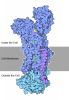
 Assembly

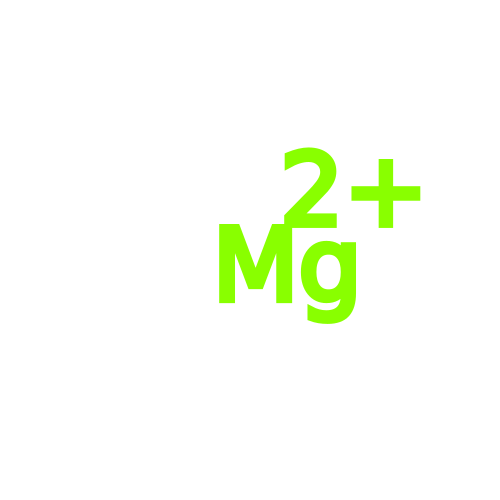 Mass: 24.305 Da / Num. of mol.: 1 / Source method: obtained synthetically / Formula: Mg / Feature type: SUBJECT OF INVESTIGATION
 Mass: 720.012 Da / Num. of mol.: 1 / Source method: obtained synthetically / Formula: C39H78NO8P / Feature type: SUBJECT OF INVESTIGATION / Comment: POPE, phospholipid*YM
 Sample preparation
 Electron microscopy imaging
 FIELD EMISSION GUN / Accelerating voltage: 300 kV / Illumination mode: FLOOD BEAM
 Processing