 Movie
Movie Controller


+ Open data

- Basic information
| Entry | Database: PDB / ID: 9r4i | |||||||||||||||
|---|---|---|---|---|---|---|---|---|---|---|---|---|---|---|---|---|
| Title | An auto inhibitory loop in the MiDAC histone deacetylase complex | |||||||||||||||
 Components Components |
| |||||||||||||||
 Keywords Keywords | GENE REGULATION / HDAC1 DNTTIP1 MIDEAS histone deacetylase complex | |||||||||||||||
| Function / homology |  Function and homology information Function and homology informationLoss of MECP2 binding ability to 5mC-DNA / Krueppel-associated box domain binding / Repression of WNT target genes / MECP2 regulates transcription of neuronal ligands / protein lysine delactylase activity / p75NTR negatively regulates cell cycle via SC1 / fungiform papilla formation / epidermal cell differentiation / histone decrotonylase activity / NuRD complex ...Loss of MECP2 binding ability to 5mC-DNA / Krueppel-associated box domain binding / Repression of WNT target genes / MECP2 regulates transcription of neuronal ligands / protein lysine delactylase activity / p75NTR negatively regulates cell cycle via SC1 / fungiform papilla formation / epidermal cell differentiation / histone decrotonylase activity / NuRD complex / regulation of cell fate specification / negative regulation of androgen receptor signaling pathway / negative regulation of stem cell population maintenance / regulation of stem cell differentiation / histone deacetylase activity, hydrolytic mechanism / histone deacetylase / Transcription of E2F targets under negative control by p107 (RBL1) and p130 (RBL2) in complex with HDAC1 / positive regulation of intracellular estrogen receptor signaling pathway / STAT3 nuclear events downstream of ALK signaling / odontogenesis of dentin-containing tooth / Regulation of MITF-M-dependent genes involved in apoptosis / Transcription of E2F targets under negative control by DREAM complex / embryonic digit morphogenesis / histone deacetylase activity / protein lysine deacetylase activity / Hydrolases; Acting on carbon-nitrogen bonds, other than peptide bonds; In linear amides / DNA methylation-dependent constitutive heterochromatin formation / eyelid development in camera-type eye / Notch-HLH transcription pathway / Sin3-type complex / negative regulation of gene expression, epigenetic / G1/S-Specific Transcription / positive regulation of stem cell population maintenance / histone deacetylase complex / E-box binding / RNA Polymerase I Transcription Initiation / G0 and Early G1 / hair follicle placode formation / host-mediated suppression of viral transcription / regulation of embryonic development / Regulation of MECP2 expression and activity / FOXO-mediated transcription of oxidative stress, metabolic and neuronal genes / NF-kappaB binding / Regulation of MITF-M-dependent genes involved in cell cycle and proliferation / RNA polymerase II core promoter sequence-specific DNA binding / cellular response to platelet-derived growth factor stimulus / core promoter sequence-specific DNA binding / Transcriptional regulation of brown and beige adipocyte differentiation by EBF2 / Regulation of TP53 Activity through Acetylation / nucleosome binding / transcription repressor complex / MECP2 regulates neuronal receptors and channels / heterochromatin / Nuclear events stimulated by ALK signaling in cancer / Transcriptional and post-translational regulation of MITF-M expression and activity / positive regulation of smooth muscle cell proliferation / negative regulation of cell migration / transcription corepressor binding / SUMOylation of chromatin organization proteins / Regulation of PTEN gene transcription / ERCC6 (CSB) and EHMT2 (G9a) positively regulate rRNA expression / Regulation of endogenous retroelements by KRAB-ZFP proteins / circadian regulation of gene expression / HDACs deacetylate histones / negative regulation of transforming growth factor beta receptor signaling pathway / Regulation of endogenous retroelements by Piwi-interacting RNAs (piRNAs) / negative regulation of canonical Wnt signaling pathway / Deactivation of the beta-catenin transactivating complex / promoter-specific chromatin binding / Downregulation of SMAD2/3:SMAD4 transcriptional activity / SMAD2/SMAD3:SMAD4 heterotrimer regulates transcription / Formation of the beta-catenin:TCF transactivating complex / RUNX1 regulates genes involved in megakaryocyte differentiation and platelet function / Negative Regulation of CDH1 Gene Transcription / NoRC negatively regulates rRNA expression / NOTCH1 Intracellular Domain Regulates Transcription / Constitutive Signaling by NOTCH1 PEST Domain Mutants / Constitutive Signaling by NOTCH1 HD+PEST Domain Mutants / histone deacetylase binding / p53 binding / transcription corepressor activity / chromosome / Factors involved in megakaryocyte development and platelet production / chromatin organization / heterochromatin formation / transcription regulator complex / Estrogen-dependent gene expression / DNA-binding transcription factor binding / Potential therapeutics for SARS / RNA polymerase II-specific DNA-binding transcription factor binding / RNA polymerase II cis-regulatory region sequence-specific DNA binding / chromatin remodeling / ribonucleoprotein complex / negative regulation of gene expression / negative regulation of DNA-templated transcription / neuronal cell body / positive regulation of gene expression / positive regulation of cell population proliferation / regulation of transcription by RNA polymerase II / nucleolus Similarity search - Function | |||||||||||||||
| Biological species |  Homo sapiens (human) Homo sapiens (human) | |||||||||||||||
| Method | ELECTRON MICROSCOPY / single particle reconstruction / cryo EM / Resolution: 2.92 Å | |||||||||||||||
 Authors Authors | Fairall, L. / Schwabe, J.W.R. | |||||||||||||||
| Funding support |  United Kingdom, 1items United Kingdom, 1items
| |||||||||||||||
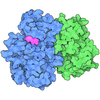
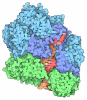
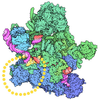
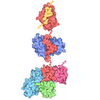
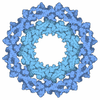
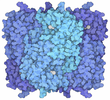
 Citation Citation | Journal: Nat Commun / Year: 2025 Title: A de novo missense variant in MIDEAS results in increased deacetylase activity of the MiDAC HDAC complex causing a neurodevelopmental syndrome. Authors: Louise Fairall / Kristupas Sirvydis / Robert E Turnbull / Suzan Jg Knottnerus / Oksana Gonchar / Frederick W Muskett / Rebekah Jukes-Jones / Lonneke van Brussel / Ellen van de Geer / Koen ...Authors: Louise Fairall / Kristupas Sirvydis / Robert E Turnbull / Suzan Jg Knottnerus / Oksana Gonchar / Frederick W Muskett / Rebekah Jukes-Jones / Lonneke van Brussel / Ellen van de Geer / Koen van Gassen / Paul Badenhorst / Diana Johnson / Paulien A Terhal / Peter M van Hasselt / Richard H van Jaarsveld / John Wr Schwabe /  Abstract: MIDEAS is a scaffold protein that, together with DNTTIP1, mediates assembly of the MiDAC histone deacetylase complex. Mice lacking MiDAC die before birth suggesting a key developmental function. ...MIDEAS is a scaffold protein that, together with DNTTIP1, mediates assembly of the MiDAC histone deacetylase complex. Mice lacking MiDAC die before birth suggesting a key developmental function. Here, we report two unrelated individuals, with a multisystem disorder characterised by delayed speech development, joint contractures, dysmorphic features and dysmotility of the gut. Both individuals have the same de novo heterozygous missense variant in MIDEAS (p.Tyr654Ser). A cryoEM structure of the MiDAC complex reveals that this amino acid is located in a conserved auto-inhibitory loop that covers the active site of the deacetylase enzyme. We suggest that the variant results in loop displacement leading to elevated deacetylase activity. In support, we observe reciprocal gene expression changes in patient fibroblasts compared with a cell line following rapid MiDAC degradation. Our results establish MIDEAS as a dominant monogenic disease gene and that hyperactivity of the MiDAC complex results in a characteristic multisystem disorder. | |||||||||||||||
| History |
|
- Structure visualization
| Structure viewer | Molecule: MolmilJmol/JSmol |
|---|
- Downloads & links
-Download
| PDBx/mmCIF format | 9r4i.cif.gz | 503.7 KB | Display | PDBx/mmCIF format |
|---|---|---|---|---|
| PDB format | pdb9r4i.ent.gz | 409.9 KB | Display | PDB format |
| PDBx/mmJSON format | 9r4i.json.gz | Tree view | PDBx/mmJSON format | |
| Others |  Other downloads Other downloads |
-Validation report
| Arichive directory | https://data.pdbj.org/pub/pdb/validation_reports/r4/9r4iftp://data.pdbj.org/pub/pdb/validation_reports/r4/9r4i | HTTPS FTP |
|---|
-Related structure data
| Related structure data |  53567MC C: citing same article ( M: map data used to model this data |
|---|---|
| Similar structure data |


-Links
 PDBj
PDBj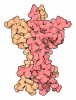
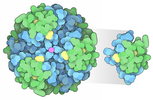
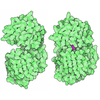
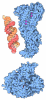
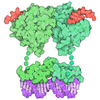
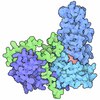
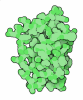
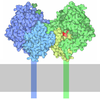
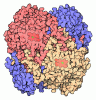
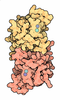
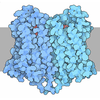
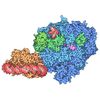
- Assembly
| Deposited unit | 
|
|---|---|
| 1 |
|
-Components
-Protein , 3 types, 6 molecules ADBECF
| #1: Protein | Mass: 55178.906 Da / Num. of mol.: 2 Source method: isolated from a genetically manipulated source Source: (gene. exp.) Homo sapiens (human) / Gene: HDAC1, RPD3L1 / Plasmid: pcDNA3 / Cell line (production host): HEK293F / Production host: Homo sapiens (human) / References: UniProt: Q13547, histone deacetylase#2: Protein | Mass: 29268.566 Da / Num. of mol.: 2 Source method: isolated from a genetically manipulated source Source: (gene. exp.) Homo sapiens (human) / Gene: MIDEAS, C14orf117, C14orf43, ELMSAN1 / Plasmid: pcDNA3 / Cell line (production host): HEK293F / Production host: Homo sapiens (human) / References: UniProt: Q6PJG2#3: Protein | Mass: 37074.434 Da / Num. of mol.: 2 Source method: isolated from a genetically manipulated source Source: (gene. exp.) Homo sapiens (human) / Gene: DNTTIP1, C20orf167, TDIF1 / Plasmid: pcDNA3 / Cell line (production host): HEK293F / Production host: Homo sapiens (human) / References: UniProt: Q9H147 |
|---|
-Non-polymers , 3 types, 8 molecules 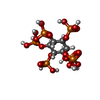


| #4: Chemical | 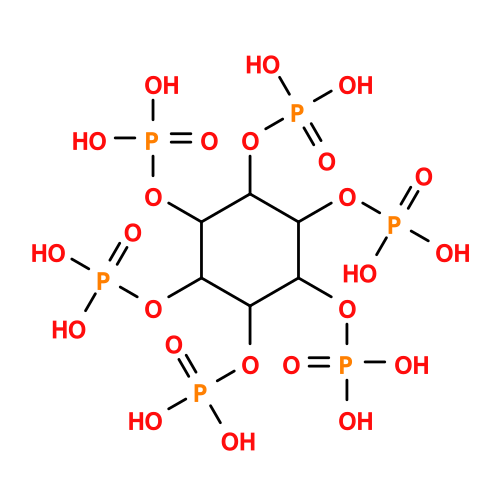 Mass: 660.035 Da / Num. of mol.: 2 / Source method: obtained synthetically / Formula: C6H18O24P6 / Feature type: SUBJECT OF INVESTIGATION Mass: 660.035 Da / Num. of mol.: 2 / Source method: obtained synthetically / Formula: C6H18O24P6 / Feature type: SUBJECT OF INVESTIGATION#5: Chemical |  Mass: 65.409 Da / Num. of mol.: 2 / Source method: obtained synthetically / Formula: Zn Mass: 65.409 Da / Num. of mol.: 2 / Source method: obtained synthetically / Formula: Zn#6: Chemical | ChemComp-K /  Mass: 39.098 Da / Num. of mol.: 4 / Source method: obtained synthetically / Formula: K Mass: 39.098 Da / Num. of mol.: 4 / Source method: obtained synthetically / Formula: K |
|---|
-Details
| Has ligand of interest | Y |
|---|---|
| Has protein modification | N |
-Experimental details
-Experiment
| Experiment | Method: ELECTRON MICROSCOPY |
|---|---|
| EM experiment | Aggregation state: PARTICLE / 3D reconstruction method: single particle reconstruction |
- Sample preparation
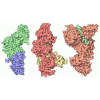
| Component | Name: Dimeric complex of HDAC1:MIDEAS:DNTTIP1 / Type: COMPLEX / Entity ID: #1-#3 / Source: RECOMBINANT | ||||||||||||||||||||
|---|---|---|---|---|---|---|---|---|---|---|---|---|---|---|---|---|---|---|---|---|---|
| Molecular weight | Value: 0.225 MDa / Experimental value: NO | ||||||||||||||||||||
| Source (natural) | Organism: Homo sapiens (human) | ||||||||||||||||||||
| Source (recombinant) | Organism: Homo sapiens (human) / Cell: HEK293F / Plasmid: pcDNA3 | ||||||||||||||||||||
| Buffer solution | pH: 7.5 Details: 10 mM HEPES, 25 mM KCl, 1 micromolar Inositol Hexaphosphate | ||||||||||||||||||||
| Buffer component |
| ||||||||||||||||||||
| Specimen | Conc.: 0.2 mg/ml / Embedding applied: NO / Shadowing applied: NO / Staining applied: NO / Vitrification applied: YES Details: Crosslinked with 0.1% formaldehyde and 0.0625% glutaraldehyde | ||||||||||||||||||||
| Specimen support | Grid material: GOLD / Grid mesh size: 300 divisions/in. / Grid type: Quantifoil R1.2/1.3 | ||||||||||||||||||||
| Vitrification | Instrument: FEI VITROBOT MARK IV / Cryogen name: ETHANE / Humidity: 100 % / Chamber temperature: 277 K |
- Electron microscopy imaging
| Experimental equipment |  Model: Titan Krios / Image courtesy: FEI Company |
|---|---|
| Microscopy | Model: TFS KRIOS |
| Electron gun | Electron source:  FIELD EMISSION GUN / Accelerating voltage: 300 kV / Illumination mode: FLOOD BEAM FIELD EMISSION GUN / Accelerating voltage: 300 kV / Illumination mode: FLOOD BEAM |
| Electron lens | Mode: BRIGHT FIELD / Nominal magnification: 105000 X / Nominal defocus max: 2400 nm / Nominal defocus min: 1200 nm / Cs: 2.7 mm / C2 aperture diameter: 50 µm / Alignment procedure: ZEMLIN TABLEAU |
| Specimen holder | Cryogen: NITROGEN / Specimen holder model: FEI TITAN KRIOS AUTOGRID HOLDER / Temperature (max): 100 K / Temperature (min): 77 K |
| Image recording | Average exposure time: 2 sec. / Electron dose: 46.7 e/Å2 / Film or detector model: GATAN K3 BIOQUANTUM (6k x 4k) / Num. of grids imaged: 1 / Num. of real images: 10709 |
| Image scans | Width: 5760 / Height: 4092 |
- Processing
| EM software |
| ||||||||||||||||||||||||||||||||||||
|---|---|---|---|---|---|---|---|---|---|---|---|---|---|---|---|---|---|---|---|---|---|---|---|---|---|---|---|---|---|---|---|---|---|---|---|---|---|
| CTF correction | Type: PHASE FLIPPING AND AMPLITUDE CORRECTION | ||||||||||||||||||||||||||||||||||||
| Particle selection | Num. of particles selected: 3618574 | ||||||||||||||||||||||||||||||||||||
| 3D reconstruction | Resolution: 2.92 Å / Resolution method: FSC 0.143 CUT-OFF / Num. of particles: 305895 / Num. of class averages: 1 / Symmetry type: POINT | ||||||||||||||||||||||||||||||||||||
| Atomic model building | B value: 100.7 / Protocol: AB INITIO MODEL / Space: REAL Details: Initial model was built using Modelangelo and compared with PDB entry 6Z2J | ||||||||||||||||||||||||||||||||||||
| Atomic model building | PDB-ID: 6Z2J Accession code: 6Z2J / Source name: PDB / Type: experimental model | ||||||||||||||||||||||||||||||||||||
| Refinement | Highest resolution: 2.92 Å Stereochemistry target values: REAL-SPACE (WEIGHTED MAP SUM AT ATOM CENTERS) | ||||||||||||||||||||||||||||||||||||
| Refine LS restraints |
|

