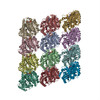
ムービー
ムービー コントローラー


+ データを開く

- 基本情報
基本情報
| 登録情報 | データベース: PDB / ID: 9pnd | |||||||||||||||||||||||||||||||||||||||||||||||||||
|---|---|---|---|---|---|---|---|---|---|---|---|---|---|---|---|---|---|---|---|---|---|---|---|---|---|---|---|---|---|---|---|---|---|---|---|---|---|---|---|---|---|---|---|---|---|---|---|---|---|---|---|---|
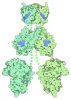
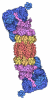
| タイトル | In situ microtubule of EpoB-induced regenerating axons | |||||||||||||||||||||||||||||||||||||||||||||||||||
 要素 要素 |
| |||||||||||||||||||||||||||||||||||||||||||||||||||
 キーワード キーワード | STRUCTURAL PROTEIN / cytoskeleton / microtubules / neuroregeneration / axon | |||||||||||||||||||||||||||||||||||||||||||||||||||
| 機能・相同性 |  機能・相同性情報 機能・相同性情報Microtubule-dependent trafficking of connexons from Golgi to the plasma membrane / Cilium Assembly / Sealing of the nuclear envelope (NE) by ESCRT-III / Carboxyterminal post-translational modifications of tubulin / Intraflagellar transport / netrin-activated signaling pathway / COPI-independent Golgi-to-ER retrograde traffic / netrin receptor binding / HSP90 chaperone cycle for steroid hormone receptors (SHR) in the presence of ligand / COPI-mediated anterograde transport ...Microtubule-dependent trafficking of connexons from Golgi to the plasma membrane / Cilium Assembly / Sealing of the nuclear envelope (NE) by ESCRT-III / Carboxyterminal post-translational modifications of tubulin / Intraflagellar transport / netrin-activated signaling pathway / COPI-independent Golgi-to-ER retrograde traffic / netrin receptor binding / HSP90 chaperone cycle for steroid hormone receptors (SHR) in the presence of ligand / COPI-mediated anterograde transport / Kinesins / Aggrephagy / PKR-mediated signaling / Mitotic Prometaphase / EML4 and NUDC in mitotic spindle formation / Resolution of Sister Chromatid Cohesion / RHO GTPases activate IQGAPs / The role of GTSE1 in G2/M progression after G2 checkpoint / Recycling pathway of L1 / COPI-dependent Golgi-to-ER retrograde traffic / dorsal root ganglion development / RHO GTPases Activate Formins / axonemal microtubule / Separation of Sister Chromatids / Hedgehog 'off' state / Loss of Nlp from mitotic centrosomes / Recruitment of mitotic centrosome proteins and complexes / Loss of proteins required for interphase microtubule organization from the centrosome / organelle transport along microtubule / Anchoring of the basal body to the plasma membrane / Recruitment of NuMA to mitotic centrosomes / AURKA Activation by TPX2 / forebrain morphogenesis / Regulation of PLK1 Activity at G2/M Transition / cerebellar cortex morphogenesis / glial cell differentiation / neuron projection arborization / dentate gyrus development / MHC class II antigen presentation / flagellated sperm motility / pyramidal neuron differentiation / response to L-glutamate / centrosome cycle / 'de novo' protein folding / smoothened signaling pathway / regulation of synapse organization / startle response / motor behavior / microtubule polymerization / adult behavior / locomotory exploration behavior / response to tumor necrosis factor / response to mechanical stimulus / sperm flagellum / intercellular bridge / cytoplasmic microtubule / condensed chromosome / peptide binding / homeostasis of number of cells within a tissue / neurogenesis / cellular response to calcium ion / axon guidance / cell periphery / adult locomotory behavior / hippocampus development / filopodium / neuromuscular junction / locomotory behavior / intracellular protein transport / cerebral cortex development / visual learning / synapse organization / recycling endosome / structural constituent of cytoskeleton / microtubule cytoskeleton organization / neuron migration / neuron differentiation / memory / cytoplasmic ribonucleoprotein granule / mitotic spindle / myelin sheath / mitotic cell cycle / lamellipodium / growth cone / protein-folding chaperone binding / microtubule cytoskeleton / neuron apoptotic process / microtubule binding / gene expression / 加水分解酵素; 酸無水物に作用; GTPに作用・細胞または細胞小器官の運動に関与 / microtubule / protein stabilization / cilium / membrane raft / protein heterodimerization activity / protein domain specific binding / axon / hydrolase activity / neuronal cell body / GTPase activity 類似検索 - 分子機能 | |||||||||||||||||||||||||||||||||||||||||||||||||||
| 生物種 |   Mus musculus (ハツカネズミ) Mus musculus (ハツカネズミ) | |||||||||||||||||||||||||||||||||||||||||||||||||||
| 手法 | 電子顕微鏡法 / らせん対称体再構成法 / クライオ電子顕微鏡法 / 解像度: 3.19 Å | |||||||||||||||||||||||||||||||||||||||||||||||||||
 データ登録者 データ登録者 | Bodakuntla, S. / Taira, K. / Yamada, Y. / Alvarez-Brecht, P. / Cada, A.K. / Basnet, N. / Zhang, R. / Martinez-Sanchez, A. / Biertumpfel, C. / Mizuno, N. | |||||||||||||||||||||||||||||||||||||||||||||||||||
| 資金援助 |  米国, 1件 米国, 1件
| |||||||||||||||||||||||||||||||||||||||||||||||||||
 引用 引用 | ジャーナル: Nature / 年: 2025 タイトル: In situ structural mechanism of epothilone-B-induced CNS axon regeneration. 著者: Satish Bodakuntla / Kenichiro Taira / Yurika Yamada / Pelayo Alvarez-Brecht / A King Cada / Nirakar Basnet / Rui Zhang / Antonio Martinez-Sanchez / Christian Biertümpfel / Naoko Mizuno /  要旨: Axons in the adult central nervous system (CNS) do not regenerate following injury, in contrast to neurons in the peripheral nervous system and neuronal growth during embryonic development. The ...Axons in the adult central nervous system (CNS) do not regenerate following injury, in contrast to neurons in the peripheral nervous system and neuronal growth during embryonic development. The molecular mechanisms that prevent regeneration of neurons in the CNS remain largely unknown. Here, to address the intracellular response to injury, we developed an in situ cryo-electron tomography and cryo-electron microscopy platform to mimic axonal damage and present the structural mechanism underlying thalamic axon regeneration induced by the drug epothilone B. We observed that stabilized microtubules extend beyond the injury site, generating membrane tension and driving membrane expansion. Cryo-electron microscopy reveals the in situ structure of microtubules at 3.19 Å resolution, which engage epothilone B within the microtubule lattice at the regenerating front. During repair, tubulin clusters are delivered and incorporated into polymerizing microtubules at the regenerating site. These microtubule shoots serve as scaffolds for various types of vesicles and endoplasmic reticulum, facilitating the supply of materials necessary for axon repair until membrane tension normalizes. We demonstrate the unexpected ability of neuronal cells to adjust to strain induced by epothilone B, which creates homeostatic imbalances and activates axons to regeneration mode. | |||||||||||||||||||||||||||||||||||||||||||||||||||
| 履歴 |
|
- 構造の表示
構造の表示
| 構造ビューア | 分子: MolmilJmol/JSmol |
|---|
- ダウンロードとリンク
-ダウンロード
| PDBx/mmCIF形式 | 9pnd.cif.gz | 352.1 KB | 表示 | PDBx/mmCIF形式 |
|---|---|---|---|---|
| PDB形式 | pdb9pnd.ent.gz | 281.8 KB | 表示 | PDB形式 |
| PDBx/mmJSON形式 | 9pnd.json.gz | ツリー表示 | PDBx/mmJSON形式 | |
| その他 |  その他のダウンロード その他のダウンロード |
-検証レポート
| アーカイブディレクトリ | https://data.pdbj.org/pub/pdb/validation_reports/pn/9pndftp://data.pdbj.org/pub/pdb/validation_reports/pn/9pnd | HTTPS FTP |
|---|
-関連構造データ


-リンク
 PDBj
PDBj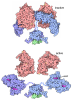
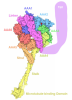
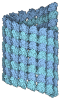
- 集合体
集合体
| 登録構造単位 | 
|
|---|---|
| 1 |
|
-要素
-タンパク質 , 2種, 4分子 BDAC
| #1: タンパク質 | 分子量: 50467.492 Da / 分子数: 2 / 由来タイプ: 天然 / 詳細: TUBB3 component of microtubules / 由来: (天然) Mus musculus (ハツカネズミ) / 器官: Brain / Plasmid details: Axon / 組織: Thalamus / 参照: UniProt: Q9ERD7#2: タンパク質 | 分子量: 50188.441 Da / 分子数: 2 / 由来タイプ: 天然 / 詳細: TUBA1A component of microtubules / 由来: (天然) Mus musculus (ハツカネズミ) / 器官: Brain / Plasmid details: Axon / 組織: Thalamus / 参照: UniProt: P68369 |
|---|
-非ポリマー , 5種, 14分子 
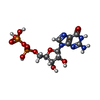
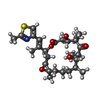

| #3: 化合物 | ChemComp-MG / 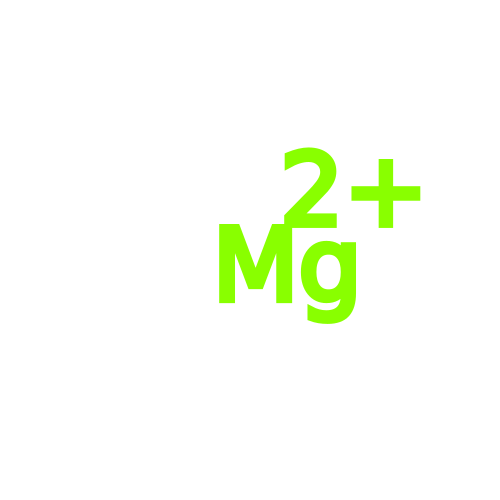 分子量: 24.305 Da / 分子数: 4 / 由来タイプ: 合成 / 式: Mg 分子量: 24.305 Da / 分子数: 4 / 由来タイプ: 合成 / 式: Mg#4: 化合物 | 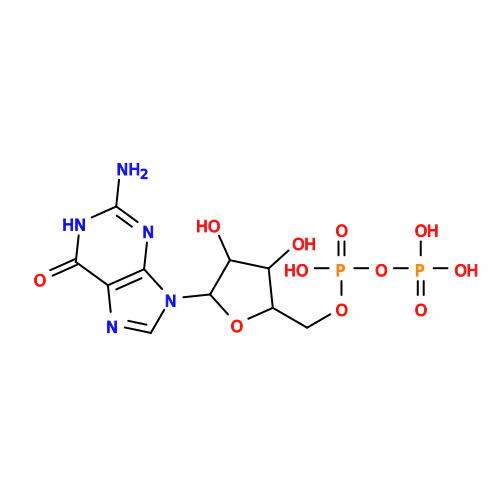 タイプ: RNA linking / 分子量: 443.201 Da / 分子数: 2 / 由来タイプ: 合成 / 式: C10H15N5O11P2 / コメント: GDP, エネルギー貯蔵分子*YM タイプ: RNA linking / 分子量: 443.201 Da / 分子数: 2 / 由来タイプ: 合成 / 式: C10H15N5O11P2 / コメント: GDP, エネルギー貯蔵分子*YM#5: 化合物 |  分子量: 507.683 Da / 分子数: 2 / 由来タイプ: 合成 / 式: C27H41NO6S / タイプ: SUBJECT OF INVESTIGATION 分子量: 507.683 Da / 分子数: 2 / 由来タイプ: 合成 / 式: C27H41NO6S / タイプ: SUBJECT OF INVESTIGATION#6: 化合物 | 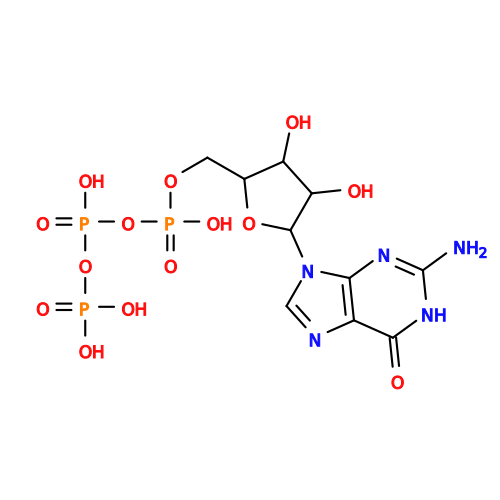 分子量: 523.180 Da / 分子数: 2 / 由来タイプ: 合成 / 式: C10H16N5O14P3 / コメント: GTP, エネルギー貯蔵分子*YM 分子量: 523.180 Da / 分子数: 2 / 由来タイプ: 合成 / 式: C10H16N5O14P3 / コメント: GTP, エネルギー貯蔵分子*YM#7: 水 | ChemComp-HOH / | 分子量: 18.015 Da / 分子数: 4 / 由来タイプ: 天然 / 式: H2O |
|---|
-詳細
| 研究の焦点であるリガンドがあるか | Y |
|---|---|
| Has protein modification | N |
-実験情報
-実験
| 実験 | 手法: 電子顕微鏡法 |
|---|---|
| EM実験 | 試料の集合状態: FILAMENT / 3次元再構成法: らせん対称体再構成法 |
- 試料調製
試料調製
| 構成要素 | 名称: Microtubule, axonal / タイプ: ORGANELLE OR CELLULAR COMPONENT 詳細: from Epothilone B-induced regenerating explant axons from thalamus primary mouse embryo tissue after axotomy Entity ID: #1-#2 / 由来: NATURAL |
|---|---|
| 分子量 | 実験値: NO |
| 由来(天然) | 生物種: Mus musculus (ハツカネズミ) / 細胞内の位置: Axon / 器官: Brain / 組織: Thalamus |
| 緩衝液 | pH: 7.2 / 詳細: Gibco Neurobasal Media |
| 試料 | 包埋: NO / シャドウイング: NO / 染色: NO / 凍結: YES 詳細: induced by axotomy in the presence of 1 nM Epothilone B |
| 試料支持 | 詳細: coated with poly-L-lysine and laminin / グリッドの材料: GOLD / グリッドのサイズ: 200 divisions/in. / グリッドのタイプ: Quantifoil R1/4 |
| 急速凍結 | 装置: FEI VITROBOT MARK IV / 凍結剤: ETHANE / 湿度: 95 % / 凍結前の試料温度: 298 K |
- 電子顕微鏡撮影
| 実験機器 |  モデル: Titan Krios / 画像提供: FEI Company |
|---|---|
| 顕微鏡 | モデル: TFS KRIOS |
| 電子銃 | 電子線源:  FIELD EMISSION GUN / 加速電圧: 300 kV / 照射モード: FLOOD BEAM FIELD EMISSION GUN / 加速電圧: 300 kV / 照射モード: FLOOD BEAM |
| 電子レンズ | モード: BRIGHT FIELD / 倍率(公称値): 81000 X / 最大 デフォーカス(公称値): 2500 nm / 最小 デフォーカス(公称値): 800 nm / Cs: 2.7 mm / アライメント法: COMA FREE |
| 試料ホルダ | 凍結剤: NITROGEN 試料ホルダーモデル: FEI TITAN KRIOS AUTOGRID HOLDER |
| 撮影 | 電子線照射量: 54 e/Å2 フィルム・検出器のモデル: GATAN K3 BIOQUANTUM (6k x 4k) 撮影したグリッド数: 5 / 実像数: 4034 / 詳細: curated image number |
| 電子光学装置 | エネルギーフィルター名称: GIF Bioquantum |
| 画像スキャン | 横: 11520 / 縦: 8184 |
- 解析
解析
| EMソフトウェア |
| ||||||||||||||||||||||||||||||||||||||||||||
|---|---|---|---|---|---|---|---|---|---|---|---|---|---|---|---|---|---|---|---|---|---|---|---|---|---|---|---|---|---|---|---|---|---|---|---|---|---|---|---|---|---|---|---|---|---|
| CTF補正 | タイプ: PHASE FLIPPING AND AMPLITUDE CORRECTION | ||||||||||||||||||||||||||||||||||||||||||||
| らせん対称 | 回転角度/サブユニット: -27.64 ° / 軸方向距離/サブユニット: 9.695 Å / らせん対称軸の対称性: C1 | ||||||||||||||||||||||||||||||||||||||||||||
| 粒子像の選択 | 選択した粒子像数: 399396 詳細: picked in filament tracer with overlapping boxes with a step size of 82.5 Angstrom | ||||||||||||||||||||||||||||||||||||||||||||
| 3次元再構成 | 解像度: 3.19 Å / 解像度の算出法: FSC 0.143 CUT-OFF / 粒子像の数: 118551 / アルゴリズム: FOURIER SPACE / クラス平均像の数: 1 / 対称性のタイプ: HELICAL | ||||||||||||||||||||||||||||||||||||||||||||
| 原子モデル構築 | プロトコル: FLEXIBLE FIT / 空間: REAL | ||||||||||||||||||||||||||||||||||||||||||||
| 原子モデル構築 | PDB-ID: 6dpu Accession code: 6dpu / Source name: PDB / タイプ: experimental model | ||||||||||||||||||||||||||||||||||||||||||||
| 精密化 | 最高解像度: 3.19 Å 立体化学のターゲット値: REAL-SPACE (WEIGHTED MAP SUM AT ATOM CENTERS) | ||||||||||||||||||||||||||||||||||||||||||||
| 拘束条件 |
|