 Movie
Movie Controller

[English] 日本語
 Yorodumi
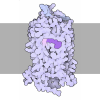
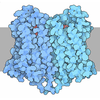
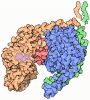
- PDB-9pln: Locally-refined structure of alpha2a adrenergic receptor in compl... -
+ Open data

- Basic information
| Entry | Database: PDB / ID: 9pln | |||||||||||||||||||||||||||||||||
|---|---|---|---|---|---|---|---|---|---|---|---|---|---|---|---|---|---|---|---|---|---|---|---|---|---|---|---|---|---|---|---|---|---|---|
| Title | Locally-refined structure of alpha2a adrenergic receptor in complex with Go heterotrimer, scFv16, and N-(5-methylnaphthalen-1-yl)pyridin-4-amine (compound 4905) | |||||||||||||||||||||||||||||||||
 Components Components | Alpha-2A adrenergic receptor | |||||||||||||||||||||||||||||||||
 Keywords Keywords | MEMBRANE PROTEIN / Receptor / Drug / Complex / GPCR / G-protein / scFv16 | |||||||||||||||||||||||||||||||||
| Function / homology |  Function and homology information Function and homology informationnegative regulation of uterine smooth muscle contraction / alpha2-adrenergic receptor activity / Adrenaline signalling through Alpha-2 adrenergic receptor / alpha-2C adrenergic receptor binding / epinephrine binding / phospholipase C-activating adrenergic receptor signaling pathway / alpha-1B adrenergic receptor binding / negative regulation of norepinephrine secretion / negative regulation of insulin secretion involved in cellular response to glucose stimulus / negative regulation of epinephrine secretion ...negative regulation of uterine smooth muscle contraction / alpha2-adrenergic receptor activity / Adrenaline signalling through Alpha-2 adrenergic receptor / alpha-2C adrenergic receptor binding / epinephrine binding / phospholipase C-activating adrenergic receptor signaling pathway / alpha-1B adrenergic receptor binding / negative regulation of norepinephrine secretion / negative regulation of insulin secretion involved in cellular response to glucose stimulus / negative regulation of epinephrine secretion / negative regulation of calcium ion-dependent exocytosis / heterotrimeric G-protein binding / intestinal absorption / dopaminergic synapse / positive regulation of potassium ion transport / thioesterase binding / response to alcohol / thermoception / Surfactant metabolism / adenylate cyclase-inhibiting adrenergic receptor signaling pathway / norepinephrine binding / positive regulation of membrane protein ectodomain proteolysis / Adrenoceptors / adrenergic receptor signaling pathway / positive regulation of wound healing / response to morphine / negative regulation of calcium ion transport / positive regulation of epidermal growth factor receptor signaling pathway / negative regulation of insulin secretion / Rho protein signal transduction / negative regulation of lipid catabolic process / regulation of vasoconstriction / cellular response to hormone stimulus / adenylate cyclase-activating adrenergic receptor signaling pathway / presynaptic modulation of chemical synaptic transmission / presynaptic active zone membrane / axon terminus / positive regulation of cytokine production / female pregnancy / platelet activation / vasodilation / postsynaptic density membrane / epidermal growth factor receptor signaling pathway / GABA-ergic synapse / adenylate cyclase-inhibiting G protein-coupled receptor signaling pathway / glucose homeostasis / actin cytoskeleton organization / Adrenaline,noradrenaline inhibits insulin secretion / G alpha (z) signalling events / adenylate cyclase-activating G protein-coupled receptor signaling pathway / positive regulation of phosphatidylinositol 3-kinase/protein kinase B signal transduction / G alpha (i) signalling events / basolateral plasma membrane / positive regulation of MAPK cascade / Ras protein signal transduction / DNA replication / signaling receptor complex / positive regulation of cell migration / G protein-coupled receptor signaling pathway / neuronal cell body / positive regulation of cell population proliferation / protein kinase binding / glutamatergic synapse / protein homodimerization activity / plasma membrane / cytoplasm Similarity search - Function | |||||||||||||||||||||||||||||||||
| Biological species |  Homo sapiens (human) Homo sapiens (human) | |||||||||||||||||||||||||||||||||
| Method | ELECTRON MICROSCOPY / single particle reconstruction / cryo EM / Resolution: 2.8 Å | |||||||||||||||||||||||||||||||||
 Authors Authors | Srinivasan, K. / Xu, X. / Mailhot, O. / Manglik, A. / Shoichet, B. | |||||||||||||||||||||||||||||||||
| Funding support |  United States, 1items United States, 1items
| |||||||||||||||||||||||||||||||||
 Citation Citation | Journal: bioRxiv / Year: 2026 Title: Toward a Random Background for Ligand Optimization. Abstract: Ligand optimization is central to drug discovery as hundreds of analogs might be designed and synthesized between an initial hit and a therapeutic candidate. The efficiency of this process is ...Ligand optimization is central to drug discovery as hundreds of analogs might be designed and synthesized between an initial hit and a therapeutic candidate. The efficiency of this process is unclear, at least partly because there is no random background for optimization against which to compare. Such a random background might emerge from synthetically accessible but otherwise systematic random small substitutions across starting ligands, measuring likelihood of achieving a substantial improvement in affinity/potency or other property by any single perturbation. Recent literature and ligand-affinity/potency databases suggest that perhaps 10% of analogs with minor modifications improve upon a parent's potency substantially (by ≥10-fold), but this number is clouded by reporting bias, intentional improvement, and inter-group reproducibility. To begin to establish a background expectation for ligand optimization, we comprehensively and systematically modified 18 lead molecules across six targets with single atom changes; 257 compounds were synthesized. Unexpectedly, 11.2% of these random small perturbation analogs improved potency by ≥10-fold over their parents. Conversely, these more potent analogs typically had worse pharmacokinetics (e.g. reduced metabolic stability, lower plasma free fraction). While it was possible to find analogs where the potency increase compensated for inferior exposure and half-life, resulting in more potent compounds in vivo, overall a frustrated landscape for ligand optimization is revealed. This study begins to establish a background expectation for ligand potency optimization and offers a simple strategy to do so. It also begins to quantify the challenges confronting the field in moving beyond in vitro potency. | |||||||||||||||||||||||||||||||||
| History |
|
- Structure visualization
| Structure viewer | Molecule: MolmilJmol/JSmol |
|---|
- Downloads & links
-Download
| PDBx/mmCIF format | 9pln.cif.gz | 120.2 KB | Display | PDBx/mmCIF format |
|---|---|---|---|---|
| PDB format | pdb9pln.ent.gz | Display | PDB format | |
| PDBx/mmJSON format | 9pln.json.gz | Tree view | PDBx/mmJSON format | |
| Others |  Other downloads Other downloads |
-Validation report
| Arichive directory | https://data.pdbj.org/pub/pdb/validation_reports/pl/9plnftp://data.pdbj.org/pub/pdb/validation_reports/pl/9pln | HTTPS FTP |
|---|
-Related structure data
| Related structure data |  71718MC 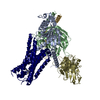 9ploC M: map data used to model this data C: citing same article ( |
|---|---|
| Similar structure data |

-Links
 PDBj
PDBj
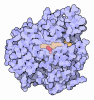
- Assembly
| Deposited unit | 
|
|---|---|
| 1 |
|
-Components
| #1: Protein | Mass: 53643.855 Da / Num. of mol.: 1 Source method: isolated from a genetically manipulated source Source: (gene. exp.) Homo sapiens (human) / Gene: ADRA2A, ADRA2R, ADRAR / Production host:   Spodoptera frugiperda (fall armyworm) / References: UniProt: P08913 Spodoptera frugiperda (fall armyworm) / References: UniProt: P08913 |
|---|---|
| #2: Chemical | ChemComp-A1CIU / Mass: 234.296 Da / Num. of mol.: 1 / Source method: obtained synthetically / Formula: C16H14N2 / Feature type: SUBJECT OF INVESTIGATION |
| Has ligand of interest | Y |
| Has protein modification | Y |
-Experimental details
-Experiment
| Experiment | Method: ELECTRON MICROSCOPY |
|---|---|
| EM experiment | Aggregation state: PARTICLE / 3D reconstruction method: single particle reconstruction |
- Sample preparation
| Component | Name: Alpha2a adrenergic receptor in complex with Go heterotrimer, scFv16, and compound 4905. Type: COMPLEX / Entity ID: #1 / Source: RECOMBINANT | |||||||||||||||||||||||||||||||||||
|---|---|---|---|---|---|---|---|---|---|---|---|---|---|---|---|---|---|---|---|---|---|---|---|---|---|---|---|---|---|---|---|---|---|---|---|---|
| Molecular weight | Experimental value: NO | |||||||||||||||||||||||||||||||||||
| Source (natural) | Organism: Homo sapiens (human) | |||||||||||||||||||||||||||||||||||
| Source (recombinant) | Organism: Spodoptera frugiperda (fall armyworm) | |||||||||||||||||||||||||||||||||||
| Buffer solution | pH: 7.5 Details: CHS was solubilized in LMNG and GDN prior to diluting into buffers. | |||||||||||||||||||||||||||||||||||
| Buffer component |
| |||||||||||||||||||||||||||||||||||
| Specimen | Conc.: 2.6 mg/ml / Embedding applied: NO / Shadowing applied: NO / Staining applied: NO / Vitrification applied: YES | |||||||||||||||||||||||||||||||||||
| Specimen support | Details: 15 mA current / Grid material: GOLD / Grid mesh size: 300 divisions/in. / Grid type: UltrAuFoil R1.2/1.3 | |||||||||||||||||||||||||||||||||||
| Vitrification | Instrument: FEI VITROBOT MARK IV / Cryogen name: ETHANE / Humidity: 100 % / Chamber temperature: 277.15 K |
- Electron microscopy imaging
| Experimental equipment |  Model: Titan Krios / Image courtesy: FEI Company |
|---|---|
| Microscopy | Model: TFS KRIOS |
| Electron gun | Electron source:  FIELD EMISSION GUN / Accelerating voltage: 300 kV / Illumination mode: FLOOD BEAM FIELD EMISSION GUN / Accelerating voltage: 300 kV / Illumination mode: FLOOD BEAM |
| Electron lens | Mode: BRIGHT FIELD / Nominal magnification: 105000 X / Nominal defocus max: 3000 nm / Nominal defocus min: 1500 nm / Alignment procedure: COMA FREE |
| Specimen holder | Cryogen: NITROGEN / Specimen holder model: FEI TITAN KRIOS AUTOGRID HOLDER |
| Image recording | Average exposure time: 2 sec. / Electron dose: 0.596 e/Å2 / Film or detector model: GATAN K3 (6k x 4k) / Num. of grids imaged: 1 / Num. of real images: 10305 |
- Processing
| EM software |
| ||||||||||||||||||||||||||||||||
|---|---|---|---|---|---|---|---|---|---|---|---|---|---|---|---|---|---|---|---|---|---|---|---|---|---|---|---|---|---|---|---|---|---|
| CTF correction | Type: PHASE FLIPPING AND AMPLITUDE CORRECTION | ||||||||||||||||||||||||||||||||
| Particle selection | Num. of particles selected: 6609807 | ||||||||||||||||||||||||||||||||
| 3D reconstruction | Resolution: 2.8 Å / Resolution method: FSC 0.143 CUT-OFF / Num. of particles: 323827 / Symmetry type: POINT | ||||||||||||||||||||||||||||||||
| Atomic model building | B value: 110.6 / Protocol: RIGID BODY FIT | ||||||||||||||||||||||||||||||||
| Atomic model building | PDB-ID: 7EJ8 Accession code: 7EJ8 / Source name: PDB / Type: experimental model | ||||||||||||||||||||||||||||||||
| Refinement | Highest resolution: 2.8 Å Stereochemistry target values: REAL-SPACE (WEIGHTED MAP SUM AT ATOM CENTERS) | ||||||||||||||||||||||||||||||||
| Refine LS restraints |
|

