[English] 日本語
Yorodumi
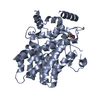
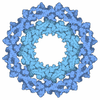
- PDB-9pdm: Leucine-bound Sestrin2 from Homo sapiens (GATOR2-inspired update) -

+
Open data


ID or keywords:

Loading...

-
Basic information

Entry
Database: PDB / ID: 9pdm
TitleLeucine-bound Sestrin2 from Homo sapiens (GATOR2-inspired update)
ComponentsSestrin-2
KeywordsSIGNALING PROTEIN / nutrient sensor / mTORC1 pathway
Function / homology
Function and homology information


regulation of response to reactive oxygen species / sulfiredoxin activity / negative regulation of translation in response to endoplasmic reticulum stress / GATOR2 complex / L-leucine binding / Atg1/ULK1 kinase complex / oxidoreductase activity, acting on peroxide as acceptor / regulation of TORC1 signaling / TORC2 complex / PH domain binding ...regulation of response to reactive oxygen species / sulfiredoxin activity / negative regulation of translation in response to endoplasmic reticulum stress / GATOR2 complex / L-leucine binding / Atg1/ULK1 kinase complex / oxidoreductase activity, acting on peroxide as acceptor / regulation of TORC1 signaling / TORC2 complex / PH domain binding / cellular response to leucine starvation / activation of protein kinase activity / cellular response to L-leucine / Amino acids regulate mTORC1 / nucleotide-activated protein kinase complex / TORC2 signaling / cellular oxidant detoxification / GDP-dissociation inhibitor activity / positive regulation of macroautophagy / regulation of protein phosphorylation / Oxidoreductases; Acting on a peroxide as acceptor; Peroxidases / reactive oxygen species metabolic process / cellular response to glucose starvation / negative regulation of TORC1 signaling / positive regulation of TORC1 signaling / cellular response to amino acid stimulus / DNA damage response, signal transduction by p53 class mediator / protein localization to plasma membrane / cellular response to amino acid starvation / TP53 Regulates Metabolic Genes / peroxidase activity / protein sequestering activity / negative regulation of cell growth / positive regulation of protein localization to nucleus / KEAP1-NFE2L2 pathway / cellular response to oxidative stress / lysosomal membrane / protein-containing complex binding / nucleus / cytosol / cytoplasm
Similarity search - Function
Sestrin / PA26 p53-induced protein (sestrin) / AhpD-like
Similarity search - Domain/homology
Biological speciesHomo sapiens (human)
MethodX-RAY DIFFRACTION / SYNCHROTRON / SAD / Resolution: 2.7 Å
AuthorsChoi, Y. / Wranik, M. / Rogala, K.B.
Funding support United States, 5items
OrganizationGrant numberCountry
National Institutes of Health/National Institute of General Medical Sciences (NIH/NIGMS)R35 GM150935 United States
National Institutes of Health/National Cancer Institute (NIH/NCI)R00 CA255926 United States
National Institutes of Health/National Cancer Institute (NIH/NCI)P30 CA124435 United States
Department of Defense (DOD, United States)CA220856 United States
Lustgarten Foundation1156790 United States
Citation
Journal: Nature / Year: 2025
Title: Structural basis for the dynamic regulation of mTORC1 by amino acids.
Authors: Max L Valenstein / Maximilian Wranik / Pranav V Lalgudi / Karen Y Linde-Garelli / Yuri Choi / Raghu R Chivukula / David M Sabatini / Kacper B Rogala /
Abstract: The mechanistic target of rapamycin complex 1 (mTORC1) anchors a conserved signalling pathway that regulates growth in response to nutrient availability. Amino acids activate mTORC1 through the Rag ...The mechanistic target of rapamycin complex 1 (mTORC1) anchors a conserved signalling pathway that regulates growth in response to nutrient availability. Amino acids activate mTORC1 through the Rag GTPases, which are regulated by GATOR, a supercomplex consisting of GATOR1, KICSTOR and the nutrient-sensing hub GATOR2 (refs. ). GATOR2 forms an octagonal cage, with its distinct WD40 domain β-propellers interacting with GATOR1 and the leucine sensors Sestrin1 and Sestrin2 (SESN1 and SESN2) and the arginine sensor CASTOR1 (ref. ). The mechanisms through which these sensors regulate GATOR2 and how they detach from it upon binding their cognate amino acids remain unknown. Here, using cryo-electron microscopy, we determined the structures of a stabilized GATOR2 bound to either Sestrin2 or CASTOR1. The sensors occupy distinct and non-overlapping binding sites, disruption of which selectively impairs the ability of mTORC1 to sense individual amino acids. We also resolved the apo (leucine-free) structure of Sestrin2 and characterized the amino acid-induced structural rearrangements within Sestrin2 and CASTOR1 that trigger their dissociation from GATOR2. Binding of either sensor restricts the dynamic WDR24 β-propeller of GATOR2, a domain essential for nutrient-dependent mTORC1 activation. These findings reveal the allosteric mechanisms that convey amino acid sufficiency to GATOR2 and the ensuing structural changes that lead to mTORC1 activation.
#1: Journal: Science / Year: 2016
Title: Structural basis for leucine sensing by the Sestrin2-mTORC1 pathway.
Authors: Saxton, R.A. / Knockenhauer, K.E. / Wolfson, R.L. / Chantranupong, L. / Pacold, M.E. / Wang, T. / Schwartz, T.U. / Sabatini, D.M.
History
DepositionJun 30, 2025Deposition site: RCSB / Processing site: RCSB
Revision 1.0Aug 12, 2026Provider: repository / Type: Initial release

-
Structure visualization

Structure viewerMolecule:
MolmilJmol/JSmol

Downloads & links

-
Assembly

Deposited unit
A: Sestrin-2
B: Sestrin-2
C: Sestrin-2
D: Sestrin-2
E: Sestrin-2
hetero molecules


Theoretical massNumber of molelcules
Total (without water)273,45910
Polymers272,8035
Non-polymers6565
Water1,982110
1
A: Sestrin-2
hetero molecules


Theoretical massNumber of molelcules
Total (without water)54,6922
Polymers54,5611
Non-polymers1311
Water181
TypeNameSymmetry operationNumber
identity operation1_555x,y,z1
2
B: Sestrin-2
hetero molecules


Theoretical massNumber of molelcules
Total (without water)54,6922
Polymers54,5611
Non-polymers1311
Water181
TypeNameSymmetry operationNumber
identity operation1_555x,y,z1
3
C: Sestrin-2
hetero molecules


Theoretical massNumber of molelcules
Total (without water)54,6922
Polymers54,5611
Non-polymers1311
Water181
TypeNameSymmetry operationNumber
identity operation1_555x,y,z1
4
D: Sestrin-2
hetero molecules


Theoretical massNumber of molelcules
Total (without water)54,6922
Polymers54,5611
Non-polymers1311
Water181
TypeNameSymmetry operationNumber
identity operation1_555x,y,z1
5
E: Sestrin-2
hetero molecules


Theoretical massNumber of molelcules
Total (without water)54,6922
Polymers54,5611
Non-polymers1311
Water181
TypeNameSymmetry operationNumber
identity operation1_555x,y,z1
Unit cell
Length a, b, c (Å)293.029, 293.029, 293.029
Angle α, β, γ (deg.)90.00, 90.00, 90.00
Int Tables number197
Space group name H-MI23

-
Components

#1: Protein
Sestrin-2 / Hypoxia-induced gene


Mass: 54560.566 Da / Num. of mol.: 5
Source method: isolated from a genetically manipulated source
Source: (gene. exp.) Homo sapiens (human) / Gene: SESN2, Hi95, SEST2 / Production host: Escherichia coli BL21(DE3) (bacteria) / References: UniProt: P58004, peroxiredoxin
#2: Chemical
ChemComp-LEU / LEUCINE


Type: L-peptide linking / Mass: 131.173 Da / Num. of mol.: 5 / Source method: obtained synthetically / Formula: C6H13NO2 / Feature type: SUBJECT OF INVESTIGATION
#3: Water ChemComp-HOH / water


Mass: 18.015 Da / Num. of mol.: 110 / Source method: isolated from a natural source / Formula: H2O
Has ligand of interestY
Has protein modificationN

-
Experimental details

-
Experiment

ExperimentMethod: X-RAY DIFFRACTION / Number of used crystals: 1

-
Sample preparation

CrystalDensity Matthews: 3.84 Å3/Da / Density % sol: 67.99 %
Crystal growTemperature: 291 K / Method: vapor diffusion, hanging drop / pH: 6
Details: 1.2 M disodium malonate, 0.1 M MES pH 6.0, 1% (v/v) Jeffamine ED 2001

-
Data collection

DiffractionMean temperature: 100 K / Serial crystal experiment: N
Diffraction sourceSource: SYNCHROTRON / Site: APS / Beamline: 24-ID-C / Wavelength: 0.9792 Å
DetectorType: DECTRIS PILATUS 6M / Detector: PIXEL / Date: Jun 12, 2015
RadiationProtocol: SINGLE WAVELENGTH / Monochromatic (M) / Laue (L): M / Scattering type: x-ray
Radiation wavelengthWavelength: 0.9792 Å / Relative weight: 1
ReflectionResolution: 2.7→92.67 Å / Num. obs: 114283 / % possible obs: 100 % / Redundancy: 40 % / CC1/2: 0.998 / Net I/σ(I): 24.47
Reflection shellResolution: 2.7→2.75 Å / Rsym value: 15.3

-
Processing

Software
NameVersionClassification
PHENIX1.20.1_4487refinement
PDB_EXTRACTdata extraction
HKL-2000data reduction
HKL-2000data scaling
PHENIXphasing
RefinementMethod to determine structure: SAD / Resolution: 2.7→92.66 Å / SU ML: 0.41 / Cross valid method: FREE R-VALUE / σ(F): 1.34 / Phase error: 24.02 / Stereochemistry target values: ML
RfactorNum. reflection% reflection
Rfree0.2293 1999 1.75 %
Rwork0.1912 --
obs0.1918 114166 99.9 %
Solvent computationShrinkage radii: 0.9 Å / VDW probe radii: 1.1 Å / Solvent model: FLAT BULK SOLVENT MODEL
Refinement stepCycle: LAST / Resolution: 2.7→92.66 Å
ProteinNucleic acidLigandSolventTotal
Num. atoms15889 0 0 110 15999
Refine LS restraints
Refine-IDTypeDev idealNumber
X-RAY DIFFRACTIONf_bond_d0.00916288
X-RAY DIFFRACTIONf_angle_d1.08322067
X-RAY DIFFRACTIONf_dihedral_angle_d6.2462182
X-RAY DIFFRACTIONf_chiral_restr0.0532400
X-RAY DIFFRACTIONf_plane_restr0.0092805
LS refinement shell
Resolution (Å)Rfactor RfreeNum. reflection RfreeRfactor RworkNum. reflection RworkRefine-ID% reflection obs (%)
2.7-2.760.35891390.35387958X-RAY DIFFRACTION100
2.76-2.840.37111410.30017934X-RAY DIFFRACTION100
2.84-2.920.34041400.27737953X-RAY DIFFRACTION100
2.92-3.020.31371440.24898005X-RAY DIFFRACTION100
3.02-3.120.26521420.24377929X-RAY DIFFRACTION100
3.13-3.250.28961460.23737980X-RAY DIFFRACTION100
3.25-3.40.29061420.2587998X-RAY DIFFRACTION100
3.4-3.580.25691460.21687979X-RAY DIFFRACTION100
3.58-3.80.21681450.17817995X-RAY DIFFRACTION100
3.8-4.090.20341410.16258039X-RAY DIFFRACTION100
4.1-4.510.21881430.15638008X-RAY DIFFRACTION100
4.51-5.160.17921440.15048039X-RAY DIFFRACTION100
5.16-6.50.23121380.1918109X-RAY DIFFRACTION100
6.5-92.660.17111480.15128241X-RAY DIFFRACTION100

+
About Yorodumi

-
News

-
Feb 9, 2022. New format data for meta-information of EMDB entries

New format data for meta-information of EMDB entries

  • Version 3 of the EMDB header file is now the official format.
  • The previous official version 1.9 will be removed from the archive.

Related info.:EMDB header

External links:wwPDB to switch to version 3 of the EMDB data model

-
Aug 12, 2020. Covid-19 info

Covid-19 info

URL: https://pdbj.org/emnavi/covid19.php

New page: Covid-19 featured information page in EM Navigator.

Related info.:Covid-19 info / Mar 5, 2020. Novel coronavirus structure data

+
Mar 5, 2020. Novel coronavirus structure data

Novel coronavirus structure data

Related info.:Yorodumi Speices / Aug 12, 2020. Covid-19 info

External links:COVID-19 featured content - PDBj / Molecule of the Month (242):Coronavirus Proteases

+
Jan 31, 2019. EMDB accession codes are about to change! (news from PDBe EMDB page)

EMDB accession codes are about to change! (news from PDBe EMDB page)

  • The allocation of 4 digits for EMDB accession codes will soon come to an end. Whilst these codes will remain in use, new EMDB accession codes will include an additional digit and will expand incrementally as the available range of codes is exhausted. The current 4-digit format prefixed with “EMD-” (i.e. EMD-XXXX) will advance to a 5-digit format (i.e. EMD-XXXXX), and so on. It is currently estimated that the 4-digit codes will be depleted around Spring 2019, at which point the 5-digit format will come into force.
  • The EM Navigator/Yorodumi systems omit the EMD- prefix.

Related info.:Q: What is EMD? / ID/Accession-code notation in Yorodumi/EM Navigator

External links:EMDB Accession Codes are Changing Soon! / Contact to PDBj

+
Jul 12, 2017. Major update of PDB

Major update of PDB

  • wwPDB released updated PDB data conforming to the new PDBx/mmCIF dictionary.
  • This is a major update changing the version number from 4 to 5, and with Remediation, in which all the entries are updated.
  • In this update, many items about electron microscopy experimental information are reorganized (e.g. em_software).
  • Now, EM Navigator and Yorodumi are based on the updated data.

External links:wwPDB Remediation / Enriched Model Files Conforming to OneDep Data Standards Now Available in the PDB FTP Archive

-
Yorodumi

Thousand views of thousand structures

  • Yorodumi is a browser for structure data from EMDB, PDB, SASBDB, etc.
  • This page is also the successor to EM Navigator detail page, and also detail information page/front-end page for Omokage search.
  • The word "yorodu" (or yorozu) is an old Japanese word meaning "ten thousand". "mi" (miru) is to see.

Related info.:EMDB / PDB / SASBDB / Comparison of 3 databanks / Yorodumi Search / Aug 31, 2016. New EM Navigator & Yorodumi / Yorodumi Papers / Jmol/JSmol / Function and homology information / Changes in new EM Navigator and Yorodumi

Read more