 Movie
Movie Controller


+ Open data

- Basic information
| Entry | Database: PDB / ID: 9dx2 | ||||||||||||||||||||||||||||||||||||||||||||||||||||||||||||||||||||||||||||||||||||||||||||||||||||||||||||
|---|---|---|---|---|---|---|---|---|---|---|---|---|---|---|---|---|---|---|---|---|---|---|---|---|---|---|---|---|---|---|---|---|---|---|---|---|---|---|---|---|---|---|---|---|---|---|---|---|---|---|---|---|---|---|---|---|---|---|---|---|---|---|---|---|---|---|---|---|---|---|---|---|---|---|---|---|---|---|---|---|---|---|---|---|---|---|---|---|---|---|---|---|---|---|---|---|---|---|---|---|---|---|---|---|---|---|---|---|---|
| Title | Human GATOR2 complex - CASTOR1 bound state | ||||||||||||||||||||||||||||||||||||||||||||||||||||||||||||||||||||||||||||||||||||||||||||||||||||||||||||
 Components Components |
| ||||||||||||||||||||||||||||||||||||||||||||||||||||||||||||||||||||||||||||||||||||||||||||||||||||||||||||
 Keywords Keywords | SIGNALING PROTEIN / nutrient sensor / mTORC1 pathway / stress-responsive protein | ||||||||||||||||||||||||||||||||||||||||||||||||||||||||||||||||||||||||||||||||||||||||||||||||||||||||||||
| Function / homology |  Function and homology information Function and homology informationcellular response to L-arginine / molecular sensor activity / Amino acids regulate mTORC1 / arginine binding / negative regulation of TORC1 signaling / positive regulation of TORC1 signaling / cellular response to amino acid starvation / protein sequestering activity / identical protein binding / cytosol Similarity search - Function | ||||||||||||||||||||||||||||||||||||||||||||||||||||||||||||||||||||||||||||||||||||||||||||||||||||||||||||
| Biological species |  Homo sapiens (human) Homo sapiens (human) | ||||||||||||||||||||||||||||||||||||||||||||||||||||||||||||||||||||||||||||||||||||||||||||||||||||||||||||
| Method | ELECTRON MICROSCOPY / single particle reconstruction / cryo EM / Resolution: 3.4 Å | ||||||||||||||||||||||||||||||||||||||||||||||||||||||||||||||||||||||||||||||||||||||||||||||||||||||||||||
 Authors Authors | Wranik, M. / Rogala, K.B. | ||||||||||||||||||||||||||||||||||||||||||||||||||||||||||||||||||||||||||||||||||||||||||||||||||||||||||||
| Funding support |  United States, 5items United States, 5items
| ||||||||||||||||||||||||||||||||||||||||||||||||||||||||||||||||||||||||||||||||||||||||||||||||||||||||||||
 Citation Citation | Journal: Nature / Year: 2025 Title: Structural basis for the dynamic regulation of mTORC1 by amino acids. Authors: Max L Valenstein / Maximilian Wranik / Pranav V Lalgudi / Karen Y Linde-Garelli / Yuri Choi / Raghu R Chivukula / David M Sabatini / Kacper B Rogala /  Abstract: The mechanistic target of rapamycin complex 1 (mTORC1) anchors a conserved signalling pathway that regulates growth in response to nutrient availability. Amino acids activate mTORC1 through the Rag ...The mechanistic target of rapamycin complex 1 (mTORC1) anchors a conserved signalling pathway that regulates growth in response to nutrient availability. Amino acids activate mTORC1 through the Rag GTPases, which are regulated by GATOR, a supercomplex consisting of GATOR1, KICSTOR and the nutrient-sensing hub GATOR2 (refs. ). GATOR2 forms an octagonal cage, with its distinct WD40 domain β-propellers interacting with GATOR1 and the leucine sensors Sestrin1 and Sestrin2 (SESN1 and SESN2) and the arginine sensor CASTOR1 (ref. ). The mechanisms through which these sensors regulate GATOR2 and how they detach from it upon binding their cognate amino acids remain unknown. Here, using cryo-electron microscopy, we determined the structures of a stabilized GATOR2 bound to either Sestrin2 or CASTOR1. The sensors occupy distinct and non-overlapping binding sites, disruption of which selectively impairs the ability of mTORC1 to sense individual amino acids. We also resolved the apo (leucine-free) structure of Sestrin2 and characterized the amino acid-induced structural rearrangements within Sestrin2 and CASTOR1 that trigger their dissociation from GATOR2. Binding of either sensor restricts the dynamic WDR24 β-propeller of GATOR2, a domain essential for nutrient-dependent mTORC1 activation. These findings reveal the allosteric mechanisms that convey amino acid sufficiency to GATOR2 and the ensuing structural changes that lead to mTORC1 activation. | ||||||||||||||||||||||||||||||||||||||||||||||||||||||||||||||||||||||||||||||||||||||||||||||||||||||||||||
| History |
|
- Structure visualization
| Structure viewer | Molecule: MolmilJmol/JSmol |
|---|
- Downloads & links
-Download
| PDBx/mmCIF format | 9dx2.cif.gz | 873.5 KB | Display | PDBx/mmCIF format |
|---|---|---|---|---|
| PDB format | pdb9dx2.ent.gz | 692.1 KB | Display | PDB format |
| PDBx/mmJSON format | 9dx2.json.gz | Tree view | PDBx/mmJSON format | |
| Others |  Other downloads Other downloads |
-Validation report
| Arichive directory | https://data.pdbj.org/pub/pdb/validation_reports/dx/9dx2ftp://data.pdbj.org/pub/pdb/validation_reports/dx/9dx2 | HTTPS FTP |
|---|
-Related structure data
| Related structure data |  47278MC  9dx0C  9dx1C  9pdmC  9pdoC  9xd1 M: map data used to model this data C: citing same article ( |
|---|---|
| Similar structure data |


-Links
 PDBj
PDBj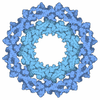
- Assembly
| Deposited unit | 
|
|---|---|
| 1 |
|
-Components
| #1: Protein | Mass: 88740.953 Da / Num. of mol.: 2 Source method: isolated from a genetically manipulated source Source: (gene. exp.) Homo sapiens (human) / Cell line (production host): HEK293F / Production host: Homo sapiens (human)#2: Protein | | Mass: 63832.641 Da / Num. of mol.: 1 Source method: isolated from a genetically manipulated source Source: (gene. exp.) Homo sapiens (human) / Cell line (production host): HEK293F / Production host: Homo sapiens (human)#3: Protein | | Mass: 60774.332 Da / Num. of mol.: 1 Source method: isolated from a genetically manipulated source Source: (gene. exp.) Homo sapiens (human) / Cell line (production host): HEK293F / Production host: Homo sapiens (human)#4: Protein | Mass: 36222.164 Da / Num. of mol.: 3 Source method: isolated from a genetically manipulated source Source: (gene. exp.) Homo sapiens (human) / Gene: CASTOR1, GATSL3 / Cell line (production host): HEK293F / Production host: Homo sapiens (human) / References: UniProt: Q8WTX7#5: Protein | | Mass: 118434.242 Da / Num. of mol.: 1 Source method: isolated from a genetically manipulated source Source: (gene. exp.) Homo sapiens (human) / Cell line (production host): HEK293F / Production host: Homo sapiens (human)Has ligand of interest | N | Has protein modification | Y | |
|---|
-Experimental details
-Experiment
| Experiment | Method: ELECTRON MICROSCOPY |
|---|---|
| EM experiment | Aggregation state: PARTICLE / 3D reconstruction method: single particle reconstruction |
- Sample preparation
| Component | Name: Human GATOR2 complex bound to CASTOR1 / Type: COMPLEX / Entity ID: #1-#4 / Source: RECOMBINANT |
|---|---|
| Molecular weight | Value: 1.3 MDa / Experimental value: NO |
| Source (natural) | Organism: Homo sapiens (human) |
| Source (recombinant) | Organism: Homo sapiens (human) / Cell: HEK293F |
| Buffer solution | pH: 7.4 |
| Specimen | Embedding applied: NO / Shadowing applied: NO / Staining applied: NO / Vitrification applied: YES |
| Vitrification | Cryogen name: ETHANE |
- Electron microscopy imaging
| Experimental equipment |  Model: Titan Krios / Image courtesy: FEI Company |
|---|---|
| Microscopy | Model: TFS KRIOS |
| Electron gun | Electron source:  FIELD EMISSION GUN / Accelerating voltage: 300 kV / Illumination mode: FLOOD BEAM FIELD EMISSION GUN / Accelerating voltage: 300 kV / Illumination mode: FLOOD BEAM |
| Electron lens | Mode: 4D-STEM / Nominal defocus max: 2100 nm / Nominal defocus min: 700 nm |
| Image recording | Electron dose: 69.44 e/Å2 / Film or detector model: GATAN K3 BIOQUANTUM (6k x 4k) |
- Processing
| EM software |
| ||||||||||||
|---|---|---|---|---|---|---|---|---|---|---|---|---|---|
| CTF correction | Type: PHASE FLIPPING AND AMPLITUDE CORRECTION | ||||||||||||
| 3D reconstruction | Resolution: 3.4 Å / Resolution method: FSC 0.143 CUT-OFF / Num. of particles: 865410 / Symmetry type: POINT |
