 Movie
Movie Controller


+ Open data

- Basic information
| Entry | Database: PDB / ID: 9m1h | |||||||||||||||||||||
|---|---|---|---|---|---|---|---|---|---|---|---|---|---|---|---|---|---|---|---|---|---|---|
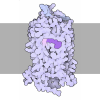
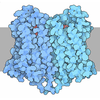
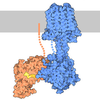
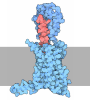
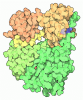
| Title | Cryo-EM structure of PGE2-EP1-Gq complex | |||||||||||||||||||||
 Components Components |
| |||||||||||||||||||||
 Keywords Keywords | MEMBRANE PROTEIN / GPCR / EP1 / PGE2 / Gq | |||||||||||||||||||||
| Function / homology |  Function and homology information Function and homology informationnegative regulation of mucus secretion / prostaglandin E receptor activity / Prostanoid ligand receptors / positive regulation of gonadotropin secretion / phospholipase C-activating tachykinin receptor signaling pathway / Fatty Acids bound to GPR40 (FFAR1) regulate insulin secretion / Acetylcholine regulates insulin secretion / phospholipase C-activating G protein-coupled glutamate receptor signaling pathway / regulation of platelet activation / PLC beta mediated events ...negative regulation of mucus secretion / prostaglandin E receptor activity / Prostanoid ligand receptors / positive regulation of gonadotropin secretion / phospholipase C-activating tachykinin receptor signaling pathway / Fatty Acids bound to GPR40 (FFAR1) regulate insulin secretion / Acetylcholine regulates insulin secretion / phospholipase C-activating G protein-coupled glutamate receptor signaling pathway / regulation of platelet activation / PLC beta mediated events / phospholipase C-activating serotonin receptor signaling pathway / entrainment of circadian clock / sensory perception of itch / positive regulation of membrane depolarization / phototransduction, visible light / regulation of canonical Wnt signaling pathway / glutamate receptor signaling pathway / adenylate cyclase-activating G protein-coupled bile acid receptor signaling pathway / adenylate cyclase-activating serotonin receptor signaling pathway / intracellular transport / regulation of skeletal muscle contraction / hair follicle placode formation / developmental growth / PKA activation in glucagon signalling / renal water homeostasis / postsynaptic cytosol / photoreceptor outer segment / D1 dopamine receptor binding / hormone-mediated signaling pathway / vascular endothelial cell response to laminar fluid shear stress / Hedgehog 'off' state / activation of adenylate cyclase activity / adenylate cyclase-activating adrenergic receptor signaling pathway / cellular response to acidic pH / regulation of eating behavior / adenylate cyclase inhibitor activity / T cell migration / positive regulation of protein localization to cell cortex / positive regulation of relaxation of smooth muscle / Adenylate cyclase inhibitory pathway / ovarian follicle development / cellular response to glucagon stimulus / D2 dopamine receptor binding / GTPase activator activity / adenylate cyclase-inhibiting dopamine receptor signaling pathway / adenylate cyclase-inhibiting serotonin receptor signaling pathway / G protein-coupled serotonin receptor binding / Turbulent (oscillatory, disturbed) flow shear stress activates signaling by PIEZO1 and integrins in endothelial cells / regulation of G protein-coupled receptor signaling pathway / intracellular glucose homeostasis / cellular response to forskolin / adenylate cyclase activator activity / regulation of mitotic spindle organization / mast cell degranulation / positive regulation of insulin secretion involved in cellular response to glucose stimulus / chemokine-mediated signaling pathway / positive regulation of insulin secretion / trans-Golgi network membrane / bone development / establishment of mitotic spindle orientation / negative regulation of inflammatory response to antigenic stimulus / neuropeptide signaling pathway / Regulation of insulin secretion / response to prostaglandin E / positive regulation of cholesterol biosynthetic process / platelet aggregation / G protein-coupled receptor binding / blood coagulation / cognition / response to peptide hormone / G-protein beta/gamma-subunit complex binding / adenylate cyclase-inhibiting G protein-coupled receptor signaling pathway / adenylate cyclase-modulating G protein-coupled receptor signaling pathway / Olfactory Signaling Pathway / phospholipase C-activating G protein-coupled receptor signaling pathway / Activation of the phototransduction cascade / sensory perception of smell / G protein-coupled acetylcholine receptor signaling pathway / G beta:gamma signalling through PLC beta / Presynaptic function of Kainate receptors / Thromboxane signalling through TP receptor / Activation of G protein gated Potassium channels / Inhibition of voltage gated Ca2+ channels via Gbeta/gamma subunits / G-protein activation / Glucagon signaling in metabolic regulation / G beta:gamma signalling through CDC42 / Prostacyclin signalling through prostacyclin receptor / GDP binding / Synthesis, secretion, and inactivation of Glucagon-like Peptide-1 (GLP-1) / photoreceptor disc membrane / G beta:gamma signalling through BTK / ADP signalling through P2Y purinoceptor 12 / Sensory perception of sweet, bitter, and umami (glutamate) taste / glucose homeostasis / Glucagon-type ligand receptors / Adrenaline,noradrenaline inhibits insulin secretion / Vasopressin regulates renal water homeostasis via Aquaporins / G alpha (z) signalling events / Glucagon-like Peptide-1 (GLP1) regulates insulin secretion / ADP signalling through P2Y purinoceptor 1 Similarity search - Function | |||||||||||||||||||||
| Biological species |  Homo sapiens (human) Homo sapiens (human) | |||||||||||||||||||||
| Method | ELECTRON MICROSCOPY / single particle reconstruction / cryo EM / Resolution: 2.55 Å | |||||||||||||||||||||
 Authors Authors | Meng, X. / Xu, Y. / Xu, H.E. | |||||||||||||||||||||
| Funding support |  China, 1items China, 1items
| |||||||||||||||||||||
 Citation Citation | Journal: Proc Natl Acad Sci U S A / Year: 2025 Title: Structural insights into the activation of the human prostaglandin E receptor EP1 subtype by prostaglandin E. Authors: Xue Meng / Yang Li / Jiuyin Xu / Kai Wu / Wen Hu / Canrong Wu / H Eric Xu / Youwei Xu / Abstract: Prostaglandin E (PGE) mediates diverse physiological processes through four G protein-coupled receptor subtypes (EP1-EP4). While structures of EP2, EP3, and EP4 have been determined, the structural ...Prostaglandin E (PGE) mediates diverse physiological processes through four G protein-coupled receptor subtypes (EP1-EP4). While structures of EP2, EP3, and EP4 have been determined, the structural basis for PGE recognition and activation of the EP1 receptor subtype has remained elusive due to its inherent instability. Here, we present the cryoelectron microscopy structure of the human EP1 receptor in complex with PGE and heterotrimeric Gq protein at 2.55 Å resolution, completing the structural characterization of the EP receptor family. Our structure reveals a unique binding mode of PGE within EP1, involving key interactions with residues in the orthosteric pocket. Notably, we observe a less pronounced outward displacement of transmembrane helix 6 compared to other EP receptor subtypes, suggesting a distinct activation mechanism for EP1. Through extensive mutational analyses, we identify critical residues involved in PGE recognition, EP1 activation, and Gq protein coupling. By overcoming the challenges associated with the instability of EP1, our findings provide valuable insights into the subtype-specific activation mechanisms of EP receptors and lay the foundation for the development of more selective EP1-targeted therapeutics. | |||||||||||||||||||||
| History |
|
- Structure visualization
| Structure viewer | Molecule: MolmilJmol/JSmol |
|---|
- Downloads & links
-Download
| PDBx/mmCIF format | 9m1h.cif.gz | 172.5 KB | Display | PDBx/mmCIF format |
|---|---|---|---|---|
| PDB format | pdb9m1h.ent.gz | 132.1 KB | Display | PDB format |
| PDBx/mmJSON format | 9m1h.json.gz | Tree view | PDBx/mmJSON format | |
| Others |  Other downloads Other downloads |
-Validation report
| Arichive directory | https://data.pdbj.org/pub/pdb/validation_reports/m1/9m1hftp://data.pdbj.org/pub/pdb/validation_reports/m1/9m1h | HTTPS FTP |
|---|
-Related structure data
| Related structure data |  63571MC M: map data used to model this data C: citing same article ( |
|---|---|
| Similar structure data |
-Links
 PDBj
PDBj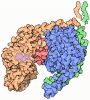
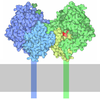
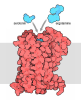

- Assembly
| Deposited unit | 
|
|---|---|
| 1 |
|
-Components
-Protein , 1 types, 1 molecules A
| #1: Protein | Mass: 41847.230 Da / Num. of mol.: 1 Source method: isolated from a genetically manipulated source Source: (gene. exp.) Homo sapiens (human) / Gene: PTGER1 / Production host:  Trichoplusia ni (cabbage looper) / References: UniProt: P34995 Trichoplusia ni (cabbage looper) / References: UniProt: P34995 |
|---|
-Guanine nucleotide-binding protein ... , 3 types, 3 molecules BCG
| #2: Protein | Mass: 41724.383 Da / Num. of mol.: 1 Source method: isolated from a genetically manipulated source Source: (gene. exp.) Homo sapiens (human) / Gene: GNAI1, GNAS, GNAS1, GSP, GNAQ, GAQ / Production host: Trichoplusia ni (cabbage looper)References: UniProt: P63096, UniProt: P63092, UniProt: P50148, Hydrolases; Acting on acid anhydrides; Acting on GTP to facilitate cellular and subcellular movement |
|---|---|
| #3: Protein | Mass: 37915.496 Da / Num. of mol.: 1 Source method: isolated from a genetically manipulated source Source: (gene. exp.) Homo sapiens (human) / Gene: GNB1 / Production host: Trichoplusia ni (cabbage looper) / References: UniProt: P62873 |
| #4: Protein | Mass: 7861.143 Da / Num. of mol.: 1 Source method: isolated from a genetically manipulated source Source: (gene. exp.) Homo sapiens (human) / Gene: GNG2 / Production host: Trichoplusia ni (cabbage looper) / References: UniProt: P59768 |
-Non-polymers , 2 types, 2 molecules 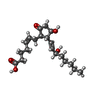

| #5: Chemical | ChemComp-P2E / (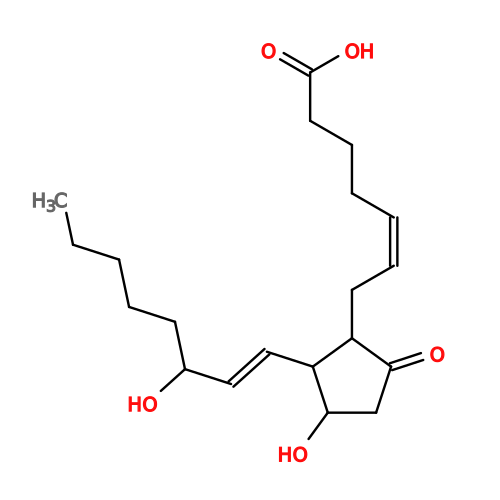 Mass: 352.465 Da / Num. of mol.: 1 / Source method: obtained synthetically / Formula: C20H32O5 Mass: 352.465 Da / Num. of mol.: 1 / Source method: obtained synthetically / Formula: C20H32O5 |
|---|---|
| #6: Water | ChemComp-HOH / Mass: 18.015 Da / Num. of mol.: 1 / Source method: isolated from a natural source / Formula: H2O |
-Details
| Has ligand of interest | N |
|---|---|
| Has protein modification | N |
-Experimental details
-Experiment
| Experiment | Method: ELECTRON MICROSCOPY |
|---|---|
| EM experiment | Aggregation state: PARTICLE / 3D reconstruction method: single particle reconstruction |
- Sample preparation
| Component | Name: PGE2-EP1-Gq complex / Type: COMPLEX / Entity ID: #1-#4 / Source: RECOMBINANT |
|---|---|
| Source (natural) | Organism: Homo sapiens (human) |
| Source (recombinant) | Organism: Trichoplusia ni (cabbage looper) |
| Buffer solution | pH: 7.5 |
| Specimen | Embedding applied: NO / Shadowing applied: NO / Staining applied: NO / Vitrification applied: YES |
| Vitrification | Cryogen name: ETHANE |
- Electron microscopy imaging
| Experimental equipment |  Model: Titan Krios / Image courtesy: FEI Company |
|---|---|
| Microscopy | Model: TFS KRIOS |
| Electron gun | Electron source:  FIELD EMISSION GUN / Accelerating voltage: 300 kV / Illumination mode: FLOOD BEAM FIELD EMISSION GUN / Accelerating voltage: 300 kV / Illumination mode: FLOOD BEAM |
| Electron lens | Mode: BRIGHT FIELD / Nominal defocus max: 5000 nm / Nominal defocus min: 1200 nm |
| Image recording | Electron dose: 30 e/Å2 / Film or detector model: GATAN K3 (6k x 4k) |
- Processing
| CTF correction | Type: NONE |
|---|---|
| 3D reconstruction | Resolution: 2.55 Å / Resolution method: FSC 0.143 CUT-OFF / Num. of particles: 543885 / Symmetry type: POINT |
