 Movie
Movie Controller

[English] 日本語
 Yorodumi
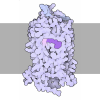
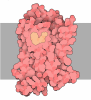
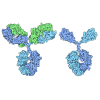
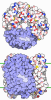
- PDB-9l9o: Cryo-EM structure of apo GPR50 with BRIL fusion, anti-BRIL Fab, a... -
+ Open data

- Basic information
| Entry | Database: PDB / ID: 9l9o | ||||||||||||||||||||||||||||||
|---|---|---|---|---|---|---|---|---|---|---|---|---|---|---|---|---|---|---|---|---|---|---|---|---|---|---|---|---|---|---|---|
| Title | Cryo-EM structure of apo GPR50 with BRIL fusion, anti-BRIL Fab, and anti-Fab Nb complex | ||||||||||||||||||||||||||||||
 Components Components |
| ||||||||||||||||||||||||||||||
 Keywords Keywords | MEMBRANE PROTEIN/IMMUNE SYSTEM / G-protein coupled receptor / MEMBRANE PROTEIN / MEMBRANE PROTEIN-IMMUNE SYSTEM complex | ||||||||||||||||||||||||||||||
| Function / homology |  Function and homology information Function and homology informationmelatonin receptor activity / electron transport chain / G protein-coupled receptor activity / cell-cell signaling / electron transfer activity / periplasmic space / postsynaptic density / iron ion binding / G protein-coupled receptor signaling pathway / heme binding ...melatonin receptor activity / electron transport chain / G protein-coupled receptor activity / cell-cell signaling / electron transfer activity / periplasmic space / postsynaptic density / iron ion binding / G protein-coupled receptor signaling pathway / heme binding / nucleus / plasma membrane Similarity search - Function | ||||||||||||||||||||||||||||||
| Biological species | synthetic construct (others) Homo sapiens (human) Homo sapiens (human)  Escherichia coli (E. coli) Escherichia coli (E. coli) | ||||||||||||||||||||||||||||||
| Method | ELECTRON MICROSCOPY / single particle reconstruction / cryo EM / Resolution: 2.98 Å | ||||||||||||||||||||||||||||||
 Authors Authors | Shin, J. / Cho, Y. | ||||||||||||||||||||||||||||||
| Funding support |  Korea, Republic Of, 1items Korea, Republic Of, 1items
| ||||||||||||||||||||||||||||||
 Citation Citation | Journal: Mol Cells / Year: 2026 Title: Structure of the melatonin-related orphan receptor, GPR50. Authors: Jinwoo Shin / Dongyoung Baek / Jihan Kim / Junhyeon Park / Eunyoung Jeong / Yoojoong Kim / Young Jin Kim / Yunje Cho / Abstract: GPR50 is an orphan G-protein-coupled receptors that belongs to the member of melatonin-related receptor family. GPR50 plays roles in various physiological processes, including cancer progression, ...GPR50 is an orphan G-protein-coupled receptors that belongs to the member of melatonin-related receptor family. GPR50 plays roles in various physiological processes, including cancer progression, Notch signaling, and insulin, leptin, and glucocorticoid signaling. GPR50 forms a complex with melatonin-receptor type 1A or 1B, and regulates signaling activity of melatonin-receptor type 1A. Although endogenous agonists have not been characterized, GPR50 may have its own signaling activity, which is undefined at present. In this study, in an attempt to characterize the orphan activity of GPR50, we determined the 3.4 Å structure of ligand-free GPR50 using cryo-electron microscopy. We showed that GPR50 exhibits moderate constitutive activity through interaction with Gα. The structure reveals a putative ligand-binding pocket and ligand access channels of GPR50 that differ from those of melatonin receptors. Based on the comparison with the AlphaFold3-predicted active state, we propose an activation mechanism of GPR50. Our findings could serve as a platform for identifying the synthetic or endogenous ligands of GPR50, providing insights into the elusive G-protein-dependent signaling of GPR50. | ||||||||||||||||||||||||||||||
| History |
|
- Structure visualization
| Structure viewer | Molecule: MolmilJmol/JSmol |
|---|
- Downloads & links
-Download
| PDBx/mmCIF format | 9l9o.cif.gz | 202.2 KB | Display | PDBx/mmCIF format |
|---|---|---|---|---|
| PDB format | pdb9l9o.ent.gz | 153.4 KB | Display | PDB format |
| PDBx/mmJSON format | 9l9o.json.gz | Tree view | PDBx/mmJSON format | |
| Others |  Other downloads Other downloads |
-Validation report
| Arichive directory | https://data.pdbj.org/pub/pdb/validation_reports/l9/9l9oftp://data.pdbj.org/pub/pdb/validation_reports/l9/9l9o | HTTPS FTP |
|---|
-Related structure data
| Related structure data |  62911MC M: map data used to model this data C: citing same article ( |
|---|---|
| Similar structure data |
-Links
 PDBj
PDBj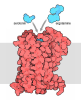
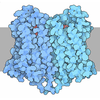
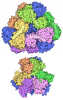
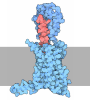
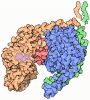
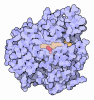
- Assembly
| Deposited unit | 
|
|---|---|
| 1 |
|
-Components
| #1: Antibody | Mass: 17727.252 Da / Num. of mol.: 1 Source method: isolated from a genetically manipulated source Source: (gene. exp.) synthetic construct (others) / Production host: Escherichia coli (E. coli) |
|---|---|
| #2: Antibody | Mass: 25638.656 Da / Num. of mol.: 1 Source method: isolated from a genetically manipulated source Source: (gene. exp.) Homo sapiens (human) / Production host:  Trichoplusia ni (cabbage looper) Trichoplusia ni (cabbage looper) |
| #3: Antibody | Mass: 31174.799 Da / Num. of mol.: 1 Source method: isolated from a genetically manipulated source Source: (gene. exp.) Homo sapiens (human) / Production host: Trichoplusia ni (cabbage looper) |
| #4: Protein | Mass: 59741.742 Da / Num. of mol.: 1 / Mutation: M29W,H124I,R128L Source method: isolated from a genetically manipulated source Source: (gene. exp.) Homo sapiens (human), (gene. exp.) Escherichia coli (E. coli)Gene: GPR50, cybC / Cell line (production host): HEK293 / Production host: Homo sapiens (human) / References: UniProt: Q13585, UniProt: P0ABE7 |
| Has protein modification | Y |
-Experimental details
-Experiment
| Experiment | Method: ELECTRON MICROSCOPY |
|---|---|
| EM experiment | Aggregation state: PARTICLE / 3D reconstruction method: single particle reconstruction |
- Sample preparation
| Component |
| ||||||||||||||||||||||||||||||
|---|---|---|---|---|---|---|---|---|---|---|---|---|---|---|---|---|---|---|---|---|---|---|---|---|---|---|---|---|---|---|---|
| Molecular weight | Value: 127.6 kDa/nm / Experimental value: YES | ||||||||||||||||||||||||||||||
| Source (natural) |
| ||||||||||||||||||||||||||||||
| Source (recombinant) |
| ||||||||||||||||||||||||||||||
| Buffer solution | pH: 7.5 | ||||||||||||||||||||||||||||||
| Specimen | Embedding applied: NO / Shadowing applied: NO / Staining applied: NO / Vitrification applied: YES | ||||||||||||||||||||||||||||||
| Vitrification | Cryogen name: ETHANE |
- Electron microscopy imaging
| Experimental equipment | 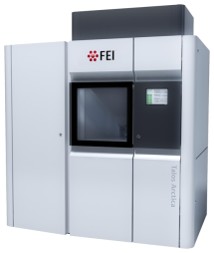 Model: Talos Arctica / Image courtesy: FEI Company |
|---|---|
| Microscopy | Model: FEI TALOS ARCTICA |
| Electron gun | Electron source: OTHER / Accelerating voltage: 300 kV / Illumination mode: OTHER |
| Electron lens | Mode: OTHER / Nominal defocus max: 2000 nm / Nominal defocus min: 1000 nm |
| Image recording | Electron dose: 65 e/Å2 / Film or detector model: GATAN K3 (6k x 4k) |
- Processing
| EM software |
| ||||||||||||||||||||||||
|---|---|---|---|---|---|---|---|---|---|---|---|---|---|---|---|---|---|---|---|---|---|---|---|---|---|
| CTF correction | Type: NONE | ||||||||||||||||||||||||
| 3D reconstruction | Resolution: 2.98 Å / Resolution method: FSC 0.143 CUT-OFF / Num. of particles: 608641 / Symmetry type: POINT | ||||||||||||||||||||||||
| Refinement | Highest resolution: 2.98 Å Stereochemistry target values: REAL-SPACE (WEIGHTED MAP SUM AT ATOM CENTERS) | ||||||||||||||||||||||||
| Refine LS restraints |
|
