 Movie
Movie Controller

[English] 日本語
 Yorodumi
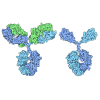
- EMDB-62911: Cryo-EM structure of apo GPR50 with BRIL fusion, anti-BRIL Fab, a... -
+ Open data

- Basic information
| Entry |  | |||||||||
|---|---|---|---|---|---|---|---|---|---|---|
| Title | Cryo-EM structure of apo GPR50 with BRIL fusion, anti-BRIL Fab, and anti-Fab Nb complex | |||||||||
 Map data Map data | ||||||||||
 Sample Sample |
| |||||||||
 Keywords Keywords | G-protein coupled receptor / MEMBRANE PROTEIN / MEMBRANE PROTEIN-IMMUNE SYSTEM complex | |||||||||
| Function / homology |  Function and homology information Function and homology informationmelatonin receptor activity / electron transport chain / G protein-coupled receptor activity / cell-cell signaling / electron transfer activity / periplasmic space / postsynaptic density / iron ion binding / G protein-coupled receptor signaling pathway / heme binding ...melatonin receptor activity / electron transport chain / G protein-coupled receptor activity / cell-cell signaling / electron transfer activity / periplasmic space / postsynaptic density / iron ion binding / G protein-coupled receptor signaling pathway / heme binding / nucleus / plasma membrane Similarity search - Function | |||||||||
| Biological species | synthetic construct (others) /  Homo sapiens (human) Homo sapiens (human) | |||||||||
| Method | single particle reconstruction / cryo EM / Resolution: 2.98 Å | |||||||||
 Authors Authors | Shin J / Cho Y | |||||||||
| Funding support |  Korea, Republic Of, 1 items Korea, Republic Of, 1 items
| |||||||||
 Citation Citation | Journal: Mol Cells / Year: 2026 Title: Structure of the melatonin-related orphan receptor, GPR50. Authors: Jinwoo Shin / Dongyoung Baek / Jihan Kim / Junhyeon Park / Eunyoung Jeong / Yoojoong Kim / Young Jin Kim / Yunje Cho / Abstract: GPR50 is an orphan G-protein-coupled receptors that belongs to the member of melatonin-related receptor family. GPR50 plays roles in various physiological processes, including cancer progression, ...GPR50 is an orphan G-protein-coupled receptors that belongs to the member of melatonin-related receptor family. GPR50 plays roles in various physiological processes, including cancer progression, Notch signaling, and insulin, leptin, and glucocorticoid signaling. GPR50 forms a complex with melatonin-receptor type 1A or 1B, and regulates signaling activity of melatonin-receptor type 1A. Although endogenous agonists have not been characterized, GPR50 may have its own signaling activity, which is undefined at present. In this study, in an attempt to characterize the orphan activity of GPR50, we determined the 3.4 Å structure of ligand-free GPR50 using cryo-electron microscopy. We showed that GPR50 exhibits moderate constitutive activity through interaction with Gα. The structure reveals a putative ligand-binding pocket and ligand access channels of GPR50 that differ from those of melatonin receptors. Based on the comparison with the AlphaFold3-predicted active state, we propose an activation mechanism of GPR50. Our findings could serve as a platform for identifying the synthetic or endogenous ligands of GPR50, providing insights into the elusive G-protein-dependent signaling of GPR50. | |||||||||
| History |
|
- Structure visualization
| Supplemental images |
|---|

- Downloads & links
-EMDB archive
| Map data | emd_62911.map.gz | 230 MB | EMDB map data format | |
|---|---|---|---|---|
| Header (meta data) | emd-62911-v30.xmlemd-62911.xml | 28.5 KB 28.5 KB | Display Display | EMDB header |
| Images |  emd_62911.png emd_62911.png | 166.6 KB | ||
| Filedesc metadata | emd-62911.cif.gz | 6.6 KB | ||
| Others | emd_62911_additional_1.map.gzemd_62911_additional_2.map.gzemd_62911_additional_3.map.gzemd_62911_half_map_1.map.gzemd_62911_half_map_2.map.gz | 218.9 MB 218.8 MB 218.1 MB 226.9 MB 226.9 MB | ||
| Archive directory |  https://data.pdbj.org/pub/emdb/structures/EMD-62911ftp://data.pdbj.org/pub/emdb/structures/EMD-62911 https://data.pdbj.org/pub/emdb/structures/EMD-62911ftp://data.pdbj.org/pub/emdb/structures/EMD-62911 | HTTPS FTP |
-Related structure data
| Related structure data |  9l9oMC M: atomic model generated by this map C: citing same article ( |
|---|---|
| Similar structure data |
-Links
| EMDB pages | EMDB (EBI/PDBe) / EMDataResource |
|---|---|
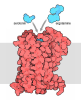
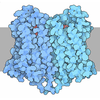
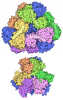
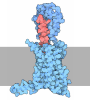
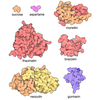
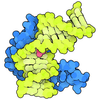
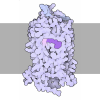
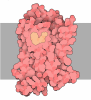
| Related items in Molecule of the Month |
-Map
| File | Download / File: emd_62911.map.gz / Format: CCP4 / Size: 244.1 MB / Type: IMAGE STORED AS FLOATING POINT NUMBER (4 BYTES) | ||||||||||||||||||||||||||||||||||||
|---|---|---|---|---|---|---|---|---|---|---|---|---|---|---|---|---|---|---|---|---|---|---|---|---|---|---|---|---|---|---|---|---|---|---|---|---|---|
| Projections & slices | Image control
Images are generated by Spider. | ||||||||||||||||||||||||||||||||||||
| Voxel size | X=Y=Z: 0.85124 Å | ||||||||||||||||||||||||||||||||||||
| Density |
| ||||||||||||||||||||||||||||||||||||
| Symmetry | Space group: 1 | ||||||||||||||||||||||||||||||||||||
| Details | EMDB XML:
|
 Z (Sec.)
 Y (Row.)
 X (Col.)


-Supplemental data
-Additional map: #3
| File | emd_62911_additional_1.map | ||||||||||||
|---|---|---|---|---|---|---|---|---|---|---|---|---|---|
| Projections & Slices |
| ||||||||||||
| Density Histograms |


-Additional map: #2
| File | emd_62911_additional_2.map | ||||||||||||
|---|---|---|---|---|---|---|---|---|---|---|---|---|---|
| Projections & Slices |
| ||||||||||||
| Density Histograms |


-Additional map: #1
| File | emd_62911_additional_3.map | ||||||||||||
|---|---|---|---|---|---|---|---|---|---|---|---|---|---|
| Projections & Slices |
| ||||||||||||
| Density Histograms |


-Half map: #2
| File | emd_62911_half_map_1.map | ||||||||||||
|---|---|---|---|---|---|---|---|---|---|---|---|---|---|
| Projections & Slices |
| ||||||||||||
| Density Histograms |


-Half map: #1
| File | emd_62911_half_map_2.map | ||||||||||||
|---|---|---|---|---|---|---|---|---|---|---|---|---|---|
| Projections & Slices |
| ||||||||||||
| Density Histograms |


- Sample components
-Entire : apo GPR50 with BRIL fusion, anti-BRIL Fab, and anti-Fab Nb complex
| Entire | Name: apo GPR50 with BRIL fusion, anti-BRIL Fab, and anti-Fab Nb complex |
|---|---|
| Components |
|
-Supramolecule #1: apo GPR50 with BRIL fusion, anti-BRIL Fab, and anti-Fab Nb complex
| Supramolecule | Name: apo GPR50 with BRIL fusion, anti-BRIL Fab, and anti-Fab Nb complex type: complex / ID: 1 / Parent: 0 / Macromolecule list: all |
|---|---|
| Molecular weight | Theoretical: 127.6 kDa/nm |
-Supramolecule #2: anti-Fab Nb
| Supramolecule | Name: anti-Fab Nb / type: complex / ID: 2 / Parent: 1 / Macromolecule list: #1 |
|---|---|
| Source (natural) | Organism: synthetic construct (others) |
-Supramolecule #3: anti-BRIL Fab
| Supramolecule | Name: anti-BRIL Fab / type: complex / ID: 3 / Parent: 1 / Macromolecule list: #2-#3 |
|---|---|
| Source (natural) | Organism: Homo sapiens (human) |
-Supramolecule #4: GPR50
| Supramolecule | Name: GPR50 / type: complex / ID: 4 / Parent: 1 / Macromolecule list: #4 |
|---|---|
| Source (natural) | Organism: Homo sapiens (human) |
-Macromolecule #1: anti-Fab Nb
| Macromolecule | Name: anti-Fab Nb / type: protein_or_peptide / ID: 1 / Number of copies: 1 / Enantiomer: LEVO |
|---|---|
| Source (natural) | Organism: synthetic construct (others) |
| Molecular weight | Theoretical: 17.727252 KDa |
| Recombinant expression | Organism:   Escherichia coli (E. coli) Escherichia coli (E. coli) |
| Sequence | String: MGSSHHHHHH SSGLVPRGSH MGSQVQLQES GGGLVQPGGS LRLSCAASGR TISRYAMSWF RQAPGKEREF VAVARRSGDG AFYADSVQG RFTVSRDDAK NTVYLQMNSL KPEDTAVYYC AIDSDTFYSG SYDYWGQGTQ VTVSSGGDDD DKSNSWSHPQ F EK |
-Macromolecule #2: anti-BRIL Fab Light Chain
| Macromolecule | Name: anti-BRIL Fab Light Chain / type: protein_or_peptide / ID: 2 / Number of copies: 1 / Enantiomer: LEVO |
|---|---|
| Source (natural) | Organism: Homo sapiens (human) |
| Molecular weight | Theoretical: 25.638656 KDa |
| Recombinant expression | Organism:  Trichoplusia ni (cabbage looper) Trichoplusia ni (cabbage looper) |
| Sequence | String: MVSAIVLYVL LAAAAHSAFA ADPSDIQMTQ SPSSLSASVG DRVTITCRAS QSVSSAVAWY QQKPGKAPKL LIYSASSLYS GVPSRFSGS RSGTDFTLTI SSLQPEDFAT YYCQQYLYYS LVTFGQGTKV EIKRTVAAPS VFIFPPSDSQ LKSGTASVVC L LNNFYPRE ...String: MVSAIVLYVL LAAAAHSAFA ADPSDIQMTQ SPSSLSASVG DRVTITCRAS QSVSSAVAWY QQKPGKAPKL LIYSASSLYS GVPSRFSGS RSGTDFTLTI SSLQPEDFAT YYCQQYLYYS LVTFGQGTKV EIKRTVAAPS VFIFPPSDSQ LKSGTASVVC L LNNFYPRE AKVQWKVDNA LQSGNSQESV TEQDSKDSTY SLSSTLTLSK ADYEKHKVYA CEVTHQGLSS PVTKSFNRG |
-Macromolecule #3: anti-BRIL Fab Heavy Chain
| Macromolecule | Name: anti-BRIL Fab Heavy Chain / type: protein_or_peptide / ID: 3 / Number of copies: 1 / Enantiomer: LEVO |
|---|---|
| Source (natural) | Organism: Homo sapiens (human) |
| Molecular weight | Theoretical: 31.174799 KDa |
| Recombinant expression | Organism: Trichoplusia ni (cabbage looper) |
| Sequence | String: MVSAIVLYVL LAAAAHSAFA ADPEISEVQL VESGGGLVQP GGSLRLSCAA SGFNVVDFSL HWVRQAPGKG LEWVAYISSS SGSTSYADS VKGRFTISAD TSKNTAYLQM NSLRAEDTAV YYCARWGYWP GEPWWKAFDY WGQGTLVTVS SASTKGPSVF P LAPSSKST ...String: MVSAIVLYVL LAAAAHSAFA ADPEISEVQL VESGGGLVQP GGSLRLSCAA SGFNVVDFSL HWVRQAPGKG LEWVAYISSS SGSTSYADS VKGRFTISAD TSKNTAYLQM NSLRAEDTAV YYCARWGYWP GEPWWKAFDY WGQGTLVTVS SASTKGPSVF P LAPSSKST SGGTAALGCL VKDYFPEPVT VSWNSGALTS GVHTFPAVLQ SSGLYSLSSV VTVPSSSLGT QTYICNVNHK PS NTKVDKK VEPKSHHHHH HHHLVPRGSE NLYFQSNSPS RLEEELRRRL TE |
-Macromolecule #4: Melatonin-related receptor,Soluble cytochrome b562
| Macromolecule | Name: Melatonin-related receptor,Soluble cytochrome b562 / type: protein_or_peptide / ID: 4 / Number of copies: 1 / Enantiomer: LEVO |
|---|---|
| Source (natural) | Organism: Homo sapiens (human) |
| Molecular weight | Theoretical: 59.741742 KDa |
| Recombinant expression | Organism: Homo sapiens (human) |
| Sequence | String: MRLLTALFAY FIVALILAFS VSAKSMGPTL AVPTPYGCIG CKLPQPEYPP ALIIFMFCAM VITIVVDLIG NSMVILAVTK NKKLRNSGN IFVVSLSVAD MLVAIYPYPL MLHAMSIGGW DLSQLQCQMV GFITGLSVVG SIFNIVAIAI NRYCYICHSL Q YERIFSVR ...String: MRLLTALFAY FIVALILAFS VSAKSMGPTL AVPTPYGCIG CKLPQPEYPP ALIIFMFCAM VITIVVDLIG NSMVILAVTK NKKLRNSGN IFVVSLSVAD MLVAIYPYPL MLHAMSIGGW DLSQLQCQMV GFITGLSVVG SIFNIVAIAI NRYCYICHSL Q YERIFSVR NTCIYLVITW IMTVLAVLPN MYIGTIEYDP RTYTCIFNYL NNPVFTVTIV CIHFVLPLLI VGFCYVRIWT KV LAARRQL ADLEDNWETL NDNLKVIEKA DNAAQVKDAL TKMRAAALDA QKATPPKLED KSPDSPEMKD FRHGFDILVG QID DALKLA NEGKVKEAQA AAEQLKTTRN AYIQKYLERA RSTLDNQLAE VRNFLTMFVI FLLFAVCWCP INVLTVLVAV SPKE MAGKI PNWLYLAAYF IAYFNSCLNA VIYGLLNENF RREYWTIFHA MRHPIIFFSG LISDIREMQE ARTLARARAH ARDQA REQD RAHACRGRGG SLEVLFQGPG SWSHPQFEKG GGSGGGSGGS AWSHPQFEK UniProtKB: Melatonin-related receptor, Soluble cytochrome b562, Melatonin-related receptor |
-Experimental details
-Structure determination
| Method | cryo EM |
|---|---|
 Processing Processing | single particle reconstruction |
| Aggregation state | particle |
-Sample preparation
| Buffer | pH: 7.5 |
|---|---|
| Vitrification | Cryogen name: ETHANE |
- Electron microscopy
| Microscope | FEI TALOS ARCTICA |
|---|---|
| Image recording | Film or detector model: GATAN K3 (6k x 4k) / Average electron dose: 65.0 e/Å2 |
| Electron beam | Acceleration voltage: 300 kV / Electron source: OTHER |
| Electron optics | Illumination mode: OTHER / Imaging mode: OTHER / Nominal defocus max: 2.0 µm / Nominal defocus min: 1.0 µm |
| Experimental equipment | 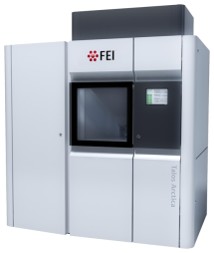 Model: Talos Arctica / Image courtesy: FEI Company |
