 Movie
Movie Controller

[English] 日本語
 Yorodumi
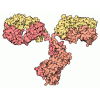
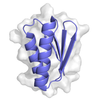
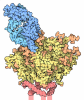
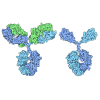
- PDB-9kwy: Cryo-EM structure of SARS-CoV-2 RBD in complex with ACE2 and mAb 1C4 -
+ Open data

- Basic information
| Entry | Database: PDB / ID: 9kwy | |||||||||||||||||||||
|---|---|---|---|---|---|---|---|---|---|---|---|---|---|---|---|---|---|---|---|---|---|---|
| Title | Cryo-EM structure of SARS-CoV-2 RBD in complex with ACE2 and mAb 1C4 | |||||||||||||||||||||
 Components Components |
| |||||||||||||||||||||
 Keywords Keywords | VIRAL PROTEIN/HYDROLASE / SARS-CoV-2 / Neutralizing antibody / Cryo-EM / VIRAL PROTEIN-HYDROLASE complex | |||||||||||||||||||||
| Function / homology |  Function and homology information Function and homology informationangiotensin-converting enzyme 2 / positive regulation of L-proline import across plasma membrane / Hydrolases; Acting on peptide bonds (peptidases); Metallocarboxypeptidases / angiotensin-mediated drinking behavior / positive regulation of gap junction assembly / tryptophan transport / regulation of cardiac conduction / transporter activator activity / peptidyl-dipeptidase activity / amino acid import across plasma membrane ...angiotensin-converting enzyme 2 / positive regulation of L-proline import across plasma membrane / Hydrolases; Acting on peptide bonds (peptidases); Metallocarboxypeptidases / angiotensin-mediated drinking behavior / positive regulation of gap junction assembly / tryptophan transport / regulation of cardiac conduction / transporter activator activity / peptidyl-dipeptidase activity / amino acid import across plasma membrane / : / angiotensin maturation / metallocarboxypeptidase activity / positive regulation of cardiac muscle contraction / virus receptor activity / brush border membrane / metallopeptidase activity / cilium / regulation of inflammatory response / symbiont-mediated disruption of host tissue / Maturation of spike protein / host cell surface / endopeptidase activity / Translation of Structural Proteins / Virion Assembly and Release / Lectin pathway of complement activation / host extracellular region / symbiont-mediated-mediated suppression of host tetherin activity / structural constituent of virion / Induction of Cell-Cell Fusion / positive regulation of viral entry into host cell / Initial triggering of complement / membrane fusion / host cell endoplasmic reticulum-Golgi intermediate compartment membrane / Attachment and Entry / entry receptor-mediated virion attachment to host cell / receptor-mediated virion attachment to host cell / host cell surface receptor binding / symbiont-mediated suppression of host innate immune response / endocytosis involved in viral entry into host cell / receptor ligand activity / fusion of virus membrane with host plasma membrane / fusion of virus membrane with host endosome membrane / viral envelope / symbiont entry into host cell / virion attachment to host cell / host cell plasma membrane / SARS-CoV-2 activates/modulates innate and adaptive immune responses / virion membrane / negative regulation of transcription by RNA polymerase II / cell surface / metal ion binding / membrane / identical protein binding / plasma membrane / cytoplasm Similarity search - Function | |||||||||||||||||||||
| Biological species |  Homo sapiens (human) Homo sapiens (human) 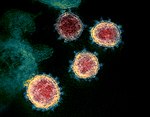 Severe acute respiratory syndrome coronavirus 2 Severe acute respiratory syndrome coronavirus 2  Mus musculus (house mouse) Mus musculus (house mouse) | |||||||||||||||||||||
| Method | ELECTRON MICROSCOPY / single particle reconstruction / cryo EM / Resolution: 2.82 Å | |||||||||||||||||||||
 Authors Authors | Sun, H. / Jiang, Y. / Li, S. / Zheng, Q. | |||||||||||||||||||||
| Funding support | 1items
| |||||||||||||||||||||
 Citation Citation | Journal: PLoS Pathog / Year: 2025 Title: Engineering a multivalent antibody nanoparticle to overcome SARS-CoV-2 Omicron immune evasion. Authors: Hui Sun / Yanan Jiang / Miaolin Lan / Ming Zhou / Gangshun Yi / Juan Shen / Tingting Deng / Liqin Liu / Yang Huang / Yu Li / Jinfu Su / Yanling Lin / Zhenqin Chen / Lizhi Zhou / Tingting Li ...Authors: Hui Sun / Yanan Jiang / Miaolin Lan / Ming Zhou / Gangshun Yi / Juan Shen / Tingting Deng / Liqin Liu / Yang Huang / Yu Li / Jinfu Su / Yanling Lin / Zhenqin Chen / Lizhi Zhou / Tingting Li / Hai Yu / Tong Cheng / Yali Zhang / Lunzhi Yuan / Shaowei Li / Ying Gu / Peijun Zhang / Ningshao Xia / Qingbing Zheng /   Abstract: The rapid evolution of SARS-CoV-2 and the subsequent emergence of Omicron subvariants pose significant challenges to the efficacy of existing vaccines and therapeutics, including those previously ...The rapid evolution of SARS-CoV-2 and the subsequent emergence of Omicron subvariants pose significant challenges to the efficacy of existing vaccines and therapeutics, including those previously reported most broad neutralizing antibodies (bnAbs). Here, we investigated the molecular basis of the altered neutralization profile of a bnAb, 1C4, against recent variants. 1C4 is effective against early variants from Alpha to Omicron BQ.1, but is circumvented by BQ.1.1, XBB and thereafter variants, primarily due to an additional R346T mutation that diminishes its binding affinity. Cryo-electron microscopy analysis revealed that despite the loss of neutralizing potency, 1C4 retained residual binding to the spike protein of immune-evasive variants such as XBB, which harbor altered receptor-binding domain (RBD). Furthermore, 1C4 exhibited a diminished capacity to inhibit ACE2 engagement with Omicron variants, amplifying the intricacies of viral immune evasion tactics. To address this, we employed the mi3-SpyCatcher-based nanoparticle to polymerize 1C4 (mi3-1C4), which reestablished the neutralization potency against recent variants by enhancing avidity via multivalent binding. Such multivalent binding can promote efficient spike aggregation as well as viral cross-linking, thereby providing enhanced protection against both the infection of Beta and XBB variants in a hamster model. Together, our findings delineate the molecular landscape of immune evasion by neutralizing antibodies and provide strategic insight for the adaptation of antibody engineering to keep pace with viral evolution. | |||||||||||||||||||||
| History |
|
- Structure visualization
| Structure viewer | Molecule: MolmilJmol/JSmol |
|---|
- Downloads & links
-Download
| PDBx/mmCIF format | 9kwy.cif.gz | 183.8 KB | Display | PDBx/mmCIF format |
|---|---|---|---|---|
| PDB format | pdb9kwy.ent.gz | 137.4 KB | Display | PDB format |
| PDBx/mmJSON format | 9kwy.json.gz | Tree view | PDBx/mmJSON format | |
| Others |  Other downloads Other downloads |
-Validation report
| Arichive directory | https://data.pdbj.org/pub/pdb/validation_reports/kw/9kwyftp://data.pdbj.org/pub/pdb/validation_reports/kw/9kwy | HTTPS FTP |
|---|
-Related structure data
| Related structure data |  62620MC  9kvjC  9kvkC  9kvqC  9kvtC  9w14C M: map data used to model this data C: citing same article ( |
|---|---|
| Similar structure data |


-Links
 PDBj
PDBj
- Assembly
| Deposited unit | 
|
|---|---|
| 1 |
|
-Components
-Protein , 2 types, 2 molecules AG
| #1: Protein | Mass: 67344.008 Da / Num. of mol.: 1 Source method: isolated from a genetically manipulated source Details: Sequence reference for Homo sapiens (9606) is not available in UniProt at the time of biocuration. Current sequence reference is from UniProt ID Q56H28. Source: (gene. exp.) Homo sapiens (human) / Gene: ACE2 / Production host: Homo sapiens (human) / References: UniProt: Q56H28 |
|---|---|
| #2: Protein | Mass: 21026.541 Da / Num. of mol.: 1 Source method: isolated from a genetically manipulated source Source: (gene. exp.) Severe acute respiratory syndrome coronavirus 2Gene: S, 2 / Production host: Homo sapiens (human) / References: UniProt: P0DTC2 |
-Antibody , 2 types, 2 molecules BC
| #3: Antibody | Mass: 11642.854 Da / Num. of mol.: 1 / Source method: isolated from a natural source / Source: (natural) Mus musculus (house mouse) |
|---|---|
| #4: Antibody | Mass: 13384.900 Da / Num. of mol.: 1 / Source method: isolated from a natural source / Source: (natural) Mus musculus (house mouse) |
-Sugars , 2 types, 3 molecules 
| #5: Polysaccharide | beta-D-mannopyranose-(1-4)-2-acetamido-2-deoxy-beta-D-glucopyranose-(1-4)-[alpha-L-fucopyranose-(1- ...beta-D-mannopyranose-(1-4)-2-acetamido-2-deoxy-beta-D-glucopyranose-(1-4)-[alpha-L-fucopyranose-(1-6)]2-acetamido-2-deoxy-beta-D-glucopyranose Source method: isolated from a genetically manipulated source |
|---|---|
| #6: Sugar | 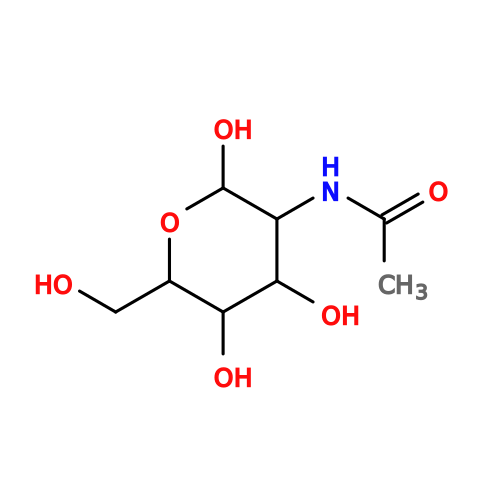 Type: D-saccharide, beta linking / Mass: 221.208 Da / Num. of mol.: 2 / Source method: obtained synthetically / Formula: C8H15NO6 / Feature type: SUBJECT OF INVESTIGATION Type: D-saccharide, beta linking / Mass: 221.208 Da / Num. of mol.: 2 / Source method: obtained synthetically / Formula: C8H15NO6 / Feature type: SUBJECT OF INVESTIGATION |
-Details
| Has ligand of interest | Y |
|---|---|
| Has protein modification | Y |
-Experimental details
-Experiment
| Experiment | Method: ELECTRON MICROSCOPY |
|---|---|
| EM experiment | Aggregation state: PARTICLE / 3D reconstruction method: single particle reconstruction |
- Sample preparation
| Component |
| ||||||||||||||||||||||||||||||
|---|---|---|---|---|---|---|---|---|---|---|---|---|---|---|---|---|---|---|---|---|---|---|---|---|---|---|---|---|---|---|---|
| Source (natural) |
| ||||||||||||||||||||||||||||||
| Source (recombinant) | Organism: Homo sapiens (human) | ||||||||||||||||||||||||||||||
| Buffer solution | pH: 7.4 | ||||||||||||||||||||||||||||||
| Specimen | Embedding applied: NO / Shadowing applied: NO / Staining applied: NO / Vitrification applied: YES | ||||||||||||||||||||||||||||||
| Vitrification | Cryogen name: ETHANE |
- Electron microscopy imaging
| Experimental equipment |  Model: Titan Krios / Image courtesy: FEI Company |
|---|---|
| Microscopy | Model: TFS KRIOS |
| Electron gun | Electron source:  FIELD EMISSION GUN / Accelerating voltage: 300 kV / Illumination mode: FLOOD BEAM FIELD EMISSION GUN / Accelerating voltage: 300 kV / Illumination mode: FLOOD BEAM |
| Electron lens | Mode: BRIGHT FIELD / Nominal defocus max: 1200 nm / Nominal defocus min: 600 nm |
| Image recording | Electron dose: 48 e/Å2 / Film or detector model: GATAN K3 (6k x 4k) |
- Processing
| CTF correction | Type: PHASE FLIPPING AND AMPLITUDE CORRECTION |
|---|---|
| 3D reconstruction | Resolution: 2.82 Å / Resolution method: FSC 0.143 CUT-OFF / Num. of particles: 182640 / Symmetry type: POINT |
