[English] 日本語
Yorodumi
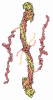
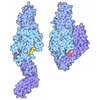
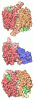
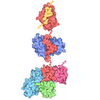
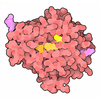
- PDB-8w8m: Cryo-EM structure of helical filament of MyD88 TIR -

+
Open data


ID or keywords:

Loading...

-
Basic information

Entry
Database: PDB / ID: 8w8m
TitleCryo-EM structure of helical filament of MyD88 TIR
ComponentsMyeloid differentiation primary response protein MyD88
KeywordsIMMUNE SYSTEM / signaling protein / innate immunity
Function / homology
Function and homology information


regulation of chemokine (C-X-C motif) ligand 1 production / MyD88 deficiency (TLR5) / Toll binding / toll-like receptor 5 signaling pathway / induced systemic resistance / ATP-dependent histone chaperone activity / TIR domain binding / regulation of chemokine (C-X-C motif) ligand 2 production / neutrophil-mediated killing of bacterium / leukocyte activation involved in inflammatory response ...regulation of chemokine (C-X-C motif) ligand 1 production / MyD88 deficiency (TLR5) / Toll binding / toll-like receptor 5 signaling pathway / induced systemic resistance / ATP-dependent histone chaperone activity / TIR domain binding / regulation of chemokine (C-X-C motif) ligand 2 production / neutrophil-mediated killing of bacterium / leukocyte activation involved in inflammatory response / response to molecule of fungal origin / toll-like receptor 8 signaling pathway / response to peptidoglycan / positive regulation of lymphocyte proliferation / positive regulation of interleukin-23 production / regulation of neutrophil migration / IRAK4 deficiency (TLR5) / establishment of endothelial intestinal barrier / MyD88 dependent cascade initiated on endosome / DEx/H-box helicases activate type I IFN and inflammatory cytokines production / cellular response to oxidised low-density lipoprotein particle stimulus / TRAF6 mediated induction of NFkB and MAP kinases upon TLR7/8 or 9 activation / MyD88 cascade initiated on plasma membrane / Toll-like receptor binding / Toll signaling pathway / toll-like receptor TLR6:TLR2 signaling pathway / neutrophil activation involved in immune response / interleukin-33-mediated signaling pathway / microglia differentiation / RIP-mediated NFkB activation via ZBP1 / MyD88 deficiency (TLR2/4) / death receptor binding / interleukin-1 receptor binding / positive regulation of cytokine production involved in inflammatory response / interleukin-1-mediated signaling pathway / response to amine / IRAK4 deficiency (TLR2/4) / positive regulation of macrophage cytokine production / 3'-UTR-mediated mRNA stabilization / MyD88:MAL(TIRAP) cascade initiated on plasma membrane / extrinsic component of plasma membrane / toll-like receptor 4 signaling pathway / MyD88-dependent toll-like receptor signaling pathway / extrinsic component of cytoplasmic side of plasma membrane / skin development / type I interferon-mediated signaling pathway / defense response to protozoan / positive regulation of interleukin-17 production / immunoglobulin mediated immune response / positive regulation of NLRP3 inflammasome complex assembly / response to amino acid / phagocytosis / JNK cascade / positive regulation of chemokine production / positive regulation of type I interferon production / signaling adaptor activity / positive regulation of smooth muscle cell proliferation / lipopolysaccharide-mediated signaling pathway / p75NTR recruits signalling complexes / response to interleukin-1 / TRAF6 mediated IRF7 activation in TLR7/8 or 9 signaling / : / positive regulation of interleukin-1 beta production / positive regulation of interleukin-8 production / cellular response to mechanical stimulus / positive regulation of interleukin-6 production / positive regulation of JNK cascade / Interleukin-1 signaling / positive regulation of tumor necrosis factor production / PIP3 activates AKT signaling / PI5P, PP2A and IER3 Regulate PI3K/AKT Signaling / ER-Phagosome pathway / cellular response to lipopolysaccharide / regulation of inflammatory response / gene expression / defense response to virus / molecular adaptor activity / response to ethanol / positive regulation of canonical NF-kappaB signal transduction / cell surface receptor signaling pathway / endosome membrane / defense response to bacterium / defense response to Gram-positive bacterium / innate immune response / apoptotic process / positive regulation of gene expression / cell surface / signal transduction / positive regulation of transcription by RNA polymerase II / protein-containing complex / identical protein binding / nucleus / plasma membrane / cytoplasm / cytosol
Similarity search - Function
Myeloid differentiation primary response protein MyD88 / MyD88, death domain / TIR domain / Death domain profile. / DEATH domain, found in proteins involved in cell death (apoptosis). / Death domain / Death domain / Toll - interleukin 1 - resistance / TIR domain profile. / Toll/interleukin-1 receptor homology (TIR) domain ...Myeloid differentiation primary response protein MyD88 / MyD88, death domain / TIR domain / Death domain profile. / DEATH domain, found in proteins involved in cell death (apoptosis). / Death domain / Death domain / Toll - interleukin 1 - resistance / TIR domain profile. / Toll/interleukin-1 receptor homology (TIR) domain / Toll/interleukin-1 receptor homology (TIR) domain superfamily / Death-like domain superfamily
Similarity search - Domain/homology
Myeloid differentiation primary response protein MyD88
Similarity search - Component
Biological speciesHomo sapiens (human)
MethodELECTRON MICROSCOPY / single particle reconstruction / cryo EM / Resolution: 3.28 Å
AuthorsKasai, K. / Imamura, K. / Narita, A. / Makino, F. / Miyata, T. / Kato, T. / Namba, K. / Onishi, H. / Tochio, H.
Funding support Japan, 2items
OrganizationGrant numberCountry
Japan Science and TechnologyJPMJCR1762 Japan
Japan Society for the Promotion of Science (JSPS)16H04752 Japan
Citation
Journal: Nat Commun / Year: 2026
Title: Structural Mechanism of Receptor-Triggered MyD88 Oligomeric Assembly in Innate Immune Signaling.
Authors: Kazuki Kasai / Kayo Imamura / Masatoshi Uno / Shiho Nukui / Naotaka Sekiyama / Tomoko Miyata / Fumiaki Makino / Ryusei Yamada / Yoshiki Takahashi / Noriyuki Kodera / Keiichi Namba / Hidenori ...Authors: Kazuki Kasai / Kayo Imamura / Masatoshi Uno / Shiho Nukui / Naotaka Sekiyama / Tomoko Miyata / Fumiaki Makino / Ryusei Yamada / Yoshiki Takahashi / Noriyuki Kodera / Keiichi Namba / Hidenori Ohnishi / Akihiro Narita / Hiroki Konno / Hidehito Tochio /
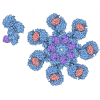
Abstract: MyD88 plays a pivotal role in Toll-like receptor (TLR) and interleukin-1 family signaling through its oligomerization upon receptor activation, leading to downstream protein recruitment. The ...MyD88 plays a pivotal role in Toll-like receptor (TLR) and interleukin-1 family signaling through its oligomerization upon receptor activation, leading to downstream protein recruitment. The Toll/interleukin-1 receptor domain of MyD88 (TIR) is responsible for this receptor-mediated oligomerization, but the detailed mechanism involved remains elusive. Here we investigate the structure of TIR oligomers and their interactions with TLRs. Cryoelectron microscopy reveals that tandemly arrayed TIR subunits form an antiparallel double-stranded filament that can further form rings and cylindrical filaments. Moreover, the self-assembly of TIR in vitro is markedly accelerated by dimeric rather than monomeric receptor TIRs, possibly reflecting the signal initiation step in vivo. High-speed atomic force microscopy further captures the dynamic processes of oligomerization of TIR, in addition to its direct interaction with the receptor TIRs. These results reveal a regulatory mechanism of TIR oligomerization underlying the signal initiation step.
#1: Journal: Biorxiv / Year: 2024
Title: From Monomers to Oligomers: Structural Mechanism of Receptor-Triggered MyD88 Assembly in Innate Immune Signaling
Authors: Kasai, K. / Imamura, K. / Uno, M. / Sekiyama, N. / Miyata, T. / Makino, F. / Yamada, R. / Takahashi, Y. / Kodera, N. / Namba, K. / Ohnishi, H. / Narita, A. / Konno, H. / Tochio, H.
History
DepositionSep 4, 2023Deposition site: PDBJ / Processing site: PDBJ
Revision 1.0Sep 4, 2024Provider: repository / Type: Initial release
Revision 1.0Sep 4, 2024Data content type: EM metadata / Data content type: EM metadata / Provider: repository / Type: Initial release
Revision 1.0Sep 4, 2024Data content type: Half map / Part number: 1 / Data content type: Half map / Provider: repository / Type: Initial release
Revision 1.0Sep 4, 2024Data content type: Half map / Part number: 2 / Data content type: Half map / Provider: repository / Type: Initial release
Revision 1.0Sep 4, 2024Data content type: Image / Data content type: Image / Provider: repository / Type: Initial release
Revision 1.0Sep 4, 2024Data content type: Primary map / Data content type: Primary map / Provider: repository / Type: Initial release
Revision 1.0Sep 4, 2024Data content type: Half map / Part number: 1 / Data content type: Half map / Provider: repository / Type: Initial release
Revision 1.0Sep 4, 2024Data content type: Half map / Part number: 2 / Data content type: Half map / Provider: repository / Type: Initial release
Revision 1.0Sep 4, 2024Data content type: Image / Data content type: Image / Provider: repository / Type: Initial release
Revision 1.0Sep 4, 2024Data content type: Primary map / Data content type: Primary map / Provider: repository / Type: Initial release
Revision 1.1Mar 26, 2025Group: Data collection / Database references / Structure summary
Category: citation / citation_author ...citation / citation_author / em_admin / pdbx_entry_details
Item: _citation.country / _citation.journal_abbrev ..._citation.country / _citation.journal_abbrev / _citation.journal_id_CSD / _citation.journal_id_ISSN / _citation.pdbx_database_id_DOI / _citation.title / _citation.year / _em_admin.last_update
Revision 1.2May 6, 2026Group: Data collection / Data processing / Database references
Category: citation / citation_author ...citation / citation_author / em_3d_reconstruction / em_admin
Item: _em_3d_reconstruction.num_particles / _em_admin.last_update
Revision 1.1May 6, 2026Data content type: EM metadata / Data content type: EM metadata / EM metadata / EM metadata
Group: Data processing / Database references / Experimental summary
Data content type: EM metadata / EM metadata ...EM metadata / EM metadata / EM metadata / EM metadata
Category: citation / citation_author ...citation / citation_author / em_3d_reconstruction / em_admin
Data content type: EM metadata / EM metadata
Item: _em_3d_reconstruction.num_particles / _em_admin.last_update

-
Structure visualization

Structure viewerMolecule:
MolmilJmol/JSmol

Downloads & links

-
Assembly

Deposited unit
D2: Myeloid differentiation primary response protein MyD88
D3: Myeloid differentiation primary response protein MyD88
E1: Myeloid differentiation primary response protein MyD88
E2: Myeloid differentiation primary response protein MyD88
E3: Myeloid differentiation primary response protein MyD88
F1: Myeloid differentiation primary response protein MyD88
F2: Myeloid differentiation primary response protein MyD88
F3: Myeloid differentiation primary response protein MyD88
D1: Myeloid differentiation primary response protein MyD88
A2: Myeloid differentiation primary response protein MyD88
A3: Myeloid differentiation primary response protein MyD88
B1: Myeloid differentiation primary response protein MyD88
B2: Myeloid differentiation primary response protein MyD88
B3: Myeloid differentiation primary response protein MyD88
C1: Myeloid differentiation primary response protein MyD88
C2: Myeloid differentiation primary response protein MyD88
C3: Myeloid differentiation primary response protein MyD88
A1: Myeloid differentiation primary response protein MyD88
J2: Myeloid differentiation primary response protein MyD88
J3: Myeloid differentiation primary response protein MyD88
K1: Myeloid differentiation primary response protein MyD88
K2: Myeloid differentiation primary response protein MyD88
K3: Myeloid differentiation primary response protein MyD88
L1: Myeloid differentiation primary response protein MyD88
L2: Myeloid differentiation primary response protein MyD88
L3: Myeloid differentiation primary response protein MyD88
J1: Myeloid differentiation primary response protein MyD88
G2: Myeloid differentiation primary response protein MyD88
G3: Myeloid differentiation primary response protein MyD88
H1: Myeloid differentiation primary response protein MyD88
H2: Myeloid differentiation primary response protein MyD88
H3: Myeloid differentiation primary response protein MyD88
I1: Myeloid differentiation primary response protein MyD88
I2: Myeloid differentiation primary response protein MyD88
I3: Myeloid differentiation primary response protein MyD88
G1: Myeloid differentiation primary response protein MyD88
M2: Myeloid differentiation primary response protein MyD88
M3: Myeloid differentiation primary response protein MyD88
N1: Myeloid differentiation primary response protein MyD88
N2: Myeloid differentiation primary response protein MyD88
N3: Myeloid differentiation primary response protein MyD88
O1: Myeloid differentiation primary response protein MyD88
O2: Myeloid differentiation primary response protein MyD88
O3: Myeloid differentiation primary response protein MyD88
M1: Myeloid differentiation primary response protein MyD88
P2: Myeloid differentiation primary response protein MyD88
P3: Myeloid differentiation primary response protein MyD88
Q1: Myeloid differentiation primary response protein MyD88
Q2: Myeloid differentiation primary response protein MyD88
Q3: Myeloid differentiation primary response protein MyD88
R1: Myeloid differentiation primary response protein MyD88
R2: Myeloid differentiation primary response protein MyD88
R3: Myeloid differentiation primary response protein MyD88
P1: Myeloid differentiation primary response protein MyD88
S2: Myeloid differentiation primary response protein MyD88
S3: Myeloid differentiation primary response protein MyD88
T1: Myeloid differentiation primary response protein MyD88
T2: Myeloid differentiation primary response protein MyD88
T3: Myeloid differentiation primary response protein MyD88
U1: Myeloid differentiation primary response protein MyD88
U2: Myeloid differentiation primary response protein MyD88
U3: Myeloid differentiation primary response protein MyD88
S1: Myeloid differentiation primary response protein MyD88
V2: Myeloid differentiation primary response protein MyD88
V3: Myeloid differentiation primary response protein MyD88
W1: Myeloid differentiation primary response protein MyD88
W2: Myeloid differentiation primary response protein MyD88
W3: Myeloid differentiation primary response protein MyD88
X1: Myeloid differentiation primary response protein MyD88
X2: Myeloid differentiation primary response protein MyD88
X3: Myeloid differentiation primary response protein MyD88
V1: Myeloid differentiation primary response protein MyD88
Y2: Myeloid differentiation primary response protein MyD88
Y3: Myeloid differentiation primary response protein MyD88
Z1: Myeloid differentiation primary response protein MyD88
Z2: Myeloid differentiation primary response protein MyD88
Z3: Myeloid differentiation primary response protein MyD88
1A: Myeloid differentiation primary response protein MyD88
2A: Myeloid differentiation primary response protein MyD88
3A: Myeloid differentiation primary response protein MyD88
Y1: Myeloid differentiation primary response protein MyD88
2B: Myeloid differentiation primary response protein MyD88
3B: Myeloid differentiation primary response protein MyD88
1C: Myeloid differentiation primary response protein MyD88
2C: Myeloid differentiation primary response protein MyD88
3C: Myeloid differentiation primary response protein MyD88
1D: Myeloid differentiation primary response protein MyD88
2D: Myeloid differentiation primary response protein MyD88
3D: Myeloid differentiation primary response protein MyD88
1B: Myeloid differentiation primary response protein MyD88
ZD: Myeloid differentiation primary response protein MyD88
YE: Myeloid differentiation primary response protein MyD88
ZE: Myeloid differentiation primary response protein MyD88
1E: Myeloid differentiation primary response protein MyD88
YF: Myeloid differentiation primary response protein MyD88
ZF: Myeloid differentiation primary response protein MyD88
1F: Myeloid differentiation primary response protein MyD88
YD: Myeloid differentiation primary response protein MyD88
2E: Myeloid differentiation primary response protein MyD88
3E: Myeloid differentiation primary response protein MyD88
2F: Myeloid differentiation primary response protein MyD88
3F: Myeloid differentiation primary response protein MyD88


Theoretical massNumber of molelcules
Total (without water)1,717,861102
Polymers1,717,861102
Non-polymers00
Water00
1


  • Idetical with deposited unit
  • defined by author
  • Evidence: electron microscopy, not applicable
TypeNameSymmetry operationNumber
identity operation1_5551

-
Components

#1: Protein ...
Myeloid differentiation primary response protein MyD88


Mass: 16841.775 Da / Num. of mol.: 102
Source method: isolated from a genetically manipulated source
Source: (gene. exp.) Homo sapiens (human) / Gene: MYD88 / Production host: Escherichia coli (E. coli) / References: UniProt: Q99836
Has protein modificationN

-
Experimental details

-
Experiment

ExperimentMethod: ELECTRON MICROSCOPY
EM experimentAggregation state: HELICAL ARRAY / 3D reconstruction method: single particle reconstruction

-
Sample preparation

ComponentName: signaling adopter protein in a self-assembled form / Type: COMPLEX / Entity ID: all / Source: RECOMBINANT
Molecular weightValue: 5.7 kDa/nm / Experimental value: YES
Source (natural)Organism: Homo sapiens (human)
Source (recombinant)Organism: Escherichia coli BL21(DE3) (bacteria)
Buffer solutionpH: 7
Buffer component
IDConc.NameFormulaBuffer-ID
120.0 mMHEPES-NaOH1
250.0 mMsodium chlorideNaCl1
310.0 mMdithiothreitolDTT1
SpecimenConc.: 3.4 mg/ml / Embedding applied: NO / Shadowing applied: NO / Staining applied: NO / Vitrification applied: YES
VitrificationInstrument: FEI VITROBOT MARK IV / Cryogen name: ETHANE / Humidity: 100 % / Chamber temperature: 277 K

-
Electron microscopy imaging

MicroscopyModel: JEOL CRYO ARM 300
Electron gunElectron source: FIELD EMISSION GUN / Accelerating voltage: 300 kV / Illumination mode: FLOOD BEAM
Electron lensMode: BRIGHT FIELD / Nominal defocus max: 2500 nm / Nominal defocus min: 1000 nm / Cs: 2.7 mm
Image recordingAverage exposure time: 3.2 sec. / Electron dose: 1 e/Å2 / Film or detector model: GATAN K3 (6k x 4k) / Num. of real images: 5325

-
Processing

EM softwareName: Gctf / Category: CTF correction
CTF correctionType: NONE
3D reconstructionResolution: 3.28 Å / Resolution method: FSC 0.143 CUT-OFF / Num. of particles: 14934 / Symmetry type: POINT
RefinementCross valid method: NONE
Stereochemistry target values: GeoStd + Monomer Library + CDL v1.2
Displacement parametersBiso mean: 62.09 Å2
Refine LS restraints
Refine-IDTypeDev idealNumber
ELECTRON MICROSCOPYf_bond_d0.0023116382
ELECTRON MICROSCOPYf_angle_d0.4419156876
ELECTRON MICROSCOPYf_chiral_restr0.042817544
ELECTRON MICROSCOPYf_plane_restr0.004519380
ELECTRON MICROSCOPYf_dihedral_angle_d3.766615096

+
About Yorodumi

-
News

-
Feb 9, 2022. New format data for meta-information of EMDB entries

New format data for meta-information of EMDB entries

  • Version 3 of the EMDB header file is now the official format.
  • The previous official version 1.9 will be removed from the archive.

Related info.:EMDB header

External links:wwPDB to switch to version 3 of the EMDB data model

-
Aug 12, 2020. Covid-19 info

Covid-19 info

URL: https://pdbj.org/emnavi/covid19.php

New page: Covid-19 featured information page in EM Navigator.

Related info.:Covid-19 info / Mar 5, 2020. Novel coronavirus structure data

+
Mar 5, 2020. Novel coronavirus structure data

Novel coronavirus structure data

Related info.:Yorodumi Speices / Aug 12, 2020. Covid-19 info

External links:COVID-19 featured content - PDBj / Molecule of the Month (242):Coronavirus Proteases

+
Jan 31, 2019. EMDB accession codes are about to change! (news from PDBe EMDB page)

EMDB accession codes are about to change! (news from PDBe EMDB page)

  • The allocation of 4 digits for EMDB accession codes will soon come to an end. Whilst these codes will remain in use, new EMDB accession codes will include an additional digit and will expand incrementally as the available range of codes is exhausted. The current 4-digit format prefixed with “EMD-” (i.e. EMD-XXXX) will advance to a 5-digit format (i.e. EMD-XXXXX), and so on. It is currently estimated that the 4-digit codes will be depleted around Spring 2019, at which point the 5-digit format will come into force.
  • The EM Navigator/Yorodumi systems omit the EMD- prefix.

Related info.:Q: What is EMD? / ID/Accession-code notation in Yorodumi/EM Navigator

External links:EMDB Accession Codes are Changing Soon! / Contact to PDBj

+
Jul 12, 2017. Major update of PDB

Major update of PDB

  • wwPDB released updated PDB data conforming to the new PDBx/mmCIF dictionary.
  • This is a major update changing the version number from 4 to 5, and with Remediation, in which all the entries are updated.
  • In this update, many items about electron microscopy experimental information are reorganized (e.g. em_software).
  • Now, EM Navigator and Yorodumi are based on the updated data.

External links:wwPDB Remediation / Enriched Model Files Conforming to OneDep Data Standards Now Available in the PDB FTP Archive

-
Yorodumi

Thousand views of thousand structures

  • Yorodumi is a browser for structure data from EMDB, PDB, SASBDB, etc.
  • This page is also the successor to EM Navigator detail page, and also detail information page/front-end page for Omokage search.
  • The word "yorodu" (or yorozu) is an old Japanese word meaning "ten thousand". "mi" (miru) is to see.

Related info.:EMDB / PDB / SASBDB / Comparison of 3 databanks / Yorodumi Search / Aug 31, 2016. New EM Navigator & Yorodumi / Yorodumi Papers / Jmol/JSmol / Function and homology information / Changes in new EM Navigator and Yorodumi

Read more