 Movie
Movie Controller

[English] 日本語
 Yorodumi
- PDB-8vrt: The structure of LSD1-CoREST-HDAC1 in complex with KBTBD4R313PRR ... -
+ Open data

- Basic information
| Entry | Database: PDB / ID: 8vrt | ||||||
|---|---|---|---|---|---|---|---|
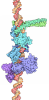
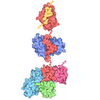
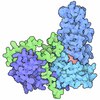
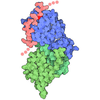
| Title | The structure of LSD1-CoREST-HDAC1 in complex with KBTBD4R313PRR mutant | ||||||
 Components Components |
| ||||||
 Keywords Keywords | LIGASE / protein degradation / E3 ligase / Neo-substrate / cancer mutation | ||||||
| Function / homology |  Function and homology information Function and homology informationLoss of MECP2 binding ability to 5mC-DNA / Krueppel-associated box domain binding / Repression of WNT target genes / MECP2 regulates transcription of neuronal ligands / protein decrotonylase activity / protein lysine delactylase activity / p75NTR negatively regulates cell cycle via SC1 / fungiform papilla formation / epidermal cell differentiation / eyelid development in camera-type eye ...Loss of MECP2 binding ability to 5mC-DNA / Krueppel-associated box domain binding / Repression of WNT target genes / MECP2 regulates transcription of neuronal ligands / protein decrotonylase activity / protein lysine delactylase activity / p75NTR negatively regulates cell cycle via SC1 / fungiform papilla formation / epidermal cell differentiation / eyelid development in camera-type eye / positive regulation of megakaryocyte differentiation / histone decrotonylase activity / negative regulation of androgen receptor signaling pathway / NuRD complex / regulation of cell fate specification / negative regulation of stem cell population maintenance / regulation of stem cell differentiation / histone deacetylase activity, hydrolytic mechanism / histone deacetylase / Transcription of E2F targets under negative control by p107 (RBL1) and p130 (RBL2) in complex with HDAC1 / positive regulation of intracellular estrogen receptor signaling pathway / odontogenesis of dentin-containing tooth / STAT3 nuclear events downstream of ALK signaling / Transcription of E2F targets under negative control by DREAM complex / Regulation of MITF-M-dependent genes involved in apoptosis / embryonic digit morphogenesis / DNA repair complex / histone deacetylase activity / DNA methylation-dependent constitutive heterochromatin formation / protein lysine deacetylase activity / Hydrolases; Acting on carbon-nitrogen bonds, other than peptide bonds; In linear amides / Notch-HLH transcription pathway / negative regulation of gene expression, epigenetic / G1/S-Specific Transcription / Cul3-RING ubiquitin ligase complex / histone deacetylase complex / positive regulation of stem cell population maintenance / Sin3-type complex / E-box binding / histone methyltransferase complex / RNA Polymerase I Transcription Initiation / G0 and Early G1 / hair follicle placode formation / host-mediated suppression of viral transcription / FOXO-mediated transcription of oxidative stress, metabolic and neuronal genes / Regulation of MECP2 expression and activity / Regulation of MITF-M-dependent genes involved in cell cycle and proliferation / NF-kappaB binding / Differentiation of naive CD4+ T cells to T helper 2 cells (Th2 cells) / Transcriptional regulation of brown and beige adipocyte differentiation by EBF2 / core promoter sequence-specific DNA binding / RNA polymerase II core promoter sequence-specific DNA binding / Regulation of TP53 Activity through Acetylation / MECP2 regulates neuronal receptors and channels / transcription repressor complex / heterochromatin / Nuclear events stimulated by ALK signaling in cancer / Transcriptional and post-translational regulation of MITF-M expression and activity / cellular response to platelet-derived growth factor stimulus / positive regulation of smooth muscle cell proliferation / negative regulation of cell migration / regulation of embryonic development / negative regulation of transforming growth factor beta receptor signaling pathway / Regulation of PTEN gene transcription / transcription corepressor binding / SUMOylation of chromatin organization proteins / negative regulation of canonical Wnt signaling pathway / NuRD complex assembly / ERCC6 (CSB) and EHMT2 (G9a) positively regulate rRNA expression / Interaction of NuRD complexes with transcription factors / erythrocyte differentiation / circadian regulation of gene expression / Regulation of endogenous retroelements by KRAB-ZFP proteins / HDACs deacetylate histones / Regulation of endogenous retroelements by Piwi-interacting RNAs (piRNAs) / promoter-specific chromatin binding / Downregulation of SMAD2/3:SMAD4 transcriptional activity / SMAD2/SMAD3:SMAD4 heterotrimer regulates transcription / RUNX1 regulates genes involved in megakaryocyte differentiation and platelet function / Deactivation of the beta-catenin transactivating complex / Negative Regulation of CDH1 Gene Transcription / NoRC negatively regulates rRNA expression / Formation of the beta-catenin:TCF transactivating complex / NOTCH1 Intracellular Domain Regulates Transcription / Constitutive Signaling by NOTCH1 PEST Domain Mutants / Constitutive Signaling by NOTCH1 HD+PEST Domain Mutants / histone deacetylase binding / p53 binding / transcription corepressor activity / Factors involved in megakaryocyte development and platelet production / chromatin organization / heterochromatin formation / transcription regulator complex / DNA-binding transcription factor binding / Estrogen-dependent gene expression / Potential therapeutics for SARS / proteasome-mediated ubiquitin-dependent protein catabolic process / RNA polymerase II-specific DNA-binding transcription factor binding / chromatin remodeling / ribonucleoprotein complex Similarity search - Function | ||||||
| Biological species |  Homo sapiens (human) Homo sapiens (human) | ||||||
| Method | ELECTRON MICROSCOPY / single particle reconstruction / cryo EM / Resolution: 3.42 Å | ||||||
 Authors Authors | Xie, X. / Liau, B. / Zheng, N. | ||||||
| Funding support |  United States, 1items United States, 1items
| ||||||
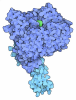
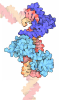
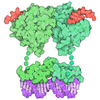
 Citation Citation | Journal: Nature / Year: 2025 Title: Converging mechanism of UM171 and KBTBD4 neomorphic cancer mutations. Authors: Xiaowen Xie / Olivia Zhang / Megan J R Yeo / Ceejay Lee / Ran Tao / Stefan A Harry / N Connor Payne / Eunju Nam / Leena Paul / Yiran Li / Hui Si Kwok / Hanjie Jiang / Haibin Mao / Jennifer L ...Authors: Xiaowen Xie / Olivia Zhang / Megan J R Yeo / Ceejay Lee / Ran Tao / Stefan A Harry / N Connor Payne / Eunju Nam / Leena Paul / Yiran Li / Hui Si Kwok / Hanjie Jiang / Haibin Mao / Jennifer L Hadley / Hong Lin / Melissa Batts / Pallavi M Gosavi / Vincenzo D'Angiolella / Philip A Cole / Ralph Mazitschek / Paul A Northcott / Ning Zheng / Brian B Liau /  Abstract: Cancer mutations can create neomorphic protein-protein interactions to drive aberrant function. As a substrate receptor of the CULLIN3-RING E3 ubiquitin ligase complex, KBTBD4 is recurrently mutated ...Cancer mutations can create neomorphic protein-protein interactions to drive aberrant function. As a substrate receptor of the CULLIN3-RING E3 ubiquitin ligase complex, KBTBD4 is recurrently mutated in medulloblastoma, the most common embryonal brain tumour in children. These mutations impart gain-of-function to KBTBD4 to induce aberrant degradation of the transcriptional corepressor CoREST. However, their mechanism remains unresolved. Here we establish that KBTBD4 mutations promote CoREST degradation through engaging HDAC1/2 as the direct target of the mutant substrate receptor. Using deep mutational scanning, we chart the mutational landscape of the KBTBD4 cancer hotspot, revealing distinct preferences by which insertions and substitutions can promote gain-of-function and the critical residues involved in the hotspot interaction. Cryo-electron microscopy analysis of two distinct KBTBD4 cancer mutants bound to LSD1-HDAC1-CoREST reveals that a KBTBD4 homodimer asymmetrically engages HDAC1 with two KELCH-repeat β-propeller domains. The interface between HDAC1 and one of the KBTBD4 β-propellers is stabilized by the medulloblastoma mutations, which insert a bulky side chain into the HDAC1 active site pocket. Our structural and mutational analyses inform how this hotspot E3-neosubstrate interface can be chemically modulated. First, we unveil a converging shape-complementarity-based mechanism between gain-of-function E3 mutations and a molecular glue degrader, UM171. Second, we demonstrate that HDAC1/2 inhibitors can block the mutant KBTBD4-HDAC1 interface and proliferation of KBTBD4-mutant medulloblastoma cells. Altogether, our work reveals the structural and mechanistic basis of cancer mutation-driven neomorphic protein-protein interactions. | ||||||
| History |
|
- Structure visualization
| Structure viewer | Molecule: MolmilJmol/JSmol |
|---|
- Downloads & links
-Download
| PDBx/mmCIF format | 8vrt.cif.gz | 318.4 KB | Display | PDBx/mmCIF format |
|---|---|---|---|---|
| PDB format | pdb8vrt.ent.gz | 250.4 KB | Display | PDB format |
| PDBx/mmJSON format | 8vrt.json.gz | Tree view | PDBx/mmJSON format | |
| Others |  Other downloads Other downloads |
-Validation report
| Arichive directory | https://data.pdbj.org/pub/pdb/validation_reports/vr/8vrtftp://data.pdbj.org/pub/pdb/validation_reports/vr/8vrt | HTTPS FTP |
|---|
-Related structure data
| Related structure data |  43487MC  8vpqC  9dtqC M: map data used to model this data C: citing same article ( |
|---|---|
| Similar structure data |

-Links
 PDBj
PDBj




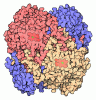
- Assembly
| Deposited unit | 
|
|---|---|
| 1 |
|
-Components
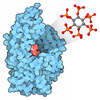
| #1: Protein | Mass: 58463.059 Da / Num. of mol.: 2 Source method: isolated from a genetically manipulated source Source: (gene. exp.) Homo sapiens (human) / Gene: KBTBD4, BKLHD4 / Production host:  Trichoplusia ni (cabbage looper) / References: UniProt: Q9NVX7 Trichoplusia ni (cabbage looper) / References: UniProt: Q9NVX7#2: Protein | | Mass: 55178.906 Da / Num. of mol.: 1 Source method: isolated from a genetically manipulated source Source: (gene. exp.) Homo sapiens (human) / Gene: HDAC1, RPD3L1 / Production host: Trichoplusia ni (cabbage looper)References: UniProt: Q13547, histone deacetylase, Hydrolases; Acting on carbon-nitrogen bonds, other than peptide bonds; In linear amides #3: Protein | | Mass: 45974.441 Da / Num. of mol.: 1 Source method: isolated from a genetically manipulated source Source: (gene. exp.) Homo sapiens (human) / Gene: RCOR1, KIAA0071, RCOR / Production host: Trichoplusia ni (cabbage looper) / References: UniProt: Q9UKL0#4: Chemical | ChemComp-ZN / |   Mass: 65.409 Da / Num. of mol.: 1 / Source method: obtained synthetically / Formula: Zn Mass: 65.409 Da / Num. of mol.: 1 / Source method: obtained synthetically / Formula: Zn#5: Chemical | ChemComp-IHP / | 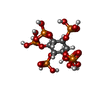 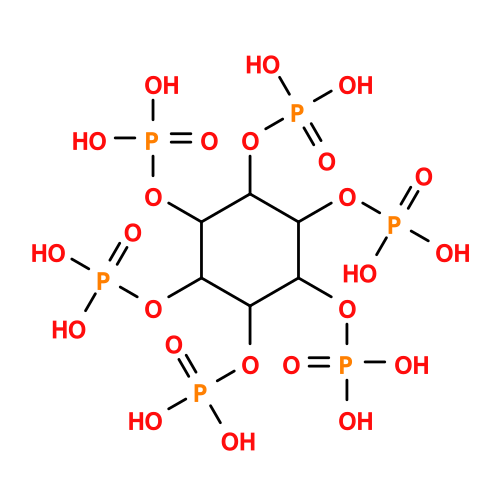 Mass: 660.035 Da / Num. of mol.: 1 / Source method: obtained synthetically / Formula: C6H18O24P6 Mass: 660.035 Da / Num. of mol.: 1 / Source method: obtained synthetically / Formula: C6H18O24P6Has ligand of interest | Y | Has protein modification | N | |
|---|
-Experimental details
-Experiment
| Experiment | Method: ELECTRON MICROSCOPY |
|---|---|
| EM experiment | Aggregation state: PARTICLE / 3D reconstruction method: single particle reconstruction |
- Sample preparation
| Component | Name: LHC-KBTBD4PRRmutant / Type: COMPLEX / Entity ID: #1-#3 / Source: RECOMBINANT |
|---|---|
| Source (natural) | Organism: Homo sapiens (human) |
| Source (recombinant) | Organism: Homo sapiens (human) |
| Buffer solution | pH: 7.5 |
| Specimen | Embedding applied: NO / Shadowing applied: NO / Staining applied: NO / Vitrification applied: YES |
| Vitrification | Cryogen name: ETHANE |
- Electron microscopy imaging
| Microscopy | Model: TFS GLACIOS |
|---|---|
| Electron gun | Electron source:  FIELD EMISSION GUN / Accelerating voltage: 200 kV / Illumination mode: FLOOD BEAM FIELD EMISSION GUN / Accelerating voltage: 200 kV / Illumination mode: FLOOD BEAM |
| Electron lens | Mode: BRIGHT FIELD / Nominal defocus max: 1800 nm / Nominal defocus min: 800 nm |
| Image recording | Electron dose: 49 e/Å2 / Film or detector model: GATAN K3 (6k x 4k) |
- Processing
| EM software | Name: PHENIX / Version: 1.21.1_5286: / Category: model refinement | ||||||||||||||||||||||||
|---|---|---|---|---|---|---|---|---|---|---|---|---|---|---|---|---|---|---|---|---|---|---|---|---|---|
| CTF correction | Type: PHASE FLIPPING ONLY | ||||||||||||||||||||||||
| 3D reconstruction | Resolution: 3.42 Å / Resolution method: FSC 0.143 CUT-OFF / Num. of particles: 110048 / Symmetry type: POINT | ||||||||||||||||||||||||
| Refine LS restraints |
|
