[English] 日本語
Yorodumi
- PDB-8sup: Structure of the 48S translation initiation complex assembled on ... -

+
Open data


ID or keywords:

Loading...

-
Basic information

Entry
Database: PDB / ID: 8sup
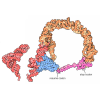
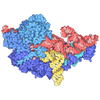
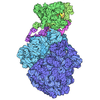
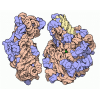
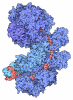
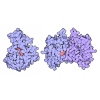
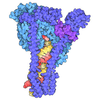
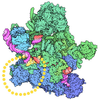
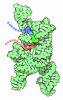
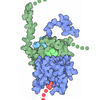
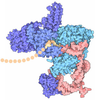
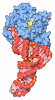
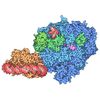
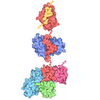
TitleStructure of the 48S translation initiation complex assembled on the encephalomyocarditis virus IRES
Components
  • (Eukaryotic translation initiation factor ...) x 10
  • 18S rRNA
  • 40S ribosomal protein S2
  • EMCV mRNA
  • Met-tRNAiMet
  • Receptor for Activated C Kinase 1 (RACK1)
  • Small ribosomal subunit protein uS11
  • eL41
  • eS1
  • eS10
  • eS12
  • eS17
  • eS19
  • eS21
  • eS24
  • eS25
  • eS26
  • eS27
  • eS28
  • eS30
  • eS31
  • eS4 (S4 X isoform)
  • eS6
  • eS7
  • eS8
  • uS10
  • uS12
  • uS13
  • uS14
  • uS15
  • uS17
  • uS19
  • uS2 (SA)
  • uS3
  • uS4
  • uS7
  • uS8
  • uS9
KeywordsRIBOSOME / EMCV / IRES / Cryo-EM / 40SIC
Function / homology
Function and homology information


viral translational termination-reinitiation / eukaryotic translation initiation factor 3 complex, eIF3e / eukaryotic translation initiation factor 3 complex, eIF3m / IRES-dependent viral translational initiation / translation reinitiation / formation of cytoplasmic translation initiation complex / multi-eIF complex / eukaryotic translation initiation factor 3 complex / eukaryotic 43S preinitiation complex / translation factor activity, RNA binding ...viral translational termination-reinitiation / eukaryotic translation initiation factor 3 complex, eIF3e / eukaryotic translation initiation factor 3 complex, eIF3m / IRES-dependent viral translational initiation / translation reinitiation / formation of cytoplasmic translation initiation complex / multi-eIF complex / eukaryotic translation initiation factor 3 complex / eukaryotic 43S preinitiation complex / translation factor activity, RNA binding / eukaryotic 48S preinitiation complex / metal-dependent deubiquitinase activity / regulation of translational initiation / nuclear-transcribed mRNA catabolic process, nonsense-mediated decay / Formation of the ternary complex, and subsequently, the 43S complex / laminin receptor activity / Ribosomal scanning and start codon recognition / Translation initiation complex formation / Formation of a pool of free 40S subunits / ubiquitin ligase inhibitor activity / 90S preribosome / positive regulation of signal transduction by p53 class mediator / GTP hydrolysis and joining of the 60S ribosomal subunit / L13a-mediated translational silencing of Ceruloplasmin expression / phagocytic cup / translation regulator activity / rough endoplasmic reticulum / laminin binding / ribosomal small subunit export from nucleus / translation initiation factor binding / translation initiation factor activity / gastrulation / MDM2/MDM4 family protein binding / cytosolic ribosome / class I DNA-(apurinic or apyrimidinic site) endonuclease activity / DNA-(apurinic or apyrimidinic site) lyase / positive regulation of translation / ribosome assembly / positive regulation of apoptotic signaling pathway / maturation of SSU-rRNA from tricistronic rRNA transcript (SSU-rRNA, 5.8S rRNA, LSU-rRNA) / maturation of SSU-rRNA / small-subunit processome / translational initiation / PML body / spindle / fibrillar center / metallopeptidase activity / rRNA processing / positive regulation of canonical Wnt signaling pathway / rhythmic process / regulation of translation / ribosomal small subunit assembly / ribosome binding / virus receptor activity / ribosomal small subunit biogenesis / small ribosomal subunit / small ribosomal subunit rRNA binding / cytosolic small ribosomal subunit / perikaryon / cell differentiation / cytoplasmic translation / tRNA binding / cysteine-type deubiquitinase activity / mitochondrial inner membrane / postsynaptic density / rRNA binding / structural constituent of ribosome / ribosome / translation / ribonucleoprotein complex / cell division / DNA repair / mRNA binding / apoptotic process / synapse / dendrite / centrosome / nucleolus / perinuclear region of cytoplasm / Golgi apparatus / DNA binding / RNA binding / zinc ion binding / nucleoplasm / membrane / identical protein binding / nucleus / plasma membrane / cytoplasm / cytosol
Similarity search - Function
: / EIF3CL-like, C-terminal domain / Eukaryotic translation initiation factor 3 subunit H / eIF3h, C-terminal / C-terminal region of eIF3h / Eukaryotic translation initiation factor 3 subunit F / Translation initiation factor 3 complex subunit L / RNA polymerase I-associated factor PAF67 / Eukaryotic translation initiation factor 3 subunit M / eIF3 subunit M, C-terminal helix domain ...: / EIF3CL-like, C-terminal domain / Eukaryotic translation initiation factor 3 subunit H / eIF3h, C-terminal / C-terminal region of eIF3h / Eukaryotic translation initiation factor 3 subunit F / Translation initiation factor 3 complex subunit L / RNA polymerase I-associated factor PAF67 / Eukaryotic translation initiation factor 3 subunit M / eIF3 subunit M, C-terminal helix domain / eIF3 subunit 6 N terminal domain / eIF3 subunit M, C-terminal helix / Eukaryotic translation initiation factor 3 subunit E, C-terminal / Eukaryotic translation initiation factor 3 subunit E / Eukaryotic translation initiation factor 3 subunit E, N-terminal / eIF3 subunit 6 N terminal domain / Eukaryotic translation initiation factor 3 subunit K / Translation initiation factor 3, subunit 12, N-terminal, eukaryotic / : / eIF3a, PCI domain, TPR-like region / Eukaryotic translation initiation factor 3 subunit A / Eukaryotic translation initiation factor 3 subunit C, N-terminal domain / Eukaryotic translation initiation factor 3 subunit C / Eukaryotic translation initiation factor 3 subunit 8 N-terminus / Translation initiation factor 1A (eIF-1A), conserved site / Eukaryotic initiation factor 1A signature. / Eukaryotic translation initiation factor 3 subunit M eIF3m/COP9 signalosome complex subunit 7 COPS7 / eukaryotic translation initiation factor 1A / Translation initiation factor 1A (eIF-1A) / RNA-binding domain, S1, IF1 type / Translation initiation factor 1A / IF-1 / S1 domain IF1 type profile. / CSN8/PSMD8/EIF3K / CSN8/PSMD8/EIF3K family / Rpn11/EIF3F, C-terminal / Maintenance of mitochondrial structure and function / : / motif in proteasome subunits, Int-6, Nip-1 and TRIP-15 / PCI domain / Proteasome component (PCI) domain / PCI domain profile. / 40S ribosomal protein SA / 40S ribosomal protein SA, C-terminal domain / 40S ribosomal protein SA C-terminus / Ubiquitin-like protein FUBI / JAB1/Mov34/MPN/PAD-1 ubiquitin protease / : / Ribosomal protein S26e signature. / Ribosomal protein L41 / Ribosomal protein L41 / Ribosomal protein S21e, conserved site / Ribosomal protein S21e signature. / : / Ribosomal protein S12e signature. / Ribosomal protein S26e / Ribosomal protein S26e superfamily / Ribosomal protein S26e / Ribosomal protein S12e / Small (40S) ribosomal subunit Asc1/RACK1 / Ribosomal protein S21e / Ribosomal protein S21e superfamily / Ribosomal protein S21e / Ribosomal protein S2, eukaryotic / Ribosomal protein S19e, conserved site / Ribosomal protein S19e signature. / S27a-like superfamily / JAB/MPN domain / JAB1/MPN/MOV34 metalloenzyme domain / 40S Ribosomal protein S10 / Plectin/S10, N-terminal / Plectin/S10 domain / Ribosomal protein S30 / Ribosomal protein S30 / Ribosomal protein S10, eukaryotic/archaeal / : / Ribosomal protein S7e signature. / Ribosomal protein S8e subdomain, eukaryotes / Ribosomal protein S27a / Ribosomal protein S27a / Ribosomal protein S27a / Ribosomal protein S25 / S25 ribosomal protein / MPN domain / MPN domain profile. / Ribosomal protein S17e, conserved site / Ribosomal protein S17e signature. / Ribosomal protein S2, eukaryotic/archaeal / Ribosomal protein S3Ae, conserved site / Ribosomal protein S3Ae signature. / 40S ribosomal protein S29/30S ribosomal protein S14 type Z / Ribosomal protein S3, eukaryotic/archaeal / 40S ribosomal protein S4, C-terminal domain / 40S ribosomal protein S4 C-terminus / Ribosomal protein S4e, N-terminal, conserved site / Ribosomal protein S4e signature. / Ribosomal protein S8e, conserved site / Ribosomal protein S8e signature. / Ribosomal protein S19A/S15e / Ribosomal protein S27e signature. / Ribosomal protein S6, eukaryotic
Similarity search - Domain/homology
: / : / RNA / RNA (> 10) / RNA (> 100) / RNA (> 1000) / Small ribosomal subunit protein eS32 / Eukaryotic translation initiation factor 3 subunit C / Small ribosomal subunit protein uS11 / Small ribosomal subunit protein uS4 ...: / : / RNA / RNA (> 10) / RNA (> 100) / RNA (> 1000) / Small ribosomal subunit protein eS32 / Eukaryotic translation initiation factor 3 subunit C / Small ribosomal subunit protein uS11 / Small ribosomal subunit protein uS4 / Eukaryotic translation initiation factor 3 subunit L / Small ribosomal subunit protein eS12 / Small ribosomal subunit protein uS9 / Small ribosomal subunit protein uS10 / Small ribosomal subunit protein RACK1 / Ubiquitin-ribosomal protein eS31 fusion protein / Eukaryotic translation initiation factor 3 subunit F / Eukaryotic translation initiation factor 3 subunit M / Eukaryotic translation initiation factor 3 subunit A / Small ribosomal subunit protein uS15 / Small ribosomal subunit protein eS1 / Eukaryotic translation initiation factor 3 subunit H / Eukaryotic translation initiation factor 3 subunit E / Small ribosomal subunit protein eS7 / Small ribosomal subunit protein uS12 / 40S ribosomal protein S24 / Eukaryotic translation initiation factor 3 subunit K / Ubiquitin-like FUBI-ribosomal protein eS30 fusion protein / Small ribosomal subunit protein eS25 / Small ribosomal subunit protein eS26 / Small ribosomal subunit protein uS7 / Small ribosomal subunit protein uS8 / Small ribosomal subunit protein eS28 / Small ribosomal subunit protein eS8 / Small ribosomal subunit protein eS4 / Small ribosomal subunit protein uS2 / Small ribosomal subunit protein eS6 / Small ribosomal subunit protein eS21 / Small ribosomal subunit protein eS19 / Small ribosomal subunit protein uS3 / Small ribosomal subunit protein uS13 / Small ribosomal subunit protein eS10 / Small ribosomal subunit protein uS17 / Small ribosomal subunit protein eS17 / Small ribosomal subunit protein eS27 / Small ribosomal subunit protein uS19 / Small ribosomal subunit protein uS14 / Eukaryotic translation initiation factor 1A, X-chromosomal
Similarity search - Component
Biological speciesOryctolagus cuniculus (rabbit)
Homo sapiens (human)
Encephalomyocarditis virus
MethodELECTRON MICROSCOPY / single particle reconstruction / cryo EM / Resolution: 3.1 Å
AuthorsBhattacharjee, S. / Abaeva, I.S. / Brown, Z.P. / Arhab, Y. / Fallah, H. / Jeevan, J.C. / Hellen, C.U.T. / Frank, J. / Pestova, T.V.
Funding support United States, 5items
OrganizationGrant numberCountry
National Institutes of Health/National Institute of General Medical Sciences (NIH/NIGMS)GM139453 United States
National Institutes of Health/National Institute of General Medical Sciences (NIH/NIGMS)R01 GM29169 United States
National Institutes of Health/National Institute of General Medical Sciences (NIH/NIGMS)R35 GM122602 United States
National Institutes of Health/National Institute of General Medical Sciences (NIH/NIGMS)R01 GM097014 United States
National Institutes of Health/National Institute Of Allergy and Infectious Diseases (NIH/NIAID)R01 AI123406 United States
CitationJournal: bioRxiv / Year: 2025
Title: The mechanism of ribosomal recruitment during translation initiation on Type 2 IRESs.
Authors: Sayan Bhattacharjee / Irina S Abaeva / Zuben P Brown / Yani Arhab / Hengameh Fallah / Christopher U T Hellen / Joachim Frank / Tatyana V Pestova /
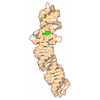
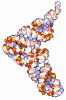
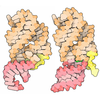
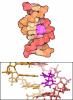
Abstract: The encephalomyocarditis virus (EMCV) IRES and other Type 2 IRESs comprise domains H-L and specifically interact with eIF4G/eIF4A through their essential JK domain. However, the JK domain is not ...The encephalomyocarditis virus (EMCV) IRES and other Type 2 IRESs comprise domains H-L and specifically interact with eIF4G/eIF4A through their essential JK domain. However, the JK domain is not sufficient for IRES function, which also requires the preceding domain I of unknown function. To identify interactions that drive ribosomal recruitment of eIF4G/eIF4A-bound Type 2 IRESs, we determined the cryo-EM structure of 48S initiation complexes formed on the EMCV IRES. It revealed that the apical domain I cloverleaf contacts ribosomal proteins uS13 and uS19 via its Id subdomain and that the essential GNRA tetraloop in subdomain Ic interacts directly with the TψC domain of initiator tRNA. Functional assays supported the exceptional role of these interactions for initiation on this IRES. The strong conservation of primary and secondary structures of the apex of domain I among Type 2 IRESs suggests that the reported interactions are a common essential feature of them all.
History
DepositionMay 12, 2023Deposition site: RCSB / Processing site: RCSB
Revision 1.0Mar 18, 2026Provider: repository / Type: Initial release
Revision 1.0Mar 18, 2026Data content type: EM metadata / Data content type: EM metadata / Provider: repository / Type: Initial release
Revision 1.0Mar 18, 2026Data content type: Image / Data content type: Image / Provider: repository / Type: Initial release
Revision 1.0Mar 18, 2026Data content type: Primary map / Data content type: Primary map / Provider: repository / Type: Initial release

-
Structure visualization

Structure viewerMolecule:
MolmilJmol/JSmol

Downloads & links

-
Assembly

Deposited unit
o: Eukaryotic translation initiation factor 3 subunit A
p: Eukaryotic translation initiation factor 3 subunit C
q: Eukaryotic translation initiation factor 3 subunit E
r: Eukaryotic translation initiation factor 3 subunit F
s: Eukaryotic translation initiation factor 3 subunit H
t: Eukaryotic translation initiation factor 3 subunit K
u: Eukaryotic translation initiation factor 3 subunit L
v: Eukaryotic translation initiation factor 3 subunit M
2: 18S rRNA
3: EMCV mRNA
A: Eukaryotic translation initiation factor 1A, X-chromosomal
B: uS2 (SA)
C: eS1
D: 40S ribosomal protein S2
E: uS3
F: eS4 (S4 X isoform)
G: uS7
H: eS6
I: eS7
J: eS8
K: uS4
L: eS10
M: uS17
N: eS12
O: uS15
P: Small ribosomal subunit protein uS11
Q: uS19
R: uS9
S: eS17
T: uS13
U: eS19
V: uS10
W: eS21
X: uS8
Y: uS12
Z: eS24
a: eS25
b: eS26
c: eS27
d: eS28
e: uS14
f: eS30
g: eS31
h: Receptor for Activated C Kinase 1 (RACK1)
i: Met-tRNAiMet
j: Eukaryotic translation initiation factor 2 subunit 1
n: eL41
hetero molecules


Theoretical massNumber of molelcules
Total (without water)1,893,87748
Polymers1,893,81247
Non-polymers651
Water00
1


  • Idetical with deposited unit
  • defined by author
  • Evidence: electron microscopy
TypeNameSymmetry operationNumber
identity operation1_5551

-
Components

-
Eukaryotic translation initiation factor ... , 10 types, 10 molecules opqrstuvAj

#1: Protein Eukaryotic translation initiation factor 3 subunit A / eIF3a / Eukaryotic translation initiation factor 3 subunit 10 / eIF-3-theta


Mass: 164902.656 Da / Num. of mol.: 1
Source method: isolated from a genetically manipulated source
Source: (gene. exp.) Oryctolagus cuniculus (rabbit) / Gene: EIF3A, EIF3S10 / Production host: Oryctolagus cuniculus (rabbit) / References: UniProt: G1SMZ5
#2: Protein Eukaryotic translation initiation factor 3 subunit C


Mass: 97923.547 Da / Num. of mol.: 1
Source method: isolated from a genetically manipulated source
Source: (gene. exp.) Oryctolagus cuniculus (rabbit) / Gene: EIF3C / Production host: Oryctolagus cuniculus (rabbit) / References: UniProt: A0A5F9CMJ3
#3: Protein Eukaryotic translation initiation factor 3 subunit E


Mass: 52281.633 Da / Num. of mol.: 1
Source method: isolated from a genetically manipulated source
Source: (gene. exp.) Oryctolagus cuniculus (rabbit) / Gene: EIF3E / Production host: Oryctolagus cuniculus (rabbit) / References: UniProt: G1SUC8
#4: Protein Eukaryotic translation initiation factor 3 subunit F / eIF3f / Eukaryotic translation initiation factor 3 subunit 5 / eIF-3-epsilon / eIF3 p47


Mass: 37846.730 Da / Num. of mol.: 1
Source method: isolated from a genetically manipulated source
Source: (gene. exp.) Oryctolagus cuniculus (rabbit) / Gene: EIF3F, EIF3S5 / Production host: Oryctolagus cuniculus (rabbit) / References: UniProt: G1SLC2
#5: Protein Eukaryotic translation initiation factor 3 subunit H


Mass: 39952.281 Da / Num. of mol.: 1
Source method: isolated from a genetically manipulated source
Source: (gene. exp.) Oryctolagus cuniculus (rabbit) / Gene: EIF3H / Production host: Oryctolagus cuniculus (rabbit) / References: UniProt: G1ST95
#6: Protein Eukaryotic translation initiation factor 3 subunit K / eIF3k / Eukaryotic translation initiation factor 3 subunit 12 / eIF-3 p25


Mass: 25129.709 Da / Num. of mol.: 1
Source method: isolated from a genetically manipulated source
Source: (gene. exp.) Oryctolagus cuniculus (rabbit) / Gene: EIF3K, EIF3S12 / Production host: Oryctolagus cuniculus (rabbit) / References: UniProt: G1T3L2
#7: Protein Eukaryotic translation initiation factor 3 subunit L / eIF3l / Eukaryotic translation initiation factor 3 subunit 6-interacting protein / Eukaryotic ...eIF3l / Eukaryotic translation initiation factor 3 subunit 6-interacting protein / Eukaryotic translation initiation factor 3 subunit E-interacting protein


Mass: 66804.766 Da / Num. of mol.: 1
Source method: isolated from a genetically manipulated source
Source: (gene. exp.) Oryctolagus cuniculus (rabbit) / Gene: EIF3L, EIF3EIP, EIF3S6IP / Production host: Oryctolagus cuniculus (rabbit) / References: UniProt: G1SED9
#8: Protein Eukaryotic translation initiation factor 3 subunit M / eIF3m


Mass: 42555.832 Da / Num. of mol.: 1
Source method: isolated from a genetically manipulated source
Source: (gene. exp.) Oryctolagus cuniculus (rabbit) / Gene: EIF3M / Production host: Oryctolagus cuniculus (rabbit) / References: UniProt: G1SLW8
#11: Protein Eukaryotic translation initiation factor 1A, X-chromosomal / eIF-1A X isoform / Eukaryotic translation initiation factor 4C / eIF-4C


Mass: 16488.449 Da / Num. of mol.: 1
Source method: isolated from a genetically manipulated source
Source: (gene. exp.) Homo sapiens (human) / Gene: EIF1AX, EIF1A, EIF4C / Production host: Homo sapiens (human) / References: UniProt: P47813
#46: Protein Eukaryotic translation initiation factor 2 subunit 1


Mass: 36161.180 Da / Num. of mol.: 1
Source method: isolated from a genetically manipulated source
Source: (gene. exp.) Oryctolagus cuniculus (rabbit) / Gene: EIF2S1, EIF2A / Production host: Oryctolagus cuniculus (rabbit)

-
RNA chain , 3 types, 3 molecules 23i

#9: RNA chain 18S rRNA


Mass: 603100.938 Da / Num. of mol.: 1
Source method: isolated from a genetically manipulated source
Source: (gene. exp.) Oryctolagus cuniculus (rabbit) / Production host: Oryctolagus cuniculus (rabbit) / References: GenBank: 2488159015
#10: RNA chain EMCV mRNA


Mass: 28627.121 Da / Num. of mol.: 1 / Source method: isolated from a natural source / Source: (natural) Encephalomyocarditis virus / References: GenBank: 485965777
#45: RNA chain Met-tRNAiMet


Mass: 24231.510 Da / Num. of mol.: 1
Source method: isolated from a genetically manipulated source
Source: (gene. exp.) Oryctolagus cuniculus (rabbit) / Production host: Oryctolagus cuniculus (rabbit)

+
Protein , 33 types, 33 molecules BCDEFGHIJKLMNOPQRSTUVWXYZabcde...

#12: Protein uS2 (SA) / 40S ribosomal protein SA / 37 kDa laminin receptor precursor / 37LRP / 37/67 kDa laminin receptor / ...40S ribosomal protein SA / 37 kDa laminin receptor precursor / 37LRP / 37/67 kDa laminin receptor / LRP/LR / 67 kDa laminin receptor / 67LR / Laminin receptor 1 / LamR / Laminin-binding protein precursor p40 / LBP/p40


Mass: 32958.016 Da / Num. of mol.: 1
Source method: isolated from a genetically manipulated source
Source: (gene. exp.) Oryctolagus cuniculus (rabbit) / Gene: RPSA, LOC100144340 / Production host: Oryctolagus cuniculus (rabbit) / References: UniProt: G1TLT8
#13: Protein eS1 / 40S ribosomal protein S3a


Mass: 30002.061 Da / Num. of mol.: 1
Source method: isolated from a genetically manipulated source
Source: (gene. exp.) Oryctolagus cuniculus (rabbit) / Gene: RPS3A, LOC100342838, LOC100348981 / Production host: Oryctolagus cuniculus (rabbit) / References: UniProt: G1SS70
#14: Protein 40S ribosomal protein S2


Mass: 24441.846 Da / Num. of mol.: 1
Source method: isolated from a genetically manipulated source
Source: (gene. exp.) Oryctolagus cuniculus (rabbit) / Production host: Oryctolagus cuniculus (rabbit)
#15: Protein uS3 / Ribosomal protein S3


Mass: 31146.607 Da / Num. of mol.: 1
Source method: isolated from a genetically manipulated source
Source: (gene. exp.) Oryctolagus cuniculus (rabbit) / Gene: RPS3 / Production host: Oryctolagus cuniculus (rabbit) / References: UniProt: G1TNM3
#16: Protein eS4 (S4 X isoform) / 40S ribosomal protein S4


Mass: 29654.869 Da / Num. of mol.: 1
Source method: isolated from a genetically manipulated source
Source: (gene. exp.) Oryctolagus cuniculus (rabbit) / Gene: LOC100338112 / Production host: Oryctolagus cuniculus (rabbit) / References: UniProt: G1TK17
#17: Protein uS7 / 40S ribosomal protein S5


Mass: 22913.453 Da / Num. of mol.: 1
Source method: isolated from a genetically manipulated source
Source: (gene. exp.) Oryctolagus cuniculus (rabbit) / Gene: RPS5 / Production host: Oryctolagus cuniculus (rabbit) / References: UniProt: G1TFM5
#18: Protein eS6 / 40S ribosomal protein S6


Mass: 28751.906 Da / Num. of mol.: 1
Source method: isolated from a genetically manipulated source
Source: (gene. exp.) Oryctolagus cuniculus (rabbit) / Gene: LOC100339133, RPS6 / Production host: Oryctolagus cuniculus (rabbit) / References: UniProt: G1TM55
#19: Protein eS7 / 40S ribosomal protein S7


Mass: 47356.172 Da / Num. of mol.: 1
Source method: isolated from a genetically manipulated source
Source: (gene. exp.) Oryctolagus cuniculus (rabbit) / Production host: Oryctolagus cuniculus (rabbit) / References: UniProt: G1SVB0
#20: Protein eS8 / 40S ribosomal protein S8


Mass: 24263.387 Da / Num. of mol.: 1
Source method: isolated from a genetically manipulated source
Source: (gene. exp.) Oryctolagus cuniculus (rabbit) / Gene: LOC100352057 / Production host: Oryctolagus cuniculus (rabbit) / References: UniProt: G1TJW1
#21: Protein uS4 / Ribosomal protein S9


Mass: 22641.564 Da / Num. of mol.: 1
Source method: isolated from a genetically manipulated source
Source: (gene. exp.) Oryctolagus cuniculus (rabbit) / Gene: RPS9 / Production host: Oryctolagus cuniculus (rabbit) / References: UniProt: B7NZS8
#22: Protein eS10


Mass: 17156.865 Da / Num. of mol.: 1
Source method: isolated from a genetically manipulated source
Source: (gene. exp.) Oryctolagus cuniculus (rabbit) / Gene: LOC100348511 / Production host: Oryctolagus cuniculus (rabbit) / References: UniProt: G1TPV3
#23: Protein uS17 / 40S ribosomal protein S11


Mass: 18468.826 Da / Num. of mol.: 1
Source method: isolated from a genetically manipulated source
Source: (gene. exp.) Oryctolagus cuniculus (rabbit) / Gene: LOC100347468 / Production host: Oryctolagus cuniculus (rabbit) / References: UniProt: G1TRM4
#24: Protein eS12 / 40S ribosomal protein S12


Mass: 14538.987 Da / Num. of mol.: 1
Source method: isolated from a genetically manipulated source
Source: (gene. exp.) Oryctolagus cuniculus (rabbit) / Gene: RPS12 / Production host: Oryctolagus cuniculus (rabbit) / References: UniProt: G1SFR8
#25: Protein uS15 / Ribosomal protein S13


Mass: 17259.389 Da / Num. of mol.: 1
Source method: isolated from a genetically manipulated source
Source: (gene. exp.) Oryctolagus cuniculus (rabbit) / Gene: RPS13 / Production host: Oryctolagus cuniculus (rabbit) / References: UniProt: G1SP51
#26: Protein Small ribosomal subunit protein uS11 / 40S ribosomal protein S14


Mass: 18133.984 Da / Num. of mol.: 1
Source method: isolated from a genetically manipulated source
Source: (gene. exp.) Oryctolagus cuniculus (rabbit) / Production host: Oryctolagus cuniculus (rabbit) / References: UniProt: A0AAA9WYR1
#27: Protein uS19 / 40S ribosomal protein S15


Mass: 17049.182 Da / Num. of mol.: 1
Source method: isolated from a genetically manipulated source
Source: (gene. exp.) Oryctolagus cuniculus (rabbit) / Gene: LOC103349305 / Production host: Oryctolagus cuniculus (rabbit) / References: UniProt: G1U0Q2
#28: Protein uS9 / Ribosomal protein S16


Mass: 19213.465 Da / Num. of mol.: 1
Source method: isolated from a genetically manipulated source
Source: (gene. exp.) Oryctolagus cuniculus (rabbit) / Gene: RPS16 / Production host: Oryctolagus cuniculus (rabbit) / References: UniProt: G1SGX4
#29: Protein eS17 / 40S ribosomal protein S17


Mass: 15552.119 Da / Num. of mol.: 1
Source method: isolated from a genetically manipulated source
Source: (gene. exp.) Oryctolagus cuniculus (rabbit) / Gene: RPS17 / Production host: Oryctolagus cuniculus (rabbit) / References: UniProt: G1TU13
#30: Protein uS13 / 40S ribosomal protein S18


Mass: 17759.777 Da / Num. of mol.: 1
Source method: isolated from a genetically manipulated source
Source: (gene. exp.) Oryctolagus cuniculus (rabbit) / Gene: LOC100356144 / Production host: Oryctolagus cuniculus (rabbit) / References: UniProt: G1TPG3
#31: Protein eS19 / 40S ribosomal protein S19


Mass: 16235.796 Da / Num. of mol.: 1
Source method: isolated from a genetically manipulated source
Source: (gene. exp.) Oryctolagus cuniculus (rabbit) / Gene: LOC100345774 / Production host: Oryctolagus cuniculus (rabbit) / References: UniProt: G1TN62
#32: Protein uS10


Mass: 13398.763 Da / Num. of mol.: 1
Source method: isolated from a genetically manipulated source
Source: (gene. exp.) Oryctolagus cuniculus (rabbit) / Gene: LOC100354063 / Production host: Oryctolagus cuniculus (rabbit) / References: UniProt: G1SIZ2
#33: Protein eS21 / 40S ribosomal protein S21


Mass: 9124.389 Da / Num. of mol.: 1
Source method: isolated from a genetically manipulated source
Source: (gene. exp.) Oryctolagus cuniculus (rabbit) / Gene: RPS21 / Production host: Oryctolagus cuniculus (rabbit) / References: UniProt: G1TM82
#34: Protein uS8 / 40S Ribosomal protein S15a


Mass: 14865.555 Da / Num. of mol.: 1
Source method: isolated from a genetically manipulated source
Source: (gene. exp.) Oryctolagus cuniculus (rabbit) / Gene: RPS15A / Production host: Oryctolagus cuniculus (rabbit) / References: UniProt: G1TG89
#35: Protein uS12 / 40S ribosomal protein S23


Mass: 15844.666 Da / Num. of mol.: 1
Source method: isolated from a genetically manipulated source
Source: (gene. exp.) Oryctolagus cuniculus (rabbit) / Gene: RPS23 / Production host: Oryctolagus cuniculus (rabbit) / References: UniProt: G1SZ47
#36: Protein eS24 / 40S ribosomal protein S24


Mass: 15237.104 Da / Num. of mol.: 1
Source method: isolated from a genetically manipulated source
Source: (gene. exp.) Oryctolagus cuniculus (rabbit) / Production host: Oryctolagus cuniculus (rabbit) / References: UniProt: G1T3D8
#37: Protein eS25 / 40S ribosomal protein S25


Mass: 13645.028 Da / Num. of mol.: 1
Source method: isolated from a genetically manipulated source
Source: (gene. exp.) Oryctolagus cuniculus (rabbit) / Production host: Oryctolagus cuniculus (rabbit) / References: UniProt: G1TDB3
#38: Protein eS26 / 40S ribosomal protein S26


Mass: 11645.794 Da / Num. of mol.: 1
Source method: isolated from a genetically manipulated source
Source: (gene. exp.) Oryctolagus cuniculus (rabbit) / Production host: Oryctolagus cuniculus (rabbit) / References: UniProt: G1TFE8
#39: Protein eS27 / 40S ribosomal protein S27


Mass: 9480.186 Da / Num. of mol.: 1
Source method: isolated from a genetically manipulated source
Source: (gene. exp.) Oryctolagus cuniculus (rabbit) / Gene: LOC100345694, LOC100345044, LOC100348261, RPS27 / Production host: Oryctolagus cuniculus (rabbit) / References: UniProt: G1TZ76
#40: Protein eS28 / 40S Ribosomal protein S28


Mass: 7855.052 Da / Num. of mol.: 1
Source method: isolated from a genetically manipulated source
Source: (gene. exp.) Oryctolagus cuniculus (rabbit) / Gene: RPS28 / Production host: Oryctolagus cuniculus (rabbit) / References: UniProt: G1TIB4
#41: Protein uS14 / 40S ribosomal protein S29


Mass: 6690.821 Da / Num. of mol.: 1
Source method: isolated from a genetically manipulated source
Source: (gene. exp.) Oryctolagus cuniculus (rabbit) / Gene: LOC100337712 / Production host: Oryctolagus cuniculus (rabbit) / References: UniProt: G1U7M4
#42: Protein eS30 / 40S ribosomal protein S30


Mass: 14498.884 Da / Num. of mol.: 1
Source method: isolated from a genetically manipulated source
Source: (gene. exp.) Oryctolagus cuniculus (rabbit) / Gene: FAU / Production host: Oryctolagus cuniculus (rabbit) / References: UniProt: G1T8A2
#43: Protein eS31 / 40S ribosomal protein S27a / Ubiquitin carboxyl extension protein 80 / Ubiquitin-40S ribosomal protein S27a


Mass: 21431.742 Da / Num. of mol.: 1
Source method: isolated from a genetically manipulated source
Source: (gene. exp.) Oryctolagus cuniculus (rabbit) / Production host: Oryctolagus cuniculus (rabbit) / References: UniProt: G1SK22
#44: Protein Receptor for Activated C Kinase 1 (RACK1)


Mass: 35115.652 Da / Num. of mol.: 1
Source method: isolated from a genetically manipulated source
Source: (gene. exp.) Oryctolagus cuniculus (rabbit) / Gene: GNB2L1 / Production host: Oryctolagus cuniculus (rabbit) / References: UniProt: G1SJB4

-
Protein/peptide / Non-polymers , 2 types, 2 molecules n
#47: Protein/peptide eL41 / 60s ribosomal protein l41


Mass: 3473.451 Da / Num. of mol.: 1
Source method: isolated from a genetically manipulated source
Source: (gene. exp.) Oryctolagus cuniculus (rabbit) / Production host: Oryctolagus cuniculus (rabbit) / References: UniProt: A0A087WNH4
#48: Chemical ChemComp-ZN / ZINC ION


Mass: 65.409 Da / Num. of mol.: 1 / Source method: obtained synthetically / Formula: Zn

-
Details

Has ligand of interestN
Has protein modificationY

-
Experimental details

-
Experiment

ExperimentMethod: ELECTRON MICROSCOPY
EM experimentAggregation state: CELL / 3D reconstruction method: single particle reconstruction

-
Sample preparation

Component
IDNameTypeDetailsEntity IDParent-IDSource
1EMCV IRES 40SICRIBOSOMECryo_EM#1-#470MULTIPLE SOURCES
240SICRIBOSOME#1-#9, #11-#471NATURAL
3EMCV IRESCOMPLEX#101NATURAL
Source (natural)
IDEntity assembly-IDOrganismNcbi tax-ID
22Oryctolagus cuniculus (rabbit)9986
33Encephalomyocarditis virus12104
Buffer solutionpH: 7.5
SpecimenEmbedding applied: NO / Shadowing applied: NO / Staining applied: NO / Vitrification applied: YES
VitrificationCryogen name: ETHANE

-
Electron microscopy imaging

Experimental equipment
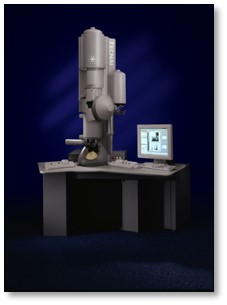
Model: Tecnai F30 / Image courtesy: FEI Company
MicroscopyModel: FEI TECNAI F30
Electron gunElectron source: FIELD EMISSION GUN / Accelerating voltage: 300 kV / Illumination mode: FLOOD BEAM
Electron lensMode: DARK FIELD / Nominal defocus max: 2500 nm / Nominal defocus min: 1000 nm
Image recordingElectron dose: 58 e/Å2 / Film or detector model: GATAN K3 (6k x 4k)

-
Processing

EM software
IDNameVersionCategory
1RELION4particle selection
4RELION4CTF correction
CTF correctionType: PHASE FLIPPING AND AMPLITUDE CORRECTION
3D reconstructionResolution: 3.1 Å / Resolution method: FSC 0.143 CUT-OFF / Num. of particles: 262752 / Symmetry type: POINT

+
About Yorodumi

-
News

-
Feb 9, 2022. New format data for meta-information of EMDB entries

New format data for meta-information of EMDB entries

  • Version 3 of the EMDB header file is now the official format.
  • The previous official version 1.9 will be removed from the archive.

Related info.:EMDB header

External links:wwPDB to switch to version 3 of the EMDB data model

-
Aug 12, 2020. Covid-19 info

Covid-19 info

URL: https://pdbj.org/emnavi/covid19.php

New page: Covid-19 featured information page in EM Navigator.

Related info.:Covid-19 info / Mar 5, 2020. Novel coronavirus structure data

+
Mar 5, 2020. Novel coronavirus structure data

Novel coronavirus structure data

Related info.:Yorodumi Speices / Aug 12, 2020. Covid-19 info

External links:COVID-19 featured content - PDBj / Molecule of the Month (242):Coronavirus Proteases

+
Jan 31, 2019. EMDB accession codes are about to change! (news from PDBe EMDB page)

EMDB accession codes are about to change! (news from PDBe EMDB page)

  • The allocation of 4 digits for EMDB accession codes will soon come to an end. Whilst these codes will remain in use, new EMDB accession codes will include an additional digit and will expand incrementally as the available range of codes is exhausted. The current 4-digit format prefixed with “EMD-” (i.e. EMD-XXXX) will advance to a 5-digit format (i.e. EMD-XXXXX), and so on. It is currently estimated that the 4-digit codes will be depleted around Spring 2019, at which point the 5-digit format will come into force.
  • The EM Navigator/Yorodumi systems omit the EMD- prefix.

Related info.:Q: What is EMD? / ID/Accession-code notation in Yorodumi/EM Navigator

External links:EMDB Accession Codes are Changing Soon! / Contact to PDBj

+
Jul 12, 2017. Major update of PDB

Major update of PDB

  • wwPDB released updated PDB data conforming to the new PDBx/mmCIF dictionary.
  • This is a major update changing the version number from 4 to 5, and with Remediation, in which all the entries are updated.
  • In this update, many items about electron microscopy experimental information are reorganized (e.g. em_software).
  • Now, EM Navigator and Yorodumi are based on the updated data.

External links:wwPDB Remediation / Enriched Model Files Conforming to OneDep Data Standards Now Available in the PDB FTP Archive

-
Yorodumi

Thousand views of thousand structures

  • Yorodumi is a browser for structure data from EMDB, PDB, SASBDB, etc.
  • This page is also the successor to EM Navigator detail page, and also detail information page/front-end page for Omokage search.
  • The word "yorodu" (or yorozu) is an old Japanese word meaning "ten thousand". "mi" (miru) is to see.

Related info.:EMDB / PDB / SASBDB / Comparison of 3 databanks / Yorodumi Search / Aug 31, 2016. New EM Navigator & Yorodumi / Yorodumi Papers / Jmol/JSmol / Function and homology information / Changes in new EM Navigator and Yorodumi

Read more