National Institutes of Health/National Institute of General Medical Sciences (NIH/NIGMS)
R35 GM139453
United States
National Institutes of Health/National Institute of General Medical Sciences (NIH/NIGMS)
R01 GM29169
United States
National Institutes of Health/National Institute of General Medical Sciences (NIH/NIGMS)
R35 GM122602
United States
National Institutes of Health/National Institute of General Medical Sciences (NIH/NIGMS)
R01 GM097014
United States
National Institutes of Health/National Institute Of Allergy and Infectious Diseases (NIH/NIAID)
R01 AI123406
United States
Citation
Journal: EMBO J / Year: 2026 Title: The mechanism of ribosomal recruitment during translation initiation on the Type 2 encephalomyocarditis virus IRES. Authors: Sayan Bhattacharjee / Irina S Abaeva / Zuben P Brown / Yani Arhab / Hengameh Fallah / Christopher U T Hellen / Joachim Frank / Tatyana V Pestova / Abstract: The encephalomyocarditis virus (EMCV) internal ribosomal entry side (IRES) and other Type 2 IRESs favor translation of the viral genome during infection. The domains H-L of these IRESs specifically ...The encephalomyocarditis virus (EMCV) internal ribosomal entry side (IRES) and other Type 2 IRESs favor translation of the viral genome during infection. The domains H-L of these IRESs specifically interact with the cellular translation initiation factors eIF4G/eIF4A through their essential JK domain. However, the JK domain is not sufficient for IRES activity, which also strictly requires the preceding domain I of unknown function. To identify interactions that drive ribosomal attachment to eIF4G/eIF4A-bound Type 2 IRESs, we determined the cryo-EM structure of 48S initiation complexes formed on the EMCV IRES. The apical cloverleaf of domain I contacts ribosomal proteins uS13 and uS19 via its subdomain Id, whereas the essential GNRA tetraloop in subdomain Ic interacts with the TψC domain of initiator tRNA. The IRES-tRNA interaction also provides a mechanism for release of the IRES after eIF2 is replaced by eIF5B during subunit joining to allow attachment of 60S subunits. Functional assays supported the exceptional role of these interactions for initiation on this IRES. The strong conservation of the apex of domain I amongst Type 2 IRESs suggests that the reported interactions provide a common general mechanism of ribosomal attachment on them all.
In the structure databanks used in Yorodumi, some data are registered as the other names, "COVID-19 virus" and "2019-nCoV". Here are the details of the virus and the list of structure data.
Jan 31, 2019. EMDB accession codes are about to change! (news from PDBe EMDB page)
EMDB accession codes are about to change! (news from PDBe EMDB page)
The allocation of 4 digits for EMDB accession codes will soon come to an end. Whilst these codes will remain in use, new EMDB accession codes will include an additional digit and will expand incrementally as the available range of codes is exhausted. The current 4-digit format prefixed with “EMD-” (i.e. EMD-XXXX) will advance to a 5-digit format (i.e. EMD-XXXXX), and so on. It is currently estimated that the 4-digit codes will be depleted around Spring 2019, at which point the 5-digit format will come into force.
The EM Navigator/Yorodumi systems omit the EMD- prefix.
Related info.:Q: What is EMD? / ID/Accession-code notation in Yorodumi/EM Navigator
Yorodumi is a browser for structure data from EMDB, PDB, SASBDB, etc.
This page is also the successor to EM Navigator detail page, and also detail information page/front-end page for Omokage search.
The word "yorodu" (or yorozu) is an old Japanese word meaning "ten thousand". "mi" (miru) is to see.
Related info.:EMDB / PDB / SASBDB / Comparison of 3 databanks / Yorodumi Search / Aug 31, 2016. New EM Navigator & Yorodumi / Yorodumi Papers / Jmol/JSmol / Function and homology information / Changes in new EM Navigator and Yorodumi
 Movie
Movie Controller

 Yorodumi
 Open data
 Basic information
 Map data
 Sample
 Keywords
 Oryctolagus cuniculus (rabbit) /
  Encephalomyocarditis virus
 Authors
 United States, 5 items
  Citation
 Structure visualization
 Downloads & links
 EMDB map data format
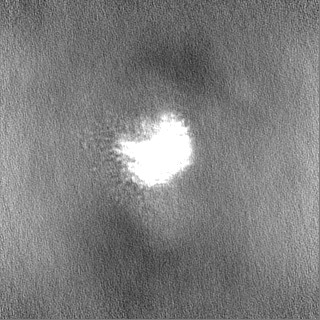
 emd_40771.png
 https://data.pdbj.org/pub/emdb/structures/EMD-40771


 Z (Sec.)
 Y (Row.)
 X (Col.)




 Sample components
 Processing
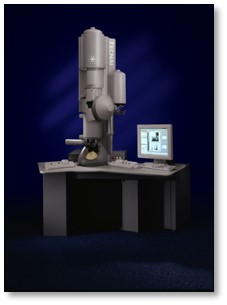
 Electron microscopy
 FIELD EMISSION GUN