protein localization to organelle / centriole-centriole cohesion / regulation of centriole-centriole cohesion / detection of light stimulus involved in visual perception / macrolide binding / activin receptor binding / positive regulation of protein localization to centrosome / regulation of skeletal muscle contraction by regulation of release of sequestered calcium ion / cytoplasmic side of membrane / transforming growth factor beta receptor binding ...protein localization to organelle / centriole-centriole cohesion / regulation of centriole-centriole cohesion / detection of light stimulus involved in visual perception / macrolide binding / activin receptor binding / positive regulation of protein localization to centrosome / regulation of skeletal muscle contraction by regulation of release of sequestered calcium ion / cytoplasmic side of membrane / transforming growth factor beta receptor binding / TGFBR1 LBD Mutants in Cancer / heart trabecula formation / type I transforming growth factor beta receptor binding / negative regulation of activin receptor signaling pathway / signaling receptor inhibitor activity / non-motile cilium assembly / protein localization to centrosome / I-SMAD binding / regulation of amyloid precursor protein catabolic process / terminal cisterna / ryanodine receptor complex / 'de novo' protein folding / FK506 binding / ventricular cardiac muscle tissue morphogenesis / TGF-beta receptor signaling activates SMADs / microtubule organizing center / heart morphogenesis / mTORC1-mediated signalling / Calcineurin activates NFAT / cilium assembly / regulation of immune response / photoreceptor outer segment / regulation of cardiac muscle contraction by regulation of the release of sequestered calcium ion / photoreceptor inner segment / Loss of Nlp from mitotic centrosomes / Loss of proteins required for interphase microtubule organization from the centrosome / supramolecular fiber organization / Recruitment of mitotic centrosome proteins and complexes / centriole / sarcoplasmic reticulum membrane / Recruitment of NuMA to mitotic centrosomes / Anchoring of the basal body to the plasma membrane / AURKA Activation by TPX2 / T cell activation / peptidylprolyl isomerase / sarcoplasmic reticulum / peptidyl-prolyl cis-trans isomerase activity / TGF-beta receptor signaling in EMT (epithelial to mesenchymal transition) / calcium channel regulator activity / protein maturation / negative regulation of transforming growth factor beta receptor signaling pathway / protein refolding / Z disc / intracellular protein localization / SARS-CoV-1 activates/modulates innate immune responses / Regulation of PLK1 Activity at G2/M Transition / regulation of protein localization / mitotic cell cycle / protein folding / Potential therapeutics for SARS / amyloid fibril formation / transmembrane transporter binding / ciliary basal body / positive regulation of canonical NF-kappaB signal transduction / protein domain specific binding / centrosome / perinuclear region of cytoplasm / protein-containing complex / extracellular exosome / membrane / cytosol / cytoplasm Similarity search - Function
In the structure databanks used in Yorodumi, some data are registered as the other names, "COVID-19 virus" and "2019-nCoV". Here are the details of the virus and the list of structure data.
Jan 31, 2019. EMDB accession codes are about to change! (news from PDBe EMDB page)
EMDB accession codes are about to change! (news from PDBe EMDB page)
The allocation of 4 digits for EMDB accession codes will soon come to an end. Whilst these codes will remain in use, new EMDB accession codes will include an additional digit and will expand incrementally as the available range of codes is exhausted. The current 4-digit format prefixed with “EMD-” (i.e. EMD-XXXX) will advance to a 5-digit format (i.e. EMD-XXXXX), and so on. It is currently estimated that the 4-digit codes will be depleted around Spring 2019, at which point the 5-digit format will come into force.
The EM Navigator/Yorodumi systems omit the EMD- prefix.
Related info.:Q: What is EMD? / ID/Accession-code notation in Yorodumi/EM Navigator
Yorodumi is a browser for structure data from EMDB, PDB, SASBDB, etc.
This page is also the successor to EM Navigator detail page, and also detail information page/front-end page for Omokage search.
The word "yorodu" (or yorozu) is an old Japanese word meaning "ten thousand". "mi" (miru) is to see.
Related info.:EMDB / PDB / SASBDB / Comparison of 3 databanks / Yorodumi Search / Aug 31, 2016. New EM Navigator & Yorodumi / Yorodumi Papers / Jmol/JSmol / Function and homology information / Changes in new EM Navigator and Yorodumi
 Movie
Movie Controller

 Yorodumi
 Open data
 Basic information
 Components
 Keywords
 Function and homology information
 Homo sapiens (human)
 X-RAY DIFFRACTION /
  Authors
 Citation
 Structure visualization
 Downloads & links
 Other downloads

 PDBj
PDBj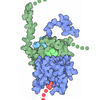

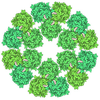

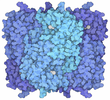
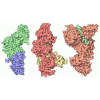
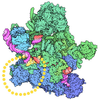
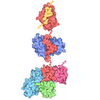
 Assembly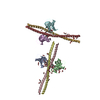
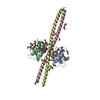
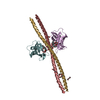

 Escherichia coli (E. coli) / References: UniProt: Q9BV73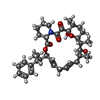
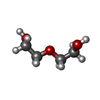

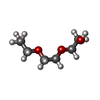
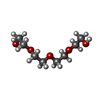

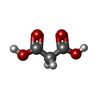

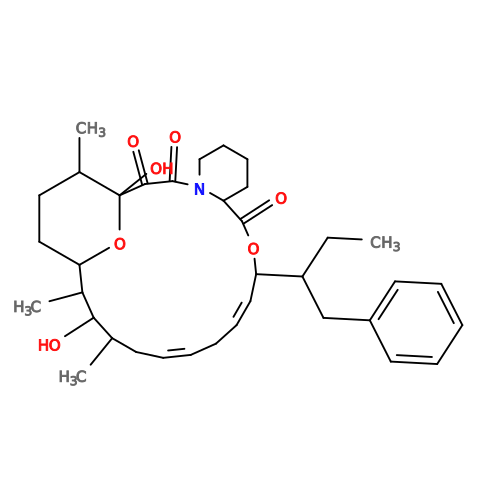 Mass: 609.793 Da / Num. of mol.: 4 / Source method: obtained synthetically / Formula: C36H51NO7 / Feature type: SUBJECT OF INVESTIGATION
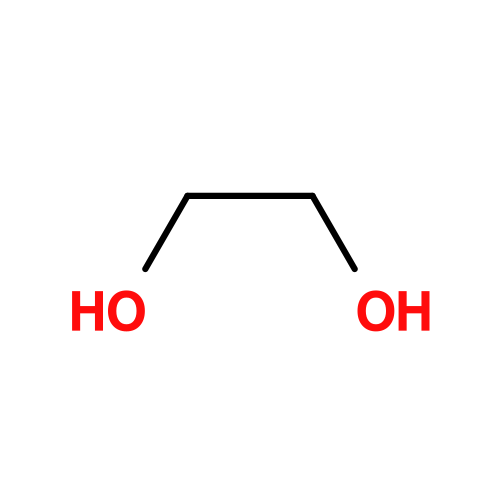 Mass: 62.068 Da / Num. of mol.: 16 / Source method: obtained synthetically / Formula: C2H6O2
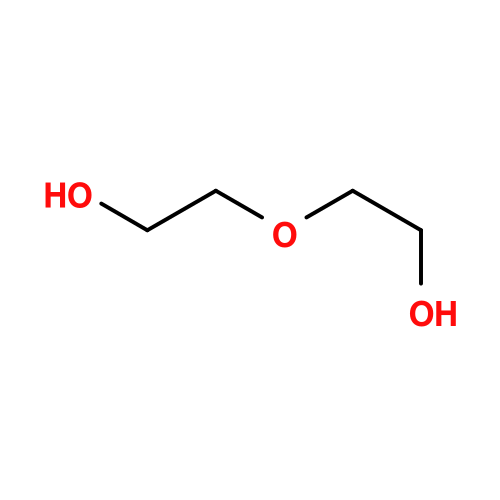 Mass: 106.120 Da / Num. of mol.: 10 / Source method: obtained synthetically / Formula: C4H10O3
 Mass: 370.436 Da / Num. of mol.: 2 / Source method: obtained synthetically / Formula: C16H34O9
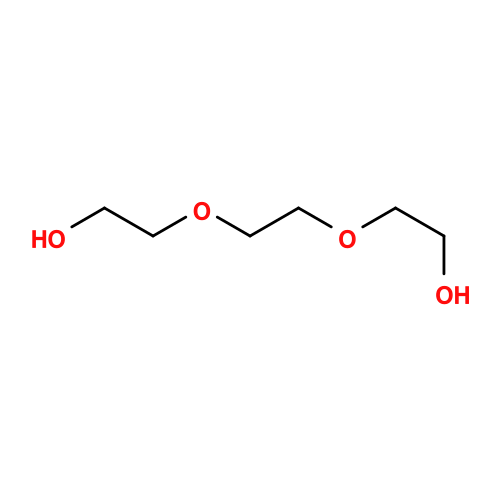 Mass: 150.173 Da / Num. of mol.: 4 / Source method: obtained synthetically / Formula: C6H14O4
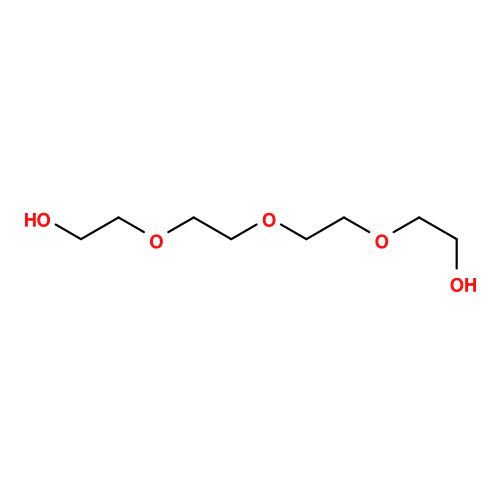 Mass: 194.226 Da / Num. of mol.: 4 / Source method: obtained synthetically / Formula: C8H18O5 / Comment: precipitant*YM
 Mass: 24.305 Da / Num. of mol.: 1 / Source method: obtained synthetically / Formula: Mg
 Mass: 104.061 Da / Num. of mol.: 1
 Sample preparation
 / Beamline: 21-ID-G / Wavelength: 0.97856 Å
 Processing