positive regulation of endodeoxyribonuclease activity / regulation of tRNA methylation / negative regulation of protein maturation / negative regulation of fatty acid beta-oxidation / positive regulation of protein localization to endoplasmic reticulum / regulation of glycogen biosynthetic process / negative regulation of lymphocyte migration / cellular response to rapamycin / negative regulation of protein localization to lysosome / maintenance of protein location in mitochondrion ...positive regulation of endodeoxyribonuclease activity / regulation of tRNA methylation / negative regulation of protein maturation / negative regulation of fatty acid beta-oxidation / positive regulation of protein localization to endoplasmic reticulum / regulation of glycogen biosynthetic process / negative regulation of lymphocyte migration / cellular response to rapamycin / negative regulation of protein localization to lysosome / maintenance of protein location in mitochondrion / AKT-mediated inactivation of FOXO1A / negative regulation of long-chain fatty acid import across plasma membrane / Negative regulation of the PI3K/AKT network / regulation of type B pancreatic cell development / activation-induced cell death of T cells / positive regulation of anaphase-promoting complex-dependent catabolic process / : / potassium channel activator activity / fibroblast migration / mammary gland epithelial cell differentiation / AKT phosphorylates targets in the nucleus / cellular response to oxidised low-density lipoprotein particle stimulus / negative regulation of cilium assembly / negative regulation of hydrogen peroxide-induced neuron intrinsic apoptotic signaling pathway / Butyrate Response Factor 1 (BRF1) binds and destabilizes mRNA / positive regulation of TORC2 signaling / positive regulation of glucose metabolic process / RUNX2 regulates genes involved in cell migration / beta-arrestin-dependent dopamine receptor signaling pathway / positive regulation of protein localization to cell surface / response to fluid shear stress / interleukin-18-mediated signaling pathway / MTOR signalling / response to growth factor / cell migration involved in sprouting angiogenesis / negative regulation of leukocyte cell-cell adhesion / RAB GEFs exchange GTP for GDP on RABs / glycogen biosynthetic process / phosphatidylinositol-3,4-bisphosphate binding / complement receptor mediated signaling pathway / sphingosine-1-phosphate receptor signaling pathway / response to growth hormone / AKT phosphorylates targets in the cytosol / anoikis / regulation of postsynapse organization / regulation of neuron projection development / KSRP (KHSRP) binds and destabilizes mRNA / response to UV-A / Regulation of TP53 Activity through Association with Co-factors / cellular response to stress / TORC2 complex binding / Mechanical load activates signaling by PIEZO1 and integrins in osteocytes / negative regulation of macroautophagy / Co-inhibition by CTLA4 / negative regulation of release of cytochrome c from mitochondria / negative regulation of cGAS/STING signaling pathway / peptidyl-threonine phosphorylation / negative regulation of PERK-mediated unfolded protein response / Constitutive Signaling by AKT1 E17K in Cancer / behavioral response to pain / positive regulation of protein metabolic process / phosphatidylinositol-3,4,5-trisphosphate binding / negative regulation of Notch signaling pathway / Regulation of localization of FOXO transcription factors / TOR signaling / negative regulation of extrinsic apoptotic signaling pathway in absence of ligand / CD28 dependent PI3K/Akt signaling / positive regulation of peptidyl-serine phosphorylation / Activation of BAD and translocation to mitochondria / positive regulation of fat cell differentiation / positive regulation of blood vessel endothelial cell migration / Estrogen-dependent nuclear events downstream of ESR-membrane signaling / positive regulation of glycogen biosynthetic process / Mitochondrial unfolded protein response (UPRmt) / positive regulation of lipid biosynthetic process / protein serine/threonine kinase inhibitor activity / SARS-CoV-2 targets host intracellular signalling and regulatory pathways / T cell costimulation / response to insulin-like growth factor stimulus / positive regulation of G1/S transition of mitotic cell cycle / negative regulation of oxidative stress-induced intrinsic apoptotic signaling pathway / Cyclin E associated events during G1/S transition / vascular endothelial cell response to laminar fluid shear stress / Cyclin A:Cdk2-associated events at S phase entry / Regulation of TP53 Activity through Acetylation / nitric oxide metabolic process / nitric oxide biosynthetic process / negative regulation of proteolysis / eNOS activation / Integrin signaling / Tetrahydrobiopterin (BH4) synthesis, recycling, salvage and regulation / regulation of mRNA stability / positive regulation of endothelial cell proliferation / insulin-like growth factor receptor signaling pathway / 14-3-3 protein binding / protein serine/threonine/tyrosine kinase activity / positive regulation of TORC1 signaling / negative regulation of protein ubiquitination / regulation of cell migration / FLT3 Signaling Similarity search - Function
Protein kinase B alpha, catalytic domain / Protein Kinase B, pleckstrin homology domain / Protein kinase, C-terminal / Protein kinase C terminal domain / Extension to Ser/Thr-type protein kinases / AGC-kinase, C-terminal / AGC-kinase C-terminal domain profile. / PH domain / PH domain profile. / Pleckstrin homology domain. ...Protein kinase B alpha, catalytic domain / Protein Kinase B, pleckstrin homology domain / Protein kinase, C-terminal / Protein kinase C terminal domain / Extension to Ser/Thr-type protein kinases / AGC-kinase, C-terminal / AGC-kinase C-terminal domain profile. / PH domain / PH domain profile. / Pleckstrin homology domain. / Pleckstrin homology domain / PH-like domain superfamily / Phosphorylase Kinase; domain 1 / Phosphorylase Kinase; domain 1 / Transferase(Phosphotransferase) domain 1 / Transferase(Phosphotransferase); domain 1 / Serine/threonine-protein kinase, active site / Serine/Threonine protein kinases active-site signature. / Protein kinase domain / Serine/Threonine protein kinases, catalytic domain / Protein kinase, ATP binding site / Protein kinases ATP-binding region signature. / Protein kinase domain profile. / Protein kinase domain / Protein kinase-like domain superfamily / 2-Layer Sandwich / Orthogonal Bundle / Mainly Alpha / Alpha Beta Similarity search - Domain/homology
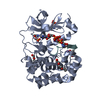
Protein / Protein/peptide , 2 types, 4 molecules ABFG
#1: Protein
RAC-alphaserine/threonine-proteinkinase / Protein kinase B / PKB / Protein kinase B alpha / PKB alpha / Proto-oncogene c-Akt / RAC-PK-alpha
Mass: 41393.801 Da / Num. of mol.: 2 / Fragment: UNP residues 123-480 Source method: isolated from a genetically manipulated source Source: (gene. exp.) Homo sapiens (human) / Gene: AKT1, PKB, RAC / Production host: Spodoptera frugiperda (fall armyworm) References: UniProt: P31749, non-specific serine/threonine protein kinase
#2: Protein/peptide
bisubstrate
Mass: 1685.502 Da / Num. of mol.: 2 Source method: isolated from a genetically manipulated source Source: (gene. exp.) Homo sapiens (human) / Production host: Spodoptera frugiperda (fall armyworm)
Resolution: 2.12→29.82 Å / Cor.coef. Fo:Fc: 0.957 / Cor.coef. Fo:Fc free: 0.932 / SU B: 5.353 / SU ML: 0.141 / SU R Cruickshank DPI: 0.2126 / Cross valid method: THROUGHOUT / σ(F): 0 / ESU R: 0.213 / ESU R Free: 0.19 Details: HYDROGENS HAVE BEEN ADDED IN THE RIDING POSITIONS U VALUES : REFINED INDIVIDUALLY
Rfactor
Num. reflection
% reflection
Selection details
Rfree
0.241
2364
4.9 %
RANDOM
Rwork
0.1853
-
-
-
obs
0.1881
45932
99.03 %
-
Solvent computation
Ion probe radii: 0.8 Å / Shrinkage radii: 0.8 Å / VDW probe radii: 1.2 Å
In the structure databanks used in Yorodumi, some data are registered as the other names, "COVID-19 virus" and "2019-nCoV". Here are the details of the virus and the list of structure data.
Jan 31, 2019. EMDB accession codes are about to change! (news from PDBe EMDB page)
EMDB accession codes are about to change! (news from PDBe EMDB page)
The allocation of 4 digits for EMDB accession codes will soon come to an end. Whilst these codes will remain in use, new EMDB accession codes will include an additional digit and will expand incrementally as the available range of codes is exhausted. The current 4-digit format prefixed with “EMD-” (i.e. EMD-XXXX) will advance to a 5-digit format (i.e. EMD-XXXXX), and so on. It is currently estimated that the 4-digit codes will be depleted around Spring 2019, at which point the 5-digit format will come into force.
The EM Navigator/Yorodumi systems omit the EMD- prefix.
Related info.:Q: What is EMD? / ID/Accession-code notation in Yorodumi/EM Navigator
Yorodumi is a browser for structure data from EMDB, PDB, SASBDB, etc.
This page is also the successor to EM Navigator detail page, and also detail information page/front-end page for Omokage search.
The word "yorodu" (or yorozu) is an old Japanese word meaning "ten thousand". "mi" (miru) is to see.
Related info.:EMDB / PDB / SASBDB / Comparison of 3 databanks / Yorodumi Search / Aug 31, 2016. New EM Navigator & Yorodumi / Yorodumi Papers / Jmol/JSmol / Function and homology information / Changes in new EM Navigator and Yorodumi
 Movie
Movie Controller


 Open data
 Basic information
 Components
 Keywords
 Function and homology information
 Homo sapiens (human)
 X-RAY DIFFRACTION /
  Authors
 United States, 2items
  Citation
 Structure visualization
 Downloads & links
 Other downloads


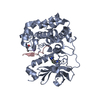
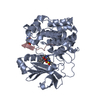


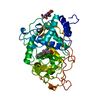
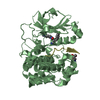


 PDBj
PDBj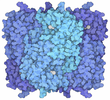
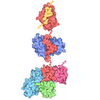
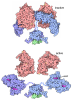
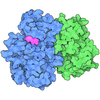
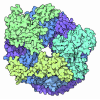

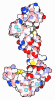
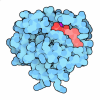
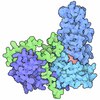
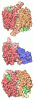
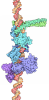
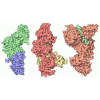
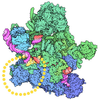
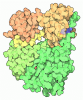
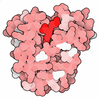
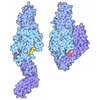
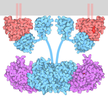
 Assembly


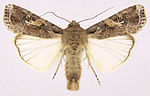 Spodoptera frugiperda (fall armyworm)
 Mass: 54.938 Da / Num. of mol.: 4 / Source method: obtained synthetically / Formula: Mn
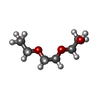
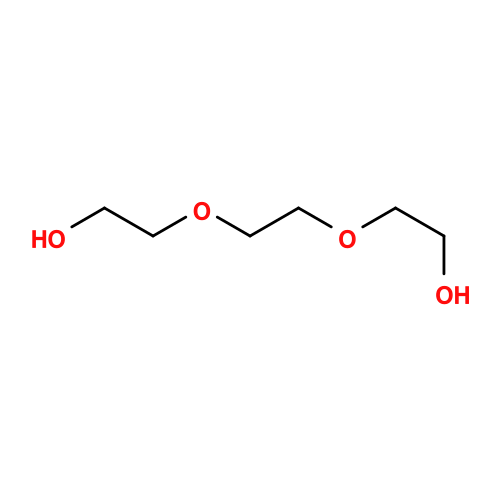 Mass: 150.173 Da / Num. of mol.: 2 / Source method: obtained synthetically / Formula: C6H14O4
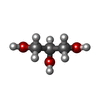
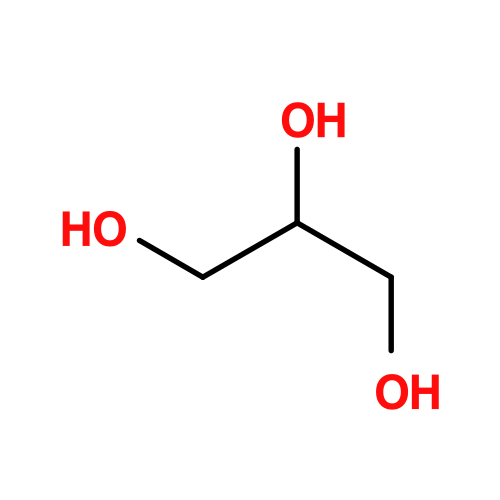 Mass: 92.094 Da / Num. of mol.: 1 / Source method: obtained synthetically / Formula: C3H8O3
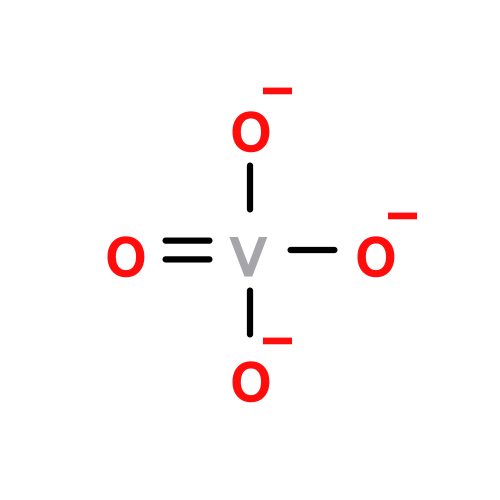 Mass: 114.939 Da / Num. of mol.: 1 / Source method: obtained synthetically / Formula: VO4
 Sample preparation
 Processing