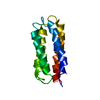
- PDB-6msv: Structure of the 6th type III domain from human fibronectin -
+
Open data
ID or keywords:
Loading...
-
Basic information
Entry
Database: PDB / ID: 6msv
Title
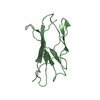
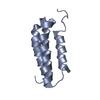
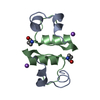
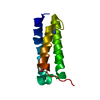
Structure of the 6th type III domain from human fibronectin
Components
Fibronectin
Keywords
CELL ADHESION
Function / homology
Function and homology information
fibronectin fibril / negative regulation of monocyte activation / negative regulation of transforming growth factor beta production / positive regulation of substrate-dependent cell migration, cell attachment to substrate / cell-substrate junction assembly / neural crest cell migration involved in autonomic nervous system development / fibrinogen complex / Fibronectin matrix formation / blood coagulation, fibrin clot formation / enteric nervous system development ...fibronectin fibril / negative regulation of monocyte activation / negative regulation of transforming growth factor beta production / positive regulation of substrate-dependent cell migration, cell attachment to substrate / cell-substrate junction assembly / neural crest cell migration involved in autonomic nervous system development / fibrinogen complex / Fibronectin matrix formation / blood coagulation, fibrin clot formation / enteric nervous system development / Attachment of bacteria to epithelial cells / non-collagenous component of basement membrane / integrin activation / neural crest cell migration / ALK mutants bind TKIs / proteoglycan binding / Molecules associated with elastic fibres / MET activates PTK2 signaling / endodermal cell differentiation / response to muscle activity / Syndecan interactions / p130Cas linkage to MAPK signaling for integrins / peptidase activator activity / extracellular matrix structural constituent / biological process involved in interaction with symbiont / GRB2:SOS provides linkage to MAPK signaling for Integrins / endoplasmic reticulum-Golgi intermediate compartment / regulation of protein phosphorylation / Non-integrin membrane-ECM interactions / regulation of ERK1 and ERK2 cascade / Integrin cell surface interactions / ECM proteoglycans / endothelial cell migration / substrate adhesion-dependent cell spreading / cell-matrix adhesion / Degradation of the extracellular matrix / collagen binding / Integrin signaling / integrin-mediated signaling pathway / platelet alpha granule lumen / positive regulation of fibroblast proliferation / Turbulent (oscillatory, disturbed) flow shear stress activates signaling by PIEZO1 and integrins in endothelial cells / Cell surface interactions at the vascular wall / Developmental Lineage of Pancreatic Ductal Cells / Post-translational protein phosphorylation / response to wounding / Signaling by high-kinase activity BRAF mutants / MAP2K and MAPK activation / integrin binding / Regulation of Insulin-like Growth Factor (IGF) transport and uptake by Insulin-like Growth Factor Binding Proteins (IGFBPs) / heart development / Signaling by RAF1 mutants / Signaling by moderate kinase activity BRAF mutants / Paradoxical activation of RAF signaling by kinase inactive BRAF / Signaling downstream of RAS mutants / heparin binding / Signaling by BRAF and RAF1 fusions / Signaling by ALK fusions and activated point mutants / Platelet degranulation / nervous system development / GPER1 signaling / protease binding / Interleukin-4 and Interleukin-13 signaling / blood microparticle / extracellular matrix / positive regulation of phosphatidylinositol 3-kinase/protein kinase B signal transduction / cell adhesion / apical plasma membrane / receptor ligand activity / endoplasmic reticulum lumen / signaling receptor binding / positive regulation of gene expression / positive regulation of cell population proliferation / extracellular exosome / extracellular region / identical protein binding / plasma membrane Similarity search - Function
Fibronectin type I domain / Fibronectin, type I / Fibronectin type-I domain signature. / Fibronectin type-I domain profile. / Fibronectin type 1 domain / : / Fibronectin type II domain / Fibronectin type II domain superfamily / Fibronectin type II domain / Fibronectin type-II collagen-binding domain signature. ...Fibronectin type I domain / Fibronectin, type I / Fibronectin type-I domain signature. / Fibronectin type-I domain profile. / Fibronectin type 1 domain / : / Fibronectin type II domain / Fibronectin type II domain superfamily / Fibronectin type II domain / Fibronectin type-II collagen-binding domain signature. / Fibronectin type-II collagen-binding domain profile. / Fibronectin type 2 domain / Kringle-like fold / Fibronectin type III domain / EGF-like domain signature 1. / Fibronectin type 3 domain / Fibronectin type-III domain profile. / Fibronectin type III / Fibronectin type III superfamily / Immunoglobulin-like fold Similarity search - Domain/homology
In the structure databanks used in Yorodumi, some data are registered as the other names, "COVID-19 virus" and "2019-nCoV". Here are the details of the virus and the list of structure data.
Jan 31, 2019. EMDB accession codes are about to change! (news from PDBe EMDB page)
EMDB accession codes are about to change! (news from PDBe EMDB page)
The allocation of 4 digits for EMDB accession codes will soon come to an end. Whilst these codes will remain in use, new EMDB accession codes will include an additional digit and will expand incrementally as the available range of codes is exhausted. The current 4-digit format prefixed with “EMD-” (i.e. EMD-XXXX) will advance to a 5-digit format (i.e. EMD-XXXXX), and so on. It is currently estimated that the 4-digit codes will be depleted around Spring 2019, at which point the 5-digit format will come into force.
The EM Navigator/Yorodumi systems omit the EMD- prefix.
Related info.:Q: What is EMD? / ID/Accession-code notation in Yorodumi/EM Navigator
Yorodumi is a browser for structure data from EMDB, PDB, SASBDB, etc.
This page is also the successor to EM Navigator detail page, and also detail information page/front-end page for Omokage search.
The word "yorodu" (or yorozu) is an old Japanese word meaning "ten thousand". "mi" (miru) is to see.
Related info.:EMDB / PDB / SASBDB / Comparison of 3 databanks / Yorodumi Search / Aug 31, 2016. New EM Navigator & Yorodumi / Yorodumi Papers / Jmol/JSmol / Function and homology information / Changes in new EM Navigator and Yorodumi
 Movie
Movie Controller


 Open data
 Basic information
 Components
 Keywords
 Function and homology information
 Homo sapiens (human)
 X-RAY DIFFRACTION /
  Authors
 United States, 2items
  Citation
 Structure visualization
 Downloads & links
 Other downloads




 PDBj
PDBj
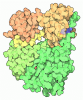

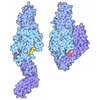
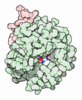
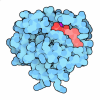
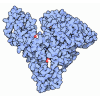
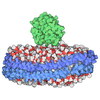
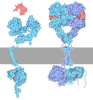
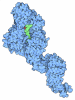
 Assembly
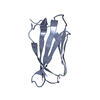


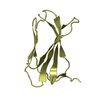

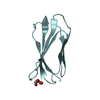


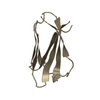


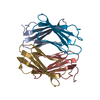

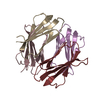

 Escherichia coli (E. coli) / References: UniProt: P02751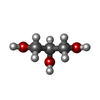
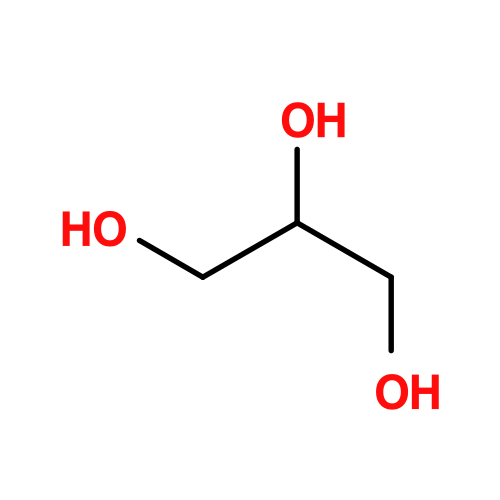 Mass: 92.094 Da / Num. of mol.: 2 / Source method: obtained synthetically / Formula: C3H8O3
 Mass: 18.015 Da / Num. of mol.: 148 / Source method: isolated from a natural source / Formula: H2O
 Sample preparation
 Processing