regulation of calcium ion transport into cytosol / ubiquitin-like protein ligase activity / negative regulation of translation in response to oxidative stress / positive regulation of protein localization to chromosome, telomeric region / oncogene-induced cell senescence / PML body organization / fibroblast migration / positive regulation of apoptotic process involved in mammary gland involution / SUMO binding / suppression of viral release by host ...regulation of calcium ion transport into cytosol / ubiquitin-like protein ligase activity / negative regulation of translation in response to oxidative stress / positive regulation of protein localization to chromosome, telomeric region / oncogene-induced cell senescence / PML body organization / fibroblast migration / positive regulation of apoptotic process involved in mammary gland involution / SUMO binding / suppression of viral release by host / negative regulation of mitotic cell cycle / endoplasmic reticulum calcium ion homeostasis / maintenance of protein location in nucleus / SUMO transferase activity / Transferases; Acyltransferases; Aminoacyltransferases / regulation of double-strand break repair / positive regulation of extrinsic apoptotic signaling pathway / Regulation of RUNX1 Expression and Activity / cobalt ion binding / negative regulation of interleukin-1 beta production / SUMOylation of ubiquitinylation proteins / entrainment of circadian clock by photoperiod / SMAD binding / negative regulation of telomere maintenance via telomerase / intrinsic apoptotic signaling pathway in response to DNA damage by p53 class mediator / positive regulation of telomere maintenance / regulation of cell adhesion / protein sumoylation / protein targeting / positive regulation of signal transduction by p53 class mediator / SUMOylation of DNA damage response and repair proteins / Dengue virus activates/modulates innate and adaptive immune responses / Regulation of TP53 Activity through Acetylation / positive regulation of defense response to virus by host / negative regulation of ubiquitin-dependent protein catabolic process / negative regulation of angiogenesis / response to cytokine / positive regulation of fibroblast proliferation / Regulation of PTEN localization / DNA damage response, signal transduction by p53 class mediator / intrinsic apoptotic signaling pathway in response to DNA damage / circadian regulation of gene expression / establishment of protein localization / antiviral innate immune response / negative regulation of cell growth / PML body / cellular senescence / regulation of circadian rhythm / Interferon gamma signaling / Transcriptional regulation of granulopoiesis / nuclear matrix / HCMV Early Events / nuclear membrane / protein-containing complex assembly / early endosome membrane / response to hypoxia / proteasome-mediated ubiquitin-dependent protein catabolic process / molecular adaptor activity / nuclear body / regulation of cell cycle / innate immune response / chromosome, telomeric region / transcription coactivator activity / protein stabilization / chromatin remodeling / apoptotic process / negative regulation of cell population proliferation / protein heterodimerization activity / negative regulation of DNA-templated transcription / ubiquitin protein ligase binding / nucleolus / regulation of DNA-templated transcription / endoplasmic reticulum membrane / protein homodimerization activity / zinc ion binding / nucleoplasm / identical protein binding / nucleus / cytosol / cytoplasm Similarity search - Function
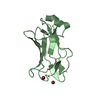
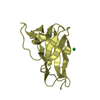
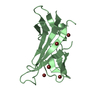
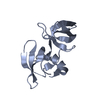
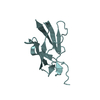
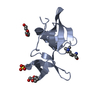
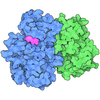
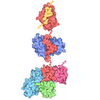
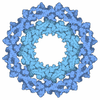
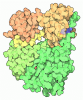
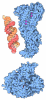
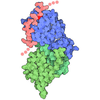
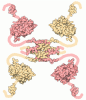
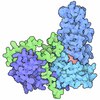
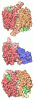
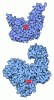
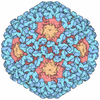
The PML B1 can form three types of dimer via W157-interface, F158-interface, and N-terminal augmentation. Through combinations of these dimeric interfaces, PML B1 can polymerize into an remarkable B1-network. Via self-self interaction, PML B1 box can form polymer (i.e. N-mer).
-
Components
#1: Protein
ProteinPML / Promyelocytic leukemia protein
Mass: 5941.795 Da / Num. of mol.: 4 / Fragment: UNP residues 12-=168 Source method: isolated from a genetically manipulated source Source: (gene. exp.) Homo sapiens (human) / Gene: PML / Production host: Escherichia coli (E. coli) / References: UniProt: P29590
 Movie
Movie Controller


 Open data
 Basic information
 Components
 Keywords
 Function and homology information
 Homo sapiens (human)
 X-RAY DIFFRACTION /
  Authors
 China, 1items
  Citation
 Structure visualization
 Downloads & links
 Other downloads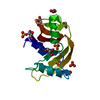



 PDBj
PDBj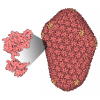


 Assembly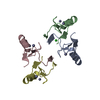

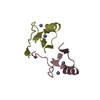

 Escherichia coli (E. coli) / References: UniProt: P29590
 Mass: 65.409 Da / Num. of mol.: 8 / Source method: obtained synthetically / Formula: Zn
 Mass: 35.453 Da / Num. of mol.: 1 / Source method: obtained synthetically / Formula: Cl
 Mass: 18.015 Da / Num. of mol.: 82 / Source method: isolated from a natural source / Formula: H2O
 Sample preparation
 Processing