 Movie
Movie Controller

[English] 日本語
 Yorodumi
- PDB-5vie: Electrophilic probes for deciphering substrate recognition by O-G... -
+ Open data

- Basic information
| Entry | Database: PDB / ID: 5vie | |||||||||
|---|---|---|---|---|---|---|---|---|---|---|
| Title | Electrophilic probes for deciphering substrate recognition by O-GlcNAc transferase | |||||||||
 Components Components |
| |||||||||
 Keywords Keywords | TRANSFERASE / O-GlcNAc Transferase / Electrophilic Probes / complex | |||||||||
| Function / homology |  Function and homology information Function and homology informationnegative regulation of non-canonical inflammasome complex assembly / protein N-acetylglucosaminyltransferase complex / regulation of insulin receptor signaling pathway / protein O-GlcNAc transferase / protein O-acetylglucosaminyltransferase activity / positive regulation of transcription from RNA polymerase II promoter by glucose / acetylglucosaminyltransferase activity / regulation of Rac protein signal transduction / regulation of necroptotic process / protein O-linked glycosylation ...negative regulation of non-canonical inflammasome complex assembly / protein N-acetylglucosaminyltransferase complex / regulation of insulin receptor signaling pathway / protein O-GlcNAc transferase / protein O-acetylglucosaminyltransferase activity / positive regulation of transcription from RNA polymerase II promoter by glucose / acetylglucosaminyltransferase activity / regulation of Rac protein signal transduction / regulation of necroptotic process / protein O-linked glycosylation / negative regulation of stem cell population maintenance / regulation of gluconeogenesis / Phosphorylation and nuclear translocation of BMAL1 (ARNTL) and CLOCK / positive regulation of aggrephagy / regulation of chromosome separation / WNT mediated activation of DVL / Condensation of Prometaphase Chromosomes / regulation of glycolytic process / protein kinase CK2 complex / symbiont-mediated disruption of host cell PML body / RIPK1-mediated regulated necrosis / Phosphorylation and nuclear translocation of the CRY:PER:kinase complex / Regulation of CDH1 posttranslational processing and trafficking to plasma membrane / Receptor Mediated Mitophagy / Sin3-type complex / Formation of WDR5-containing histone-modifying complexes / regulation of synapse assembly / hemopoiesis / positive regulation of stem cell population maintenance / Synthesis of PC / regulation of neurotransmitter receptor localization to postsynaptic specialization membrane / negative regulation of apoptotic signaling pathway / positive regulation of proteolysis / negative regulation of signal transduction by p53 class mediator / phosphatidylinositol-3,4,5-trisphosphate binding / Maturation of hRSV A proteins / RUNX1 interacts with co-factors whose precise effect on RUNX1 targets is not known / histone acetyltransferase complex / negative regulation of double-strand break repair via homologous recombination / mitophagy / positive regulation of Wnt signaling pathway / cell projection / response to nutrient / negative regulation of protein ubiquitination / positive regulation of TORC1 signaling / negative regulation of proteasomal ubiquitin-dependent protein catabolic process / negative regulation of cell migration / negative regulation of transforming growth factor beta receptor signaling pathway / Signal transduction by L1 / positive regulation of translation / protein processing / cellular response to glucose stimulus / circadian regulation of gene expression / Wnt signaling pathway / response to insulin / Hsp90 protein binding / chromatin DNA binding / peptidyl-serine phosphorylation / PML body / Regulation of necroptotic cell death / mitochondrial membrane / SPOP-mediated proteasomal degradation of PD-L1(CD274) / Regulation of PTEN stability and activity / positive regulation of protein catabolic process / kinase activity / double-strand break repair / KEAP1-NFE2L2 pathway / rhythmic process / UCH proteinases / positive regulation of cell growth / Cooperation of PDCL (PhLP1) and TRiC/CCT in G-protein beta folding / positive regulation of cold-induced thermogenesis / HATs acetylate histones / protein folding / heterochromatin formation / chromatin organization / Regulation of TP53 Activity through Phosphorylation / regulation of cell cycle / non-specific serine/threonine protein kinase / protein stabilization / negative regulation of translation / protein serine kinase activity / protein serine/threonine kinase activity / apoptotic process / positive regulation of cell population proliferation / regulation of transcription by RNA polymerase II / DNA damage response / positive regulation of DNA-templated transcription / chromatin / negative regulation of transcription by RNA polymerase II / glutamatergic synapse / signal transduction / positive regulation of transcription by RNA polymerase II / protein-containing complex / DNA-templated transcription / nucleoplasm / ATP binding / identical protein binding / nucleus / plasma membrane Similarity search - Function | |||||||||
| Biological species |  Homo sapiens (human) Homo sapiens (human) | |||||||||
| Method |  X-RAY DIFFRACTION / SYNCHROTRON / MOLECULAR REPLACEMENT / Resolution: 2.6 Å X-RAY DIFFRACTION / SYNCHROTRON / MOLECULAR REPLACEMENT / Resolution: 2.6 Å | |||||||||
 Authors Authors | Jiang, J. / Li, B. / Hu, C.-W. / Worth, M. / Fan, D. / Li, H. | |||||||||
| Funding support |  United States, 1items United States, 1items
| |||||||||
 Citation Citation | Journal: Nat. Chem. Biol. / Year: 2017 Title: Electrophilic probes for deciphering substrate recognition by O-GlcNAc transferase. Authors: Hu, C.W. / Worth, M. / Fan, D. / Li, B. / Li, H. / Lu, L. / Zhong, X. / Lin, Z. / Wei, L. / Ge, Y. / Li, L. / Jiang, J. | |||||||||
| History |
|
- Structure visualization
| Structure viewer | Molecule: MolmilJmol/JSmol |
|---|
- Downloads & links
-Download
| PDBx/mmCIF format | 5vie.cif.gz | 284.7 KB | Display | PDBx/mmCIF format |
|---|---|---|---|---|
| PDB format | pdb5vie.ent.gz | 226.2 KB | Display | PDB format |
| PDBx/mmJSON format | 5vie.json.gz | Tree view | PDBx/mmJSON format | |
| Others |  Other downloads Other downloads |
-Validation report
| Arichive directory | https://data.pdbj.org/pub/pdb/validation_reports/vi/5vieftp://data.pdbj.org/pub/pdb/validation_reports/vi/5vie | HTTPS FTP |
|---|
-Related structure data
| Related structure data |  5vifC  3pe3S S: Starting model for refinement C: citing same article ( |
|---|---|
| Similar structure data |
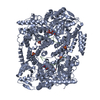
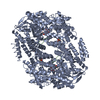
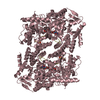


-Links
 PDBj
PDBj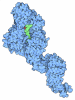

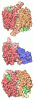
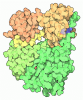

- Assembly
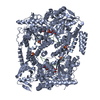
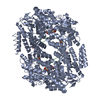
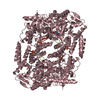
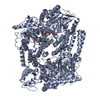
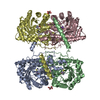
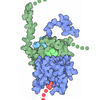
| Deposited unit | 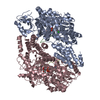
| ||||||||||||||||||||||||||||||||||||||||||||||||||||||||||||||||||||
|---|---|---|---|---|---|---|---|---|---|---|---|---|---|---|---|---|---|---|---|---|---|---|---|---|---|---|---|---|---|---|---|---|---|---|---|---|---|---|---|---|---|---|---|---|---|---|---|---|---|---|---|---|---|---|---|---|---|---|---|---|---|---|---|---|---|---|---|---|---|
| 1 |
| ||||||||||||||||||||||||||||||||||||||||||||||||||||||||||||||||||||
| Unit cell |
| ||||||||||||||||||||||||||||||||||||||||||||||||||||||||||||||||||||
| Noncrystallographic symmetry (NCS) | NCS domain:
NCS domain segments: Component-ID: _ / Refine code: _
NCS ensembles :
|
-Components
-Protein / Protein/peptide , 2 types, 4 molecules ACBD
| #1: Protein | Mass: 80974.508 Da / Num. of mol.: 2 / Fragment: UNP residues 323-1041 Source method: isolated from a genetically manipulated source Source: (gene. exp.) Homo sapiens (human) / Gene: OGT / Production host:   Escherichia coli (E. coli) / References: UniProt: O15294, protein O-GlcNAc transferase Escherichia coli (E. coli) / References: UniProt: O15294, protein O-GlcNAc transferase#2: Protein/peptide | Mass: 1398.562 Da / Num. of mol.: 2 / Source method: obtained synthetically / Source: (synth.) Homo sapiens (human) / References: UniProt: P68400*PLUS |
|---|
-Sugars , 2 types, 2 molecules 
| #4: Sugar | ChemComp-9C1 / 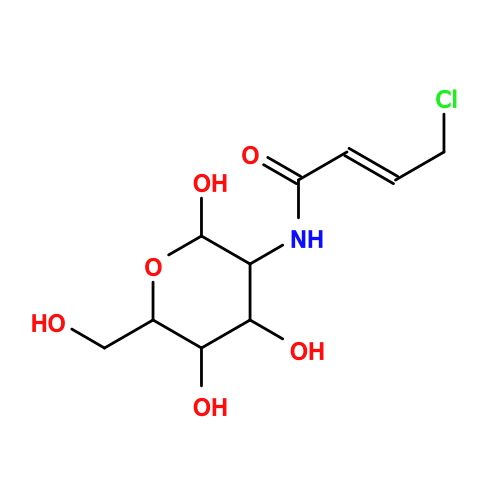 Type: D-saccharide, beta linking / Mass: 281.690 Da / Num. of mol.: 1 / Source method: obtained synthetically / Formula: C10H16ClNO6 Type: D-saccharide, beta linking / Mass: 281.690 Da / Num. of mol.: 1 / Source method: obtained synthetically / Formula: C10H16ClNO6 |
|---|---|
| #5: Sugar | ChemComp-9CD / 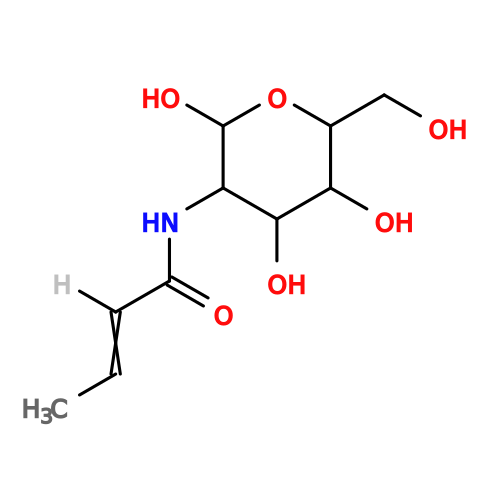 Type: D-saccharide, beta linking / Mass: 247.245 Da / Num. of mol.: 1 / Source method: obtained synthetically / Formula: C10H17NO6 Type: D-saccharide, beta linking / Mass: 247.245 Da / Num. of mol.: 1 / Source method: obtained synthetically / Formula: C10H17NO6 |
-Non-polymers , 2 types, 179 molecules 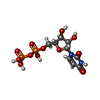
| #3: Chemical | 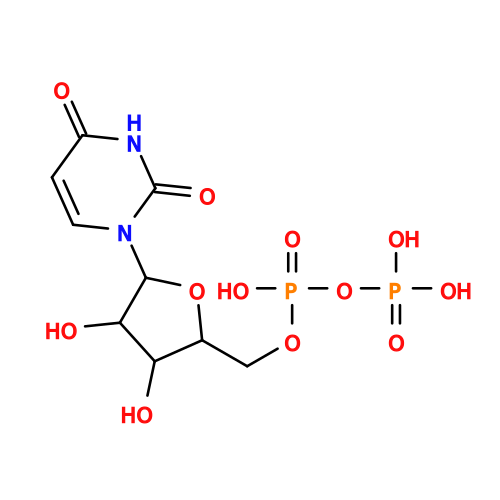 Type: RNA linking / Mass: 404.161 Da / Num. of mol.: 2 / Source method: obtained synthetically / Formula: C9H14N2O12P2 / Comment: UDP*YM Type: RNA linking / Mass: 404.161 Da / Num. of mol.: 2 / Source method: obtained synthetically / Formula: C9H14N2O12P2 / Comment: UDP*YM#6: Water | ChemComp-HOH / | Mass: 18.015 Da / Num. of mol.: 177 / Source method: isolated from a natural source / Formula: H2O |
|---|
-Details
| Has protein modification | Y |
|---|
-Experimental details
-Experiment
| Experiment | Method: X-RAY DIFFRACTION / Number of used crystals: 1 |
|---|
- Sample preparation
| Crystal | Density Matthews: 3.2 Å3/Da / Density % sol: 61.53 % |
|---|---|
| Crystal grow | Temperature: 293 K / Method: evaporation Details: 0.08 M Tris (pH 8.5), 0.02 M sodium cacodylate trihydrate (pH 6.5), 1.24 M ammonium sulfate, and 6% w/v polyethylene glycol 8,000. |
-Data collection
| Diffraction | Mean temperature: 293 K |
|---|---|
| Diffraction source | Source: SYNCHROTRON / Site: APS / Beamline: 21-ID-D / Wavelength: 0.978 Å |
| Detector | Type: MARMOSAIC 300 mm CCD / Detector: CCD / Date: Nov 14, 2015 |
| Radiation | Protocol: SINGLE WAVELENGTH / Monochromatic (M) / Laue (L): M / Scattering type: x-ray |
| Radiation wavelength | Wavelength: 0.978 Å / Relative weight: 1 |
| Reflection | Resolution: 2.6→50.01 Å / Num. obs: 68209 / % possible obs: 98.6 % / Redundancy: 4.3 % / Rmerge(I) obs: 0.098 / Rpim(I) all: 0.053 / Net I/σ(I): 13.8 |
| Reflection shell | Resolution: 2.6→2.69 Å / Redundancy: 4.6 % / Rmerge(I) obs: 0.629 / Mean I/σ(I) obs: 1.95 / Num. unique obs: 6807 / CC1/2: 0.878 / Rpim(I) all: 0.321 / % possible all: 99.9 |
- Processing
| Software |
| ||||||||||||||||||||||||||||||||||||||||||||||||||||||||||||||||||||||||||||||||||||||||||||||||||||||||||||||||||||||||||||||||||||||||||||||||||||||||||||||||||||||||||||||||||||||
|---|---|---|---|---|---|---|---|---|---|---|---|---|---|---|---|---|---|---|---|---|---|---|---|---|---|---|---|---|---|---|---|---|---|---|---|---|---|---|---|---|---|---|---|---|---|---|---|---|---|---|---|---|---|---|---|---|---|---|---|---|---|---|---|---|---|---|---|---|---|---|---|---|---|---|---|---|---|---|---|---|---|---|---|---|---|---|---|---|---|---|---|---|---|---|---|---|---|---|---|---|---|---|---|---|---|---|---|---|---|---|---|---|---|---|---|---|---|---|---|---|---|---|---|---|---|---|---|---|---|---|---|---|---|---|---|---|---|---|---|---|---|---|---|---|---|---|---|---|---|---|---|---|---|---|---|---|---|---|---|---|---|---|---|---|---|---|---|---|---|---|---|---|---|---|---|---|---|---|---|---|---|---|---|
| Refinement | Method to determine structure: MOLECULAR REPLACEMENT Starting model: 3PE3 Resolution: 2.6→50.01 Å / Cor.coef. Fo:Fc: 0.922 / Cor.coef. Fo:Fc free: 0.87 / SU B: 14.48 / SU ML: 0.294 / Cross valid method: THROUGHOUT / ESU R: 0.654 / ESU R Free: 0.375 / Stereochemistry target values: MAXIMUM LIKELIHOOD
| ||||||||||||||||||||||||||||||||||||||||||||||||||||||||||||||||||||||||||||||||||||||||||||||||||||||||||||||||||||||||||||||||||||||||||||||||||||||||||||||||||||||||||||||||||||||
| Solvent computation | Ion probe radii: 0.8 Å / Shrinkage radii: 0.8 Å / VDW probe radii: 1.2 Å / Solvent model: MASK | ||||||||||||||||||||||||||||||||||||||||||||||||||||||||||||||||||||||||||||||||||||||||||||||||||||||||||||||||||||||||||||||||||||||||||||||||||||||||||||||||||||||||||||||||||||||
| Displacement parameters | Biso mean: 41.891 Å2
| ||||||||||||||||||||||||||||||||||||||||||||||||||||||||||||||||||||||||||||||||||||||||||||||||||||||||||||||||||||||||||||||||||||||||||||||||||||||||||||||||||||||||||||||||||||||
| Refinement step | Cycle: 1 / Resolution: 2.6→50.01 Å
| ||||||||||||||||||||||||||||||||||||||||||||||||||||||||||||||||||||||||||||||||||||||||||||||||||||||||||||||||||||||||||||||||||||||||||||||||||||||||||||||||||||||||||||||||||||||
| Refine LS restraints |
|