Defective F8 accelerates dissociation of the A2 domain / Defective F8 binding to the cell membrane / Defective F8 secretion / Defective F8 sulfation at Y1699 / Gamma carboxylation, hypusinylation, hydroxylation, and arylsulfatase activation / Defective F8 binding to von Willebrand factor / blood coagulation, intrinsic pathway / Cargo concentration in the ER / COPII-coated ER to Golgi transport vesicle / Defective factor IX causes thrombophilia ...Defective F8 accelerates dissociation of the A2 domain / Defective F8 binding to the cell membrane / Defective F8 secretion / Defective F8 sulfation at Y1699 / Gamma carboxylation, hypusinylation, hydroxylation, and arylsulfatase activation / Defective F8 binding to von Willebrand factor / blood coagulation, intrinsic pathway / Cargo concentration in the ER / COPII-coated ER to Golgi transport vesicle / Defective factor IX causes thrombophilia / Defective cofactor function of FVIIIa variant / Defective F9 variant does not activate FX / COPII-mediated vesicle transport / Defective F8 cleavage by thrombin / Amplification and propagation of coagulation cascade / Initiation of coagulation cascade / endoplasmic reticulum-Golgi intermediate compartment membrane / platelet alpha granule lumen / Regulation of clotting cascade / Golgi lumen / blood coagulation / Platelet degranulation / oxidoreductase activity / endoplasmic reticulum lumen / copper ion binding / extracellular region / plasma membrane Similarity search - Function
Coagulation factor 5/8-like / : / Multicopper oxidases, conserved site / Multicopper oxidases signature 1. / Coagulation factors 5/8 type C domain (FA58C) signature 2. / Coagulation factors 5/8 type C domain (FA58C) signature 1. / Coagulation factor 5/8 C-terminal domain, discoidin domain / Multicopper oxidase, C-terminal / Multicopper oxidase / Coagulation factors 5/8 type C domain (FA58C) profile. ...Coagulation factor 5/8-like / : / Multicopper oxidases, conserved site / Multicopper oxidases signature 1. / Coagulation factors 5/8 type C domain (FA58C) signature 2. / Coagulation factors 5/8 type C domain (FA58C) signature 1. / Coagulation factor 5/8 C-terminal domain, discoidin domain / Multicopper oxidase, C-terminal / Multicopper oxidase / Coagulation factors 5/8 type C domain (FA58C) profile. / F5/8 type C domain / Coagulation factor 5/8 C-terminal domain / Multicopper oxidase / Multicopper oxidase, N-terminal / Multicopper oxidase / Galactose-binding domain-like / Cupredoxins - blue copper proteins / Cupredoxin / Galactose-binding-like domain superfamily / Jelly Rolls / Immunoglobulin-like / Sandwich / Mainly Beta Similarity search - Domain/homology
In the structure databanks used in Yorodumi, some data are registered as the other names, "COVID-19 virus" and "2019-nCoV". Here are the details of the virus and the list of structure data.
Jan 31, 2019. EMDB accession codes are about to change! (news from PDBe EMDB page)
EMDB accession codes are about to change! (news from PDBe EMDB page)
The allocation of 4 digits for EMDB accession codes will soon come to an end. Whilst these codes will remain in use, new EMDB accession codes will include an additional digit and will expand incrementally as the available range of codes is exhausted. The current 4-digit format prefixed with “EMD-” (i.e. EMD-XXXX) will advance to a 5-digit format (i.e. EMD-XXXXX), and so on. It is currently estimated that the 4-digit codes will be depleted around Spring 2019, at which point the 5-digit format will come into force.
The EM Navigator/Yorodumi systems omit the EMD- prefix.
Related info.:Q: What is EMD? / ID/Accession-code notation in Yorodumi/EM Navigator
Yorodumi is a browser for structure data from EMDB, PDB, SASBDB, etc.
This page is also the successor to EM Navigator detail page, and also detail information page/front-end page for Omokage search.
The word "yorodu" (or yorozu) is an old Japanese word meaning "ten thousand". "mi" (miru) is to see.
Related info.:EMDB / PDB / SASBDB / Comparison of 3 databanks / Yorodumi Search / Aug 31, 2016. New EM Navigator & Yorodumi / Yorodumi Papers / Jmol/JSmol / Function and homology information / Changes in new EM Navigator and Yorodumi
 Movie
Movie Controller


 Open data
 Basic information
 Components
 Keywords
 Function and homology information
 Homo sapiens (human)
 X-RAY DIFFRACTION /
  Authors
 Citation
 Structure visualization
 Downloads & links
 Other downloads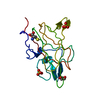
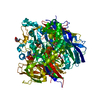
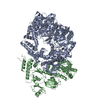
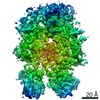

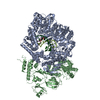
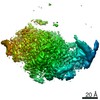
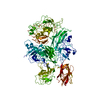
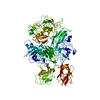
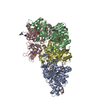
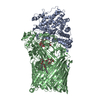
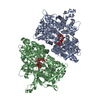
 PDBj
PDBj
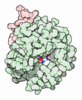
 Assembly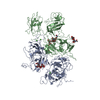

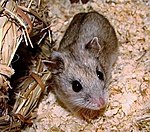 Cricetulus griseus (Chinese hamster) / References: UniProt: P00451
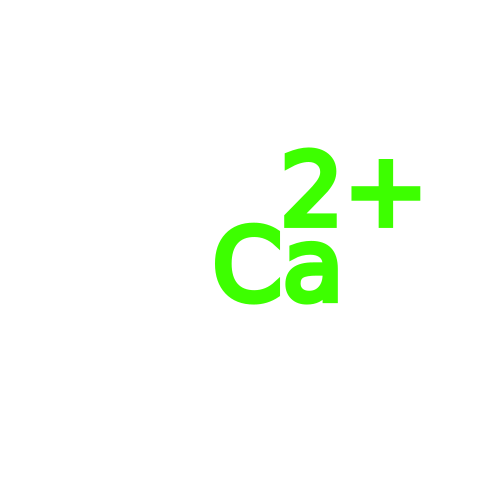 Mass: 40.078 Da / Num. of mol.: 3 / Source method: obtained synthetically / Formula: Ca
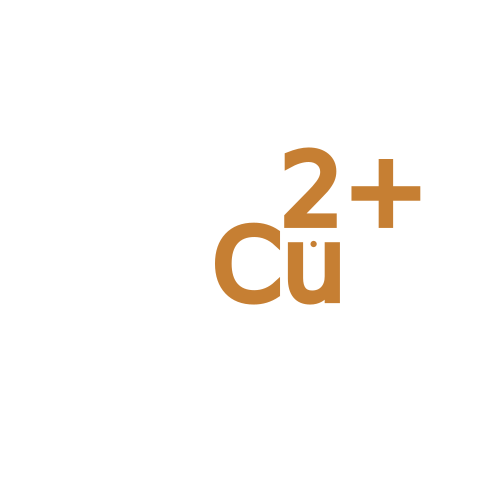 Mass: 63.546 Da / Num. of mol.: 2 / Source method: obtained synthetically / Formula: Cu
 Sample preparation
 Processing